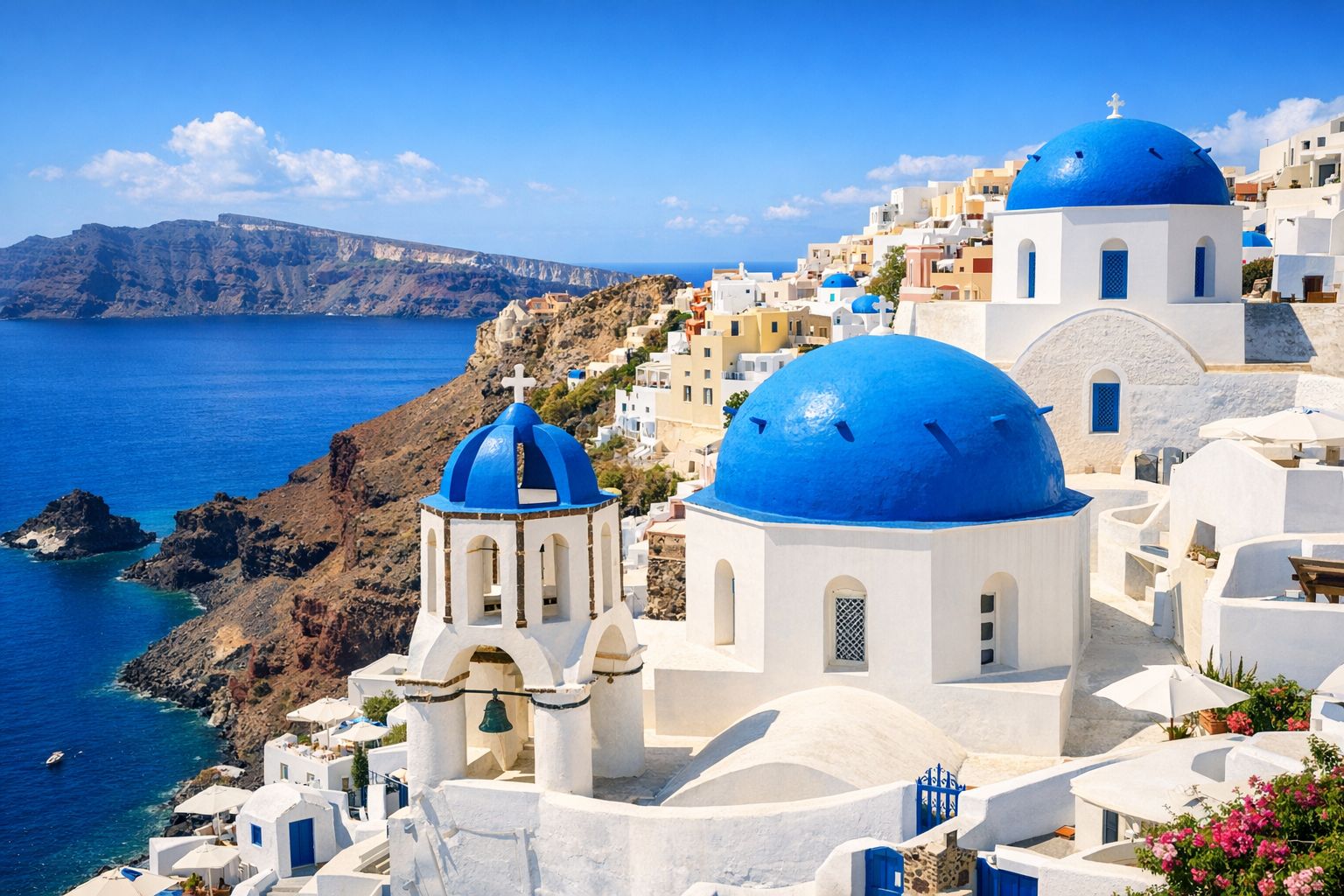
Discover the Greece Few Travellers Ever Experience
This isn't just sightseeing — it's a journey into the heart of Peloponnese & Cyclades's rich heritage. Walk through centuries of history, taste authentic flavors passed down through generations, and connect with traditions that have shaped this remarkable destination. Every moment becomes a story to tell.
Discover the wonders of Peloponnese & Cyclades, a captivating destination that offers unique experiences, rich culture, and memorable adventures. Whether you're seeking relaxation, adventure, or cultural immersion, Peloponnese & Cyclades promises to exceed your expectations with its warm hospitality and stunning scenery.
10 nights in Peloponnese & Cyclades — day by day, fact-checked
Your private transfer meets you at Athens airport and takes you to the hotel. No booked sight today, so the plan flexes around whenever you land. Settle in, then take a first flat walk through Plaka below the Acropolis.
Your package includes a private airport transfer, so clear the terminal and look for your driver rather than joining a taxi queue. Athens airport sits about 30 to 35 km east of the centre. Because origin and airline are your choice, this day suits an early-morning or a late-night arrival alike; nothing here is time-locked.
A private airport transfer is included, so you do not book or pay for the airport leg. The airport is about 30 to 35 km east of central Athens.
No timed-entry sight is booked for today, so the plan flexes to your flight. Do not pin the Acropolis to arrival day; its slot is booked separately and cannot move.
For any independent trip you take yourself, the FCDO advises pre-arranged transport or taxi-hailing apps such as Uber or Free Now, which supply licensed cabs. Treat these as a top-up to your included transfers, not the backbone.
Do not accept a lift from a tout inside the terminal or an off-meter street taxi. Always carry your passport, as police can ask for ID.
Greece is on the euro. Cards work widely in Athens, but draw some cash for tavernas, kiosks and small Peloponnese stops later in the trip, where cards can be declined for small sums.
Drop your bags, then take a short flat loop through Plaka's lanes toward Monastiraki. Sit down for a first taverna dinner; walk-in is normal here and no booking app is needed. Dinner runs late in Greece, so a 21:00 sitting is normal and a taverna full at 19:00 is full of tourists.
Sunset in Athens in late July is around 20:40, creeping earlier as the month goes on. Daylight runs long, so evenings stay bright and warm.
Walk-in is normal for Plaka tavernas and no UK-style reservation app operates here. If you want a table held for a busy evening, phone the taverna directly or ask your hotel to call.
It is illegal to serve alcohol to under-18s, and the age is enforced, so carry ID for younger members of the group. Bars face large fines and possible closure for serving minors.
Skip the most photogenic terraced-step tavernas on Mnisikleous if you want value; those scenic strips are heavily touristed. Read the menu board before you sit down.
A long-standing traditional Plaka taverna listed by the official Athens tourism board. Treat it as a walk-in.
A traditional Plaka taverna a short walk from the Acropolis, serving Greek cuisine and fresh fish. Phone or ask the hotel to call for a busy night.
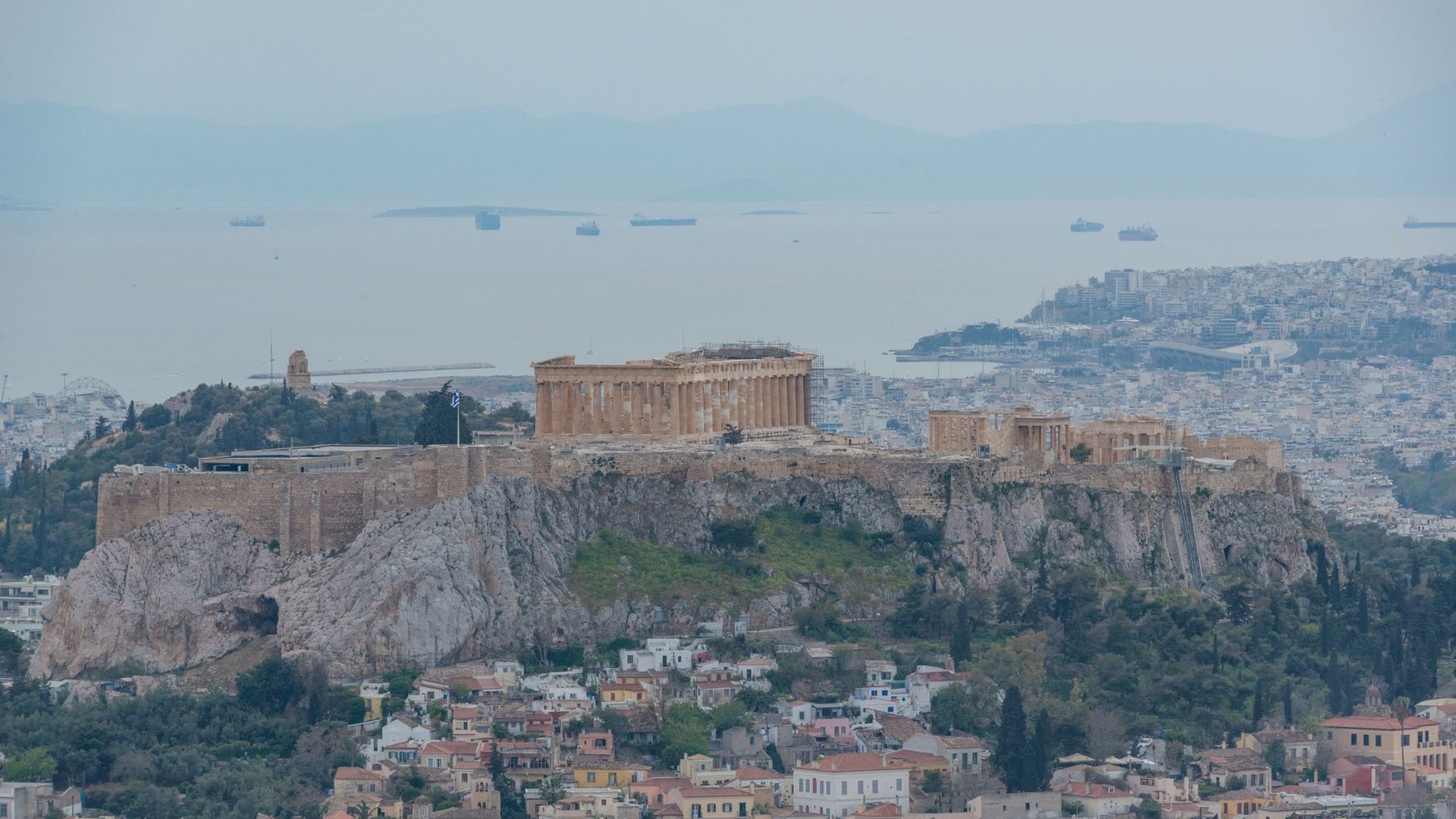
The headline Athens day, built around your timed Acropolis slot. Do the exposed marble summit at opening or late afternoon to dodge midday heat, then drop to Plaka's flat lanes and the Ancient Agora.
Entry is by timed slot only, booked through the official hhticket.gr portal. The 08:00 window is coolest and least crowded; arrive about 30 minutes before, with the ticket valid 15 minutes either side. The marble is punishing at midday, so an early or a late-afternoon slot beats the middle of the day.
Compulsory timed entry via the official hhticket.gr portal only. Four windows: 08:00-10:00, 10:00-12:00, 12:00-14:00, 14:00-17:00. Enter only in your slot; book as early as the window allows, as 08:00 and late slots sell out first.
A standard single-entry timed Acropolis ticket is 30 euros; confirm the live figure at checkout on hhticket.gr. No compulsory guide, independent entry is allowed.
Grippy shoes for polished, uneven marble, plus a hat, water and sun cover. There is little shade on the summit.
Take the earliest slot as soon as booking opens; a missed morning slot can waste the whole morning in peak season, and the ticket cannot be moved to another window.
Do not buy a timed Acropolis ticket from a reseller or turn up hoping to walk in during summer. Book direct on hhticket.gr and confirm the price there.
Come down off the hill for the air-conditioned Acropolis Museum, a separate ticket from the site. It suits the hot midday hours when the ruins bake. In summer it opens 09:00, later on Tuesday to Sunday, and stays open to 22:00 on Fridays, so you can flip it to a cooler evening if you prefer.
General admission 20 euros. The museum ticket is separate from and independent of the Acropolis site ticket.
Summer, 1 April to 31 October: Monday 09:00-17:00, Tuesday to Sunday 09:00-20:00, and Friday 09:00-22:00. No compulsory guide.
Many smaller shops and family businesses close roughly 14:00-17:00 in the heat, so use the hottest hours for an indoor sight or hotel rest rather than admin or shopping.
Do not assume your Acropolis ticket covers the museum; it does not. Buy the museum ticket separately.
As the heat eases, walk the flat Ancient Agora below the Acropolis. One 20-euro ticket covers both the site and its on-site museum. In summer it is open to 20:00, so late afternoon gives you the cooler, quieter end of the day before a late taverna dinner in Plaka.
Ticket 20 euros, covering both the site and the on-site museum. No compulsory guide.
Summer, 1 April to 31 October, 08:00-20:00; Tuesdays open later at 10:00-20:00.
Save the exposed sites for opening or late afternoon and keep the punishing midday hours for shade; the pattern repeats at Mycenae, Monemvasia and the islands.
Do not photograph any military or police installation you pass in the city; it is illegal in Greece. Keep the camera on the ruins.
The covered central food market, open daily 08:00-18:00 and closed Sundays, with cheap traditional market eateries. A category pick for market street food; carry small euro cash.
Leave Athens on an included private transfer to Nafplio, roughly 1h50 and about 148 km. It is a package-arranged drive, not a day-trip. Arrive into the old town's stepped, largely pedestrian lanes and settle by the sea.
Your private transfer runs Athens to Nafplio, about 1h50 over roughly 148 km. You are a passenger the whole way, which is the point: the FCDO calls Greek traffic busy, fast and chaotic in the larger cities. Movement in the old town itself is on foot through narrow, stepped, mostly pedestrianised lanes.
Included private car transfer, Athens to Nafplio, roughly 1h50 and about 148 km. It is a built-in package leg, not a traveller-chosen detour.
Flat, grippy shoes for the old town's stepped, uneven, pedestrianised lanes, and a light layer that covers shoulders and knees for the Byzantine churches.
Draw euro cash before or on arrival; small tavernas, kiosks and boat-day incidentals in the Peloponnese may prefer cash or decline a card for small sums.
Do not plan to hire a car or scooter here to reach the sights; your transfers cover it, and a UK provisional licence is not valid to hire, with helmets legally required on two-wheelers.
Once the heat drops, walk the flat seafront and the old-town lanes. Nafplio's Bourtzi fortress sits on a small island in the bay, reached by a short boat from the town quay for a fee. It is a low-effort excursion of a few minutes each way, with a cafe-restaurant inside.
Bourtzi fortress admission is 7 euros full, 5 euros reduced, with free categories including EU under-25s and disabled visitors. Access is by boat for a fee from the town quay.
A short, low-effort excursion: a few minutes by boat each way from the town quay. The Alos cafe-restaurant inside operates daily 09:00-24:00.
Sunset over the bay is the reason to time this for late afternoon; the light on Bourtzi and the water is best as the heat fades.
Do not sit down to a full dinner at 19:00; that is the tourist hour. Greek dinner runs to 21:00 and later, so pace the evening around a late sitting.
A traditional Greek and Mediterranean restaurant on the Bouboulinas seafront promenade of the old town, open through the late Greek dinner window.
A Peloponnese heritage day. Palamidi's Venetian fortress climbs from the old town on exposed ramparts; Mycenae, a short drive out, is a hot, shadeless site. Do both at opening or late afternoon and keep midday for shade.
Palamidi is the Venetian hilltop fortress above Nafplio, reached by a long stair climb from the old town. Do it at opening before the sun hits the exposed ramparts. Movement is on foot and the climb is steep, so it rewards an early, cool start over a midday attempt in the heat.
Water, a hat and sun cover for the exposed ramparts, and grippy shoes for the long stair climb from the old town.
Best at opening or late afternoon; the ramparts are fully sun-exposed and the climb is punishing in midday summer heat.
Carry small euro cash for the entry and a taverna afterwards; ATMs are available in Nafplio but small sums can be declined on cards.
Do not climb Palamidi in the middle of the day for the view; the shadeless ramparts are brutal at midday. Start early or leave it to late afternoon.
Mycenae is a short package drive from Nafplio: an open, hot, shadeless archaeological site whose ticket also covers its on-site museum. Late afternoon gives cooler stone and thinner crowds. One 20-euro ticket does both, with last admission 20 minutes before closing, and no guide is compulsory.
Full ticket 20 euros, covering the archaeological site and the on-site Archaeological Museum. Last admission 20 minutes before closing.
Summer hours: April 08:00-19:00, and from 2 May 08:00-20:00. No compulsory guide.
There is little shade at Mycenae; go at opening or late afternoon, carry water and cover up. The same heat logic applies at every exposed site on this trip.
Do not drop a cigarette or light anything on the dry hillsides here; causing a wildfire, even unintentionally, is a criminal offence in Greece.
A long, deliberate private transfer south to Monemvasia, about 4 hours or more over roughly 320 km. This is the trip's remote payoff: a medieval rock-town where movement is entirely on foot through stepped, car-free lanes.
Your included private transfer runs south to Monemvasia, about 4 hours or more over roughly 320 km. It is a long leg by design, and being driven removes the risk the FCDO flags on busy Greek roads. The town is a fortified rock off the coast, entered on foot along a causeway.
Included private car transfer, about 4 hours or more and roughly 320 km. This is the trip's deliberate long transfer, a package leg rather than a day-trip.
A small day bag only; the lower town's lanes are stepped and car-free, so heavy wheeled luggage is awkward. A light layer covers shoulders and knees for the Byzantine churches.
Bring euro cash from a larger town. Monemvasia is small and remote, and cash matters for tavernas and incidentals where cards can fail.
Do not expect to wheel large cases to your door or drive in; the lower town is entirely pedestrian and stepped, and everything moves on foot.
Once you have settled, walk the lower town's stepped lanes as the heat fades. It is an inhabited medieval fortress town, all on foot. Save the exposed upper town and its ruined Byzantine church for a cooler slot. Dinner runs late here as everywhere in Greece, so plan around a 21:00 sitting.
Covered shoulders and knees for the lower town's Byzantine churches, plus flat, grippy shoes for the stepped, uneven lanes.
Walk-in or phone the taverna for a busy summer evening; there is no UK-style online reservation app here. Ask your hotel to call if you want a table held.
Movement is on foot throughout the castle town, so wear shoes you can climb steps in and carry water; the lanes are stepped and there are no vehicles.
Do not tackle the exposed upper town at midday; it is in full sun with a steep climb. Leave it for opening or late afternoon.
A restaurant and wine bar inside the Monemvasia castle (the medieval Kastro), part of the Moni Emvasis Suites property, serving local Monemvasian and Greek cuisine.
A full day on the rock. Take the exposed upper town, with its ruined Agia Sofia church, at opening before the sun bakes it. Keep the hot midday for shade in the lower town, and the evening for a late taverna.
The upper town is a steep, exposed climb from the lower town to a ruined plateau, site of the Byzantine Agia Sofia church. Do it at opening, in the cool. It is all on foot and fully sun-exposed, so a midday attempt in summer is punishing. Carry water and cover up.
Water, a hat and sun cover, plus grippy shoes for the steep, rough climb. The upper town is fully sun-exposed with a ruined church at the top.
Best at opening or late afternoon. The upper-town climb is steep and shadeless, so avoid the midday heat.
Wear a layer that covers shoulders and knees for the Agia Sofia church at the top; churches expect modest dress.
Do not smoke or light anything on the dry, exposed climb; causing a wildfire even unintentionally is a criminal offence in Greece.
After the midday shade, take the lower-town lanes again as the light softens, then a late dinner. Walk-in is normal, and for a busy night you phone the taverna or ask your hotel to call. Keep some euro cash on you for small sums, which cards can decline in a small, remote town.
Carry small-denomination euro cash. Monemvasia is small and remote, and cards can be declined for small sums at tavernas and kiosks.
Walk-in is normal. For a busy summer evening, phone the taverna directly or ask your hotel to call; no UK-style reservation app operates here.
Time dinner for 21:00 or later. A taverna full at 19:00 is full of tourists, and the lower town is at its best once the day-heat has gone.
Do not skip carrying your passport around the town; police can ask for ID at any point, and it is the required document.
The switch from mainland to islands. A private transfer takes you back toward Athens's port of Piraeus, then an included ferry crosses to Naxos in the Cyclades. Ferries leave from the port, not the airport, and the sea sets the pace.
An included private transfer runs you to Piraeus, then a pre-booked ferry crosses to Naxos. Piraeus-Naxos is about 3h15 to 4h25 by high-speed catamaran, or 5h15 to 7h by conventional ferry. Ferries depart the port of Piraeus, not the airport. You are ticketed and driven throughout; the sea governs the day.
Included private transfer to Piraeus, then a pre-booked ferry to Naxos. Ferries leave from the port of Piraeus, not Athens airport.
Piraeus to Naxos is about 3h15 to 4h25 by high-speed catamaran, or 5h15 to 7h by conventional Blue Star ferry.
The meltemi, a strong northerly Aegean wind that blows periodically from mid-May to mid-September, can cancel Cyclades sailings, with high-speed catamarans held first. Strikes can also disrupt ferries.
Keep water, snacks and a layer in your day bag for the crossing, and some euro cash for on-board and port incidentals where cards can fail.
Do not photograph the coastguard or port facilities at Piraeus; photographing military and security installations is illegal in Greece.
Once on Naxos, the Portara is a short flat walk from the Chora harbour along a pedestrian causeway to the Palatia islet. It is an open, unfinished ancient marble doorway, and sunset is the moment for it. A 30-to-60-minute visit at the end of the day, before a late dinner in the old market.
The Portara, the Temple of Apollo doorway on the Palatia islet, is open-air and free, reached on foot via a causeway from Naxos Chora.
Sunset in the Cyclades in late July is around 20:33, roughly 8 minutes earlier than Athens. It is the best time for the Portara.
Care on the polished, uneven marble of the islet, especially in fading light; grippy shoes help and there is no barrier at the edges.
Do not rush to a 19:00 dinner after the Portara; island dinner runs to 21:00 and later. Time the causeway for sunset, then eat late.
A traditional taverna in the old market of Naxos Town, about 150 metres from the port, using local Naxian ingredients.
A full island day on Naxos, on foot in Chora and by choice further afield. Options run from a guided Mount Zas hike to a licensed watersports centre, all vetted for safety, with the exposed inland heat done at the cool ends of the day.
Naxos gives you a real choice. A guided Mount Zas hike takes on the Cyclades' highest peak over about 5 hours with a local guide; it is strenuous and best started early or late for the heat. Or keep it flat: the west-coast beaches, though the meltemi roughens west-facing sand on windy days.
ZasTours runs a guided Mount Zas hike, about 5 hours with an English-speaking local mountain guide, from 85 euros per person, dropping for larger groups. Three route options.
The hike is strenuous over exposed ground; do it at opening or late in the day given summer heat. Carry water and sun cover.
On windy days the meltemi roughens west-facing beaches. Check conditions before a swim day, and note a red flag on a beach means do not enter the water.
Only book watersports at a licensed centre, complete the paperwork and get a safety briefing first, as the FCDO advises.
Do not solve the transport by hiring a scooter or quad to reach a beach; the FCDO warns of serious injury and death on these, and it is not part of your package.
Back in Chora, the old town lanes are flat and on foot. Sit down late for dinner using local Naxian produce; walk-in is normal and you phone or ask the hotel to call for a busy night. Keep euro cash for kiosks and small sums that a card can decline on the island.
ATMs are available in Naxos Chora, but keep small-denomination euro cash for kiosks, bakeries and boat-day incidentals where cards can be declined.
Walk-in or phone the taverna for a busy summer evening; ask the hotel to call if needed. No UK-style online reservation app operates here.
Care with the exposed ground and heat on any hike; medical care may be more limited on the islands than the mainland, so a GHIC plus travel insurance matters.
Do not book a boat day for a young child, an over-65 or anyone with reduced mobility without checking suitability; some island boats board by dinghy and exclude those groups.
A licensed kitesurf and windsurf school at Mikri Vigla, Naxos, teaching to IKO standards with rental gear. Book only at a licensed centre and get the safety briefing.
A short inter-island hop by included ferry, Naxos to Paros, one of the most frequent crossings in the Cyclades. Paros's headline sight, a 4th-century basilica, sits steps from the Parikia port where the ferry docks.
The Naxos-Paros hop is short and direct, with over ten daily crossings in high season: about 20 to 25 minutes on the fastest high-speed vessels. That frequency makes it low-risk on a fixed itinerary. It is a pre-booked package leg, and you arrive into Parikia's port a few metres from the town's main sight.
Included pre-booked ferry, Naxos to Paros: a short direct hop with over ten daily crossings in high season, about 20 to 25 minutes on the fastest vessels.
Even on a short hop the meltemi can disrupt sailings, with high-speed catamarans cancelled first. Frequent crossings make it low-risk, but keep the buffer rule in mind for the flight home.
Keep your day bag and passport with you on the crossing, plus some euro cash for port and on-board incidentals where cards can fail.
Do not photograph the port or coastguard facilities as you dock; photographing security installations is illegal in Greece.
Paros's headline heritage sight is the Panagia Ekatontapyliani, a 4th-century Paleo-Christian basilica a few metres from Parikia port, with a Byzantine museum of sacred relics inside. It is a working church, so covered shoulders and knees are expected. Do it in the cooler afternoon, then a late dinner over at the old Naoussa port.
Covered shoulders and knees for the Ekatontapyliani; it is a working church and modest dress is expected.
On foot: the basilica is a few metres from Parikia port, where the ferry docks, so no transport is needed.
Smaller shops and family businesses can close roughly 14:00-17:00 in the heat, so use the hottest hours for rest and the cooler afternoon for the church.
Do not treat a working church as a photo backdrop in beachwear; cover up and be discreet inside, near the relics.
A Mediterranean and Aegean restaurant on the old Naoussa port, taking reservations direct. It skews upscale and touristy for the port-front setting, so go for the view and book ahead.
Your last full island day and your buffer before the flight home. Keep it flexible: a Paros boat day from a locatable operator, or a flat day in Parikia and Naoussa, with the meltemi and strike risk in mind for tomorrow's crossing back.
Paros offers full-day boat excursions from several ports toward Antiparos and Despotiko. Book only through a locatable, licensed operator and check the suitability rules first: some board by dinghy in waves and exclude young children, over-65s, pregnant women and reduced-mobility passengers. Or keep it flat and low-risk on land, with an eye on tomorrow's sea.
Polos Tours Paros runs about 18 daily boat excursions from Paros ports, including Antiparos, Despotiko, Delos and Mykonos. Contact +30 22840 22333; prices are quoted via its booking portal, not published.
Only book activities at a licensed watersports or boat centre, complete the paperwork, get a safety demonstration and know how to call for help. On beaches, a red flag means do not enter the water.
The meltemi can cancel water activities and roughen west-facing beaches on windy days, and it can cancel tomorrow's ferry. Keep today as your buffer before the flight home.
Do not book a boat trip for an under-8, an over-65, a pregnant traveller or anyone with mobility limits without checking; some operators exclude them because boarding is by dinghy in waves.
For your last island night, eat late as the Greeks do, around 21:00. Walk-in or phone the taverna, or ask your hotel to call for a busy night. Keep some euro cash for small sums, and do not leave a phone or wallet unattended on a busy port-front table.
Walk-in or phone the taverna for a busy summer evening; ask your hotel to call. There is no UK-style online reservation app on the island.
Keep small-denomination euro cash for kiosks, bakeries and small sums that a card can decline. Decline dynamic currency conversion at ATMs and choose to be charged in euros.
Tipping is customary but modest and not a fixed percentage; rounding up or leaving a few euros for good service is the norm, and leaving nothing signals dissatisfaction.
Do not let a boozy last night turn rowdy; police enforce standards on drunken behaviour, and an alcohol-related arrest can void the insurance that covers a missed flight.
Your ferry back to Piraeus and private transfer to Athens airport, all included. Because origin and airline are your choice, this day reads the same for an early or a late flight. Count back from your departure and keep slack for the sea and the road.
Your included ferry returns you toward Piraeus and a private transfer takes you to Athens airport. Count back from your departure to leave time for the crossing, the road and airport formalities. Because origin and airline are your choice, this reads the same for an early or a late flight; only your own timing is fixed.
Included ferry back toward Piraeus, then a private transfer to Athens airport. Ferries leave from the port, not the airport, so allow for both legs plus formalities.
Count back from your departure across the ferry crossing, the road transfer and check-in. Keep generous slack; the crossing time depends on the vessel and the sea.
The meltemi and occasional strikes can disrupt sailings, with high-speed catamarans held first. Yesterday's buffer day is your protection; if the sea is against you, act on it early.
For any independent hop you add, the FCDO advises pre-arranged transport or the Uber or Free Now apps, which supply licensed cabs. Have some euro cash for last incidentals.
Do not cut the buffer fine. The FCDO calls Greek traffic busy, fast and chaotic, so build slack into the transfer rather than timing it to the minute.
Practical details verified 26 July 2026. Prices and opening hours change — we re-check them monthly, but confirm anything critical before you travel.
Real-time hotel prices for Athens, Nafplio, Monemvasia, Naxos and Paros. Upgrades are shown over each location's included hotel.
Select your preferred hotel tier above. Prices vary by hotel category.
We don't yet have confirmed facility details for this property, and we'd rather tell you that than guess. Call us on 0208 944 4514 and we'll confirm exactly what this hotel offers before you book.
Select your preferred airline and cabin

Tell us what you're dreaming of — the sun, the vibe, the budget — and we'll tailor it around you and call you back. No queues, no bots, and no pressure.
Pop in your details and pick a time — an advisor calls you back, usually within the hour.
Prefer to plan it properly? Book a focused 15-minute call with a destination specialist.