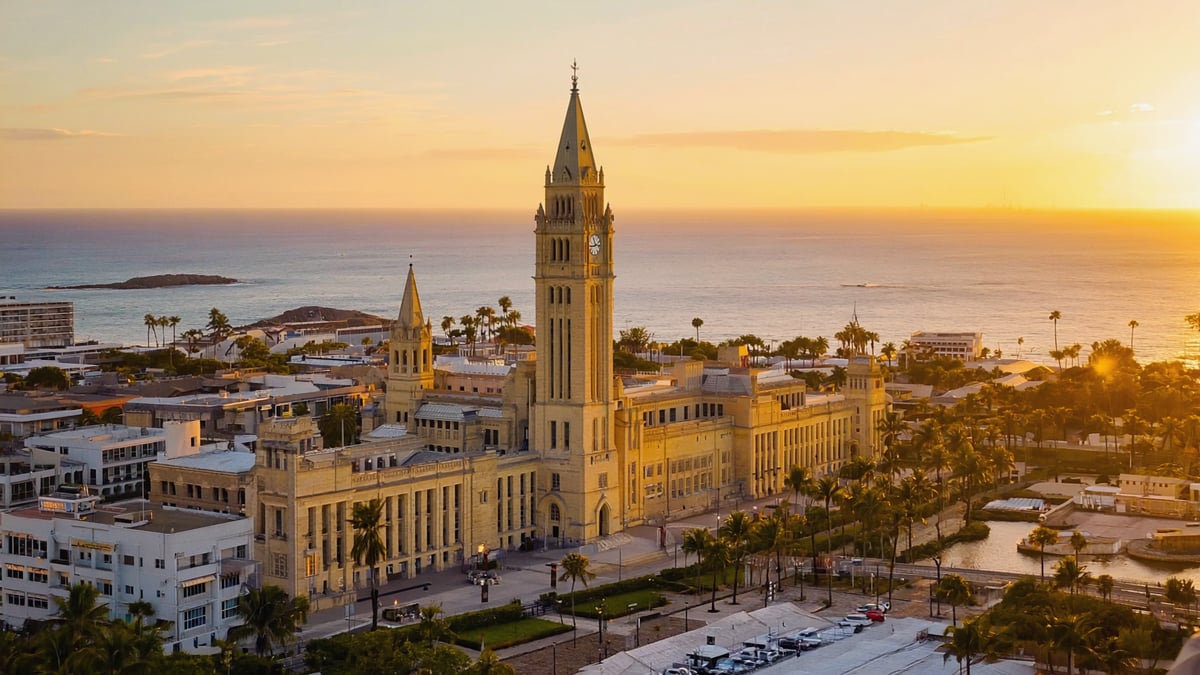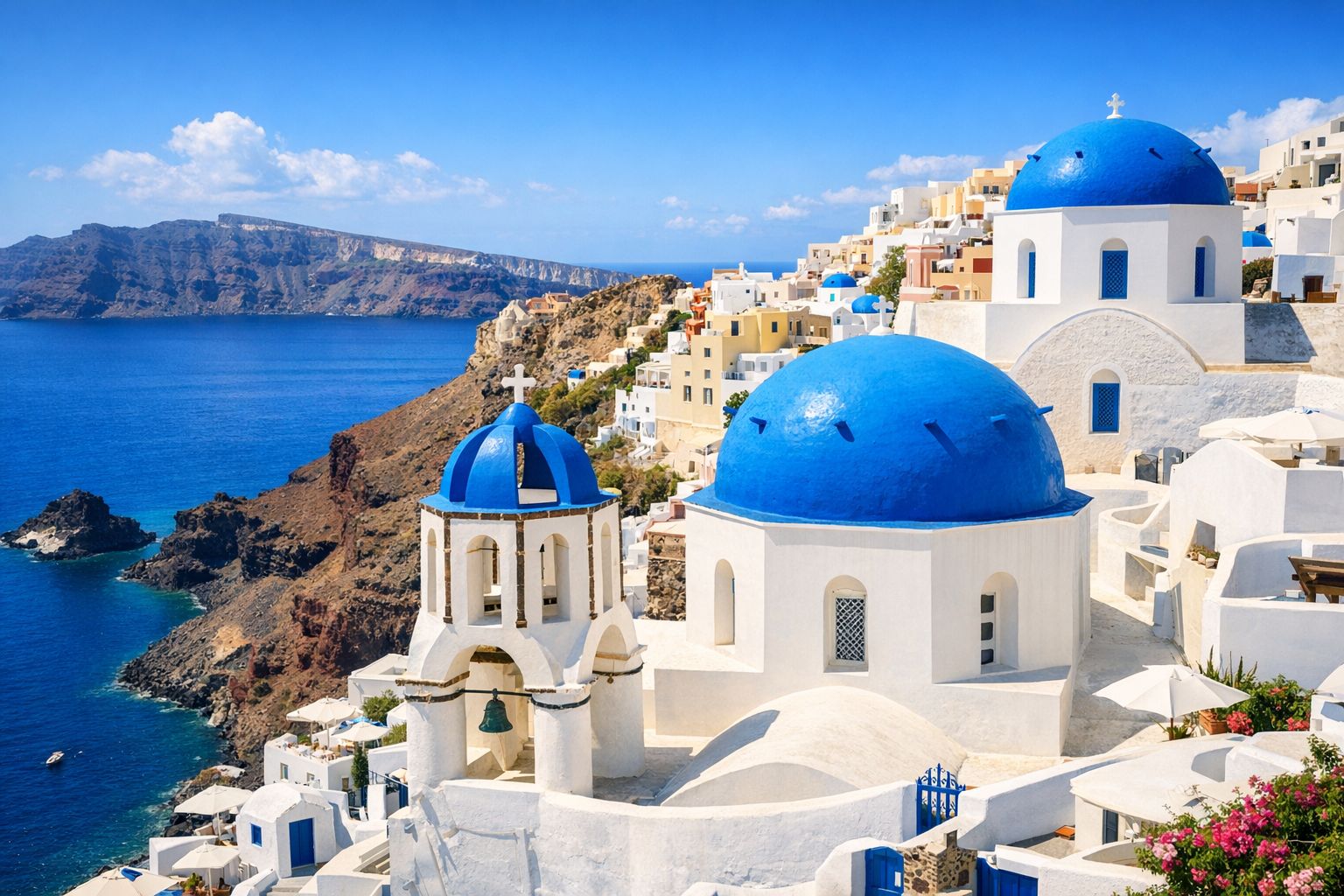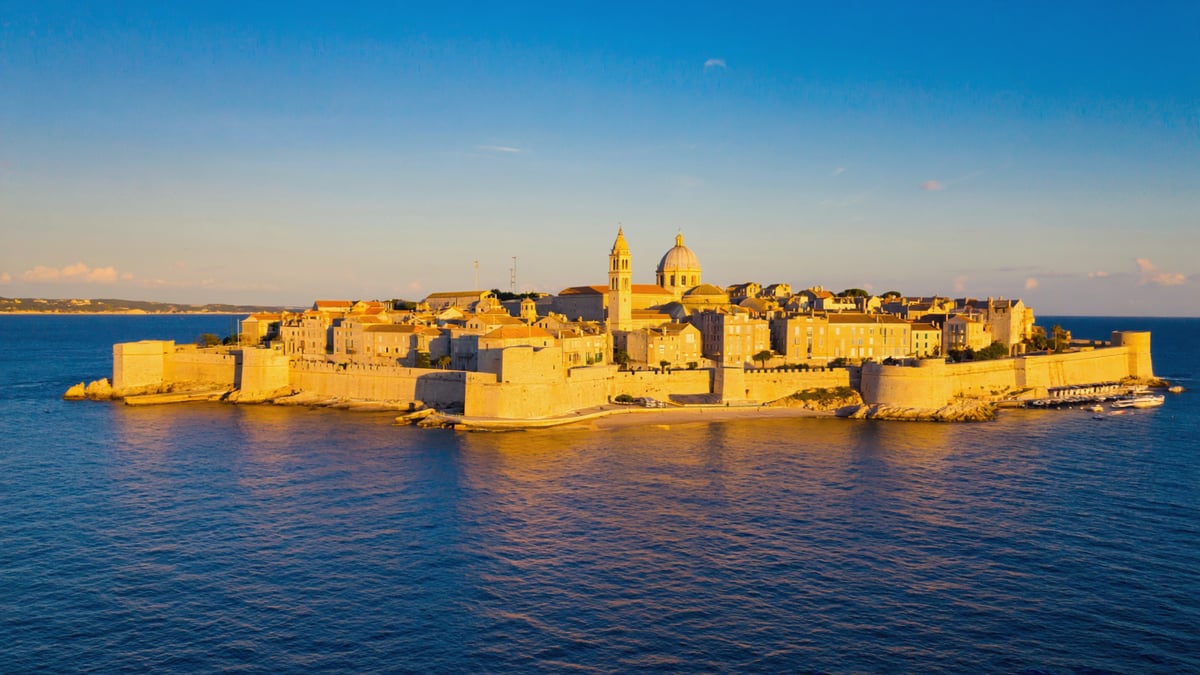
Two cities. One coastline. A decision that divides Croatian holiday-makers more reliably than any other comparison in European travel. Dubrovnik and Split are both magnificent, both UNESCO-adjacent, both accessible from the UK on flights that take less time than a cross-country train to Scotland. And yet they could not be more different in character, cost, crowd levels, or the kind of holiday they actually deliver.
This guide is not going to tell you one is better than the other. It is going to tell you which one is better for you, based on your budget, your travel style, your tolerance for crowds, and what you actually want to do when you get there. Whether you are a couple chasing a romantic long weekend, a family looking for a base to explore the Dalmatian coast, or a solo traveller wanting a city with genuine local energy, the right answer is different. And once you have made your choice, GlobeHunters has Croatia city break packages from £349 per person that make the booking straightforward.
Why Croatia Keeps Winning for UK City Breakers
Croatia has become one of the most consistently popular short-haul destinations for UK travellers, and the reasons go well beyond the photographs. The country sits in a sweet spot that few European destinations match: it is close enough for a long weekend (most flights from the UK land in under three hours), warm enough from April through October to justify a beach visit, and rich enough in history and food to satisfy travellers who find pure beach holidays too passive.
Direct flights from multiple UK airports make Croatia holidays genuinely accessible. From London Gatwick, Heathrow, Stansted, Manchester, Bristol, Edinburgh, and Birmingham, there are direct routes to both Split Airport (SPU) and Dubrovnik Airport (DBV) operated by carriers including British Airways, easyJet, Jet2, TUI, and Ryanair. Flight times typically run between two hours fifteen minutes and two hours forty-five minutes depending on departure point, making it one of the shorter European city break flights available from the UK.
The combination of flight time, cultural depth, gastronomy, and coastal scenery is why Croatia city breaks from the UK have grown in popularity year after year. Both Dubrovnik and Split are the primary entry points for first-time visitors, and both reward repeat visitors who want to go deeper into the region.
How UK Package Holidays to Croatia Work
For most UK travellers, the most efficient way to book a Croatia city break is through a package that bundles flights and hotel together. This is not just about convenience. Under the Package Travel and Linked Travel Arrangements Regulations 2018, UK-booked package holidays carry legal protections that independently booked flights and hotels do not. If your flight is cancelled or your hotel closes, a package provider is legally obligated to make alternative arrangements or issue a full refund.
GlobeHunters packages flights and accommodation for both Dubrovnik and Split, with prices starting from £349 per person for a city break. The platform pulls real-time pricing from Duffel for flights and Hotelbeds for accommodation, which means the prices shown reflect actual availability rather than headline rates that disappear at checkout. You can view current Croatia holiday packages on GlobeHunters or call the team on 020 8944 4700 to discuss which option suits your travel dates and budget.
Dubrovnik: The Walled City That Needs No Introduction
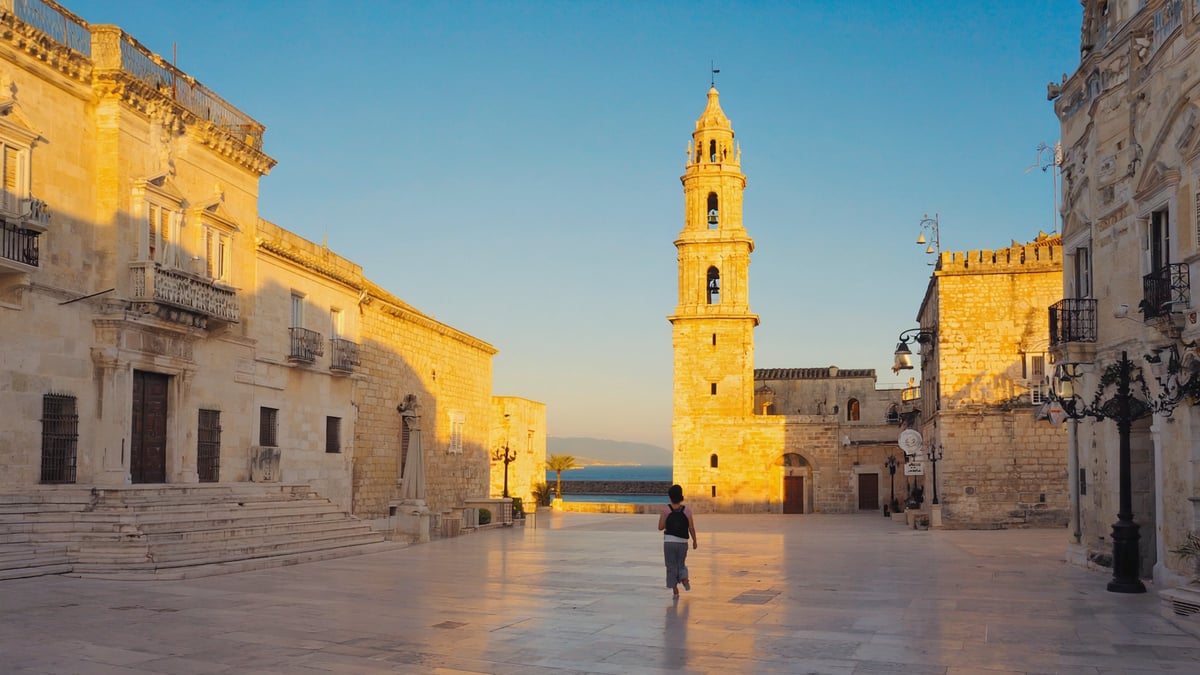
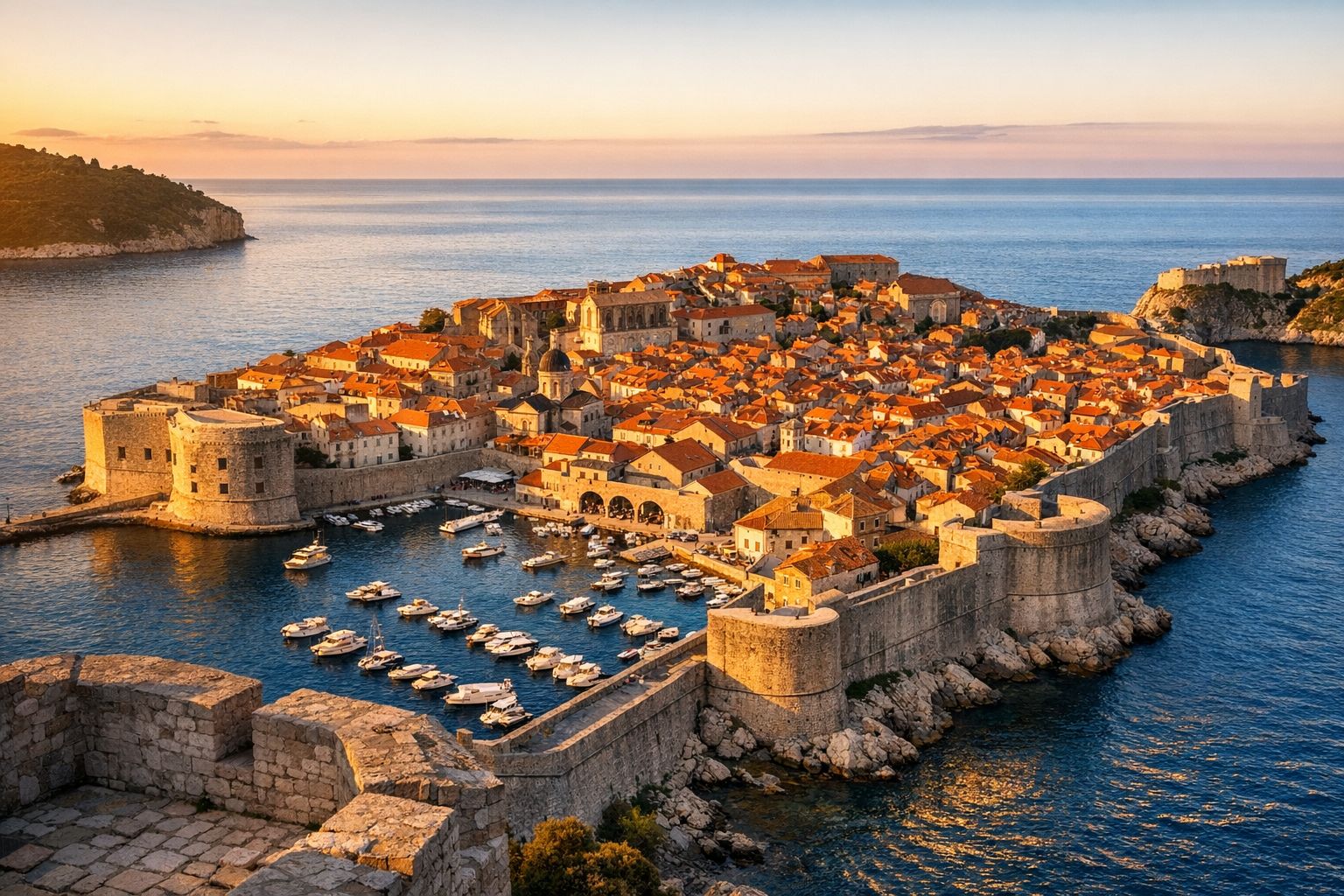
Dubrovnik is, without question, one of the most visually arresting cities in Europe. The Old Town sits inside medieval limestone walls that run for nearly two kilometres along the Adriatic coast, enclosing a pedestrianised warren of baroque churches, marble-paved streets, and terracotta rooftops that look almost identical to how they appeared in the fourteenth century. The cable car ascent to Mount Srđ delivers a view that has become one of the defining images of European travel.
It is also, and this must be said plainly, extremely popular. Dubrovnik receives a very high volume of visitors relative to its size, and the Old Town in particular can feel genuinely congested during peak summer months. The city has implemented visitor management measures in recent years, including limits on cruise ship passenger numbers and crowd-flow monitoring on the city walls, but June through August remains busy. The visitor experience changes substantially depending on when you go.
What Dubrovnik Does Best
The city walls walk is the single best thing to do in Dubrovnik, and it is best done early morning or late afternoon to avoid the midday heat and the cruise ship rush. The walls circuit takes roughly ninety minutes at a relaxed pace and delivers uninterrupted views over the Adriatic and down into the red-roofed city below. The entrance fee applies to everyone, including overnight guests.
Beyond the walls, Dubrovnik rewards slower exploration. The Franciscan Monastery on the Stradun (the main marble thoroughfare) houses one of Europe's oldest continuously operating pharmacies, dating to 1317. Fort Lovrijenac, perched on a rock outside the western walls, offers a different perspective of the Old Town and appeared extensively in the filming of Game of Thrones as the Red Keep. The Rector's Palace provides one of the best introductions to Ragusan Republic history available in the region.
For beaches, Banje Beach sits just east of the Old Town walls and is the most accessible option on foot. Lokrum Island, reached by a short ferry from the Old Harbour, offers naturist beaches, a botanical garden, and a ruined Benedictine monastery. Day trips to the Elafiti Islands are easily arranged and provide a quieter, more traditional version of Dalmatian island life than the busier tourist islands further north.
Dubrovnik Food and Drink Scene
Eating inside the Old Town walls comes at a premium, and the quality is variable. The restaurants along the Stradun and immediately adjacent streets cater heavily to tourist traffic and price accordingly. The smarter approach is to walk slightly uphill toward the residential streets behind the Pile Gate or cross to the Lapad peninsula for a broader range of options at lower prices.
Seafood is the centrepiece of Dubrovnik dining: fresh oysters from the Pelješac peninsula, black risotto made with cuttlefish ink, grilled sea bass with olive oil and blitva (a Swiss chard and potato combination that appears on almost every menu in Dalmatia), and peka, a slow-cooked lamb or octopus dish prepared under a bell-shaped lid. Dingač wine, produced from the Plavac Mali grape on the steep hillsides of the Pelješac peninsula, is the local red to seek out. Pošip is the white.
Dubrovnik Cost Reality for UK Travellers
| Expense Category | Budget Range (per person) | Notes |
|---|---|---|
| City walls entrance | ~£25–£30 | Prices vary by season; book online to avoid queues |
| Lunch (Old Town restaurant) | £20–£40 | Cheaper options exist uphill from the Stradun |
| Cable car (return) | ~£15–£20 | Worth doing at sunset if available |
| Lokrum Island ferry (return) | ~£12–£15 | Includes island entrance fee |
| Evening dinner with wine | £35–£70 | Old Town premium; Lapad peninsula significantly cheaper |
| Day trip to Elafiti Islands | £40–£65 | Boat tour including lunch |
The honest message for UK travellers: Dubrovnik is not cheap. It is one of the more expensive city break destinations in the Mediterranean, comparable to Barcelona or Prague at peak season. A couple spending four nights can easily budget £150–£200 per day on activities, food, and drink above their accommodation costs. Travelling in May, early June, or September dramatically reduces both prices and crowds.
Split: Croatia's Second City, and in Many Ways Its First Choice
Split is where people who have been to Croatia before tend to go on their second visit. It is a working city of roughly 170,000 people built in and around a Roman emperor's retirement palace, the Diocletian's Palace complex, constructed around 305 AD, now forms the living, breathing core of the city where residents hang their laundry between ancient columns, bars occupy Roman cellars, and a cathedral sits inside what was originally the emperor's mausoleum.
Unlike Dubrovnik, Split has not been entirely given over to tourism. The Pazar market operates every morning just outside the palace walls. The Riva promenade is where locals walk, drink coffee, and watch the ferries come in. The Varoš neighbourhood above the palace is a tangle of narrow stone streets with cats sleeping on windowsills and restaurants that have not updated their menus for tourist palates. Split has a pulse that Dubrovnik, beautiful as it is, sometimes lacks.
Diocletian's Palace: The Most Extraordinary Urban Living Space in Europe
No heritage site in Europe quite matches the peculiarity and brilliance of Diocletian's Palace as a piece of living urban fabric. Built by the Roman Emperor Diocletian as his retirement complex on the Dalmatian coast, the palace covers roughly thirty thousand square metres and once housed roughly nine thousand people within its walls. Today, several thousand people still live inside the palace complex, in apartments carved out of Roman structures that have been continuously inhabited for seventeen centuries.
The Peristyle, the palace's central colonnaded square, functions simultaneously as a heritage site and the social centre of Split's nightlife. The Cathedral of Saint Domnius, which occupies the original octagonal mausoleum, is one of the oldest cathedrals in the world still in regular liturgical use. The subterranean halls beneath the palace, which once supported the imperial apartments above, are now open to visitors and provide one of the most atmospheric underground spaces in the Mediterranean.
Entrance to the palace complex itself is free, though the cathedral, baptistery, peristyle tower, and subterranean halls each carry separate entry fees. A combined ticket covering all major sites represents the better value option for anyone spending more than a day exploring.
Split Beyond the Palace
The Marjan Hill park, a forested peninsula rising to the west of the city centre, is Split's green lung and one of its best-kept pleasures. Walking trails lead up through pine forest to viewpoints over the city, the offshore islands, and on clear days the Dinaric Alps in the distance. The beach at Bačvice, a ten-minute walk east of the palace, is the city's most famous swimming spot, known for its shallow sandy bottom and the local game of picigin, an acrobatic ball sport played in ankle-deep water that has been listed by UNESCO as an intangible cultural heritage.
Split also serves as the primary ferry hub for the Dalmatian islands. Brač, Hvar, Vis, Korčula, and the more remote islands of the Kornati archipelago are all reachable by ferry from Split's port. For travellers who want to combine a city break with island exploration, Split is the far superior base. The ferry connections from Dubrovnik are more limited and the journey times to most popular islands are longer.
Split Food and Drink: The Real Dalmatian Table
Split's food scene has matured considerably in recent years without losing its authenticity. The Pazar market, held every morning outside the Golden Gate of the palace, is the starting point for understanding what Dalmatian cooking is actually built on: local tomatoes, figs, wild herbs, fresh cheese from the islands, olive oil pressed from groves that have been producing for centuries.
The restaurant scene covers everything from konoba-style family restaurants serving peka and freshly grilled fish to modern Dalmatian cuisine that interprets traditional ingredients through contemporary technique. Prices are noticeably lower than Dubrovnik across almost every category. A three-course dinner with wine in a well-regarded Split restaurant will typically cost less than the equivalent meal in an average Dubrovnik tourist restaurant.
The coffee culture in Split deserves specific mention. Dalmatians take coffee seriously, and a morning coffee in Split is a ritual that can last an hour. The Riva promenade and the cafés inside the palace are the places to observe this most clearly: tables full of people with a single espresso, no particular urgency, watching the world operate at a pace the rest of Europe has largely forgotten.
Split Cost Comparison for UK Travellers
| Expense Category | Budget Range (per person) | Notes |
|---|---|---|
| Diocletian's Palace (combined ticket) | ~£10–£15 | Palace exterior is free; individual sites carry fees |
| Lunch (local konoba) | £10–£20 | Significantly cheaper than comparable Dubrovnik options |
| Ferry to Hvar (return) | ~£8–£12 | Catamaran service; book in advance in peak season |
| Marjan Hill guided walk | £0–£20 | Free independently; guided options available |
| Evening dinner with wine | £20–£45 | Noticeably cheaper than Dubrovnik equivalent |
| Day trip to Krka National Park | £35–£55 | Organised tour including transport; book in advance |
Dubrovnik vs Split: The Head-to-Head Comparison

Direct comparison is where most travel guides get vague. This one will not. Here is an honest, structured assessment across the dimensions that actually matter to UK travellers deciding between these two cities.
| Category | Dubrovnik | Split |
|---|---|---|
| Overall cost | ⚠️ High (one of Croatia's priciest destinations) | ✅ Moderate (noticeably cheaper across most categories) |
| Crowd levels (peak season) | ❌ Very high (cruise ships add significant day-tripper volume) | ⚠️ Busy but manageable; genuine local population dilutes tourist density |
| Heritage wow factor | ✅ Exceptional (city walls, baroque Old Town) | ✅ Exceptional (Diocletian's Palace is genuinely unique) |
| Local atmosphere | ⚠️ Old Town feels heavily touristic; Lapad/Gruž more authentic | ✅ Strong local identity; city functions independently of tourism |
| Island access | ⚠️ Limited (Elafiti Islands nearby; other islands require longer travel) | ✅ Excellent (Brač, Hvar, Vis, Korčula all easily accessible) |
| Food and dining | ⚠️ Good quality but expensive; tourist-heavy in Old Town | ✅ Excellent value; authentic Dalmatian cuisine widely available |
| Best for couples | ✅ Romantic atmosphere, dramatic scenery | ✅ Equally romantic but more relaxed and affordable |
| Best for families | ⚠️ Possible but expensive; limited beach options near Old Town | ✅ Better value, accessible beaches, good island day trips for kids |
| Best for solo travellers | ⚠️ Social scene exists but smaller; can feel isolated in high season crowds | ✅ Genuine city energy, strong café culture, easier to meet people |
| Off-season viability | ⚠️ Very quiet November–March; many businesses close | ✅ Year-round city; restaurants and cafés remain open |
Which Type of Traveller Should Choose Which City
The comparison table above gives you the data. This section gives you the decision framework. The right choice between Dubrovnik and Split is not about which city is objectively better, it is about which city is better matched to how you travel and what you want from a city break.
Choose Dubrovnik If...
You are visiting Croatia for the first time and want the iconic experience. Dubrovnik is the city most people picture when they think of Croatia, and for good reason. The visual impact of the Old Town, particularly from the city walls or from the cable car, is genuinely extraordinary and worth experiencing once. If your primary motivation is the classic Croatian postcard and you are happy to budget accordingly, Dubrovnik delivers it unreservedly.
You are planning a honeymoon or special occasion trip. Dubrovnik has invested heavily in luxury hotel infrastructure, and several properties within or immediately adjacent to the Old Town offer genuine five-star experiences. Sunset views from a terrace restaurant overlooking the Adriatic, private boat charters to hidden coves, and the dramatic visual backdrop of the walled city all contribute to an atmosphere that is hard to replicate. If the occasion justifies the spend, Dubrovnik is the more theatrical choice.
You are travelling in May, early June, or September. The shoulder season transforms Dubrovnik. The cruise ships are fewer, the streets are walkable, the light is golden, and the prices drop meaningfully. A Dubrovnik trip timed around the shoulder season is a fundamentally different experience to the same trip in August. If your travel dates are flexible, this single variable matters more than any other factor in the Dubrovnik equation.
You want a self-contained experience with everything within walking distance. The Old Town is compact, walkable, and contains enough to fill three or four days comfortably without needing to venture far. For travellers who prefer a slow, immersive exploration of a single historic area rather than using a city as a base for wider exploration, Dubrovnik's contained nature is a feature rather than a limitation.
Choose Split If...
You want better value without sacrificing quality. Split consistently delivers a higher quality-to-cost ratio than Dubrovnik. The food is cheaper and often better. The hotel options span a wider range of budgets. The heritage is genuinely world-class. If your travel budget is a meaningful constraint, Split allows you to eat well, stay centrally, and do more activities for significantly less money than the equivalent Dubrovnik trip.
You want to use the city as a base for wider exploration. Split's position as the ferry hub of the Dalmatian coast makes it the logical choice for travellers who want to combine a city break with island hopping. A week based in Split could include a day on Hvar for the lavender fields and nightlife, a day on Brač for the famous Zlatni Rat beach, a day at Krka National Park for the waterfalls, and still leave time to explore the palace, Marjan Hill, and the city's restaurants. No other base in Croatia offers this range.
You are travelling with children. Split is a more practical family destination. The Bačvice beach is shallow and safe for young swimmers. The ferry trips to nearby islands are short and engaging. The food options are more varied and less expensive. The city has a functioning local life that children find genuinely interesting rather than just a backdrop for adult sightseeing.
You want authentic local culture alongside heritage. If you find heavily touristed historic centres exhausting, Split's blend of living city and ancient monument is the more satisfying balance. The Diocletian's Palace is extraordinary, but it is also a neighbourhood where people live, work, and socialise. That coexistence of heritage and daily life is what makes Split feel real in a way that Dubrovnik's Old Town, at peak season, sometimes does not.
When to Go: Seasonal Guide for UK Travellers
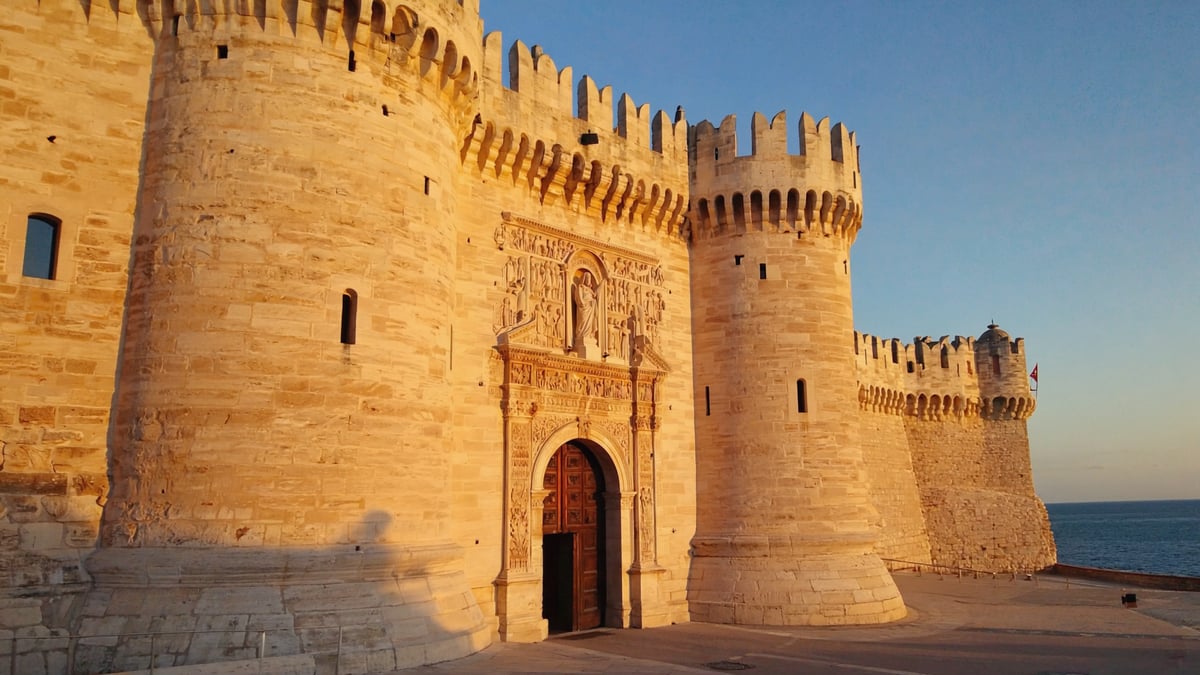
Both cities follow the same broad seasonal pattern, but the implications differ significantly depending on which you choose.
April and May: The Best Kept Secret
Spring is the most underrated time to visit both Dubrovnik and Split. Temperatures are pleasant (typically 17–22°C), the sea is still cool for swimming but perfect for coastal walks, and visitor numbers are a fraction of summer levels. Prices for both flights and hotels drop substantially, making spring the optimal window for budget-conscious UK travellers who want quality without the premium.
In May particularly, Dubrovnik's Old Town is at its most accessible. The cruise ship season has not reached its peak, the early flowers are blooming on the city walls, and the light has the warm clarity that photographers specifically travel to capture. Split in May has the added advantage of the Pazar market being at full agricultural capacity, with spring produce filling the stalls.
June to August: Peak Season Realities
This is when Croatia is at its most beautiful and most crowded. Sea temperatures are ideal for swimming, the islands are buzzing, and the food and nightlife scenes are in full operation. It is also when Dubrovnik in particular operates at the upper limit of what a comfortable visitor experience looks like.
For UK families with school-age children, summer is often the only option. In this case, the choice tilts firmly toward Split, where the combination of beaches, islands, and lower costs makes the busier environment more manageable. Booking accommodation well in advance is essential for both cities during July and August.
September and October: The Sophisticated Choice
September is widely regarded as the best month to visit Croatia by travellers who have experienced the country in multiple seasons. The sea temperature remains warm from months of summer heat (typically 23–25°C at the surface), the crowds thin noticeably after the first week, and the quality of light in the late afternoon is exceptional. Prices begin to fall while conditions remain close to their peak.
October extends the season meaningfully for both cities, though some island businesses begin to close from mid-October onward. For cultural tourism, October in Split or Dubrovnik is excellent: museums and attractions are accessible without queues, local restaurants return to their full menus after the simplified summer service, and the pace of city life slows to something genuinely enjoyable.
November to March: Off-Season Differences
This is where the two cities diverge most sharply. Split remains a functioning city year-round. Restaurants, cafés, and shops operate normally. The winter market and Christmas lighting make December a surprisingly pleasant time to visit. The hotel rates are at their annual low, and the palace without summer crowds has a particular atmospheric quality that many return visitors prefer.
Dubrovnik in winter is a more mixed experience. The Old Town quietens dramatically, which some travellers find peaceful and others find underwhelming. A meaningful portion of the hospitality businesses close entirely between November and March. The city is beautiful in winter light, and the prices are low, but the range of open restaurants and activities is considerably reduced. If you visit Dubrovnik in winter, book specific restaurants in advance and check which attractions are operating.
Getting There: Flights from the UK to Dubrovnik and Split
Both cities are served by direct flights from multiple UK airports, though the frequency and availability of routes varies by season and departure point.
Flights to Dubrovnik (DBV)
Dubrovnik Airport sits roughly eighteen kilometres from the Old Town, and the transfer takes twenty to thirty minutes by taxi or shuttle bus depending on traffic. Direct flights to Dubrovnik operate from London Gatwick (British Airways, easyJet), Manchester (Jet2, TUI), Bristol (easyJet, TUI), Edinburgh (Jet2), Birmingham (Jet2, TUI), and London Stansted (Ryanair). Flight times average around two hours thirty minutes from southern UK airports. The summer schedule is substantially more frequent than the winter one, with some routes operating only between April and October.
Flights to Split (SPU)
Split Airport is located twenty-five kilometres from the city centre, with transfers taking approximately thirty to forty minutes. Direct routes operate from London Gatwick (British Airways, easyJet), Manchester (Jet2, TUI), Bristol (easyJet), Edinburgh (Jet2), Birmingham (Jet2), and London Luton (Wizz Air). The frequency of Split routes has increased significantly in recent years as the city's profile as a destination has grown. Winter connectivity is better than Dubrovnik, with some year-round routes maintained on the Gatwick and Manchester corridors.
The Case for Booking Flights and Hotel Together
For UK travellers, packaging flights and accommodation is almost always the better approach for a Croatia city break. Beyond the legal protection advantages outlined earlier, packages frequently offer better combined pricing than booking components separately, and the operational convenience of having a single point of contact if something goes wrong has practical value that becomes very clear when a disruption actually occurs.
GlobeHunters' Croatia packages bundle Duffel-sourced flights with Hotelbeds accommodation across both Dubrovnik and Split, with packages available from £349 per person. The team at 020 8944 4700 can advise on current availability and help match package options to your travel dates and preferences. Browse available Croatia city break packages on GlobeHunters to see current pricing.
Accommodation: Where to Stay in Each City
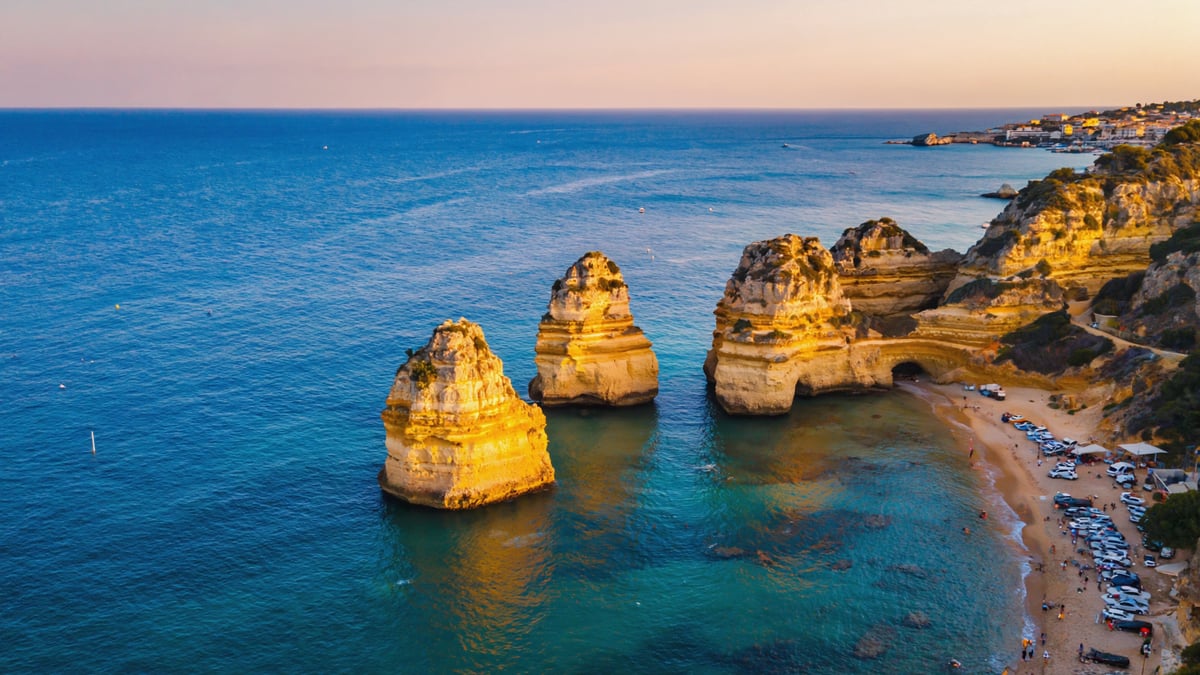
Hotel choice in both cities significantly affects the overall experience. The neighbourhood you stay in matters as much as the star rating.
Where to Stay in Dubrovnik
Staying inside the Old Town walls is the most atmospheric option and commands the highest prices. The number of hotel properties within the walls is limited, and they book quickly for peak season. Properties on the walls themselves (or with views of the walls) represent the premium tier and are genuinely special for a honeymoon or anniversary trip.
The Lapad peninsula, a fifteen-minute bus ride from the Old Town, offers a broader range of hotels at more accessible prices, including several properties with private beach access or pool facilities. This is the better base for families who want beach access without the premium of Old Town accommodation.
The Pile Gate area, just outside the western entrance to the Old Town, is the practical sweet spot for many UK visitors: walking distance to the walls and Stradun, less expensive than properties inside the gates, and well-connected to the rest of the city.
Where to Stay in Split
Staying inside or immediately adjacent to Diocletian's Palace is the most immersive experience Split offers. Several boutique hotels and apartments are located within the palace walls, some in rooms with Roman stonework as structural elements. The atmosphere of waking up inside a seventeen-hundred-year-old palace complex is genuinely singular.
The Varoš neighbourhood, on the hill immediately west of the palace, is Split's most characterful residential quarter: narrow streets, local cafés, and some of the city's best traditional restaurants. Staying here puts you five minutes' walk from the palace and surrounded by local life.
The Bacvice area, east of the palace near the beach of the same name, is the better choice for travellers prioritising beach access. The neighbourhood has a younger energy and is well-connected to the centre.
A YouTube Introduction to Both Cities
For a visual introduction to both destinations before you book, the video below gives a strong sense of what each city looks and feels like from the perspective of a traveller arriving for the first time.
Combining Both Cities: Is It Worth It?
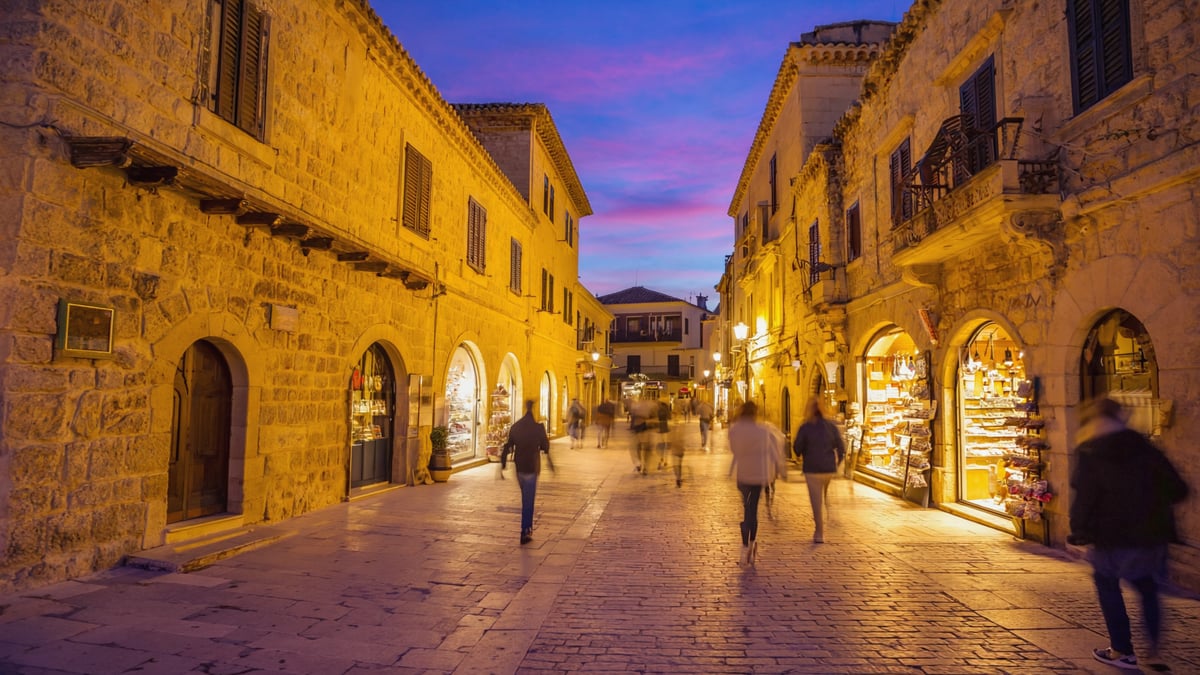
For UK travellers with a week or more to spend in Croatia, combining both cities is a legitimate and increasingly popular option. The two cities are connected by a coastal road that passes through Bosnia and Herzegovina (a brief border crossing) or by ferry via the Pelješac Bridge, which opened in 2022 and now allows drivers to travel the entire Croatian coast without leaving Croatian territory.
The driving distance between Split and Dubrovnik is approximately 230 kilometres, taking roughly three to four hours depending on the route and traffic. The bus service between the two cities is reliable and relatively affordable, with journey times of four to five hours. Flying between them is rarely practical given the airport locations and the short distances involved.
A logical combined itinerary might look like this: three nights in Split to explore the palace, Marjan Hill, and take a day trip to Hvar; three nights in Dubrovnik to walk the walls, visit Lokrum, and take an evening up to Mount Srđ. This combination allows UK travellers to experience both the authentic working-city character of Split and the theatrical grandeur of Dubrovnik without having to choose between them.
The practical consideration for package bookings is that flying into one city and out of the other (an "open jaw" routing) can actually save both time and internal travel costs. GlobeHunters can arrange open jaw Croatia packages, call 020 8944 4700 to discuss the options for your travel dates.
Practical Travel Information for UK Visitors
Currency and Payments
Croatia joined the Eurozone on 1 January 2023, replacing the kuna with the euro. UK travellers no longer need to exchange into an unfamiliar currency; euros are widely used across the UK travel economy and easily obtainable at competitive rates. Most hotels, restaurants, and shops in both cities accept card payments, but carrying some cash remains advisable for markets, smaller tavernas, and ferry tickets.
UK debit and credit cards work in Croatia without issue, though overseas transaction fees apply with many UK high street bank cards. A fee-free travel card (Starling, Monzo, Chase) is worth using to avoid unnecessary charges, particularly given that both cities have a high volume of small transactions across markets, ferries, and cafés.
Getting Around Each City
Both Dubrovnik's Old Town and Split's palace area are pedestrianised, making walking the primary mode of transport within the historic centres. In Dubrovnik, the local bus network connects the Old Town, Lapad, and Gruž port efficiently, and is worth using to avoid the steep taxi fares that apply to Old Town destinations. In Split, the tram and bus network covers the broader city, but the central palace area and most tourist attractions are within easy walking distance of each other.
Visa and Entry Requirements
Croatia is a member of the Schengen Area, which the UK left following Brexit. UK passport holders can visit Croatia and the wider Schengen zone for up to 90 days in any 180-day period without a visa. No ETIAS (European Travel Information and Authorisation System) pre-registration is currently required for UK visitors to Croatia, though the EU's ETIAS scheme is expected to launch in the future. Check the UK government's Croatia travel advice page for current entry requirements before booking.
Travel Insurance
Travel insurance is essential for any overseas holiday, and Croatia is no exception. Since Brexit, the European Health Insurance Card (EHIC) is no longer valid for UK travellers, and the UK Global Health Insurance Card (GHIC) provides only partial coverage in Croatia. Comprehensive travel insurance covering medical expenses, cancellation, and baggage is strongly recommended. Ensure your policy covers the activities you plan to undertake, including water sports or boat excursions if those are part of your itinerary.
Frequently Asked Questions: Dubrovnik vs Split for UK Travellers
Is Dubrovnik or Split cheaper for a UK city break?
Split is consistently cheaper across almost every spending category. Accommodation, dining, activities, and even ferry excursions to nearby islands cost less in Split than their equivalents in Dubrovnik. For budget-conscious UK travellers, Split delivers significantly better value without any meaningful sacrifice in heritage or scenic quality.
How far is Dubrovnik Airport from the Old Town?
Dubrovnik Airport is approximately 18 kilometres from the Old Town. The transfer takes 20–30 minutes by taxi or the airport shuttle bus, which is cheaper and drops passengers at Pile Gate, the main entrance to the Old Town. Journey times can extend during peak season due to traffic on the coastal road.
How far is Split Airport from the city centre?
Split Airport (Kaštela Airport) is approximately 25 kilometres from Diocletian's Palace. The transfer takes 30–40 minutes by taxi or shuttle bus. A local bus service also connects the airport to Split's main bus station, which sits adjacent to the ferry terminal, for a lower fare.
Can I visit Dubrovnik and Split in the same trip?
Yes, and many UK travellers do exactly this. The two cities are connected by bus (approximately 4–5 hours) or by car via the coastal road. Flying into Split and out of Dubrovnik (or vice versa) on an open jaw routing avoids backtracking and saves internal travel time. GlobeHunters can arrange open jaw Croatia packages, contact the team on 020 8944 4700 to discuss options.
What is the best time of year for a Croatia city break from the UK?
May, early June, and September offer the best combination of good weather, manageable crowds, and reasonable prices. July and August are peak season: sea temperatures are warmest but crowds and prices are at their highest. April and October are increasingly popular for UK travellers seeking lower costs and fewer visitors, with pleasant temperatures for sightseeing if not necessarily for swimming.
Do I need a visa to visit Croatia from the UK?
No. UK passport holders can visit Croatia visa-free for up to 90 days in any 180-day period under Schengen Area rules. No advance registration is currently required. Check the UK government's Croatia travel advice page for the most current entry requirements, as these can change.
Is Croatia safe for solo female travellers from the UK?
Both Split and Dubrovnik are considered safe destinations for solo travellers including women travelling alone. Croatia has low levels of violent crime, and both cities have active street life and well-lit public areas throughout the evening. Standard travel precautions apply, particularly around bag security in crowded Old Town areas.
What are the best day trips from Split?
Split offers exceptional day trip options. The most popular include Hvar island (catamaran, approximately one hour each way), Krka National Park with its famous waterfalls (approximately one hour by organised tour bus), Brač island and Zlatni Rat beach (ferry, approximately one hour), and the Blue Cave on Biševo island (organised boat tour, half day). Korčula island, with its medieval walled town, is a longer but rewarding day trip.
What are the best day trips from Dubrovnik?
The Elafiti Islands (Šipan, Lopud, and Koločep) are the most accessible day trip from Dubrovnik and provide a quieter, more traditional Dalmatian experience. Lokrum Island is a short ferry ride from the Old Harbour and offers beaches, a monastery, and peacocks wandering freely. Montenegro's Bay of Kotor is reachable in approximately two hours by organised tour and is a popular longer day trip for those wanting to see a different Adriatic coastline.
How many nights should I spend in Dubrovnik or Split?
Three to four nights is the standard recommendation for either city as a standalone city break. This allows enough time to explore the main heritage sites, take one or two day trips, and settle into the local pace without rushing. Travellers combining both cities typically spend three nights in each. If you are using either city purely as a base for island hopping, a longer stay of five to seven nights makes sense.
Are there good package holidays to Croatia from the UK?
Yes. Several UK operators offer Croatia package holidays, with GlobeHunters providing city break packages starting from £349 per person combining flights and accommodation. Packages booked through a UK operator carry legal protection under the Package Travel and Linked Travel Arrangements Regulations 2018, which means you are entitled to a full refund or alternative arrangements if your trip is cancelled or significantly changed. Browse current availability on GlobeHunters or call 020 8944 4700.
Is the food in Croatia suitable for vegetarians?
Croatian cuisine is heavily seafood and meat-focused, and traditional Dalmatian menus reflect this. However, both Dubrovnik and Split have a growing number of restaurants with strong vegetarian options, and the market culture means fresh produce is widely available. Pastas, salads, grilled vegetables with olive oil, and cheese dishes are standard alternatives. Split, being a larger city with a younger population, has more dedicated vegetarian-friendly restaurants than Dubrovnik.
Key Takeaways: Making Your Croatia City Break Decision
- Dubrovnik is the right choice for first-time visitors to Croatia, honeymooners, and travellers who want an iconic, self-contained historic experience and are happy to pay the premium it commands.
- Split is the right choice for travellers wanting better value, authentic local culture, excellent island access, and a city that functions as a genuine base for wider Dalmatian exploration.
- Shoulder season travel (May, early June, September) transforms the experience in both cities: lower prices, manageable crowds, and ideal sightseeing conditions.
- Combining both cities on an open jaw flight routing is a practical and rewarding option for UK travellers with a week or more to spend in Croatia.
- Booking a package holiday through a UK operator provides legal protection under UK package travel regulations, often better combined pricing, and a single point of contact for any travel disruption.
- GlobeHunters Croatia city break packages start from £349 per person, covering both Dubrovnik and Split options with flights and accommodation included.
- Call 020 8944 4700 or visit holidays.globehunters.com/europe/croatia to check current availability and pricing for your dates.
About the author
Spiros Maragkoudakis · Chief Commercial Officer
Ready to Book Your Dubrovnik Holiday?
Our travel experts are ready to help you plan the perfect trip. Call us today or browse our latest deals.
Ready to Start Planning?
Speak to our travel experts for personalised advice and the best deals on your next holiday.
Call 020 8944 4700