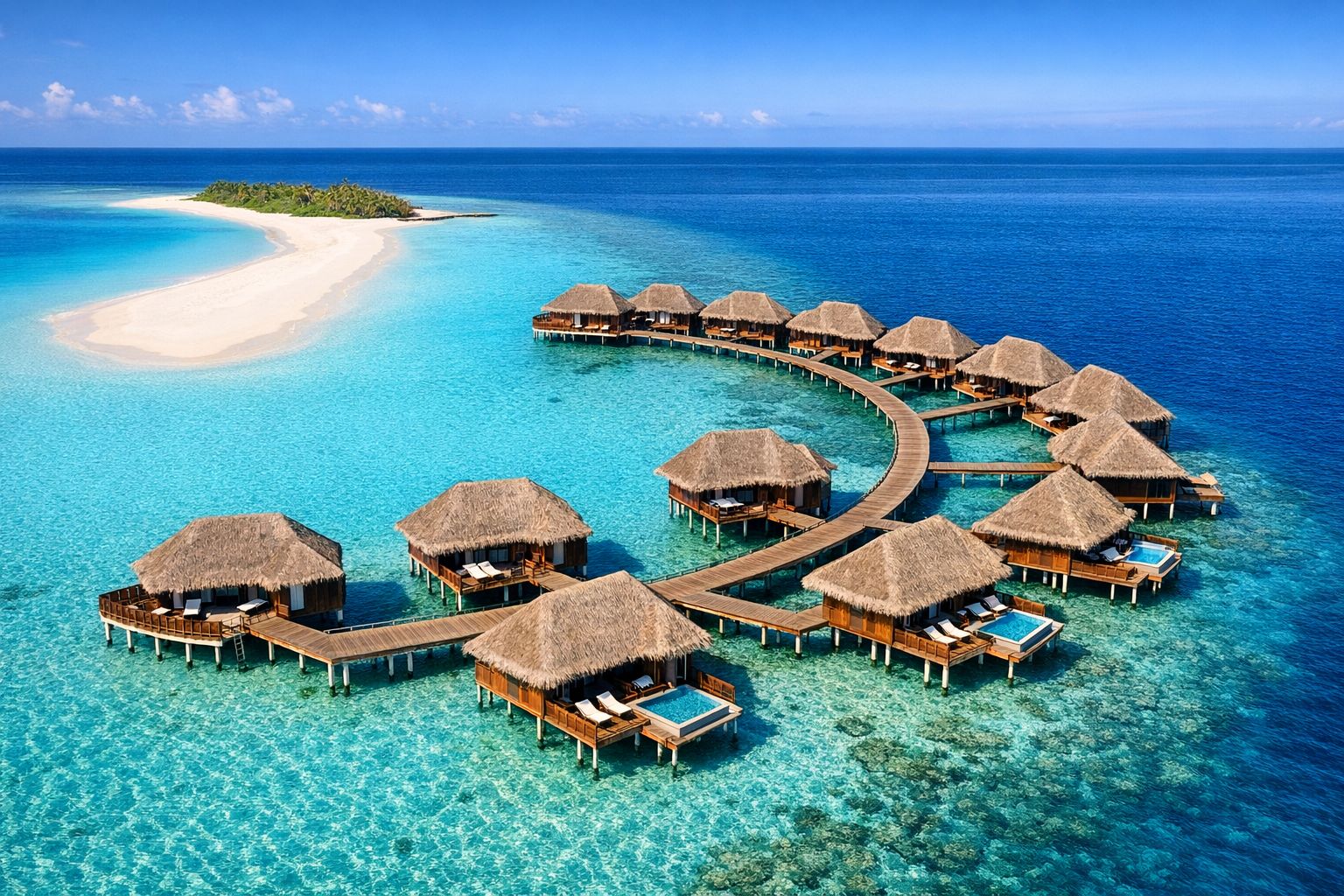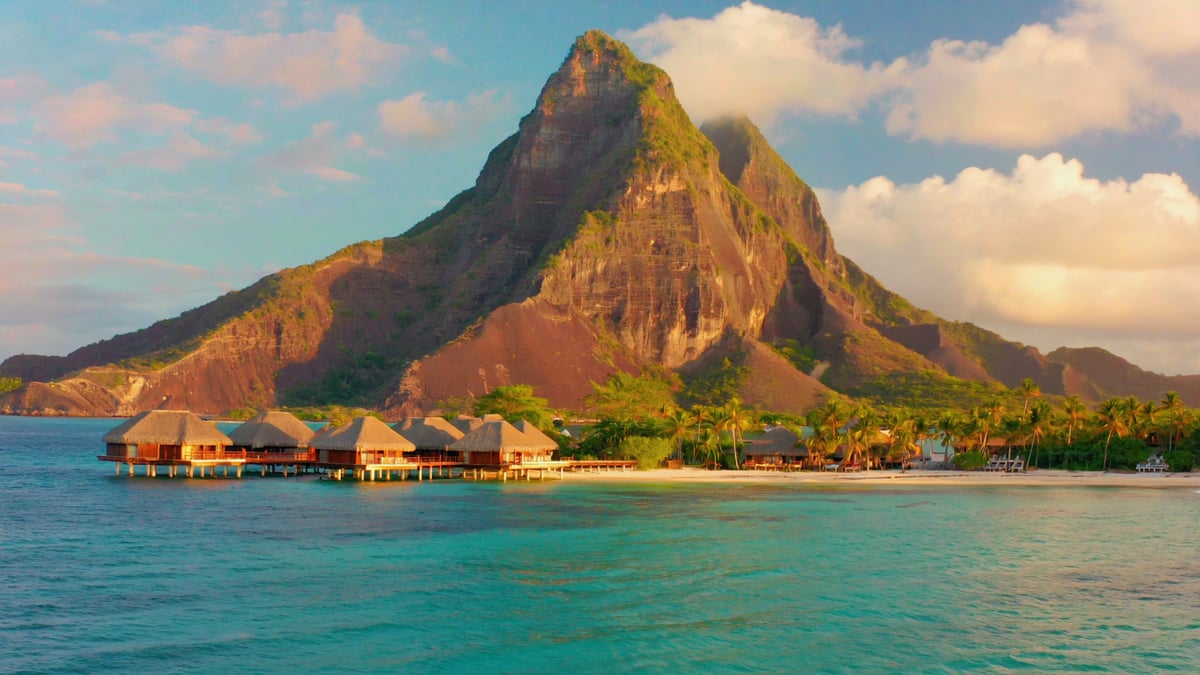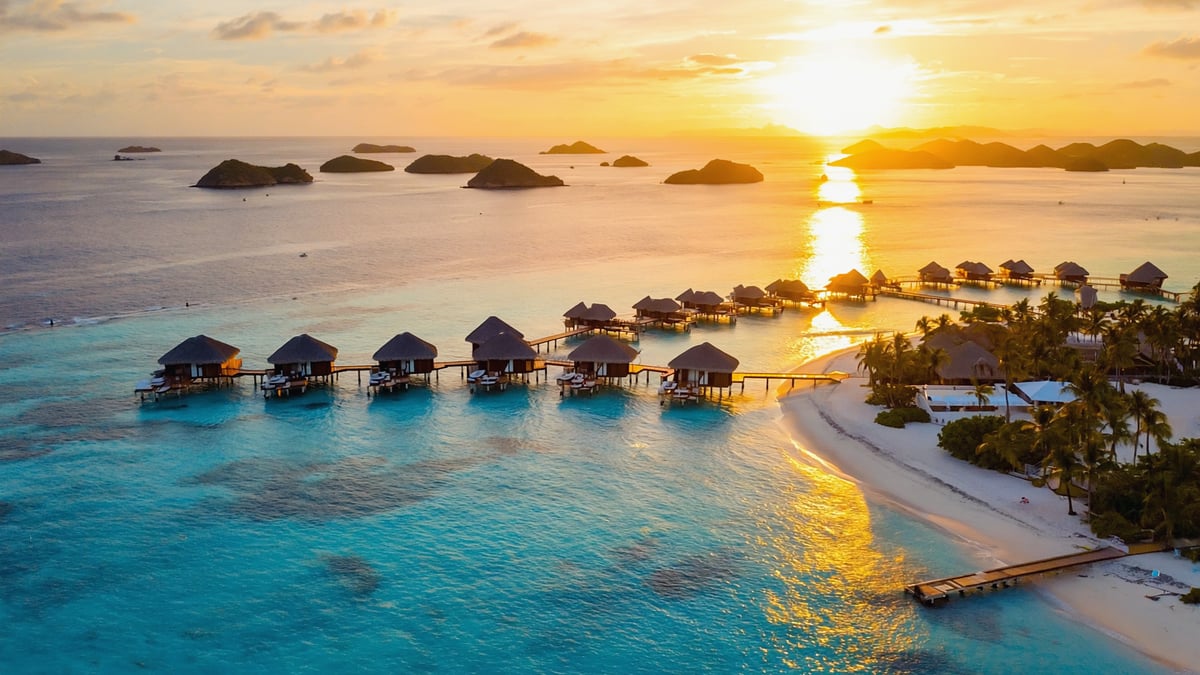
Picture this: you've just booked two weeks off work, your passport is valid, and your partner is sitting across the table with a laptop open on two tabs. One shows a stilted overwater bungalow rising from an impossibly turquoise lagoon in the South Pacific. The other shows a near-identical image, except the water is a slightly different shade of blue and there's a volcano in the background. Both cost more than your first car. Neither is obviously wrong. And you have absolutely no idea which one to book.
This is the Maldives vs Bora Bora UK dilemma, and it plays out in living rooms across Britain every single day. Both destinations are genuinely spectacular. Both deliver the fantasy. But they are not the same holiday, they do not suit the same traveller, and the gap between them in terms of cost, effort, and experience is wider than most comparison articles let on. This guide exists to close that gap honestly.
Over the next five thousand words, this article pulls apart every meaningful difference between the Maldives and Bora Bora from the perspective of a UK traveller: the flights, the costs, the resort experience, the food, the marine life, the weather, the best time to visit, and the one question that actually matters most. By the end, you won't need another tab. You'll know which one is yours.
Why UK Travellers Keep Getting Stuck Between These Two Destinations
The Maldives and Bora Bora occupy a very specific slot in the collective imagination: they are the destinations people save up for, the ones mentioned in the same breath as honeymoon, milestone anniversaries, and bucket lists. That shared status creates a false equivalence. The two are marketed almost identically, with near-identical imagery and near-identical price points at the top end, which makes choosing between them feel arbitrary. It isn't.
The Maldives is an archipelago nation in the Indian Ocean, sitting roughly 700 kilometres southwest of Sri Lanka. It comprises 26 natural atolls containing over 1,000 coral islands, of which around 200 are inhabited. The country's entire tourism model is built on private island resorts, and many of the world's most iconic overwater bungalows sit here. The Maldives is roughly a 10.5-hour direct flight from London Heathrow, making it genuinely accessible from the UK without a stopover.
Bora Bora is a single island in French Polynesia, in the South Pacific Ocean, located about 230 kilometres northwest of Tahiti. It is famous for its central dormant volcano, Mount Otemanu, and for the shallow turquoise lagoon that surrounds it. Getting there from the UK involves at minimum one stop (typically Los Angeles or Paris), and the total door-to-door journey from most UK cities runs between 20 and 28 hours. That difference alone eliminates Bora Bora for a meaningful number of UK travellers.
For those who aren't eliminated by the journey time, the real comparison begins. And it's a genuinely interesting one.
Flights and Getting There: The Honest Numbers for UK Travellers
Flight logistics are the first filter in this decision, and they matter more than most travel articles acknowledge. The best overwater bungalow holiday UK travellers can realistically take depends heavily on how much of your holiday you're willing to spend in transit.
Flying to the Maldives from the UK
British Airways, Virgin Atlantic, and several other carriers offer direct flights from London Heathrow to Malé (Velana International Airport), the Maldives' main hub. Flight time is approximately 10 to 11 hours. Emirates, Qatar Airways, and Etihad also operate frequent routes via their respective hubs (Dubai, Doha, and Abu Dhabi), which adds roughly 2 to 4 hours in total travel time but often comes at a lower fare.
Return flights from London to Malé typically range from around £500 to £900 in economy, rising significantly in business class. Once you land in Malé, reaching your resort is a separate journey: either a speedboat transfer (typically 20 to 90 minutes, depending on location) or a domestic seaplane flight (15 to 45 minutes of absolutely breathtaking travel). Seaplane transfers are often included in resort packages or sold as an add-on, and the cost and availability of seaplanes is worth factoring into your budget from the outset. Seaplanes only operate during daylight hours, which means late-arriving international flights can require an overnight stay in Malé before continuing to your resort.
Flying to Bora Bora from the UK
There are no direct flights from the UK to Bora Bora. The most common routing goes via Los Angeles (with Air Tahiti Nui or Air France connecting through Paris to Papeete, then a 50-minute domestic Air Tahiti flight to Bora Bora). The Paris-Papeete route operated by Air France and Air Tahiti Nui takes approximately 17 hours, and from Papeete's Faa'a International Airport you still need the short inter-island hop to Bora Bora. Total journey time from London is typically 22 to 26 hours, depending on layover durations.
Return flights from London to Bora Bora range from approximately £1,200 to £2,200 in economy, and the multi-leg nature of the journey means more potential for disruption. Business class fares are substantially higher. For UK couples planning a two-week honeymoon, the flight cost differential between the two destinations can easily run to £600 to £800 per person before a single night's accommodation is considered.
| Factor | Maldives | Bora Bora |
|---|---|---|
| Direct flights from UK? | ✅ Yes (Heathrow to Malé) | ❌ No (minimum 1 stop) |
| Total travel time from London | 11–16 hours (inc. transfers) | 22–28 hours |
| Economy return flights (approx.) | £500–£900 pp | £1,200–£2,200 pp |
| Onward transfer to resort | Speedboat or seaplane (may add cost) | Short boat or water taxi |
| Visa required for UK nationals? | ✅ Free on arrival (30 days) | ✅ No visa (French territory, EU rules do not apply post-Brexit, UK nationals enter as tourists) |
| Time zone difference from UK (GMT) | +5 hours | -10 hours |
The time zone difference deserves particular attention. The Maldives runs five hours ahead of GMT, meaning your body clock adjusts relatively smoothly. Bora Bora sits ten hours behind GMT, which means arriving in the South Pacific during UK morning hours and dealing with meaningful jet lag for the first two or three days of what may be a very expensive holiday.
The Overwater Bungalow Experience: Which Is Actually Better?
This is the central question for most UK couples and honeymooners, and the answer depends entirely on what you want from your overwater paradise holiday. Both destinations offer exceptional overwater accommodation, but the philosophy behind the experience is different.
Overwater Villas in the Maldives
The Maldives essentially invented the modern overwater bungalow concept, and it remains the global benchmark. Maldivian overwater villas are typically built over shallow, gin-clear lagoons where the water visibility extends several metres straight down. Many villas include glass floor panels so you can watch fish and reef life from your living room. Private sun decks with direct ladder access to the lagoon are standard at mid-range and above. At the top end, expect infinity pools cantilevered over the water, outdoor bathtubs, butler service, and sunset-facing positioning by design.
The scale of choice in the Maldives is unmatched anywhere in the world. There are currently over 160 resort islands operating in the Maldives, spanning everything from genuinely attainable mid-range properties to some of the most expensive hotel rooms on earth. This means UK travellers can find a genuinely spectacular overwater bungalow experience at a range of price points, from approximately £350 to £600 per night at solid four-star properties, to upwards of £2,000 per night at ultra-luxury resorts. The sheer variety also means the market is competitive, which keeps quality high.
One important characteristic of Maldives resorts: because each property occupies its own private island, you are largely confined to that island for the duration of your stay. There are no villages to wander, no local markets to browse, and no other resorts accessible on foot. The resort is the destination. This suits some travellers perfectly and drives others quietly mad by day four.
Overwater Bungalows in Bora Bora
Bora Bora's overwater bungalows are built over a single large lagoon that encircles the main island, and the visual drama here is genuinely different from the Maldives. The presence of Mount Otemanu rising 727 metres above the water creates a backdrop that no Maldivian resort can replicate. Sunsets over the lagoon with the mountain silhouetted behind them are among the most photographed scenes in travel photography, and they are just as extraordinary in real life.
The range of overwater accommodation in Bora Bora is narrower than in the Maldives. There are fewer than fifteen major resort properties on the island, dominated by internationally recognised brands including Four Seasons, St Regis, Conrad, InterContinental, and Le Méridien. This concentration means less competition and generally higher average prices. Expect to pay from approximately £500 to £900 per night for a mid-range overwater bungalow, with the Four Seasons and St Regis pushing substantially higher.
Unlike the Maldives, Bora Bora has a real local community. The main island has a small town (Vaitape) with local restaurants, shops, and a cultural life. You can hire a bicycle, take a 4WD tour around the island's circumference road, and interact with French Polynesian culture in a way that the private-island model of the Maldives simply doesn't allow. For travellers who find total resort isolation claustrophobic, this is a significant advantage.
| Feature | Maldives | Bora Bora |
|---|---|---|
| Number of overwater resort options | 100+ properties with OWB | ~10–12 major resorts |
| Overwater villa entry price (per night) | From ~£350 | From ~£500 |
| Signature visual backdrop | Endless flat turquoise ocean | Mount Otemanu + lagoon |
| Access to local culture | ❌ Very limited (private island model) | ✅ Yes (Vaitape town, island tours) |
| Glass floor panels | ✅ Common feature | ⚠️ Less common, varies by resort |
| Snorkelling directly from villa | ✅ Excellent at many resorts | ⚠️ Good, but varies by location in lagoon |
| Exploring beyond the resort | ❌ Not possible without boat transfer | ✅ Easy (island circumference road, water taxis) |
Marine Life and Water Activities: Where Does Each Destination Win?
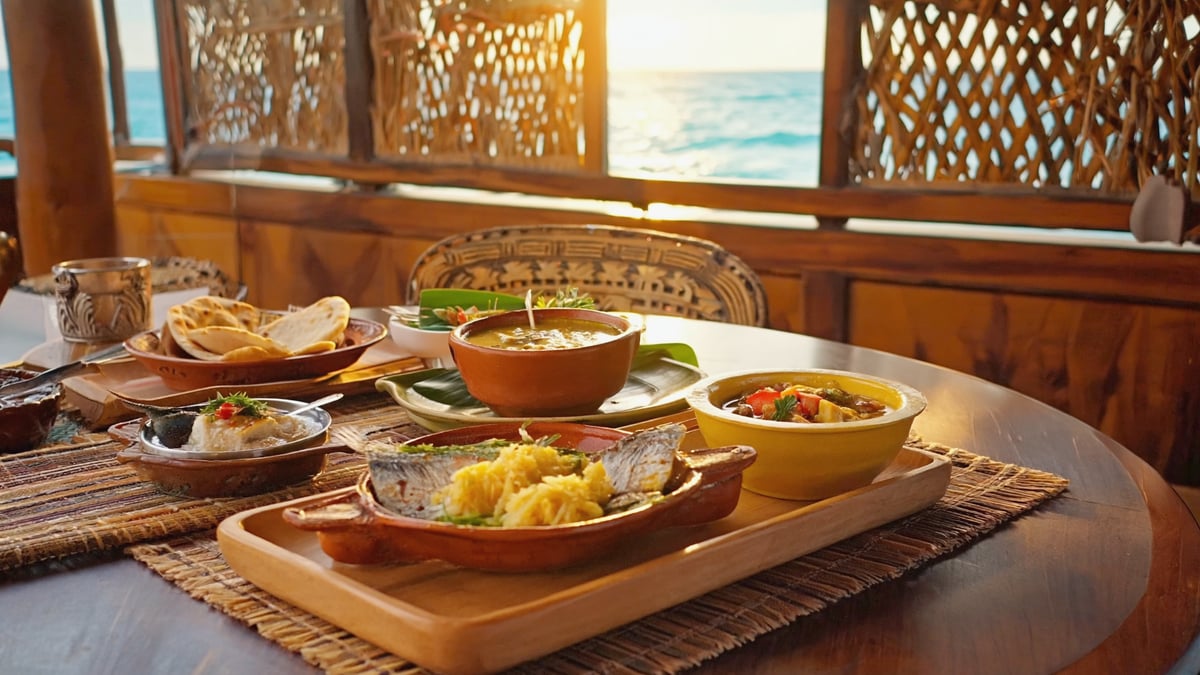
Both destinations are world-class for marine experiences, but they excel in different areas. The Maldives has a strong advantage for serious divers and snorkellers, while Bora Bora offers a more varied menu of water activities in a single, accessible lagoon.
Diving and Snorkelling in the Maldives
The Maldives sits at the intersection of two major ocean currents, which creates extraordinary biodiversity. Whale sharks (the world's largest fish) are present throughout much of the year, particularly around South Ari Atoll and the North Male Atoll. Manta rays gather seasonally in large aggregations. Hammerhead sharks, nurse sharks, grey reef sharks, and leopard sharks are regular sights at dive sites across the archipelago. The diversity of Maldivian dive sites is genuinely unmatched in the Indian Ocean region.
Even from the surface, the Maldives delivers. The house reefs attached to many resort islands are thriving ecosystems that guests can access directly from the beach or their overwater villa deck. Visibility is typically 20 to 30 metres, water temperature sits between 26 and 30°C year-round, and the absence of strong currents at most snorkelling spots makes it accessible for all levels. Beginners and experienced divers alike find the Maldives deeply satisfying.
Marine Experiences in Bora Bora
Bora Bora's lagoon is shallower and calmer than open-ocean Maldivian dive sites, which makes it better suited to certain activities. Shark and ray feeding excursions in the lagoon are a signature Bora Bora experience: snorkellers can wade in shallow water alongside dozens of blacktip reef sharks and stingrays in conditions that feel entirely safe and controlled. The coral gardens on the outer barrier reef are beautiful, though coral health has faced pressures in recent decades.
For non-divers, Bora Bora's lagoon is arguably more entertaining than the Maldives. Jet skiing, parasailing, outrigger canoe tours, and glass-bottom boat excursions all operate from the main resorts. The geography of a single contained lagoon means that every activity takes place with that extraordinary mountain backdrop, which adds a visual dimension that open-ocean snorkelling in the Maldives cannot match. For scuba divers specifically, though, the Maldives wins decisively on species diversity and open-ocean encounters.
Food, Drink, and Dining: What to Expect at Each Destination
Food is a more meaningful part of the holiday experience than most overwater bungalow marketing suggests. Both destinations require some planning around dining, and the dynamics are quite different.
Eating and Drinking in the Maldives
The Maldives is a Muslim-majority nation, and this shapes the food and drink environment in important ways. Alcohol is only available at licensed resort islands and on liveaboard dive vessels; it is strictly prohibited on local inhabited islands. For travellers staying at private resort islands (the vast majority of UK visitors), this presents no practical restriction, but the pricing reflects the import costs and licensing environment. A standard cocktail at a Maldivian resort typically costs between £12 and £20. A bottle of wine at dinner ranges from £35 to £80 at mid-range resorts.
Because each resort island is a self-contained operation with no external competition, food prices at Maldivian resorts are consistently high. Most resorts offer all-inclusive or half-board packages, which represent significantly better value than paying à la carte. Full-board or all-inclusive rates effectively flatten the daily spend and remove the anxiety of watching the bill accumulate at dinner. For UK travellers planning a Maldives trip, upgrading to all-inclusive at the booking stage almost always makes financial sense.
The cuisine itself is predominantly international, with most resorts running multiple restaurants covering Asian, Mediterranean, and Western menus. Authentic Maldivian food (built around tuna, coconut, and rice) is available at some resorts but is rarely the headline offering. Guests who want genuine local culinary experiences can take day trips to inhabited islands or to Malé.
Eating and Drinking in Bora Bora
French Polynesia carries a strong French culinary influence, and the food in Bora Bora reflects this. French wines, fresh baguettes, Polynesian-French fusion dishes (poisson cru, which is raw fish marinated in lime and coconut milk, is the local staple), and competent European cooking are all present across the main resorts. The food quality at Bora Bora's top resorts is generally considered slightly superior to equivalent-category Maldivian resorts, partly because of the French culinary tradition and partly because supply chains from Tahiti (and France itself) are more developed.
Alcohol is freely available throughout Bora Bora with no religious or cultural restrictions. Prices are still high by UK standards (this is a remote island in the South Pacific, and most goods are imported), but not at the same premium level as the Maldives. Dining outside your resort is possible: water taxis can take you to restaurants on the main island, and Vaitape has a small selection of local eateries that offer a significant cost reduction compared to resort dining.
Weather and Best Time to Visit from the UK

Timing your holiday correctly is critical for both destinations, and the optimal windows are different. Maldives or Bora Bora from UK in peak season can represent a significant premium over shoulder-season travel, but the weather risk in the wrong month is real.
Maldives Weather Patterns
The Maldives has two primary seasons: the dry season (northeast monsoon, roughly November to April) and the wet season (southwest monsoon, roughly May to October). The dry season delivers the postcard conditions: calm seas, minimal rainfall, clear skies, and optimal visibility for diving. This period aligns well with the UK winter escape instinct, and December through March is peak booking season, with prices reflecting demand accordingly.
The wet season is not as bad as the name implies. Rain typically comes in short, intense showers rather than days-long downpours, and many UK travellers book in May, June, or October and report excellent conditions. The wet season offers meaningfully lower rates and fewer crowds. The key risk is that some northern atolls experience rougher seas between June and August, which can affect seaplane operations and the appeal of certain watersports.
Bora Bora Weather Patterns
Bora Bora's dry season runs from May to October, aligning with the South Pacific winter. This is the best period for clear skies, calmer seas, and comfortable temperatures in the low-to-mid 20s Celsius. November through April is the wet season, bringing higher temperatures (hitting the low 30s), increased rainfall, and the possibility of cyclone activity, though Bora Bora sits south of the primary cyclone belt and direct strikes are historically rare.
For UK travellers considering a summer holiday, Bora Bora's dry season (May to October) represents an excellent match, whereas the Maldives is technically in its wetter period during those months. For winter sun seekers (the most common UK motivation for either destination), the Maldives is the stronger choice: its December-to-March peak is precisely the period when UK winters are at their most punishing.
| Month | Maldives Conditions | Bora Bora Conditions | UK Travel Mood |
|---|---|---|---|
| December–February | ✅ Peak dry season, ideal | ⚠️ Warm but wetter | Winter sun escape |
| March–April | ✅ Excellent, shoulder season | ⚠️ Late wet season | Spring break / Easter |
| May–June | ⚠️ Transition, some rain | ✅ Dry season begins | Early summer holiday |
| July–August | ⚠️ Wetter in northern atolls | ✅ Peak dry season | School summer holidays |
| September–October | ⚠️ Late wet season, good deals | ✅ Good, drying out | Autumn escape |
| November | ✅ Dry season starts, good value | ⚠️ Wet season begins | Pre-Christmas escape |
Total Holiday Cost: A Realistic Budget Comparison for UK Travellers
Raw nightly rates tell only part of the cost story. A luxury island holiday comparison that focuses only on accommodation pricing misses several significant expenditure categories that affect the total cost of each trip. This section builds a realistic two-week budget for each destination for a UK couple.
The True Cost of a Maldives Holiday from the UK
The Maldives has a deserved reputation for expense, but the range of options is wider than many UK travellers realise. At the accessible end of the market, solid four-star overwater villa resorts are available for £350 to £500 per villa per night on a half-board basis. At this price point, a couple spending 10 nights on a resort island (with two nights in Malé at the start or end) can achieve a genuinely excellent experience. Here's what a realistic mid-range Maldives holiday costs for two people flying from London:
- Return flights (economy, via hub): £1,200–£1,600 total (£600–£800 pp)
- Accommodation (10 nights overwater villa, half-board): £4,500–£7,000 total
- Seaplane or speedboat transfers: £200–£600 total
- Drinks and extras on resort: £600–£1,200 total
- Diving or excursions: £300–£800 total
- Total estimated spend for two: £6,800–£11,200
GlobeHunters packages Maldives holidays starting from around £1,999 per person, with all-inclusive options available that significantly reduce the on-resort extras bill. For couples considering an all-inclusive upgrade, the total spend becomes more predictable and often better value than self-managing à la carte costs. You can explore current Maldives holiday packages from GlobeHunters to see live pricing that includes flights and accommodation in a single booking.
The True Cost of a Bora Bora Holiday from the UK
Bora Bora is almost universally more expensive than the Maldives for UK travellers once total trip costs are accounted for. The combination of higher flights, fewer resort options at the mid-range, and the generally elevated pricing of French Polynesia means that Bora Bora is genuinely positioned as an ultra-luxury destination rather than a stretched-budget one. Here's a realistic two-week budget for two people:
- Return flights (economy, via LA or Paris): £2,800–£4,400 total (£1,400–£2,200 pp)
- Accommodation (10 nights overwater bungalow, half-board): £7,000–£16,000 total
- Inter-island transfers and water taxis: £200–£400 total
- Drinks and extras: £500–£1,000 total
- Excursions and activities: £400–£1,000 total
- Total estimated spend for two: £10,900–£22,800
The upper end of that Bora Bora range reflects peak-season stays at properties like the Four Seasons or St Regis, where overwater bungalow rates can exceed £1,200 per night. Even at the lower end, Bora Bora comfortably exceeds the Maldives equivalent by £3,000 to £5,000 for a comparable two-week trip, largely driven by the flight cost differential.
Honeymoon Suitability: Which Destination Wins for Romance?
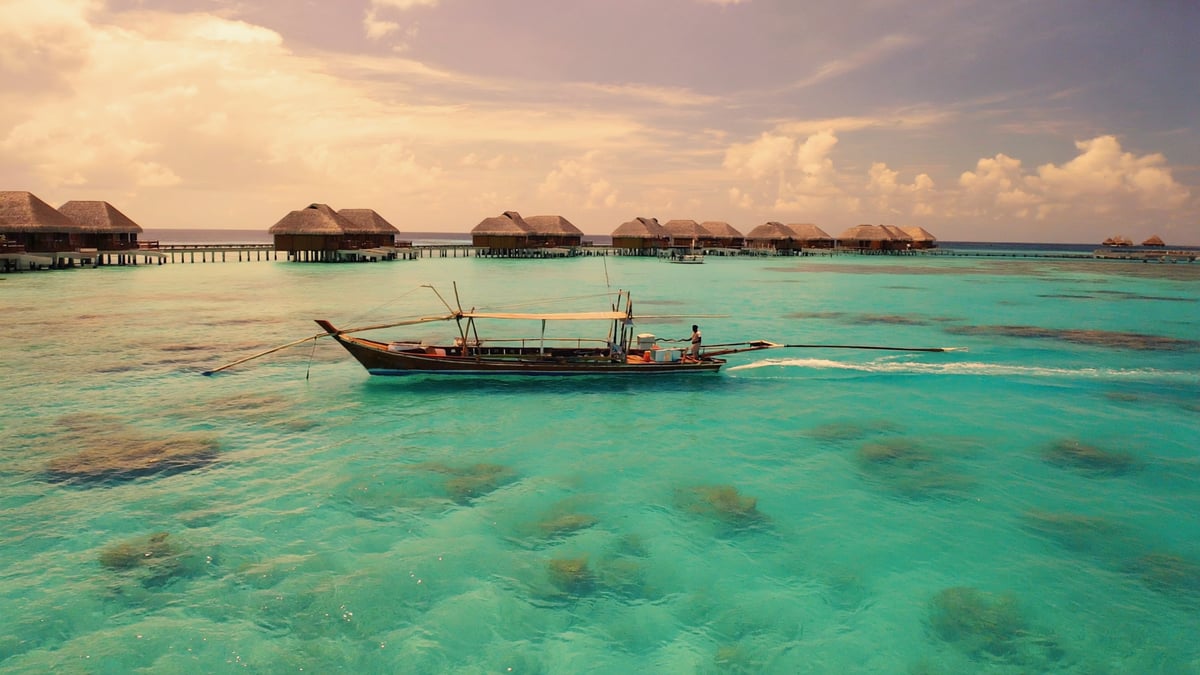
Both destinations are ranked among the world's most romantic, and both have genuine claims on the honeymoon market. The question of which is better for a UK honeymoon depends on what the couple prioritises.
The Maldives wins on pure romantic isolation. The private island model means you are genuinely cut off from the outside world. Sunrises over a flat, glittering ocean with no other structures visible in any direction are a genuinely powerful experience. The intimacy of a water villa where the sea is directly below you, and the only sounds are waves and birdsong, creates a quality of stillness that is difficult to find elsewhere. Many Maldivian resorts offer romance-specific packages including private beach dinners, sunset dolphin cruises, couples spa treatments, and overwater hammock setups.
Bora Bora wins on visual drama and variety. The mountain backdrop, the ability to explore the island, and the French Polynesian cultural richness create a more multidimensional romantic experience. Couples who would find two weeks of total resort isolation slightly suffocating often report that Bora Bora feels more like an adventure and less like a gilded cage. The French culinary tradition also elevates the dining experience in a way that matters for a honeymoon.
For a UK honeymoon on a total budget of £10,000 to £14,000 for two, the Maldives delivers a more luxurious overwater experience for the money. For couples where budget is not the primary constraint and who want something that feels more like an expedition than a resort stay, Bora Bora is worth the premium.
Activities Beyond the Bungalow: Is There Enough to Do for Two Weeks?
This is a question that doesn't appear in many comparison articles but is critical for travellers considering stays longer than seven nights. The honest answer is that both destinations have a ceiling on activities, but that ceiling is different in character.
Activity Depth in the Maldives
A well-chosen Maldivian resort with a good house reef and a full water sports centre can easily fill 10 to 14 days without repetition. The activity menu typically includes snorkelling, scuba diving (multiple sites accessible by boat), stand-up paddleboarding, kayaking, windsurfing, catamaran sailing, dolphin sunset cruises, big-game fishing, and submarine or glass-bottom boat excursions. Spa programmes at luxury resorts are extensive and represent a genuine activity in themselves.
Beyond water activities, the options are limited by the private island geography. There is no hiking, no cultural sightseeing, no local market browsing, and no capacity to simply wander. For travellers who find total inactivity restorative, this is a feature. For those who become restless without varied stimulation, a 14-night Maldives stay can feel long by the end.
Activity Depth in Bora Bora
Bora Bora's activity offering is broader in category if not necessarily in depth. The shark and ray snorkelling excursions, the 4WD island circumference tours, the pearl farm visits, the outrigger canoe experiences, and the hiking options around Mount Otemanu's lower slopes all add genuine variety that the Maldives cannot match. The ability to take a water taxi to the main island and spend an afternoon browsing the Vaitape waterfront or eating at a local restaurant is a meaningful quality-of-life advantage for longer stays.
For UK travellers considering a two-week holiday, Bora Bora's variety sustains interest more naturally. The Maldives is better suited to 7-to-10-night trips where the focus is pure relaxation rather than varied experience.
Overwater Paradise Holiday Deals: What GlobeHunters Offers UK Travellers
Booking a luxury island holiday through a specialist UK travel agency like GlobeHunters offers several practical advantages over booking flights and accommodation separately. Package holiday protection under the Package Travel and Linked Travel Arrangements Regulations 2018 means that UK travellers booking a combined flight and hotel package have ATOL protection and are entitled to full refunds or alternative arrangements if a component fails. This protection does not apply to separately booked flights and hotels.
GlobeHunters has been operating since 2003 and sources accommodation through Hotelbeds, flights through Duffel, and activities through Viator, which means real-time pricing across a wide range of properties and carriers. For Maldives packages, GlobeHunters offers options starting from around £1,999 per person, including return flights and overwater accommodation. For honeymooners or couples seeking a complete luxury island holiday comparison before booking, the platform allows direct price comparison across multiple resorts and travel dates.
To speak directly with a travel adviser about either destination, GlobeHunters can be reached on 0208 944 4514. For those who prefer to browse independently, the GlobeHunters holiday platform features live pricing with the option to customise room types, board basis, and activity add-ons.
The Honest Verdict: Which Destination Should UK Travellers Choose?
After weighing every meaningful variable, a clear recommendation emerges for most UK traveller profiles. Here it is without equivocation.
Choose the Maldives if: you are travelling primarily for the overwater bungalow experience, you want the best value for money among luxury island destinations, you are escaping a UK winter (November to April), you have 7 to 12 nights available, you are a diver or keen snorkeller, you prefer total romantic seclusion, or your total budget for two is under £12,000. The Maldives is the more accessible, more competitively priced, and more practically achievable overwater paradise for UK travellers at almost every budget level. The direct flight option alone removes a full day of travel stress and makes the Maldives the rational default choice for the vast majority of UK couples and honeymooners.
Choose Bora Bora if: budget is genuinely secondary, you want a destination that feels like an adventure as well as a retreat, the French Polynesian landscape and culture matter to you, you are travelling in the UK summer (May to September), you want to combine your overwater bungalow with island exploration, or this is a once-in-a-lifetime trip where you want the most dramatic visual setting available anywhere on earth. Bora Bora is a more complete destination than the Maldives, but it demands a higher investment of money and travel time that only makes sense when those constraints are genuinely removed.
Consider both if: you are planning a combined trip. Some UK travellers combine a Maldives stay with a few nights in Sri Lanka or Thailand on the outward or return leg, creating a more varied itinerary. A Bora Bora trip can similarly be combined with a few days in Tahiti or the Cook Islands. These multi-destination itineraries require more planning but can make the long-haul investment in Bora Bora feel more justified.
Frequently Asked Questions: Maldives vs Bora Bora for UK Travellers
Is the Maldives or Bora Bora better value for UK travellers?
The Maldives is substantially better value for most UK travellers. Flights are shorter and cheaper, the overwater accommodation market is larger and more competitive, and all-inclusive options make budgeting more predictable. A comparable quality overwater bungalow experience typically costs £3,000 to £6,000 less in the Maldives than in Bora Bora when total trip costs for two are compared.
Do UK citizens need a visa for the Maldives or Bora Bora?
UK passport holders receive a free 30-day visa on arrival in the Maldives, with no application required in advance. Bora Bora is an overseas collectivity of France (French Polynesia), and UK nationals can enter as tourists for up to 90 days without a visa. Post-Brexit, UK nationals are treated as non-EU visitors but still have visa-free access for short tourist stays.
How long is the flight from the UK to the Maldives?
Direct flights from London Heathrow to Malé take approximately 10 to 11 hours. Via-hub connections (Dubai, Doha, Abu Dhabi) add 2 to 4 hours. Once in Malé, reaching your resort requires a further speedboat transfer (20 to 90 minutes) or a domestic seaplane flight (15 to 45 minutes).
How long does it take to fly from the UK to Bora Bora?
There are no direct flights from the UK to Bora Bora. The fastest routing via Los Angeles (connecting to Air Tahiti Nui to Papeete, then a 50-minute domestic flight to Bora Bora) takes approximately 22 to 25 hours door-to-door from London. Via Paris, the journey is similar. Budget for a full day of travel each way.
What is the best time of year for a UK traveller to visit the Maldives?
November through April is the Maldives dry season and represents the best conditions, aligning neatly with the UK desire to escape winter. December and January are peak season, with the highest prices. March and April offer excellent weather with slightly lower rates. May and October are good shoulder-season options for budget-conscious travellers willing to accept some rainfall risk.
What is the best time to visit Bora Bora from the UK?
May through October is Bora Bora's dry season and the recommended period for UK visitors. July and August align with UK school summer holidays, making them popular but expensive. Shoulder season (May–June and September–October) offers excellent conditions at lower rates. Avoid December through February if you are sensitive to rain and heat.
Are overwater bungalows in the Maldives worth the cost?
For most travellers who make the journey, yes. The combination of direct ocean access, the visual experience of living above water, and the sense of privacy and immersion in nature is difficult to replicate in any other accommodation format. The key is choosing the right resort for your budget, as quality varies significantly across the 100+ properties offering overwater villas.
Can families with children go to the Maldives or Bora Bora?
Both destinations accept families, though some ultra-luxury resorts in the Maldives enforce adult-only policies. Many Maldivian resorts are genuinely family-friendly with children's clubs, shallow snorkelling areas, and family villa configurations. Bora Bora is generally more relaxed about families, with the local island providing additional space and activities. Both destinations are better suited to older children (10+) who can participate in water activities; very young children may find the isolation of a private island resort challenging.
Is all-inclusive available in the Maldives?
Yes, and it is strongly recommended. All-inclusive packages are offered at most mid-range and luxury Maldivian resorts and represent significantly better value than à la carte pricing given the high cost of drinks and extras on private island resorts. When booking through a UK agency like GlobeHunters, all-inclusive upgrades can often be added at the package stage.
Which destination has better coral reefs, the Maldives or Bora Bora?
The Maldives has more extensive and diverse coral ecosystems, benefiting from the intersection of two ocean currents that support exceptional marine biodiversity. Bora Bora's outer barrier reef is beautiful but has experienced some coral bleaching in recent decades. For dedicated divers and snorkellers, the Maldives is the stronger choice. The Coral Reef Alliance provides useful context on reef health factors that affect both destinations.
Can I book a Maldives or Bora Bora holiday as a package from the UK?
Yes. GlobeHunters offers curated package holidays to the Maldives including flights, overwater accommodation, and optional activities from a single booking. Packages include ATOL protection under UK Package Travel Regulations. Call 0208 944 4514 or visit the GlobeHunters platform to compare current pricing and availability.
Which destination is better for a honeymoon, the Maldives or Bora Bora?
Both are exceptional honeymoon destinations. The Maldives offers superior romantic isolation and better value for money, making it the practical choice for most UK honeymooners. Bora Bora offers more visual drama and cultural variety, making it the right choice for couples where budget is not a constraint and who want an experience that goes beyond pure resort seclusion.
Key Takeaways
- Flight time is the defining practical difference: The Maldives is 10 to 11 hours direct from London; Bora Bora requires 22 to 26 hours with at least one stop. For UK travellers, this alone makes the Maldives the more realistic choice for trips under 12 nights.
- The Maldives is better value overall: When total trip costs for two are compared (flights, accommodation, transfers, food and drink), the Maldives typically comes in £3,000 to £6,000 less than a comparable Bora Bora trip.
- Bora Bora has a more dramatic visual setting: Mount Otemanu's volcanic backdrop is unique in the overwater bungalow world. If landscape drama matters as much as the water itself, Bora Bora delivers something the Maldives cannot.
- The Maldives is better for diving and snorkelling: Greater species diversity, whale sharks, manta rays, and cleaner open-ocean visibility make the Maldives the superior marine destination.
- Bora Bora is better for cultural variety and longer stays: The ability to explore a real island, eat at local restaurants, and engage with French Polynesian culture makes Bora Bora more sustainable for two-week trips.
- December to April is the ideal Maldives window for UK travellers; May to October is best for Bora Bora. Matching your travel dates to the correct season significantly affects the quality of the experience.
- Book as a package for ATOL protection: UK Package Travel Regulations protect travellers who book flights and accommodation together. GlobeHunters packages both destinations with ATOL cover included.
- Call GlobeHunters on 0208 944 4514 or visit the platform to compare live pricing on Maldives and Bora Bora packages with real-time availability.
About the author
Spiros Maragkoudakis · Chief Commercial Officer
Ready to Book Your Maldives Holiday?
Our travel experts are ready to help you plan the perfect trip. Call us today or browse our latest deals.
Ready to Start Planning?
Speak to our travel experts for personalised advice and the best deals on your next holiday.
Call 0208 944 4514