Most people arrive in Cinque Terre having already decided what they'll find: five pretty villages, some Instagram backdrops, a plate of pesto pasta, and a leisurely walk along a cliff path. That assumption is both true and wildly incomplete. What actually awaits UK travellers who dig a little deeper is a place that rewards genuine curiosity, rugged terrain that has shaped a fiercely independent culture, a wine tradition that clings literally to vertical rock faces, and a marine ecosystem protected under Italian national park law. Cinque Terre is not just a postcard. It is one of the most geographically dramatic inhabited coastlines in Europe, and it takes some planning to experience it properly.
This guide covers everything a UK traveller needs to know before booking: how to get there from Britain, when to go, where to stay, what to eat, how to buy the right pass, and how to build a realistic itinerary that goes beyond the tourist conveyor belt. It also includes honest pricing, a breakdown of current Cinque Terre package deals available from the UK, and a frank look at the crowds that have reshaped how visitors must now experience this Italian Riviera travel guide staple.
What Cinque Terre Actually Is (and Why It Surprises Most Visitors)
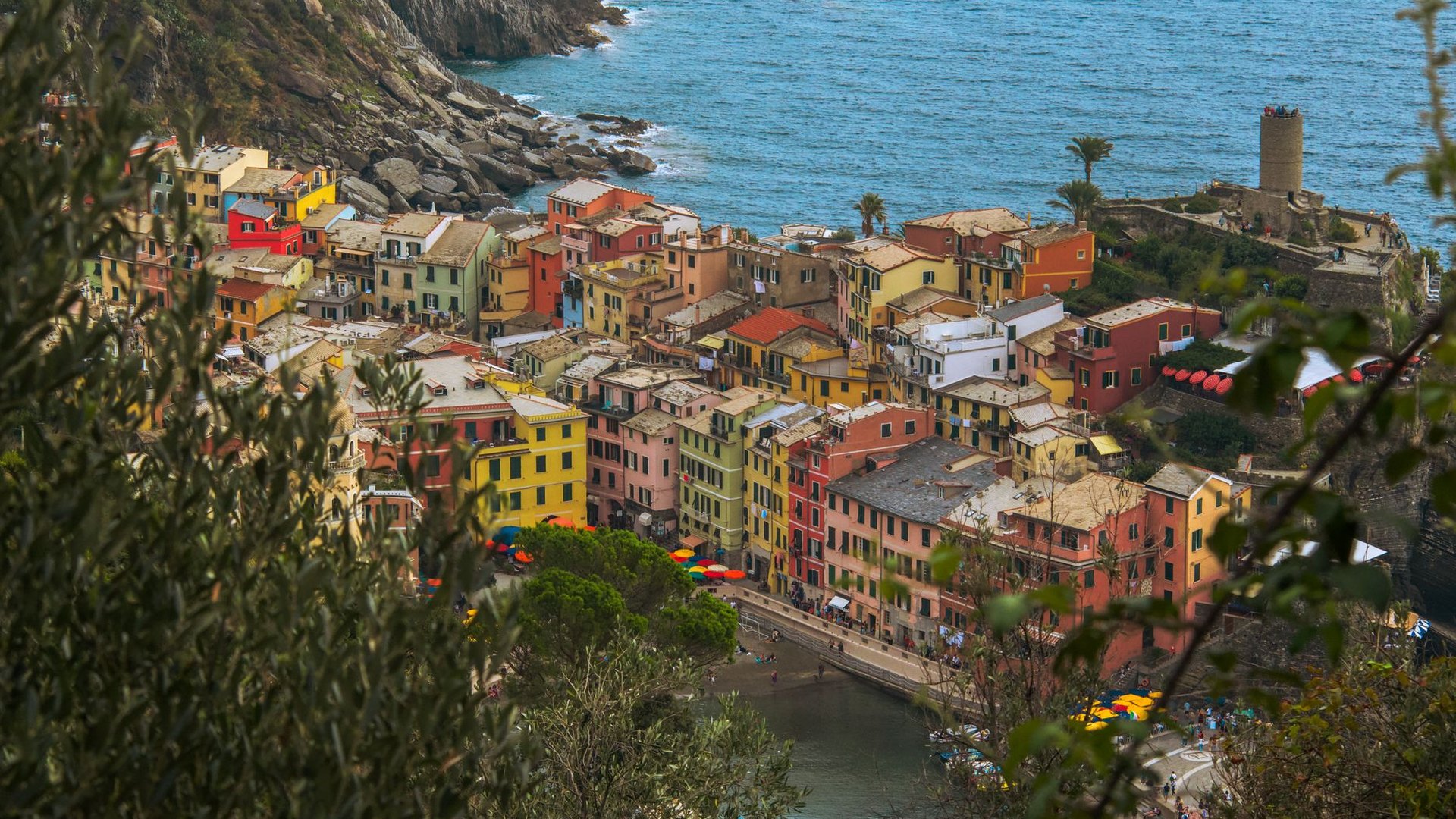
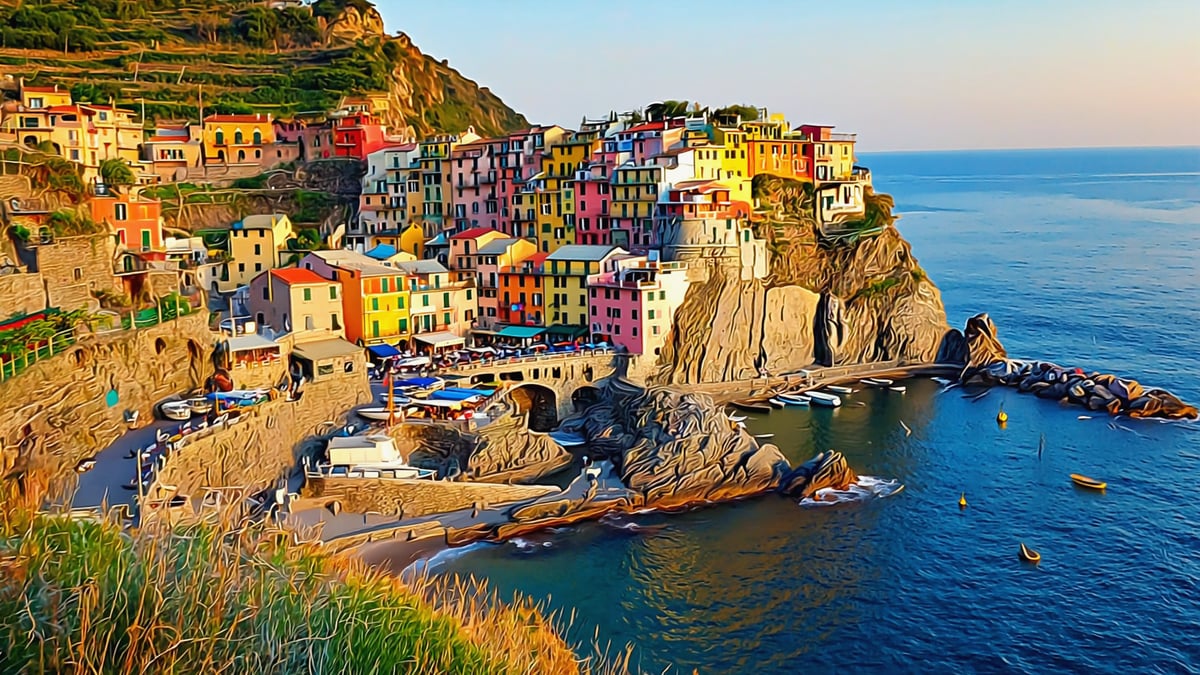
Cinque Terre, meaning "Five Lands" in Italian, is a string of five ancient fishing villages built into near-vertical cliffs along a 12-kilometre stretch of the Ligurian coast in north-west Italy. The five villages, listed from north to south, are Monterosso al Mare, Vernazza, Corniglia, Manarola, and Riomaggiore. Each one is distinct in character, elevation, and atmosphere, and collectively they form the Cinque Terre National Park, a UNESCO World Heritage Site that protects both the coastal landscape and the centuries of human engineering embedded within it.
The villages were not built for tourism. They were built for survival. The terraced hillsides that now look romantically picturesque were carved out over generations to grow grapes and lemons on soil that would otherwise be completely unworkable. The dry-stone walls holding those terraces together stretch for thousands of kilometres in total, more than the Great Wall of China, according to the national park authority. Maintaining them is a constant battle against erosion and landslide, and the villages have suffered serious flood damage in living memory, most notably in 2011 when flash floods killed several people and destroyed large sections of the coastal trail.
That history matters for modern visitors because it explains why the area is managed the way it is. The Cinque Terre National Park charges an access fee for the hiking trails, limits access to certain paths based on conditions, and enforces rules around behaviour, noise, and eating in public spaces that genuinely differ from the rest of Italy. Visiting Cinque Terre responsibly means understanding the ecosystem you are entering, not just the views you came to photograph.
The Five Villages at a Glance
| Village | Character | Best For | Beach? | Crowd Level |
|---|---|---|---|---|
| Monterosso al Mare | The largest and most resort-like village | Beach holidays, families, longer stays | ✅ Largest beach in Cinque Terre | High |
| Vernazza | Harbour village, widely regarded as the most photogenic | Atmosphere, seafood, photography | ⚠️ Small rocky harbour area | Very High |
| Corniglia | Hilltop village, no direct sea access, quietest of the five | Escaping crowds, wine, local life | ❌ No beach (cliff access only) | Low |
| Manarola | Wine-producing village, famous for its colourful stacked houses | Photography, wine tasting, sunsets | ⚠️ Rocky swimming area | High |
| Riomaggiore | Southernmost village, good transport links, lively evening scene | Base for exploring, first-timers | ⚠️ Small rocky cove | High |
Getting to Cinque Terre from the UK: Flights, Routes, and What to Expect
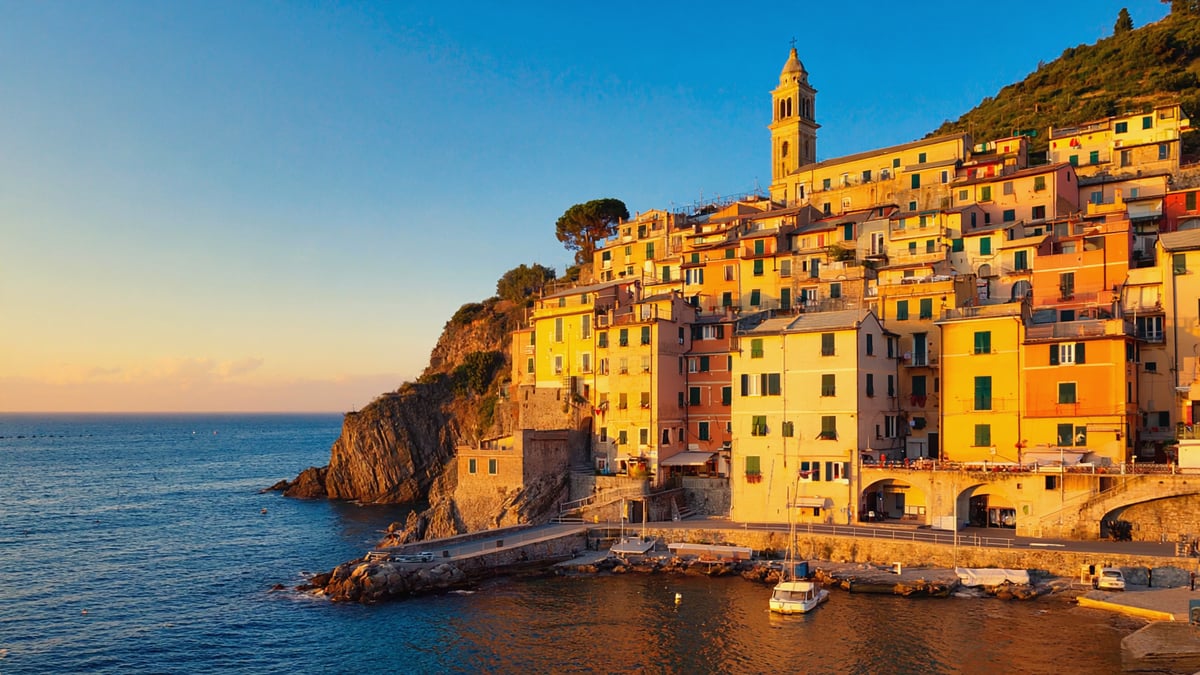
There are no direct flights from the UK to Cinque Terre itself, the area has no airport. The two main gateways are Genoa Cristoforo Colombo Airport (GOA) and Pisa Galileo Galilei Airport (PSA), with Florence Airport (FLR) serving as a viable third option for those combining cities. From all three airports, Cinque Terre is accessible by train, which is the dominant mode of transport in and between the villages.
Flying via Pisa
Pisa is the most popular gateway for UK travellers heading to Cinque Terre, and it is the easiest connection. Ryanair, easyJet, and British Airways all operate routes from London airports (Stansted, Gatwick, and Heathrow respectively), and the flight time is typically around two hours from London. From Pisa Centrale station, which is connected to the airport by a short shuttle train (the "Pisa Mover"), direct regional trains run to La Spezia, the main rail hub for Cinque Terre, in roughly an hour. From La Spezia, the local Cinque Terre train takes you into all five villages within minutes to half an hour depending on your destination village.
Ryanair also operates seasonal routes to Pisa from Manchester, Birmingham, and Edinburgh, making it one of the more accessible Italian destinations for travellers outside London. Total journey time from a UK regional airport to your first Cinque Terre village is realistically four to five hours door-to-door on a good day.
Flying via Genoa
Genoa is physically closer to Cinque Terre than Pisa, around 90 minutes by train, but has fewer direct UK routes. British Airways operates London Heathrow to Genoa, and there are some seasonal connections. Genoa itself is worth a day's exploration before or after Cinque Terre: it has one of the best-preserved medieval old towns in Italy, a UNESCO-listed network of narrow alleyways called the caruggi, and a genuinely underrated food scene.
Travelling Overland from Other Italian Cities
Many UK travellers combine Cinque Terre with other Italian destinations. From Florence, the train journey to La Spezia takes around two hours on the fastest services. From Milan, it is around two and a half hours. Rome is further, at roughly three and a half to four hours, but entirely doable as part of a wider Italian itinerary. Italy's Trenitalia network connects all these cities efficiently, and booking regional trains in advance is advisable during peak season.
The Cinque Terre Card: What It Is and Whether You Actually Need It
The Cinque Terre Card is the national park's official access pass, and understanding it before you arrive saves both money and frustration. There are two versions: a trekking-only card and a trekking-plus-train card. The trekking card covers walking trail access, use of the park's WiFi network, and ecological bus services within the villages. The trekking-plus-train card adds unlimited train travel between the five villages and La Spezia for the duration of the card.
For most UK visitors planning to walk between villages and explore freely, the combined card represents better value than buying individual train tickets throughout the day. Prices are set by the national park and adjusted periodically, so checking the official Cinque Terre National Park website before travel is strongly recommended rather than relying on figures quoted in any guide. Cards can be purchased at park offices in each village, at La Spezia station, and increasingly online in advance.
Not every trail requires the card. Some paths on the outskirts of the villages are free to use. However, the famous coastal trail (Sentiero Azzurro, Trail No. 2), which is the section most visitors come to walk, does require the card and is subject to closures based on weather and maintenance conditions. Always check trail status on the official national park site before planning a walking day.
Trail Status and the Sentiero Azzurro
The Sentiero Azzurro, the Blue Trail, is the most famous walking route in Cinque Terre, connecting all five villages along the clifftop. It is often depicted as a single seamless coastal path, but in practice different sections are open at different times. The stretch between Manarola and Riomaggiore, historically known as the Via dell'Amore (Lovers' Lane), has been subject to extended closures for reconstruction work following landslide damage. Before planning your walk, verify which sections are open at the time of your visit, as trail conditions change seasonally and after heavy rainfall.
For walkers who want more than the main trail, the higher network of paths (the Alta Via, or high trail) offers dramatically less-crowded routes through the terraced hillsides with panoramic views over all five villages. These trails are more physically demanding, require appropriate footwear, and are best attempted with a downloaded offline map or paper trail guide.
When to Visit Cinque Terre: Honest Advice Beyond the Usual "Avoid August"
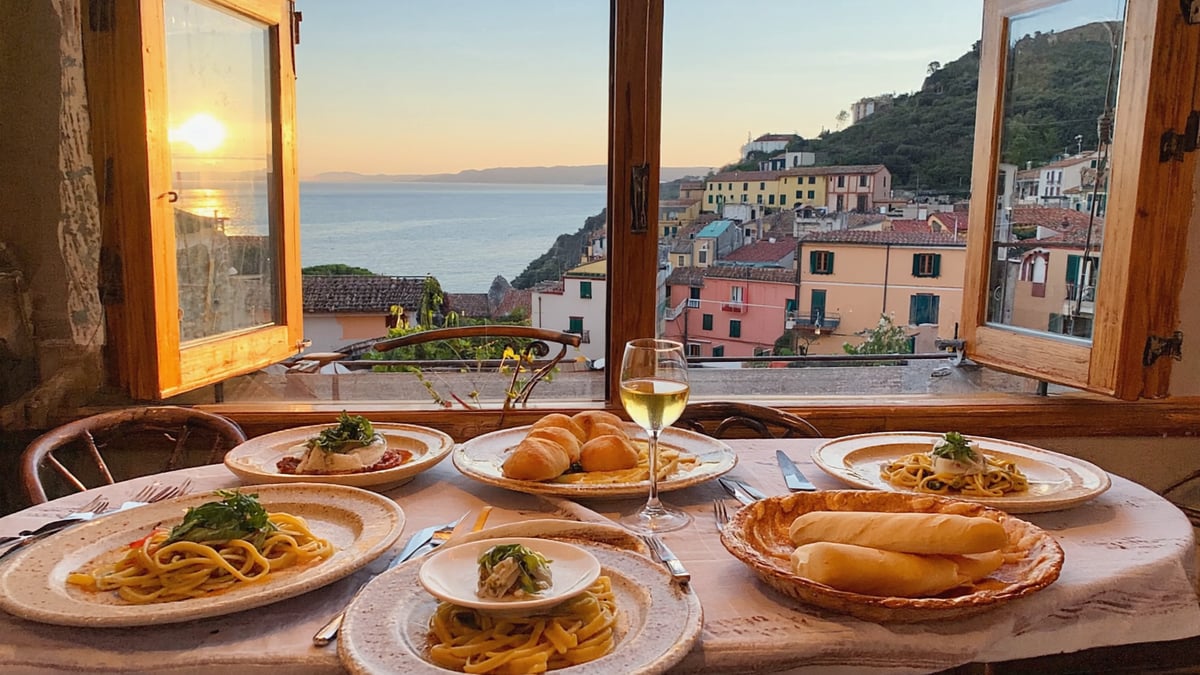
The standard advice, avoid peak summer, visit in shoulder season, is correct but incomplete. Understanding the full seasonal rhythm of Cinque Terre helps UK travellers make genuinely informed decisions about when their visit will feel most rewarding.
Spring (April to early June)
Late April through May is widely regarded as the best time to visit Cinque Terre. The coastal vegetation is in full bloom, trail conditions are generally good, temperatures are comfortable for walking (typically 17–22°C), and the villages are operating fully without the suffocating density of summer crowds. Wildflowers cover the terraces, the sea is clear, and restaurants are running their full menus without the exhausted, stretched service of peak season. The risk is late spring rain, which can close trails suddenly, so building flexibility into your itinerary is wise.
Summer (June to August)
Summer is genuinely challenging in Cinque Terre. The combination of heat (regularly exceeding 30°C), maximum visitor numbers, and the narrow physical layout of the villages creates conditions that many travellers find overwhelming rather than enjoyable. The main coastal path between Vernazza and Monterosso becomes so congested in July and August that it feels more like a slow-moving queue than a walk. That said, summer has its advantages: ferry services between villages are fully operational, the sea is warm enough for swimming, and the evening atmosphere in the villages, after the day-trippers have left on the last trains, is genuinely magical.
The key insight that most guides miss: the worst crowds in Cinque Terre are not overnight guests but day-trippers arriving by train from La Spezia, Genoa, and cruise ships docked at La Spezia. If you are staying in one of the villages, your experience of the place at 7am and 8pm is entirely different from the 11am–5pm window. Staying overnight transforms the experience.
Autumn (September to October)
September is arguably the single best month to visit. Summer temperatures remain without the worst crowds, the grape harvest is underway on the terraces, and the sea is still warm enough to swim in. The light in September and October has a particular quality that photographers chase. October brings the olive harvest and a noticeable quieting of visitor numbers, though some smaller restaurants and accommodation options begin closing from late October onward.
Winter (November to March)
Winter is quiet to the point of being almost deserted. Many guesthouses, restaurants, and shops close entirely. The villages revert to something closer to their original character as working communities, but the experience requires genuine self-sufficiency. Trails may be closed after rain, ferry services stop, and the choice of open restaurants in any given village may be limited to one or two. For travellers who genuinely want to see the Cinque Terre without crowds and are comfortable with limited facilities, late March can work well as the villages begin to reopen for the season.
| Season | Typical Temp | Crowds | Trail Access | Recommended For |
|---|---|---|---|---|
| Apr–May | 17–22°C | Moderate | ✅ Generally good | Walkers, photographers, couples |
| Jun–Aug | 25–33°C | Very High | ⚠️ Open but congested | Beach lovers, swimmers, evening atmosphere |
| Sep–Oct | 20–27°C | Moderate–Low | ✅ Excellent | Best all-round, walkers, foodies, families |
| Nov–Mar | 8–14°C | Very Low | ❌ Frequently closed | Solo travellers, those seeking solitude |
Where to Stay in Cinque Terre: Village by Village
Where you base yourself in Cinque Terre fundamentally shapes your holiday. The villages have very different characters, and because accommodation within the national park is genuinely limited, making this decision early and booking well in advance is not optional advice, it is essential.
Staying in Monterosso al Mare
Monterosso is the natural choice for travellers who want a beach holiday as well as village exploration. It has the largest sandy beach in Cinque Terre, a proper seafront promenade, and the widest range of hotels, including some that would qualify as boutique or upscale. It is also the only village with flat ground, which makes it the most accessible for visitors with mobility considerations or families with young children. The trade-off is that Monterosso feels slightly less authentically "old Cinque Terre" than the other villages, it is bigger, more commercial, and divided into two sections (old town and new town) by a short tunnel through the rock.
Staying in Vernazza
Vernazza is the most requested base for a reason. Its natural harbour, medieval tower, and cascade of painted houses down to the waterfront are everything people imagine when they picture Cinque Terre. Accommodation here is almost entirely in small family-run guesthouses, rooms above restaurants, and private apartments. There are very few conventional hotels. Booking Vernazza accommodation six months ahead is not excessive for summer visits, and even shoulder season gets tight.
Staying in Manarola or Riomaggiore
Both southern villages offer a more lived-in feel than their northern counterparts, with local families still making up a significant portion of the population. Manarola sits above a rocky swimming platform that locals have used for generations, and its wine cooperative, the Cantina Cinque Terre, produces the area's celebrated Sciacchetrà dessert wine from grapes grown on the surrounding terraces. Riomaggiore has excellent transport links, good restaurants, and tends to attract a younger crowd with its slightly more animated evening scene.
Basing Yourself in La Spezia
An option that many UK travellers overlook is staying in La Spezia, the city that serves as the rail gateway to Cinque Terre. La Spezia has a broader range of hotels at lower prices than the villages, a genuinely good food market, and excellent transport connections that put all five villages within fifteen to thirty minutes by train. Staying in La Spezia means you can visit the villages during the day and return to a city with proper restaurant variety, a functioning supermarket, and no 11pm last-train anxiety. For families, budget travellers, or anyone who wants a wider base of operations, La Spezia is a genuinely smart choice.
Things to Do in Cinque Terre Beyond the Obvious
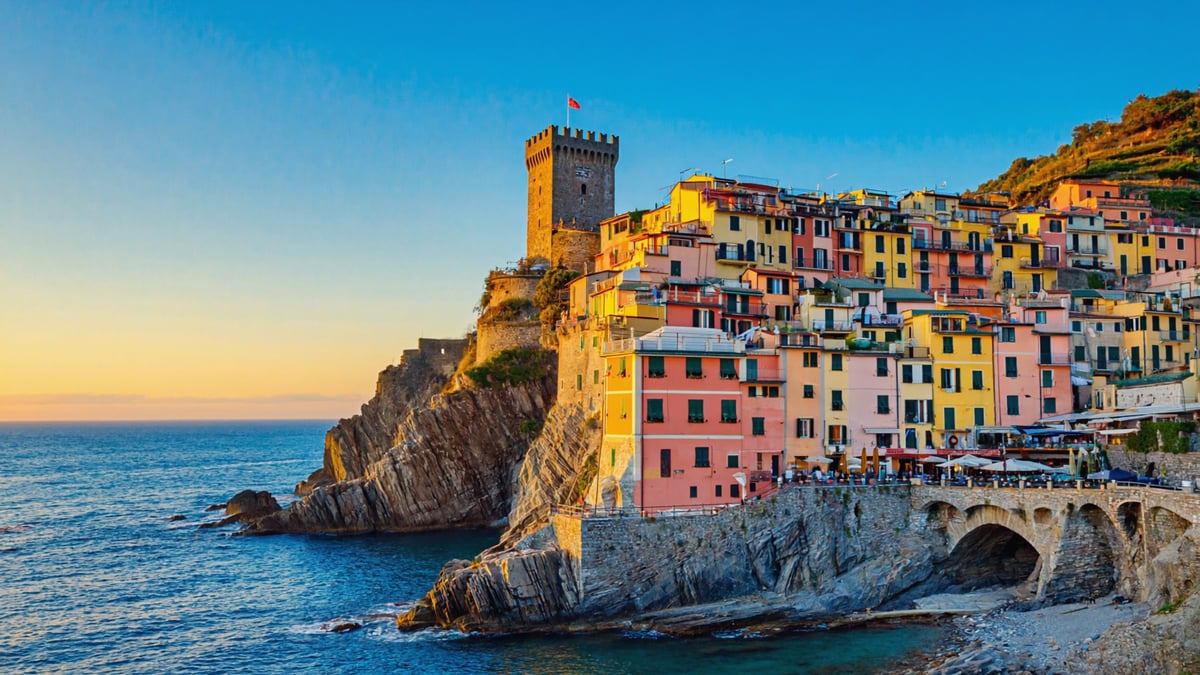
The headline things to do in Cinque Terre are well-documented: walk the coastal path, take the ferry between villages, eat pesto, swim off the rocks. But the destination rewards travellers who look beyond the first layer.
Wine Tasting on the Terraces
The wine produced in Cinque Terre is genuinely special, partly because producing it at all is an act of extraordinary effort. The Bosco and Albarola grape varieties grown on the near-vertical terraces are harvested almost entirely by hand, with monorail systems (the "teleferica") used to move equipment and grapes up and down slopes that would be impossible to navigate otherwise. The result is a dry white wine, sold as DOC Cinque Terre Bianco, that tastes of mineral salinity and citrus, a direct product of the sea air and terroir. The Sciacchetrà, a passito-style sweet wine made from partially dried grapes, is produced in very small quantities and is worth seeking out specifically in Manarola.
Taking the Ferry Instead of the Train
The regional ferry service connecting the villages runs from spring through early autumn, and travelling by sea rather than rail changes the entire visual experience of Cinque Terre. From the water, the scale of the cliffs becomes apparent in a way that walking the trails never quite reveals. The villages appear as they were meant to be seen: painted towers of colour against grey-white rock, dropping straight into the Mediterranean. Ferry services also connect to Portovenere, a beautiful walled village at the southern end of the Gulf of Poets that most Cinque Terre visitors miss entirely.
Visiting Portovenere
Portovenere sits just outside the national park boundary but shares the same UNESCO designation. Its 12th-century Church of San Pietro, perched on a rocky promontory above the sea, is one of the most dramatically positioned buildings on the Ligurian coast. The village has a long association with the Romantic poets, Byron reportedly swam from here across the Gulf to visit Shelley, and retains a quieter, more local atmosphere than the Cinque Terre villages during peak season. It is accessible by ferry from Riomaggiore or by bus from La Spezia.
Exploring Genoa as a Day Trip or Stopover
Genoa is consistently underrated by UK travellers who treat it purely as a transit point. The city's UNESCO-listed historic centre, the largest medieval old town in Europe, is a labyrinth of narrow alleys, Baroque palaces, and food stalls selling focaccia alla genovese and farinata (a chickpea-flour flatbread) that have been made the same way for centuries. Genoa is also the birthplace of pesto Genovese, and tasting it here, made with the small-leaved Genoese basil grown around the city, is a different experience from the pesto you get on any Cinque Terre tourist menu. A day trip from Cinque Terre by train takes around 90 minutes each way and is entirely manageable.
The Higher Trails: Getting Above the Crowds
The Alta Via dei Monti Liguri, the high-level trail network above the villages, is where experienced walkers find the Cinque Terre that has largely been erased at sea level. The route between Corniglia and Vernazza via the hilltop sanctuary of San Bernardino rewards those willing to climb with panoramic views across the whole arc of the national park and, on clear days, as far as Corsica. These trails require proper walking shoes, water, and a degree of navigation confidence, but they are among the finest half-day walks in northern Italy.
Food and Drink: What to Actually Order in Cinque Terre
Cinque Terre's food culture is rooted in the Ligurian tradition, which is quite different from the tomato-heavy cooking most British visitors associate with Italian food. The regional cuisine is lighter, more herb-driven, and deeply tied to what the sea and the terraces produce locally.
Pesto Genovese
Pesto is the defining condiment of Liguria, and in Cinque Terre it appears on pasta, in focaccia, over fish, and in forms you would not find outside the region. The classic preparation uses basil, pine nuts, Parmigiano Reggiano, Pecorino Sardo, garlic, and Ligurian olive oil, ground together in a marble mortar. Trofie al pesto, short twisted pasta tossed with pesto, green beans, and boiled potato, is the canonical local dish and a genuinely satisfying one. Be cautious of restaurants serving bright green, intensely garlic-heavy pesto: the real thing is more delicate and less aggressively flavoured.
Freshly Caught Seafood
The fishing boats that still operate from Vernazza and Monterosso supply restaurants with anchovies, sea bass, octopus, and squid. Anchovies are particularly important here, marinated in lemon juice (acciughe al limone) or fried, they appear on almost every menu and bear no resemblance to the tinned variety. Stuffed anchovies (acciughe ripiene) are a local speciality worth ordering wherever you see them.
Focaccia and Street Food
Ligurian focaccia is thinner, crispier, and oilier than the thick Apulian variety that has become familiar in the UK. Bakeries in all five villages sell it by weight from the early morning, and eating a slab of warm focaccia while walking between villages is one of the great simple pleasures of the trip. Focaccia di Recco, stuffed with fresh stracchino cheese, is worth hunting down. Farinata, the chickpea flatbread, is another staple that appears in every village and makes an excellent cheap breakfast or snack.
Practical Information for UK Travellers
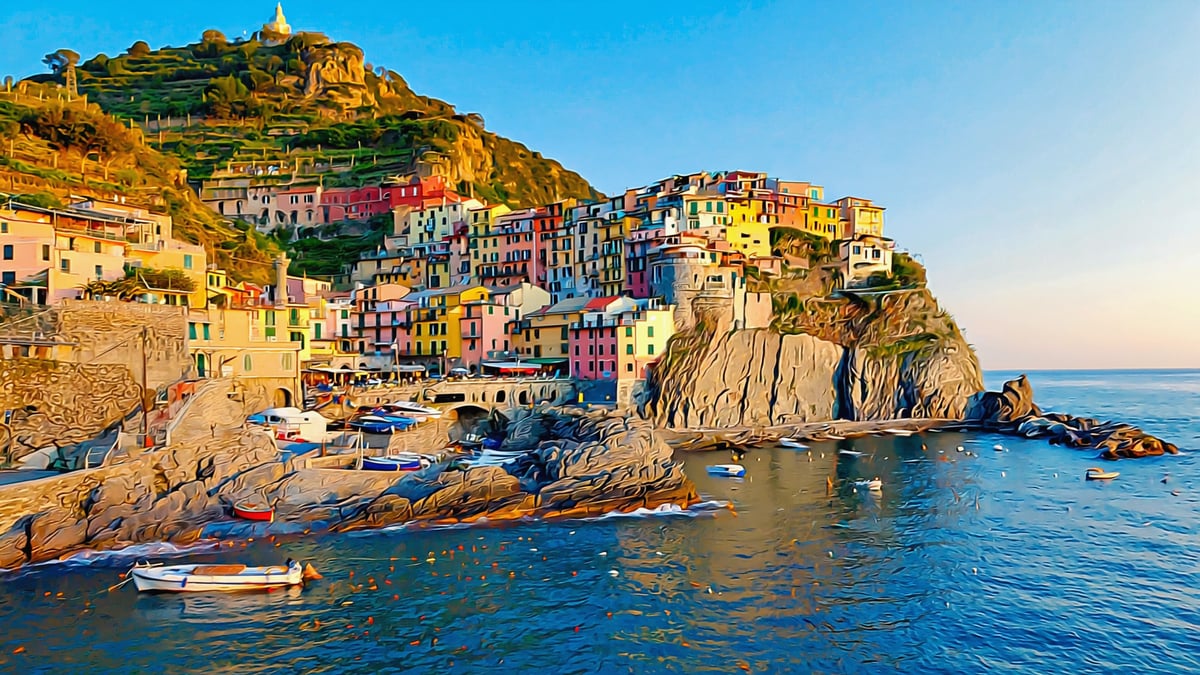
A Cinque Terre holiday is straightforward to organise but has specific practical considerations that make preparation worthwhile.
Entry Requirements and Passports
Italy is part of the Schengen Area. UK citizens, as non-EU nationals following Brexit, can visit Italy for up to 90 days within any 180-day period without a visa. Your UK passport must be valid for the duration of your stay. The EU Entry/Exit System (EES), which records biometric data from non-EU nationals at Schengen borders, is now operational across the Schengen zone, so travellers should expect brief additional checks at border crossings and airports on arrival. Check the latest entry requirements with the UK Government's Italy travel advice page before you travel, as requirements can be updated.
Currency and Payments
Italy uses the euro (€). While larger establishments in the villages accept card payments, cash remains important in Cinque Terre, particularly for small family-run trattorias, market stalls, and the park card offices. Carrying €50–100 in cash at any given time is a sensible approach. UK travellers using fee-free travel cards (such as those from Starling, Monzo, or Chase) will get the best exchange rates without foreign transaction fees.
Connectivity and Data
Mobile signal in Cinque Terre is variable. Inside the narrow alleys of the villages and on the coastal trails, you will experience regular dead zones. The national park's WiFi network (included with the Cinque Terre Card) helps in the villages themselves. Downloading offline maps before arrival, Google Maps allows area downloads, and maps.me or Komoot are useful for the trails, is strongly recommended.
Health and Travel Insurance
UK citizens no longer have access to the European Health Insurance Card (EHIC). The UK Global Health Insurance Card (GHIC) provides access to state-provided healthcare in Italy at the same cost as Italian residents, but it does not cover private medical treatment or medical repatriation. Comprehensive travel insurance that covers medical expenses, cancellation, and personal belongings is essential. Walking the coastal trails on uneven terrain in summer heat means the risk of ankle injuries, heat exhaustion, and dehydration is real and worth planning for.
What to Pack
Beyond standard summer holiday packing, Cinque Terre has specific requirements. Proper walking shoes or trail trainers are not optional if you plan to hike, the paths involve uneven stone steps, loose gravel, and steep gradients. Sandals and flip-flops are genuinely dangerous on the upper trails. A reusable water bottle is essential (there are free public drinking water fountains throughout the villages), high-factor sun cream is a must in summer, and a light rain layer is worth having even in spring and autumn given how quickly sea weather can change.
Cinque Terre Package Deals from the UK: What to Expect and How to Book
Booking a Cinque Terre package deal from the UK typically means combining flights (usually to Pisa or Genoa), accommodation in one of the villages or in La Spezia, and optionally a selection of guided activities. For a Cinque Terre holiday guide that serves UK travellers looking at real costs, here is a realistic breakdown of what different trip styles cost.
| Trip Type | Duration | Approx. Per Person (£) | What's Included | Best For |
|---|---|---|---|---|
| Budget City Break | 4–5 nights | From £449 | Flights + B&B in La Spezia | Solo travellers, couples on a budget |
| Standard Package | 5–7 nights | £699–£999 | Flights + village guesthouse + transfers | Couples, families, first-timers |
| Boutique / Comfort | 7 nights | £1,099–£1,499 | Flights + boutique hotel Monterosso + guided walks | Couples, honeymooners, comfort seekers |
| Wider Italian Riviera | 10–12 nights | £1,299–£1,899 | Flights + multiple bases (Cinque Terre + Portofino/Genoa) | Retirees, experienced Italy travellers |
GlobeHunters specialises in building tailored Italy holidays from UK that combine competitive flight pricing with carefully selected accommodation, covering the full spectrum from budget guesthouses in La Spezia to boutique hotels overlooking the Ligurian Sea. To get a live package quote for Cinque Terre including current flight availability and hotel rates, call the GlobeHunters team on 020 8944 4700 or browse current Italy holiday packages on the GlobeHunters platform. The team can also build multi-centre packages combining Cinque Terre with Florence, the Amalfi Coast, or Rome for travellers wanting a broader Italian experience.
The Crowd Problem: What Has Changed and How to Navigate It
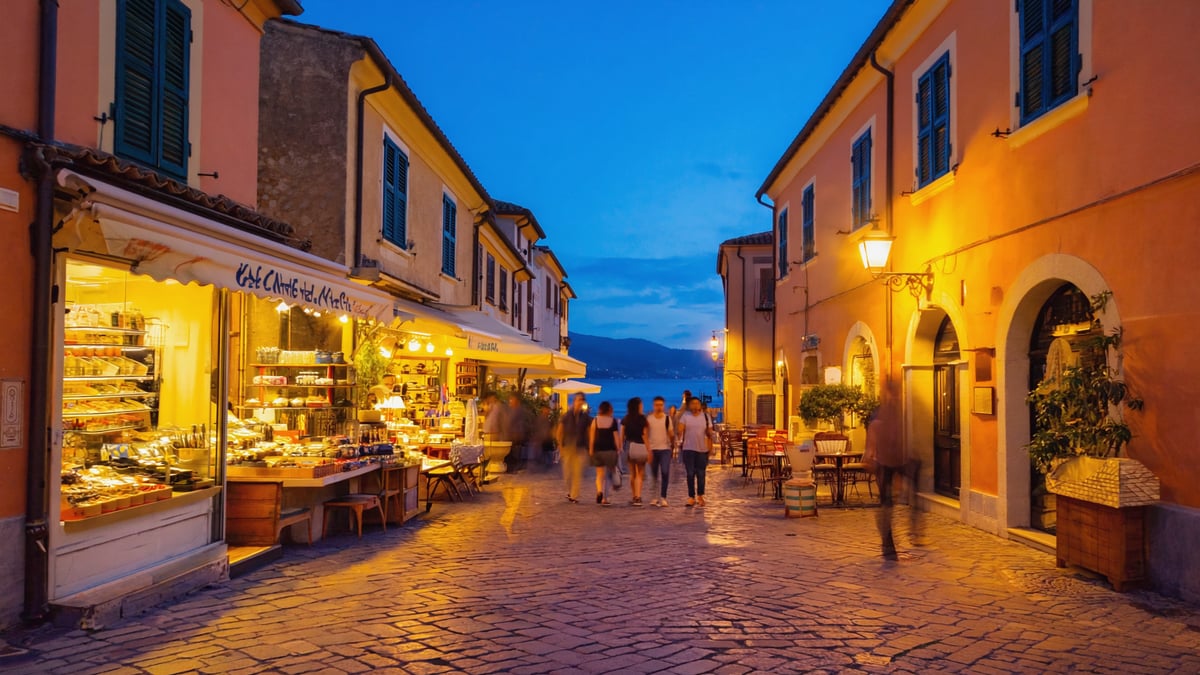
The most significant shift in Cinque Terre over the past decade is not infrastructure or pricing, it is the sheer volume of day-trippers. The national park has introduced a series of measures to manage visitor flow, including timed entry systems on the most popular trail sections, limits on the number of walkers allowed on certain paths simultaneously, and stricter enforcement of behaviour rules (eating on the main pathways carries a fine in some sections). These measures are not perfect, but they reflect a genuine commitment by the park authority to preserve what makes the place worth visiting in the first place.
For UK visitors planning a Cinque Terre holiday guide-worthy trip, the most practical response to the crowd question is structural. Staying overnight rather than day-tripping is the single biggest quality-of-life improvement available. Visiting in May, September, or October rather than July and August eliminates the worst of the congestion. Starting trail walks before 9am means you have the paths largely to yourself for the first hour or two. And choosing Corniglia or Manarola as a base rather than the more famous Vernazza gives you a quieter experience while keeping everything accessible.
The villages themselves have also introduced local rules around dress codes (covering up beyond the beach areas is expected and in some cases required), noise levels, and the consumption of alcohol in public spaces. These rules are enforced and reflect the wishes of the communities that actually live there. Treating Cinque Terre as a living place rather than an open-air theme park is both ethically appropriate and practically likely to result in a better visit.
Combining Cinque Terre with the Wider Italian Riviera
The Italian Riviera travel guide extends well beyond the five villages. The Ligurian coast offers a sequence of destinations that complement a Cinque Terre base without requiring major travel logistics. Levanto, the village immediately north of Monterosso, is larger, less crowded, and has an excellent sandy beach. It is a popular base for families who want the beach without Monterosso's prices. Porto Venere and the three small islands of Palmaria, Tino, and Tinetto are reachable by ferry from Riomaggiore. Portofino, probably Italy's most glamorous fishing village, is around 90 minutes north by car or train via Genoa, and offers a useful contrast in scale and atmosphere.
Further afield, the French Riviera begins just past the border at Ventimiglia, making a day trip to Monaco or Nice theoretically possible (though logistically ambitious). For travellers with a full fortnight, combining four nights in Cinque Terre with three nights in Genoa, two in Portofino, and a final night in Nice before flying home creates one of the most satisfying coastal circuits in Mediterranean Europe.
A Suggested Five-Day Itinerary for First-Time Visitors
This itinerary assumes arrival via Pisa, a base in Vernazza or Manarola, and a mix of walking, ferry travel, and village exploration. It is designed to cover the essential experiences without trying to do everything, which is the most common mistake first-time visitors make.
Day 1, Arrival and Orientation: Fly into Pisa, take the train to La Spezia (around one hour), then the Cinque Terre train to your base village. Arrive by early afternoon. Walk the village, find your accommodation, eat dinner locally. Resist the urge to immediately set off on a trail, orientation and rest serve you better on day one.
Day 2, Walking the Sentiero Azzurro: Start early (before 9am) from your base and walk north or south along whichever sections of the coastal trail are currently open. Check trail status the night before. Take the train back from whichever village you end at rather than walking both directions. Afternoon: swim, wine, and a long lunch.
Day 3, Ferry Day: Take the morning ferry from your village south to Riomaggiore, then north all the way to Monterosso, stopping at Vernazza and Manarola along the way. This gives you the sea-level view of all five villages in a single day. Afternoon: explore Monterosso's beach and old town, return by train.
Day 4, Day Trip to Portovenere or Genoa: Choose one depending on your interests. Portovenere by ferry for history and scenery. Genoa by train for city culture, food markets, and the caruggi. Return by early evening.
Day 5, High Trail and Departure: If fitness allows, take one of the higher trails above your base village for an early morning walk with panoramic views. Return for a final lunch, then head to La Spezia for the train to Pisa airport. Allow at least two and a half to three hours between leaving your village and your flight departure time, accounting for potential train delays and airport check-in.
Frequently Asked Questions About Visiting Cinque Terre
Do I need to book accommodation in Cinque Terre far in advance?
Yes, significantly more than for most European destinations. Accommodation within the five villages is genuinely limited, and the most desirable properties (particularly in Vernazza and Manarola) sell out months ahead for summer dates. For July and August, booking five to six months in advance is realistic. For shoulder season (May, June, September), two to three months is usually sufficient, but earlier is always safer.
Is Cinque Terre suitable for families with young children?
Partially. Monterosso is the most family-friendly village, with its flat terrain, sandy beach, and wider range of services. The other villages involve significant numbers of steep steps and narrow alleys that are challenging with pushchairs or prams. Children who are confident walkers and comfortable with boats will enjoy the ferry travel and the simpler trail sections. The national park environment is genuinely educational for older children interested in nature and geography.
Can I drive to Cinque Terre?
Driving into the villages is restricted to residents only. Visitors arriving by car must park in designated car parks outside the villages (typically at La Spezia, Levanto, or in limited spaces above individual villages) and enter by train or on foot. In peak season, these car parks fill quickly. The train system is genuinely efficient and is the recommended mode of transport for all visitors.
Is the hiking difficult?
The coastal trail (Sentiero Azzurro) between the villages ranges from moderate to moderately strenuous. Some sections involve several hundred steps. The upper trails are more demanding and require good physical fitness and appropriate footwear. The train and ferry provide alternatives for those who prefer not to walk the full trail sections. Flat-soled shoes, sandals, and particularly flip-flops are genuinely inappropriate for any trail walking and are a common cause of accidents.
What currency do they use and can I pay by card everywhere?
Italy uses the euro (€). Card payments are accepted in most restaurants and larger shops, but smaller establishments, market stalls, and some park facilities prefer or require cash. Carrying a reasonable amount of cash (€50–100) at all times within Cinque Terre is advisable. Fee-free travel money cards avoid foreign transaction charges on card payments.
How do I get the Cinque Terre Card?
The Cinque Terre Card can be purchased at national park offices in each village, at La Spezia Centrale station, and through the official Cinque Terre National Park website. Buying online in advance can save time on arrival, particularly during peak season when queues at park offices can be lengthy. Always check the official park site for current pricing, as fees are subject to change.
Is there a dress code in the villages?
Yes. Swimwear is restricted to beach areas. Walking through the village streets in swimwear or without a cover-up is prohibited and carries a fine in some villages. This rule is actively enforced, particularly in Vernazza and Riomaggiore. Packing a light cover-up or shirt for moving between the beach and the village is both courteous and legally required.
What language do people speak in Cinque Terre?
Italian is the primary language. English is widely spoken in tourist-facing businesses throughout the villages, and most menus, trail signs, and park information are available in English. Learning a handful of basic Italian phrases (greetings, ordering food, asking for directions) is always appreciated by locals and adds to the experience.
Is Cinque Terre worth visiting despite the crowds?
Yes, but with the right approach. The place is extraordinary, and no amount of visitor numbers changes the fundamental drama of the landscape or the quality of what you eat and drink there. The key is staying overnight rather than day-tripping, visiting in shoulder season if possible, starting early in the mornings, and spending time in Corniglia and on the higher trails where the crowds thin considerably. Visitors who approach Cinque Terre as a living community rather than a backdrop tend to have far better experiences than those who treat it as a checklist item.
Can I combine Cinque Terre with other Italian cities?
Absolutely, and this is often the best approach for UK travellers with more than a week. Cinque Terre connects naturally with Florence (two hours by fast train from La Spezia), Milan (two and a half hours), and Genoa (90 minutes). A two-week Italian itinerary combining Florence, Cinque Terre, and a southern destination such as the Amalfi Coast represents one of the most satisfying European travel circuits available to UK visitors.
What is the best village to base yourself in as a first-time visitor?
Vernazza or Manarola for atmosphere and that quintessential Cinque Terre feeling. Monterosso for comfort, a beach, and family-friendly logistics. La Spezia for budget value, wider amenities, and flexible day-tripping. Riomaggiore for good transport links and a lively evening atmosphere. The honest answer depends entirely on your priorities, budget, and travel style, which is why speaking to a specialist travel adviser before booking is genuinely useful.
How much spending money do I need per day in Cinque Terre?
Cinque Terre is not a budget destination by Italian standards. A realistic daily budget for two people, excluding accommodation, is approximately £80–£120 per day covering meals, drinks, the Cinque Terre Card, and ferry tickets. Eating at bakeries and takeaway focaccia shops rather than sit-down restaurants for lunch reduces costs significantly. Wine bought directly from the village cooperative is considerably cheaper than restaurant pricing.
Key Takeaways for Planning Your Cinque Terre Holiday
- Book accommodation early. Village guesthouses fill months in advance for summer dates. Vernazza and Manarola are particularly limited. La Spezia is a practical and often overlooked base that saves money and reduces stress.
- Choose your timing carefully. May and September are the best months overall. Summer is beautiful but genuinely crowded. The worst of the day-tripper crowds arrive between 11am and 5pm, plan your days around this.
- Buy the Cinque Terre Card. For most visitors planning to walk and take the train between villages, the combined trekking-plus-train card pays for itself quickly and simplifies logistics.
- Check trail status before every walking day. The Sentiero Azzurro sections are subject to closures for weather, maintenance, and seasonal conditions. The official national park website publishes current status.
- Take the ferry at least once. The sea view of the villages is entirely different from the trail view and is one of the defining experiences of the trip.
- Go beyond the main trail. The higher paths, Portovenere, Genoa, and the local wine cooperatives offer experiences that most visitors miss entirely and that significantly enrich the trip.
- Respect the local rules. Dress codes, eating restrictions on certain paths, and noise rules are real, enforced, and exist because the communities that live here have asked for them. Compliance is basic courtesy.
- Package deals from UK travel specialists simplify logistics significantly. Combining flights, accommodation, and transfer arrangements through a specialist like GlobeHunters removes the most complex elements of planning and often delivers better value than booking components separately. Call 020 8944 4700 to discuss current Cinque Terre packages.
Cinque Terre is not a secret, and it has not been for some time. But it remains, genuinely and without qualification, one of the most beautiful places in Europe. The travellers who get the most from it are those who prepare properly, stay long enough to move beyond the day-tripper circuit, and engage with the place on its own terms, not as a backdrop, but as a destination with its own culture, its own food, its own wine, and its own stubborn, extraordinary relationship with the cliffs it has called home for a thousand years.
About the author
Spiros Maragkoudakis · Chief Commercial Officer
Ready to Book Your Cinque Holiday?
Our travel experts are ready to help you plan the perfect trip. Call us today or browse our latest deals.
Ready to Start Planning?
Speak to our travel experts for personalised advice and the best deals on your next holiday.
Call 020 8944 4700