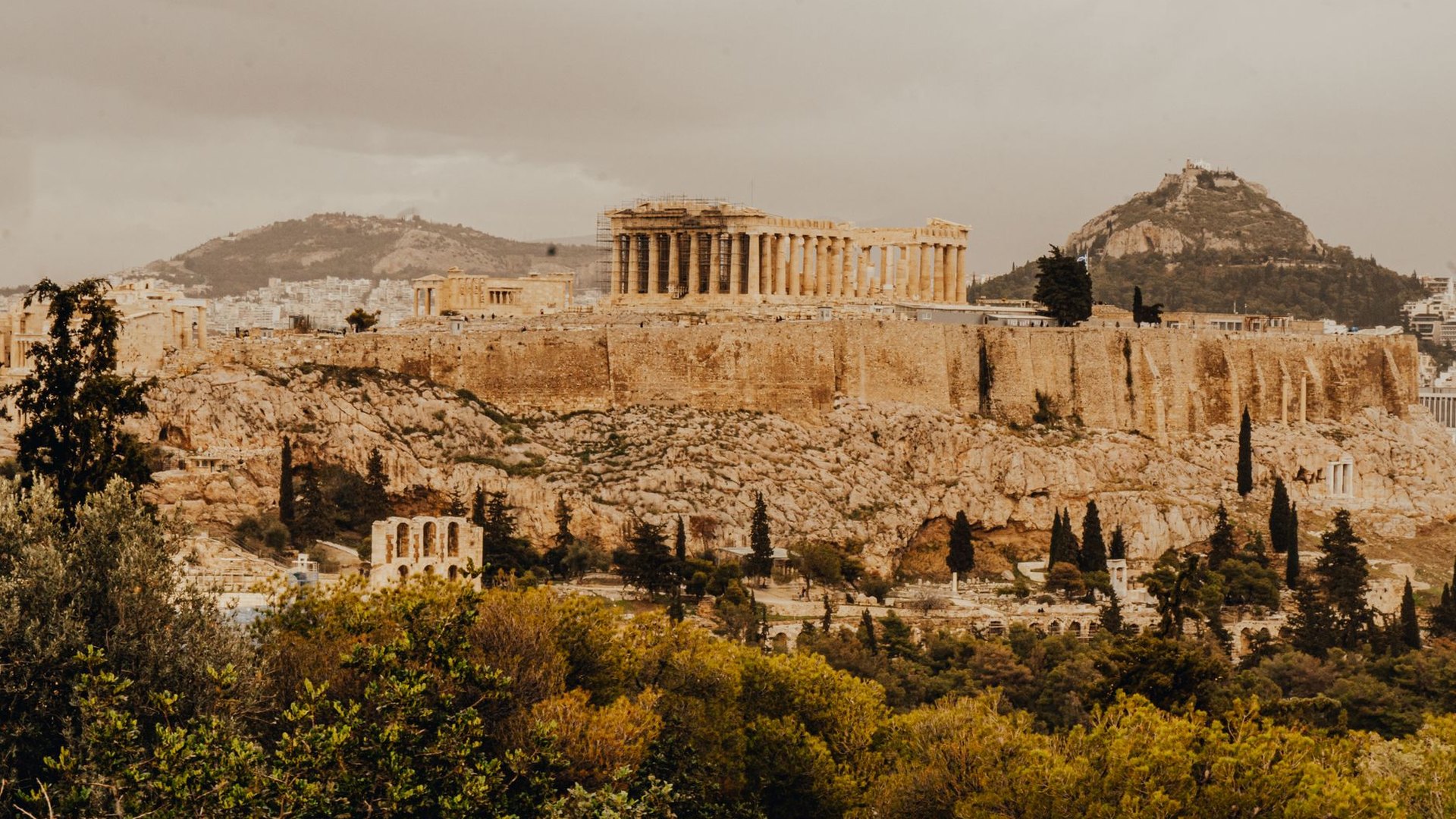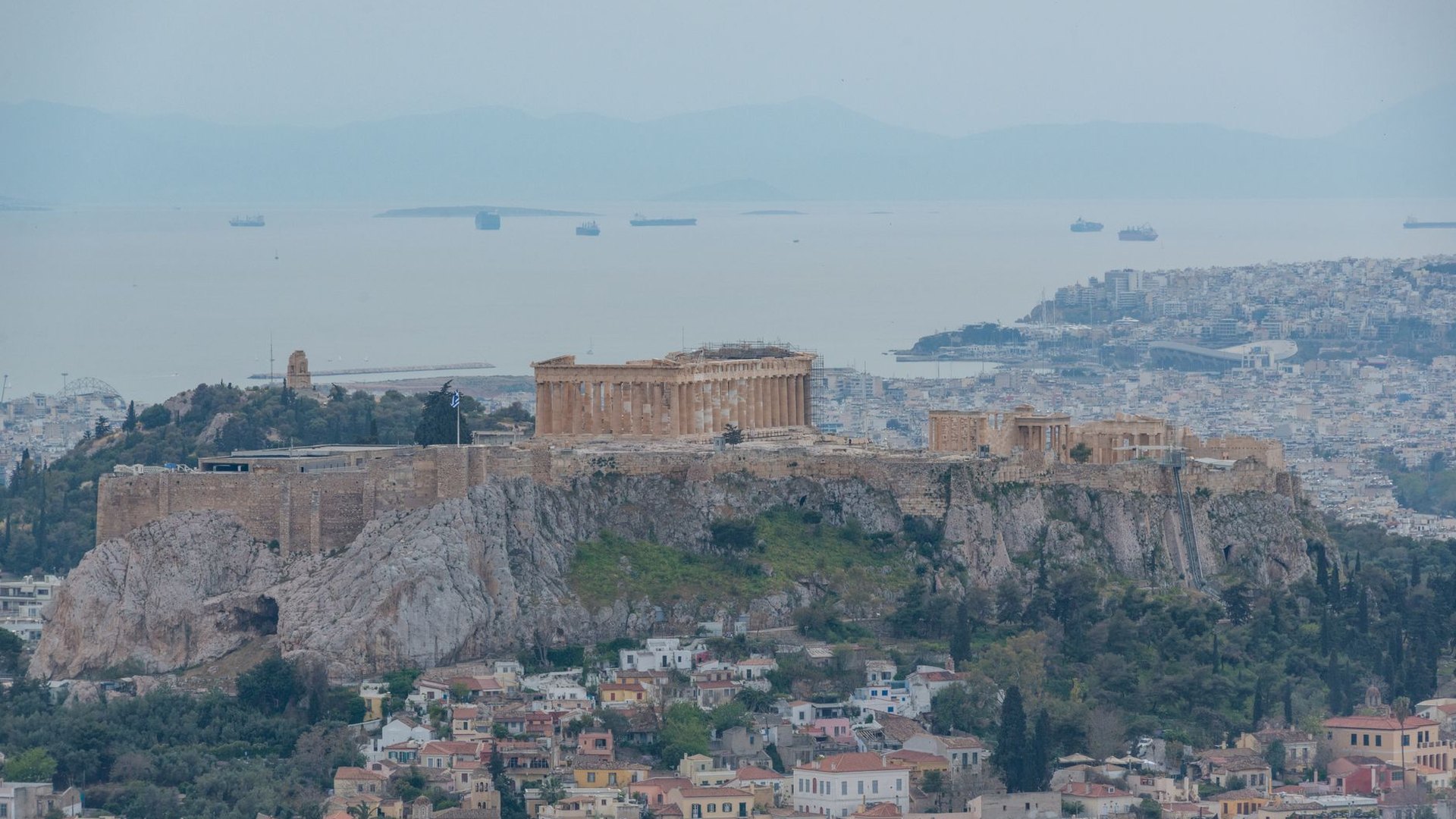
Most people planning a Greek island holiday from the UK make the same mistake: they pick one island, book a hotel for two weeks, and spend the last four days wondering what they missed. Greece has over 200 inhabited islands, and the most rewarding way to experience them is to move between them, letting the ferry schedule become your itinerary and the Aegean horizon become your compass. Two weeks is the sweet spot. Long enough to visit three or four islands without rushing, short enough to keep costs manageable and energy high.
This guide walks you through every stage of planning a Greece island-hopping holiday from the UK, from choosing your island combination and booking flights to understanding ferry routes, budgeting realistically, and finding packages that do the heavy lifting for you. Whether you are travelling as a couple, a family, or solo, the framework here gives you a working plan you can adapt and book.
What You Need to Know Before You Start Planning
Before diving into island lists and ferry timetables, it helps to understand how Greek island geography works, because the archipelago is divided into distinct groups and not all islands connect to each other conveniently. The main island groups relevant to UK travellers are the Cyclades (Santorini, Mykonos, Paros, Naxos, Milos), the Dodecanese (Rhodes, Kos, Symi), the Ionian Islands (Corfu, Kefalonia, Zakynthos), and Crete, which sits independently to the south.
The single most important planning principle: stay within one island group, or at most two neighbouring groups. Mixing Corfu with Santorini sounds appealing on paper but requires backtracking through Athens, adding significant cost and transit time. A Cyclades-only itinerary, or a Cyclades-plus-Crete combination, flows naturally and keeps travel days to a minimum.
Tools and Accounts You Will Need
- A ferry booking platform: Ferryhopper is the most comprehensive English-language ferry search tool for Greece, covering all major operators including Blue Star Ferries, Seajets, and Hellenic Seaways.
- A flight search tool or travel agent: Direct flights from UK airports serve Athens, Santorini, Mykonos, Rhodes, Corfu, Heraklion, and Kos. GlobeHunters packages flights and accommodation together, often at lower combined cost than booking separately.
- A budget spreadsheet: Island hopping involves multiple accommodation bookings and transport legs. Tracking costs as you plan prevents surprises at checkout.
- Travel insurance documentation: Essential for any multi-island trip. Check your policy covers ferry and domestic flight delays, as these are common in peak season.
Estimated Time Investment for Planning
Allow roughly five to seven hours of research time to plan a two-week island-hopping itinerary independently. If you use a package from GlobeHunters, that planning load drops significantly because flights, accommodation, and airport transfers are bundled. The step-by-step process below is designed to get you from blank page to booked itinerary efficiently.
Step 1: Choose Your Island Combination (Time: 45–60 minutes)
Your island combination determines everything else: which airports you use, which ferries you take, how long you spend in transit, and ultimately how relaxed or rushed your holiday feels. The right combination for you depends on your travel style, budget, and what you want from the trip.
The Classic Cyclades Route (Best for First-Timers)
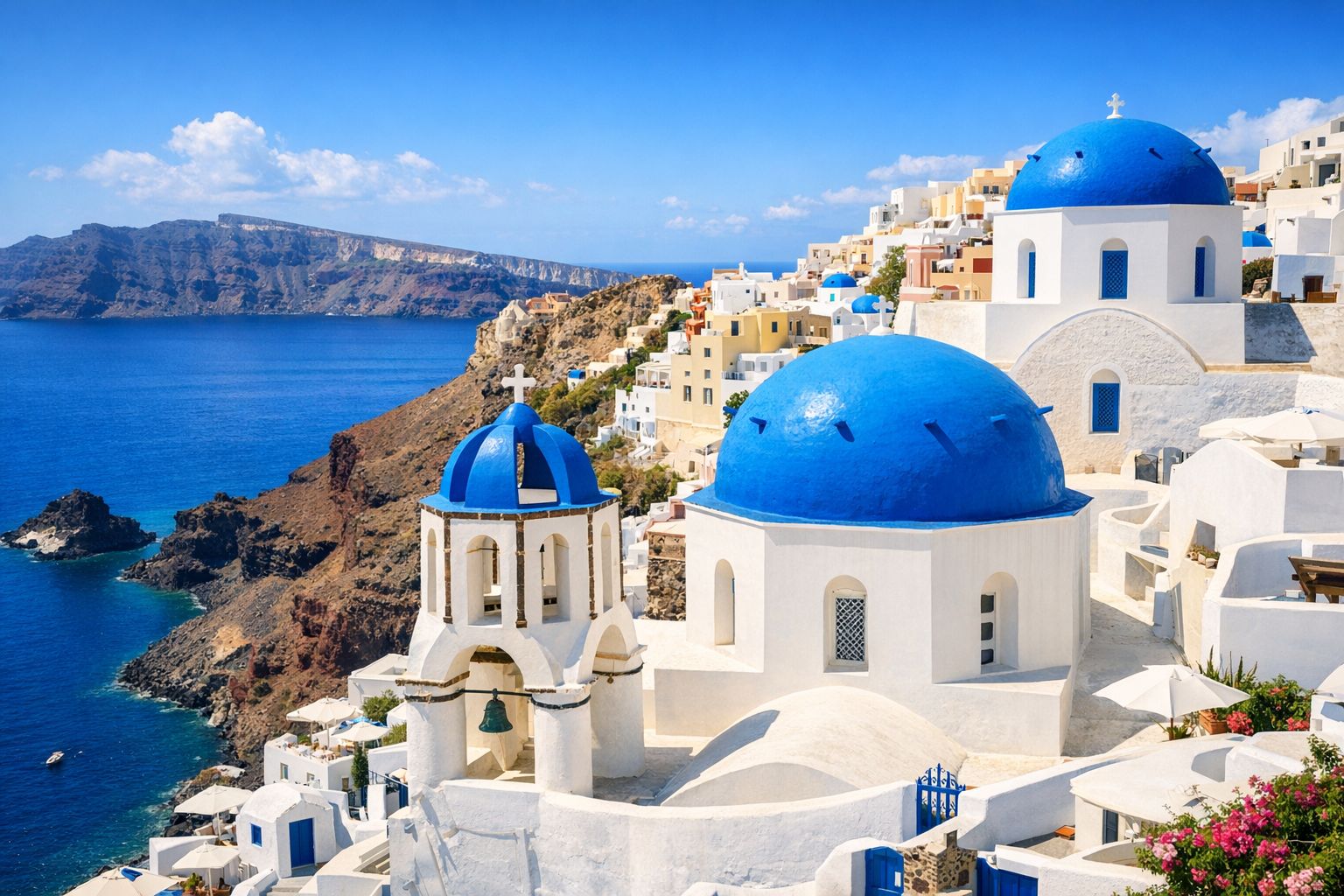
The Cyclades are the islands most UK travellers picture when they think of Greece: whitewashed houses, cobalt-blue domes, clifftop sunsets, and crystal-clear water. They connect well by high-speed ferry and all sit within a reasonable distance of Athens airport, making them ideal for a fly-in, island-hop, fly-out structure.
A strong two-week Cyclades itinerary looks like this:
- Santorini (4 nights): Arrive by flight from the UK. Base yourself in Fira or Oia. Explore the volcanic caldera, visit Akrotiri archaeological site, and watch the sunset from the castle ruins.
- Paros (3 nights): Take the high-speed ferry from Santorini (roughly 1.5–2 hours). Paros is quieter than Santorini, with excellent beaches, a charming harbour town (Parikia), and the beautiful Naoussa fishing village.
- Naxos (3 nights): A short ferry hop from Paros (30–45 minutes). Naxos is the largest Cycladic island, with lush interior villages, long sandy beaches at Agios Prokopios and Plaka, and a fascinating old town with a Venetian kastro.
- Mykonos (3 nights): Ferry from Naxos (roughly 1.5 hours). End your trip with Mykonos's famous beach clubs, vibrant nightlife, and the iconic windmills. Fly home directly from Mykonos airport, or return to Athens.
The Dodecanese Route (Best for History and Beaches Combined)
Rhodes, Kos, and Symi form a natural island-hopping circuit in the southeast Aegean. Rhodes has one of the best-preserved medieval old towns in Europe, a UNESCO World Heritage Site. Kos offers excellent beaches and a more relaxed pace. Symi is a tiny jewel of neoclassical architecture around a horseshoe harbour, perfect for a slower two or three nights.
The Crete and Cyclades Combination (Best for Two-Week Depth)
Fly into Heraklion, spend four nights in Crete exploring the Minoan ruins at Knossos, the Samaria Gorge, and the pink-sand beach at Elafonisi, then take a direct ferry to Santorini (roughly 2 hours on the high-speed service) and continue through the Cyclades. This combination gives you cultural depth alongside the postcard scenery.
Island Combination Decision Matrix
| Island Group | Best For | Ferry Connectivity | Avg. Cost Level | Recommended Stay |
|---|---|---|---|---|
| Cyclades | First-timers, couples, honeymooners | ✅ Excellent | ££££ (Mykonos/Santorini) to ££ (Naxos/Paros) | 3–4 islands over 14 nights |
| Dodecanese | History lovers, families, divers | ✅ Good | ££–£££ | 3 islands over 14 nights |
| Ionian Islands | Families, nature lovers, sailing | ⚠️ Limited inter-island ferries | ££–£££ | 2 islands, hire a car |
| Crete + Cyclades | Culture + beach combination | ✅ Good (seasonal) | £££ | Crete (4–5 nights) + 2 Cycladic islands |
Pro tip: Avoid planning more than four island stops in two weeks. Each move costs you at least half a day in transit, and the joy of island hopping comes from settling into a place long enough to find your favourite taverna, not from ticking off a list.
Step 2: Book Your Flights from the UK (Time: 30–45 minutes)
Flights are the first booking to confirm because they anchor your dates and determine which island you start and end on. For a Greece island-hopping holiday from the UK, you have two main flight strategies: fly into one hub and out of another (open-jaw routing), or fly into and out of Athens and use ferries throughout.
Open-Jaw Routing: The Recommended Approach
An open-jaw flight means flying into one Greek airport and out of a different one. For a Cyclades itinerary, this typically means flying into Santorini (JTR) and flying home from Mykonos (JMK), or flying into Athens (ATH) and flying home from Mykonos. This eliminates the need to backtrack and saves a full travel day.
UK airports with direct routes to major Greek island hubs include:
- London Gatwick and Heathrow: Direct to Athens, Santorini, Mykonos, Rhodes, Corfu, Heraklion, Kos, Kefalonia, and Zakynthos with British Airways, easyJet, TUI, and Jet2.
- Manchester: Direct services to Athens, Rhodes, Corfu, Kos, Heraklion, and Santorini with Jet2, TUI, and easyJet.
- Birmingham and Edinburgh: Seasonal direct routes to Rhodes, Corfu, and Heraklion.
- Bristol and Leeds Bradford: Seasonal direct routes to Corfu, Rhodes, and Kos.
When to Book for Best Prices
Flight prices for Greek summer routes follow a predictable curve. Booking four to six months ahead of your travel dates typically secures the best combination of availability and price. Booking within six weeks of travel in peak season (July and August) often means paying significantly more and having limited seat choice.
Shoulder season flights (May, June, September, and early October) are both cheaper and more comfortable, with fewer crowds and more pleasant temperatures for exploring on foot. Many experienced Greece travellers consider September the finest month: sea temperatures are still close to their summer peak, tourist numbers drop, and prices fall noticeably.
GlobeHunters Package Flights
GlobeHunters combines flights with accommodation in its Greece holiday packages, which means you get ATOL protection on the whole booking and avoid the coordination hassle of matching flights to hotel check-in times. Packages start from around £799 per person for a week in the Greek islands, with two-week combinations priced from approximately £1,299 per person depending on the islands chosen, departure airport, and time of year. Call the GlobeHunters team on 0208 944 4514 to discuss open-jaw itineraries, which are straightforward to quote but harder to configure on standard comparison sites.
Common mistake to avoid: Do not book accommodation before confirming your flights. Ferry timetables in Greece are seasonal, and some routes only operate between May and October. Booking a hotel on an island you cannot reach by ferry in your travel window is an easy error to make.
Step 3: Plan Your Ferry Routes and Book Tickets (Time: 60–90 minutes)
Greek ferries are the heartbeat of island hopping, and understanding how the network works turns a potentially stressful logistics puzzle into one of the most enjoyable parts of the trip. The ferry system in Greece is extensive but not always intuitive, especially for first-time visitors from the UK who are used to fixed train timetables.
How the Greek Ferry System Works
Most Cyclades ferries depart from Piraeus port, which is connected to central Athens by the metro (Line 1). High-speed ferries (catamarans operated by Seajets and Hellenic Seaways) are roughly twice as fast as conventional ferries but more expensive and more susceptible to cancellation in rough weather. Conventional Blue Star Ferries are slower but more reliable and often have better onboard facilities for longer crossings.
Journey times for the most popular Cyclades routes:
| Route | High-Speed Ferry | Conventional Ferry | Approx. Ticket Price (per person) |
|---|---|---|---|
| Santorini to Paros | 1.5–2 hours | 4–5 hours | £25–£55 |
| Paros to Naxos | 30–45 minutes | 1–1.5 hours | £12–£25 |
| Naxos to Mykonos | 1–1.5 hours | 2.5–3 hours | £18–£40 |
| Heraklion to Santorini | 2 hours | Overnight (9–11 hours) | £35–£75 |
| Athens (Piraeus) to Santorini | 4.5–5 hours | 8–9 hours | £35–£85 |
How to Book Ferry Tickets
Book ferry tickets through Ferryhopper, which aggregates all operators and allows you to compare times and prices. Book at least four to six weeks ahead in July and August, as popular morning departures on short routes sell out. In shoulder season (May, June, September), two to three weeks' notice is usually sufficient.
Print or download your tickets to your phone before travelling. Some smaller island ports have limited internet connectivity and unreliable QR code scanners, so having a downloaded PDF is worth the 30 seconds it takes.
Luggage on Ferries
There is no formal luggage allowance on Greek ferries. However, if you are staying in Santorini's Fira or Oia, be aware that your hotel may be at the top of steep cliffs. Wheeled suitcases become a significant problem on cobbled paths. A medium-sized backpack or soft-sided holdall is far more practical for island hopping than a large hard-shell suitcase.
Step 4: Book Your Accommodation Island by Island (Time: 45–60 minutes)
Accommodation strategy for island hopping differs from a standard package holiday. You are booking multiple properties across different islands, which means coordinating check-in times with ferry arrivals and managing multiple confirmation emails. Having a clear system here prevents the single most common island-hopping headache: arriving at a hotel after a long ferry crossing to find your room is not ready until 3pm and your luggage has no safe place to be stored.
Accommodation Types and What They Cost
Greek island accommodation spans a wide range, from budget-friendly rooms in family-run guesthouses to some of the most architecturally spectacular cave hotels in Europe (Santorini's caldera-edge hotels are genuinely unlike anything else in the world). Budget your accommodation costs realistically based on the island:
| Island | Budget (per night, double room) | Mid-Range | Luxury | Peak Season Tip |
|---|---|---|---|---|
| Santorini | £80–£120 | £180–£350 | £500+ | Book 6+ months ahead for caldera views |
| Mykonos | £90–£130 | £200–£400 | £600+ | Stay in Mykonos Town, not a beach resort |
| Paros | £50–£80 | £100–£200 | £300+ | Naoussa village is worth the premium |
| Naxos | £45–£75 | £90–£180 | £250+ | Most family-friendly of the Cyclades |
| Rhodes | £55–£85 | £110–£220 | £350+ | Old Town accommodation books fast |
| Crete | £50–£80 | £100–£200 | £400+ | Chania Old Town is the finest base |
Where to Base Yourself on Each Island
Location within an island matters as much as the island itself. On Santorini, the difference between staying in Oia (quiet, clifftop, romantic) and Kamari (beach resort, more affordable, busier) is essentially the difference between two completely different holiday experiences. On Naxos, Naxos Town gives you access to the port, the kastro, and the old market, while Agios Prokopios beach puts you in front of the best swimming but requires a bus or taxi for evenings out.
When booking through GlobeHunters, the team can advise on specific hotel locations based on your travel style. For independent bookings, always check the property's distance from the port before confirming, because a 30-minute taxi ride to your hotel after a 5-hour ferry crossing with luggage is a very different arrival experience than a 5-minute walk.
Pro tip: Ask every hotel whether they offer luggage storage on departure day. Most Greek guesthouses and hotels will happily hold your bags so you can explore the island on your last day before an evening ferry, but it is worth confirming at booking rather than assuming.
Step 5: Build Your Day-by-Day Itinerary (Time: 60 minutes)
Once flights, ferries, and accommodation are confirmed, building a day-by-day itinerary is more about prioritising than planning, because each island offers more than two weeks could comfortably cover. The following 14-day sample itinerary uses the Classic Cyclades route as its framework. Adapt it freely to your own combination.
Sample 14-Day Cyclades Itinerary for UK Travellers
Day 1: Fly from UK to Santorini. Evening arrival, check in, first meal at a caldera-view taverna. Do not over-plan this day; the arrival experience itself is memorable.
Day 2: Explore Oia and Fira. Walk the caldera path between the two villages (approximately 10km; allow 3–5 hours, start early and carry plenty of water). Visit the Museum of Prehistoric Thera in Fira for context on Akrotiri. Sunset from Oia castle.
Day 3: Akrotiri and the Southern Beaches. Morning visit to the Akrotiri archaeological site, a Bronze Age settlement with strong Minoan influences, preserved under volcanic ash. Afternoon at Perissa Beach (nearby Red Beach has been officially closed because of rockfall risk, so check local signage and do not enter closed areas).
Day 4: Wine Tasting and Volcano Excursion. Santorini's volcanic soil produces distinctive Assyrtiko white wine. Book a winery tour in the morning (Santo Wines and Domaine Sigalas are both well-regarded). Afternoon boat trip to the Nea Kameni volcanic island and hot springs.
Day 5: Ferry to Paros. Morning ferry (departs roughly 08:00–10:00, check current timetables). Arrive in Parikia, check in, afternoon walk around the old town and the Panagia Ekatontapiliani church, one of the oldest Christian basilicas in Greece.
Day 6: Naoussa and Golden Beach. Take a local bus or hire a scooter to Naoussa fishing village in the morning. Afternoon at Golden Beach or Kolymbithres beach, famous for its granite rock formations.
Day 7: Antiparos Day Trip. A short ferry from Parikia takes you to Antiparos, a tiny island with a cave that has been visited since ancient times. Quieter and less developed than Paros, it makes an excellent contrast.
Day 8: Ferry to Naxos. Short crossing (30–45 minutes). Check in, afternoon swim at Agios Georgios beach just south of the port. Evening dinner at the waterfront.
Day 9: Naxos Town and the Portara. The giant marble doorway of an unfinished ancient temple stands at the entrance to Naxos harbour and is one of Greece's most atmospheric ancient monuments. Morning exploring the Venetian kastro and old market lanes. Afternoon free.
Day 10: Naxos Interior Villages. Hire a car for the day (Naxos is large enough to warrant it) and drive through the mountain villages of Halki, Filoti, and Apiranthos. The landscape is dramatically different from the coast, with Byzantine towers and marble-paved streets.
Day 11: Beach Day at Plaka or Agios Prokopios. These are two of the finest beaches in the Cyclades: long, sandy, with clear shallow water ideal for families. No agenda required.
Day 12: Ferry to Mykonos. Afternoon arrival. Check in, explore Mykonos Town (the Chora) and the famous windmills. Evening meal in the Little Venice district.
Day 13: Delos Day Trip. The uninhabited island of Delos, a short boat ride from Mykonos, is one of the most significant archaeological sites in the entire Mediterranean. A UNESCO World Heritage Site, it was the mythological birthplace of Apollo and Artemis and the religious centre of the ancient Aegean world. Half a day here is one of the most memorable experiences in all of Greece.
Day 14: Final Morning in Mykonos, Fly Home. Last swim, last Greek coffee, afternoon transfer to the airport.
Step 6: Budget Your Trip Realistically (Time: 30 minutes)
Island hopping in Greece can be done on a range of budgets, but the costs stack up quickly if you are not tracking them. The following breakdown gives you realistic figures for a two-week Cyclades trip for two people travelling from the UK in mid-season (June or September).
Complete Two-Week Greece Budget Breakdown (Per Person)
| Expense Category | Budget Traveller | Mid-Range | Comfort/Luxury |
|---|---|---|---|
| Return flights from UK | £180–£280 | £280–£450 | £500–£900+ |
| Accommodation (13 nights) | £600–£900 | £1,000–£1,800 | £2,500–£6,000+ |
| Ferry tickets (3–4 crossings) | £80–£120 | £100–£160 | £150–£220 |
| Food and drink | £30–£45/day | £55–£90/day | £120–£200+/day |
| Activities and excursions | £80–£120 | £200–£350 | £400–£700+ |
| Local transport (buses, taxis) | £60–£90 | £100–£180 | £200–£400 |
| Travel insurance | £35–£60 | £50–£80 | £80–£150 |
| Estimated Total (per person) | £1,450–£2,200 | £2,500–£4,300 | £5,500–£11,000+ |
Where the package advantage kicks in: GlobeHunters' two-week Greece island-hopping packages start from approximately £1,299 per person with flights and accommodation included, which can compare favourably with the mid-range cost of booking flights and hotels separately, plus the ATOL financial protection that independent hotel bookings do not provide.
Where UK Travellers Consistently Overspend
Three budget categories catch most UK visitors by surprise on a Greek island holiday:
- Santorini and Mykonos restaurant pricing. A meal for two with wine at a caldera-view restaurant in Oia or a beach club in Mykonos can easily reach £120–£180. Eating one step back from the view (literally: walk one street inland) often cuts prices noticeably for equally good food.
- Taxi fares in Santorini. There are very few taxis on the island and very many tourists, so long waits are common during peak hours. Agree the fare before setting off, and plan your movements around the cheap local KTEL bus network, allowing extra time as buses can be crowded in summer.
- Last-minute ferry upgrades. Booking an economy seat on a high-speed ferry and then upgrading at the port is usually more expensive than booking the higher seat class in advance. Decide your comfort level when you book the ticket.
Step 7: Sort Your Travel Documents and Practical Essentials (Time: 20 minutes)
Greece is a member of the European Union, and since the UK's departure from the EU, UK passport holders travel to Greece as third-country nationals. The practical implications are straightforward but worth understanding before you travel.
Passport and Entry Requirements for UK Travellers
UK citizens can enter Greece without a visa for stays of up to 90 days within any 180-day period, under the Schengen Agreement's visa-free provisions. Under Schengen rules your passport must have been issued less than 10 years before the date you arrive and be valid for at least three months after the date you plan to leave. You do not usually need six months' validity, but check both dates carefully before booking. Since the EU's Entry/Exit System (EES) came in, UK travellers also register their fingerprints and a facial photo at the border on their first entry.
The European Travel Information and Authorisation System (ETIAS), which will require a pre-authorisation for UK visitors to Schengen countries, has been subject to repeated delays in its implementation timeline. Check the European Commission's official travel page for the current status before your trip.
Health Insurance for Greece
The UK Global Health Insurance Card (GHIC) has replaced the European Health Insurance Card (EHIC) for most UK residents, although an existing EHIC can still be used until the expiry date on the card. The GHIC gives you access to necessary state healthcare in EU countries on the same basis as local residents, which may be free or may involve the same charges locals pay. Apply for one free through the NHS website before travelling. It does not replace travel insurance but can reduce medical costs if you need treatment.
Money and Currency
Greece uses the euro (€). The most cost-effective approach for UK travellers is to use a fee-free travel card (Starling, Monzo, and Wise all offer competitive euro exchange rates without transaction fees) for card payments, and to carry some cash for smaller tavernas, beach kiosks, and port market stalls that remain cash-only. ATMs are available on all major islands, though they may charge withdrawal fees depending on your bank.
Essential Packing Checklist for Greek Island Hopping
- Lightweight backpack or soft holdall (wheeled suitcases are impractical on cobbled island streets)
- High-SPF sun protection (Greek summer sun is significantly stronger than UK sun)
- Reef-safe sunscreen if snorkelling (important for marine conservation)
- Water shoes or sandals suitable for rocky beaches
- A light layer for ferry journeys (air conditioning on Greek ferries can be aggressively cold)
- Portable phone charger (long ferry crossings drain batteries)
- Printed or downloaded copies of all ferry tickets and hotel confirmations
- GHIC card and travel insurance documents
Step 8: Book Activities and Experiences in Advance (Time: 30 minutes)
The most memorable experiences on a Greek island holiday are not the ones you stumble across, they are the ones that require advance booking. This is especially true in July and August, when popular excursions fill weeks ahead of time.
Activities Worth Pre-Booking
Delos archaeological tour (from Mykonos): Boat transfers to Delos run to a fixed schedule, and overnight stays on the island are not allowed, so plan your visit around the return boat times. The site is large and a guided tour adds enormous context. Book the boat and, if you want one, a licensed guide in advance.
Santorini sunset sailing tour: Catamaran tours around the Santorini caldera, including the hot springs and Red Beach, are among the most popular activities in all of Greece. The best operators sell out weeks ahead in peak season. GlobeHunters' platform includes Viator-powered activity booking, allowing you to add excursions to your package at the time of booking.
Winery tours in Santorini: Estate tours at wineries like Domaine Sigalas and Hatzidakis are small-group experiences with limited availability. Booking two to three weeks ahead is advisable.
Samaria Gorge hike (Crete): The 16km gorge walk in the White Mountains is one of Europe's great hikes. It requires an early start from Chania, as the gorge must be completed before closing time. Organised day trips handle the logistics, but book ahead.
Cooking classes: Several islands offer traditional Greek cooking experiences (making spanakopita, fresh pasta, and mezze) that make excellent half-day activities and are popular with couples and families alike.
What You Do Not Need to Pre-Book
Most beach visits, museum entries (except the Acropolis in Athens, which uses timed entry slots that are best booked ahead), taverna meals, and local bus journeys require no advance planning. Part of the pleasure of island hopping is leaving space for spontaneous discovery: the cove you find by following a goat track, the family-run restaurant with no menu in English, the old man at the port who recommends the best beach on the island because you asked.
Step 9: Consider a GlobeHunters Package for the Whole Trip

Planning a multi-island trip independently is genuinely achievable, but it requires time, coordination, and the confidence to manage multiple bookings across different platforms in different currencies. A package holiday from GlobeHunters simplifies the process without removing the adventure.
What a GlobeHunters Greece Package Includes
GlobeHunters' Greece island-hopping packages combine:
- Return flights from your nearest UK airport to your chosen Greek island gateway
- Airport transfers at both ends
- Accommodation across your chosen islands, curated to your budget and travel style
- ATOL financial protection on the complete booking
- Access to Viator-powered activity booking through the GlobeHunters platform
- Support from a UK-based team available on 0208 944 4514 before and during your trip
Packages for a two-week Greek island holiday from the UK start from approximately £1,299 per person for mid-season travel, rising to £1,899–£2,499 per person for peak July and August departures with premium accommodation. The ATOL protection is particularly valuable for multi-leg trips where a single flight cancellation can cascade into missed ferries and lost hotel nights.
The Package vs. Independent Booking Comparison
| Factor | GlobeHunters Package | Independent Booking |
|---|---|---|
| Financial protection | ✅ ATOL protected | ⚠️ Depends on payment method |
| Planning time | ✅ Low (1–2 calls) | ⚠️ 3–5 hours or more |
| Price transparency | ✅ Single quoted price | ⚠️ Multiple invoices, risk of hidden fees |
| Flexibility | ⚠️ Less flexible mid-trip | ✅ Fully flexible |
| Support if things go wrong | ✅ UK-based team available | ❌ You manage it yourself |
| Activity booking | ✅ Viator integration | ✅ Viator/GetYourGuide direct |
| Best for | First-timers, couples, families | Experienced travellers, maximising flexibility |
The Best Time of Year for a Greek Island Holiday from the UK
The Greek island season runs from April to October, but the experience varies enormously depending on when you travel. Understanding the seasonal rhythm helps you pick the timing that matches your priorities.
Month-by-Month Seasonal Guide
April and early May: Beautiful wildflowers, mild temperatures (18–22°C), very few tourists, and low prices. The sea is still cool for swimming (around 17–19°C). Some smaller restaurants and hotels are not yet open. Ideal for walkers and cultural travellers.
Late May and June: The sweet spot for many UK travellers. Temperatures reach 24–28°C, the sea warms up to comfortable swimming temperatures (around 19–23°C), crowds are manageable, and prices are lower than July and August. Ferries are running full schedules. One of the best times of year for island hopping.
July and August: Peak season. Temperatures regularly exceed 30–35°C (with Meltemi winds providing relief on the Cyclades). Crowds are at their maximum, prices at their highest, and popular sunsets (Oia, Mykonos windmills) become genuinely crowded. Still magical, but plan further ahead and budget more.
September and early October: The sea is still at its warmest after the summer (typically around 24–25°C in September), temperatures ease to a more comfortable 24–28°C, crowds thin noticeably after mid-September, and prices drop. Many experienced Greece travellers' favourite time to visit. Most restaurants and ferries still fully operational until mid-October.
Late October onwards: The season winds down. Some island businesses close, ferry schedules reduce, and the weather becomes unpredictable. Not recommended for island hopping.
YouTube: Watch Before You Go
Before finalising your island combination, watching footage of the islands you are considering helps enormously with accommodation location decisions and activity planning. The video below offers an excellent visual overview of the Cyclades island-hopping experience that complements the planning steps above.
Frequently Asked Questions: Greece Island Hopping from the UK
How do I get to the Greek islands from the UK?
The most common route is a direct flight from a UK airport to a Greek island gateway (Santorini, Mykonos, Rhodes, Corfu, Heraklion, or Kos) or to Athens, followed by ferry connections between islands. Multiple UK airports offer direct summer routes including London Gatwick, Heathrow, Manchester, Birmingham, and Bristol. Journey times from the UK to Athens are approximately three to four hours by air.
Do I need a visa to visit Greece from the UK?
No. UK passport holders can visit Greece visa-free for up to 90 days within any 180-day period under Schengen rules. Your passport must have been issued less than 10 years before the date you arrive and be valid for at least three months after the date you plan to leave. ETIAS pre-authorisation (a digital travel authorisation system for non-EU visitors) has been announced for the future but has not yet been implemented; check the European Commission's official travel information page before your trip for the latest status.
How many islands should I visit in two weeks?
Three to four islands is the ideal range for a two-week trip. More than four means spending a significant proportion of your holiday in transit rather than on the islands. Fewer than three is perfectly valid if you prefer depth over breadth. The Santorini-Paros-Naxos-Mykonos circuit covers four islands with manageable ferry times and excellent variety.
What is the best island combination for a Greek island holiday from the UK?
For first-time visitors, the Cyclades circuit (Santorini, Paros, Naxos, Mykonos) is the most popular and logistically straightforward. For history lovers, the Dodecanese (Rhodes, Kos, Symi) is excellent. For a combination of culture and beach, Crete followed by two Cycladic islands works very well. The Ionian Islands (Corfu, Kefalonia, Zakynthos) are beautiful but have limited inter-island ferry connections, making them better suited to a single-island base or a hire-car trip.
Is it better to book a package or plan a Greek island holiday independently?
It depends on your experience level and how much planning time you have. Packages from GlobeHunters offer ATOL financial protection, a single point of contact if things go wrong, and often competitive combined pricing. Independent bookings offer more flexibility to change plans mid-trip. For first-timers and families, a package is strongly recommended. For experienced independent travellers comfortable managing multiple bookings, the DIY approach can work well.
How much does a two-week Greek island holiday from the UK cost?
Costs vary significantly by travel style. Adding up the mid-range figures in our budget table above gives roughly £2,500–£4,300 per person (about £5,000–£8,600 for two people), covering flights, accommodation, ferries, food, activities, insurance and local transport. GlobeHunters packages for a two-week Greek island holiday start from around £1,299 per person with flights and accommodation included; food, ferries and activities are budgeted separately.
Do I need travel insurance for a Greek island holiday?
Yes, always. Travel insurance is essential for any Greek island-hopping trip, specifically because you have multiple transport legs (flights and ferries) each of which can be delayed or cancelled. Ensure your policy covers: medical expenses and repatriation, ferry and domestic flight cancellations, lost or delayed baggage, and curtailment. Cheap policies that exclude ferry travel are not adequate for this type of holiday.
When is the best time of year to go island hopping in Greece from the UK?
Late May through June and September through early October are the optimal windows for most UK travellers. These shoulder-season months offer warm sea temperatures, manageable crowds, lower prices, and very good weather. July and August are magnificent but expensive, crowded, and very hot. April and early May suit walkers and cultural travellers who do not prioritise swimming.
Can I book ferry tickets in advance from the UK?
Yes. Ferryhopper allows UK travellers to search and book ferry tickets online for all major Greek routes. Book four to eight weeks ahead for July and August travel on popular routes (Santorini to Paros, Naxos to Mykonos). For shoulder season travel, two to three weeks' notice is usually sufficient, though booking ahead remains advisable to secure your preferred departure time.
Is Greece suitable for a family island-hopping holiday?
Yes, Greece is an excellent family destination. Naxos is consistently recommended for families, with long sandy beaches, shallow water, good supermarkets, and a town with enough restaurants and activities to keep everyone happy. Crete is also very family-friendly, with a wide range of resorts, water parks, and beaches. Santorini and Mykonos are beautiful but better suited to couples and adults due to their terrain (steep cliffs, party atmosphere) and premium pricing.
What currency do I need for Greece, and can I use my UK bank card?
Greece uses the euro (€). UK bank cards (Visa and Mastercard) are accepted in most hotels, restaurants, and larger shops. Cash is still useful for smaller tavernas, market stalls, beach kiosks, and some ferry port facilities. Using a fee-free travel card such as Starling, Monzo, or Wise avoids foreign transaction fees. Inform your bank before travelling that you will be using your card in Greece.
Do I need to speak Greek to island hop?
No. English is widely spoken across the main tourist islands of Greece, particularly in hotels, restaurants, and at ferry ports. Learning a few basic Greek phrases (kalimera for good morning, efharisto for thank you, parakalo for please) is appreciated by locals and adds warmth to interactions, but it is not a practical necessity.
Key Takeaways
- Stay within one island group. The Cyclades is the most connected and logical choice for UK travellers doing their first island-hopping trip.
- Three to four islands is the sweet spot for a two-week trip. More than that means too many transit days; fewer limits the variety that makes island hopping rewarding.
- Book flights first, ferries second, accommodation third. This sequence prevents the common mistake of booking a hotel on an island you cannot reach within your ferry schedule.
- Shoulder season (late May/June or September) offers the best overall experience for most UK travellers: warm weather, warm sea, manageable crowds, and lower prices.
- Use open-jaw routing (fly into one island, fly home from another) to eliminate backtracking and save a full travel day.
- A GlobeHunters package starting from £1,299 per person provides ATOL protection and removes the coordination complexity of multi-island independent booking, with genuine price competitiveness for mid-range travellers.
- Pre-book the Delos day trip, Santorini sailing tours, and winery visits. These sell out weeks ahead in peak season and are among the most memorable experiences on the trip.
- A soft holdall or backpack beats a wheeled suitcase for island hopping. Cobbled streets, steep paths, and small ferries make hard-shell luggage a genuine inconvenience.
Ready to turn this plan into a booking? The GlobeHunters team specialises in exactly this kind of multi-island itinerary and can quote a combined package with flights, accommodation, and transfers in a single call. Reach them on 0208 944 4514 or browse current Greece island-hopping packages on the GlobeHunters platform to see live pricing for your travel dates.
About the author
Spiros Maragkoudakis · Chief Commercial Officer
Ready to Book Your How Holiday?
Our travel experts are ready to help you plan the perfect trip. Call us today or browse our latest deals.
Ready to Start Planning?
Speak to our travel experts for personalised advice and the best deals on your next holiday.
Call 0208 944 4514