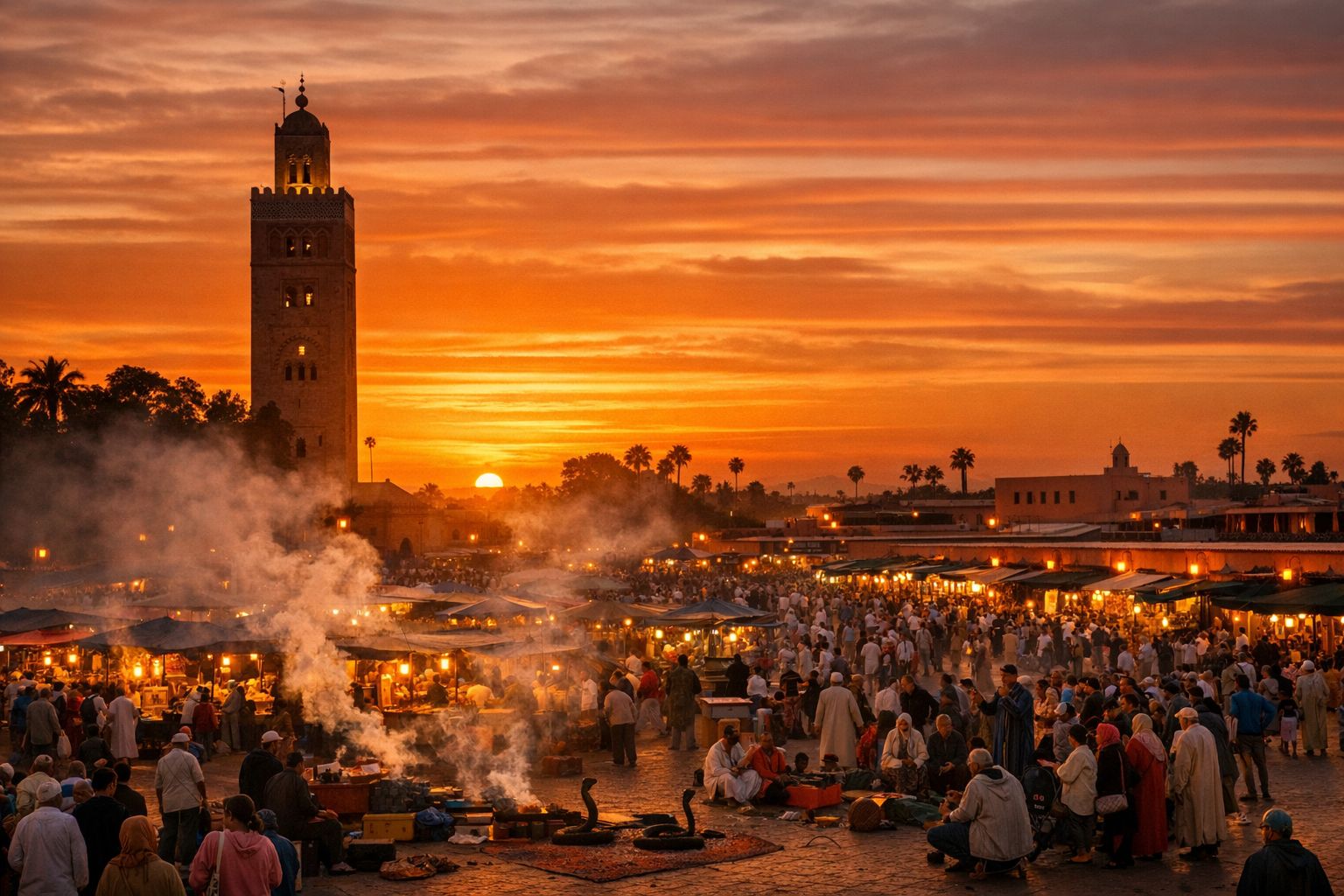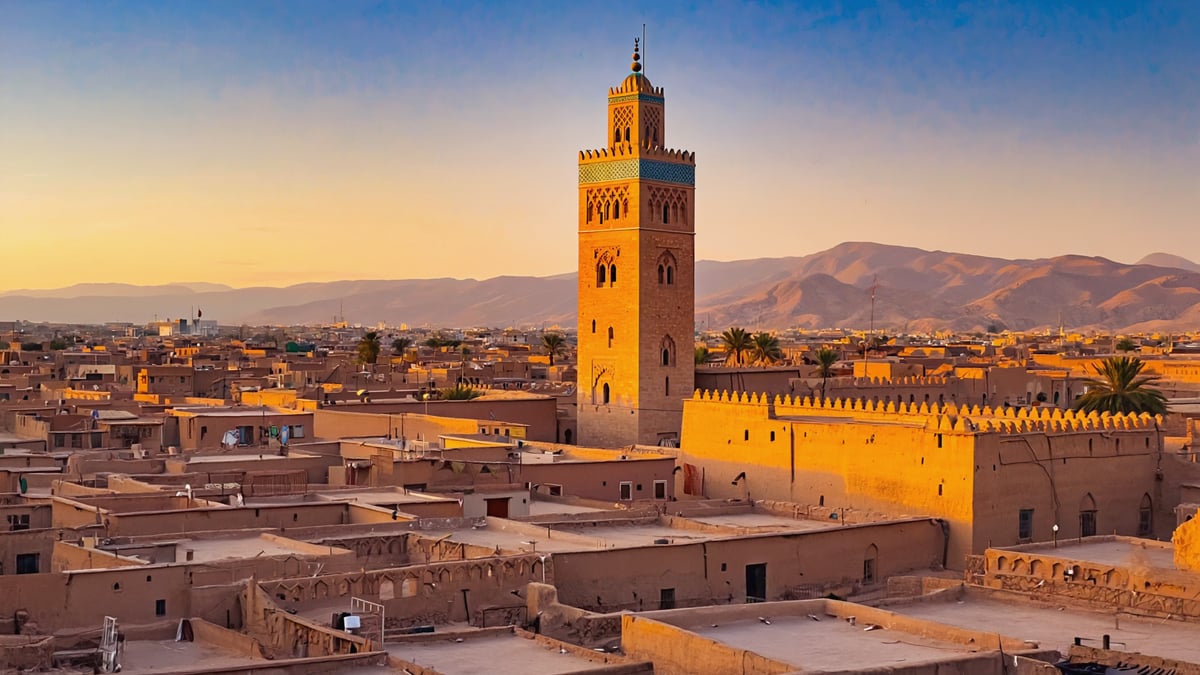
There is a moment, somewhere between stepping off the plane at Marrakech Menara Airport and turning your first corner into the medina, when the city grabs hold of you. The air carries cumin, woodsmoke, and something floral you can't quite name. A moped threads past within centimetres. A man calls out from a stall draped in lanterns. And then you look up and see the Koutoubia Minaret rising above it all, utterly calm in the chaos. That moment is why Marrakech has become one of the most popular Marrakech city break UK destinations, drawing travellers from London, Manchester, Edinburgh, and beyond on direct flights that take barely four hours.
But Marrakech is also, frankly, a destination that rewards preparation. The city operates on its own logic, and first-time visitors who arrive without a plan can find themselves overwhelmed, overcharged, or simply unsure where to start. This guide exists to fix that. It covers everything a UK traveller needs: where to stay, what to eat, how to navigate the souks, which day trips are worth your time, what a Marrakech riad holiday actually feels like, and how to book a Morocco city break package from the UK that handles the complexity for you. Whether you have three nights or seven, this is the resource that turns a good Marrakech trip into an exceptional one.
Why Marrakech Still Earns Its Place on the UK Travel Shortlist
The simplest argument for Marrakech is this: nowhere else accessible from the UK in under four hours delivers such a complete sensory departure from everyday British life. Within a single city block you move from medieval architecture to contemporary art galleries, from street food stalls to rooftop restaurants with Atlas Mountain views. The cultural contrast is enormous, and that contrast is precisely what UK travellers consistently cite as the draw.
Geographically, Marrakech sits in the Hsoua plain at the foot of the High Atlas Mountains, roughly 240 kilometres south of Casablanca. At an elevation of around 450 metres, the city enjoys a semi-arid climate with warm, dry summers and mild winters. This makes it genuinely viable as a year-round destination, unlike many Mediterranean alternatives that become ghost towns from October to April.
For UK travellers specifically, the logistics are unusually straightforward. Direct flights to Marrakech Menara Airport operate from London Heathrow, London Gatwick, Manchester, Birmingham, Bristol, and Edinburgh. Flight times range from 3 hours 30 minutes to 4 hours 15 minutes depending on departure city. No long-haul fatigue, no stopover stress, and no significant jet lag given the one-hour time difference (Morocco observes GMT in winter and BST in summer, making it the same time zone as the UK for much of the year).
The cost picture is also compelling. Marrakech remains notably affordable for UK visitors, particularly on accommodation and food. A three-course meal at a well-regarded local restaurant costs a fraction of its London equivalent. Riad stays, which in London would command boutique hotel prices, are genuinely accessible on a mid-range budget. And the dirham (MAD) has historically provided UK travellers with comfortable spending power, though it is always worth checking current exchange rates before travel.
Finally, there is the sheer density of experiences packed into a small geographic area. The historic medina, a UNESCO World Heritage Site, is roughly four kilometres across at its widest point. You can walk from the Djemaa el-Fna to the Saadian Tombs in under twenty minutes. The Atlas Mountains are a ninety-minute drive. The Saharan dunes of Merzouga are a day trip by air or an overnight journey by road. Marrakech punches far above its size as a base for exploration.
Understanding the Medina: How to Navigate Without Getting Genuinely Lost
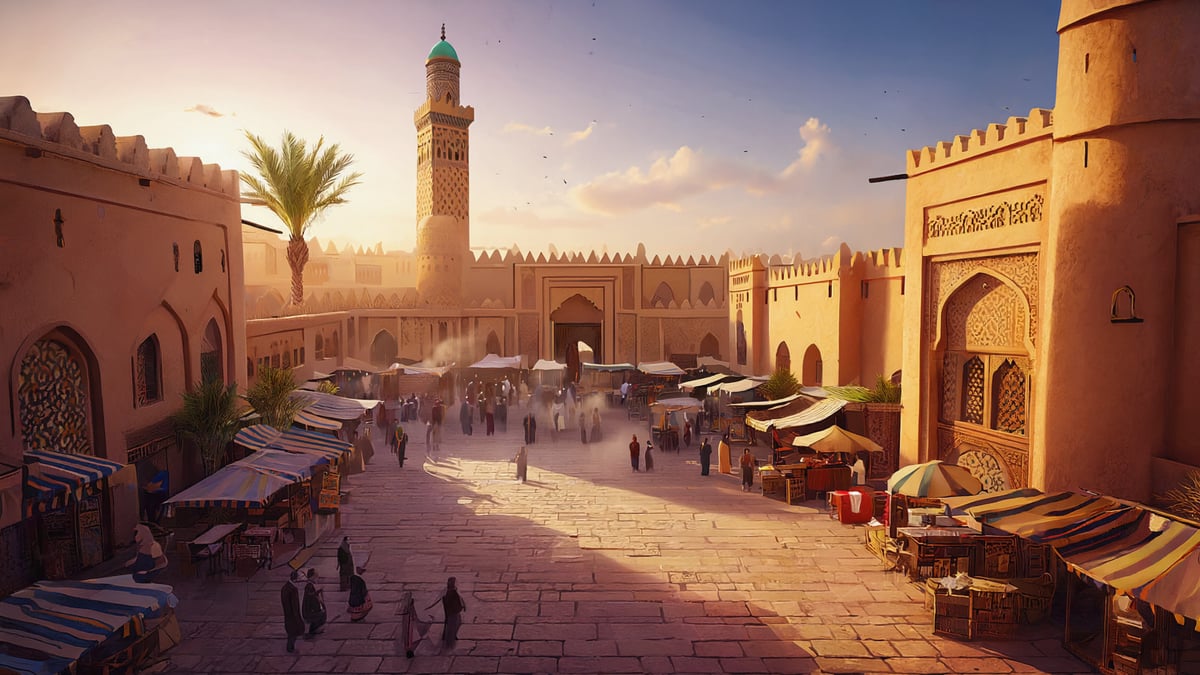
The medina is the walled old city, and it is both Marrakech's greatest attraction and its most disorienting feature. The street grid, such as it is, follows a logic developed over a thousand years of organic growth rather than any planner's blueprint. Alleys split, merge, dead-end, and circle back. Google Maps works, but it frequently struggles with the narrowest derbs (private alleyways) and occasionally routes you through passages that no longer exist.
The practical approach is to accept that you will get lost, and to make peace with that fact before it happens. Getting lost in the medina is not a problem to solve; it is one of the core experiences of being there. The key is to have two or three landmark anchors you can always navigate back to.
The most reliable anchor is the Djemaa el-Fna, the main square at the heart of the medina. Every major route leads back to it eventually, and it is large enough to appear on any mapping application. A second useful anchor is the Koutoubia Mosque, visible from much of the medina due to its 70-metre minaret, and situated just outside the medina walls to the west. If you can see the Koutoubia, you can orient yourself.
The Souks: A Neighbourhood-by-Neighbourhood Breakdown
The souks north of Djemaa el-Fna are organised, roughly, by trade. This is a centuries-old system that still largely holds today, and understanding it makes navigating the things to do in Marrakech list far more efficient.
- Souk Semmarine: The main artery heading north from the square. Wide, covered, and lined with textiles, clothing, and souvenirs. This is where most visitors start and where prices are highest because foot traffic is highest.
- Souk el-Attarine: The spice and perfume souk, branching east off Semmarine. The smell hits you before you see it. Mounds of ras el hanout, saffron, dried rose petals, and argan oil products fill the stalls.
- Souk Cherratine: The leather workers' souk. Raw hides, belts, bags, and sandals (babouches) at significantly better prices than Semmarine.
- Souk des Teinturiers (Dyers' Souk): Hanks of freshly dyed wool hung from the walls to dry. One of the most photographed corners of the medina, and genuinely worth seeking out for the colour alone.
- Souk Haddadine: The blacksmiths' souk, where the sound of hammering metal fills the air. Lanterns, mirrors, and decorative ironwork at workshop prices.
Bargaining is expected in the souks, but it is worth calibrating your expectations. The opening price at tourist-facing stalls is typically two to four times the settled price. A reasonable approach is to counter at roughly 40-50% of the opening offer and negotiate from there. Being cheerful and unhurried is more effective than being aggressive. Walking away (genuinely, not performatively) is the single most powerful bargaining move available.
Beyond the Souks: The Quieter Medina
The southern medina around the Mellah (the historic Jewish quarter) and the Kasbah district operates at a noticeably slower pace than the tourist-heavy souk area. The Saadian Tombs, the El Badi Palace ruins, and the Bahia Palace are all located in this part of the medina and are among the most significant historical sites in the city. Crowds are lighter here, especially in the mornings before 10am, and the streets around the Mellah market offer excellent local produce shopping at prices that bear no relation to the souk tourist rates.
Riad Stays: What They Are, Why They Matter, and How to Choose One
A Marrakech riad holiday is one of those experiences that photographs cannot fully communicate. A riad is a traditional Moroccan townhouse built around a central courtyard, typically featuring a fountain, citrus trees, and tiled surfaces that create a cool, quiet sanctuary from the heat and noise of the medina streets outside. The exterior is deliberately unremarkable, often just a plain wall with a wooden door. The interior is the revelation.
Riads have been converted into guesthouses and boutique hotels at scale over the past two decades, and the quality range is enormous. At the budget end, a simple riad room in the medina can be found for £40-60 per night. At the luxury end, full riad buyouts (taking the entire property exclusively) are available for significant sums and are popular with small groups and honeymooners. The mid-range sweet spot, around £80-150 per night for a double room in a well-restored riad with breakfast included, delivers an experience that simply has no equivalent at that price point in any Western European city.
What to Look for When Booking a Riad
Location within the medina matters considerably. Riads in the northern medina near the souks put you close to the action but in a noisier environment. Riads in the Kasbah or Mellah area are quieter and feel more authentically residential, but require longer walks or taxi rides to the main attractions. The Mouassine neighbourhood, roughly northwest of Djemaa el-Fna, is widely considered the sweet spot for first-time visitors: close enough to walk everywhere, but slightly removed from the most tourist-dense streets.
Key features worth prioritising in a riad booking:
- A rooftop terrace: Essential for breakfast and sunset drinks. Not all riads have them.
- Air conditioning: Non-negotiable from May to September, when temperatures regularly exceed 35°C.
- Breakfast included: Riad breakfasts, typically featuring msemen (flatbreads), amlou (almond and argan oil paste), fresh-squeezed orange juice, and mint tea, are genuinely part of the experience.
- A dedicated reception or concierge: The best riads have knowledgeable staff who can arrange hammam appointments, day trips, and restaurant reservations. This local knowledge is worth as much as any guidebook.
- Ensuite bathrooms: Not all riad rooms have private bathrooms, particularly at the budget end. Confirm before booking.
For couples and honeymooners, many riads offer suite-level rooms with private terraces or plunge pools at prices that would represent extraordinary value in any comparable European destination. The combination of Moorish architecture, candlelit courtyards, and attentive service makes riad stays a consistent highlight in traveller reviews from UK visitors.
GlobeHunters offers curated Marrakech riad holiday deals combining flights, riad accommodation, and selected activities as a complete package, removing the complexity of piecing together individual bookings while maintaining the authentic riad experience.
The Djemaa el-Fna: Marrakech's Living Theatre
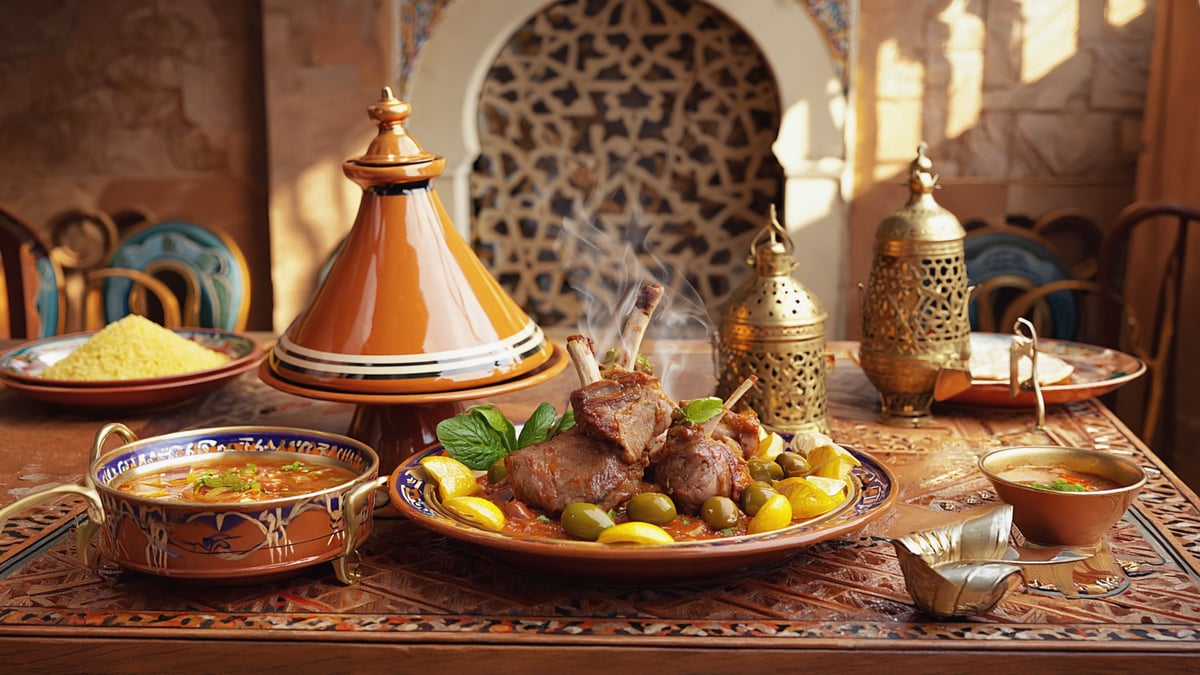
No account of Marrakech is complete without the Djemaa el-Fna, and no amount of prior reading fully prepares a first-time visitor for it. The square is a UNESCO-recognised example of Intangible Cultural Heritage, an acknowledgement that what happens here is not merely a tourist spectacle but a living performance tradition that has operated continuously for centuries.
The square transforms completely between day and night. By day, it is dominated by orange juice vendors (fresh-squeezed for around 4 dirhams, roughly 30p), snake charmers, henna artists, water sellers in traditional costume, and storytellers performing to circles of gathered listeners. By night, the food stalls roll in and the square becomes an enormous open-air dining hall, with smoke rising from dozens of grills and vendors calling out in English, French, and Arabic to passing tourists.
Navigating the Square as a UK Traveller
The Djemaa el-Fna operates on a principle of performance and compensation that can catch unprepared visitors off guard. Photograph a snake charmer and you will be asked for payment. Sit near a musician and you may find a hat thrust towards you. Accept a henna design and you will be quoted a price after it is applied rather than before. None of this is hostile; it is simply the economic logic of the space. The straightforward approach is to agree prices before any interaction, carry small denomination dirhams, and be politely direct about declining what you don't want.
The rooftop cafés surrounding the square offer a solution for those who want the visual experience without the ground-level intensity. Café de France, Café Argana, and several others provide elevated views of the square, mint tea, and a relatively peaceful perch from which to watch the spectacle below. Arrive at sunset for the most dramatic light and the transition from day to evening modes.
The food stalls themselves are worth eating at, despite the occasionally theatrical approach of the touts. Stall 14 has a long-standing reputation for harira (the traditional tomato and lentil soup), and the merguez sandwiches at multiple stalls are genuinely excellent. Ask to see the food before ordering, and choose stalls that are busy with local Moroccan customers rather than those exclusively targeting tourists.
Marrakech's Historic Sites: A Practical Visitor Framework
Marrakech has more significant historical monuments per square kilometre than almost any other city in North Africa, and the challenge for visitors is prioritisation rather than finding things to see. The sites below represent the essential list for a three-to-five night stay, organised by how much time and energy they demand.
High Priority (Must Visit)
The Bahia Palace is one of the most complete examples of 19th-century Moroccan palatial architecture in existence. Built for a powerful vizier, the palace covers roughly 8,000 square metres and features elaborately painted cedar ceilings, intricate zellij tilework, and a series of courtyards that reward slow exploration. It is open to visitors daily, and morning visits (before 9:30am) offer the best light and smallest crowds. Entry costs approximately 70 dirhams (around £5.50).
The Saadian Tombs were sealed for over two centuries after being walled up by a subsequent sultan and were only rediscovered in 1917. The tombs house the remains of over sixty members of the Saadian dynasty in elaborately decorated chambers. The site is small and can feel crowded at peak times; visiting at opening (9am) is strongly recommended.
The Koutoubia Mosque is the largest mosque in Marrakech and the spiritual anchor of the city. Non-Muslims cannot enter, but the exterior and surrounding gardens are freely accessible and the minaret is a consistent orientation landmark throughout any visit. The rose gardens around the mosque are particularly pleasant in spring.
Worth Including if Time Allows
El Badi Palace is a ruin, but an extraordinary one. Built by Sultan Ahmed al-Mansour in the late 16th century and subsequently stripped of most of its materials by a rival dynasty, what remains is a vast sunken courtyard surrounded by crumbling walls, with storks nesting on every surviving tower. There is a museum on site containing the original minbar (pulpit) from the Koutoubia Mosque. It is one of Marrakech's most atmospheric and undervisited sites.
The Yves Saint Laurent Museum (Musée Yves Saint Laurent Marrakech) opened in 2017 and represents a significant addition to the city's cultural offer. Saint Laurent had a deep connection to Marrakech, drawing inspiration from the city's colours and craftsmanship throughout his career. The permanent collection is thoughtfully curated and provides an unexpected lens through which to view the city's visual culture. The museum café is one of the better coffee stops in the new city (Gueliz) area.
Jardin Majorelle, immediately adjacent to the Saint Laurent Museum, is the botanical garden designed by French painter Jacques Majorelle in the 1920s and later restored by Saint Laurent and his partner Pierre Bergé. The cobalt blue buildings and exotic plant collection make it one of the most photographed gardens in Africa. It is very popular and advance booking is recommended. Entry costs approximately 150 dirhams (around £12) for the garden, with an additional fee for the Berber Museum inside.
Where and What to Eat: The Marrakech Food Map
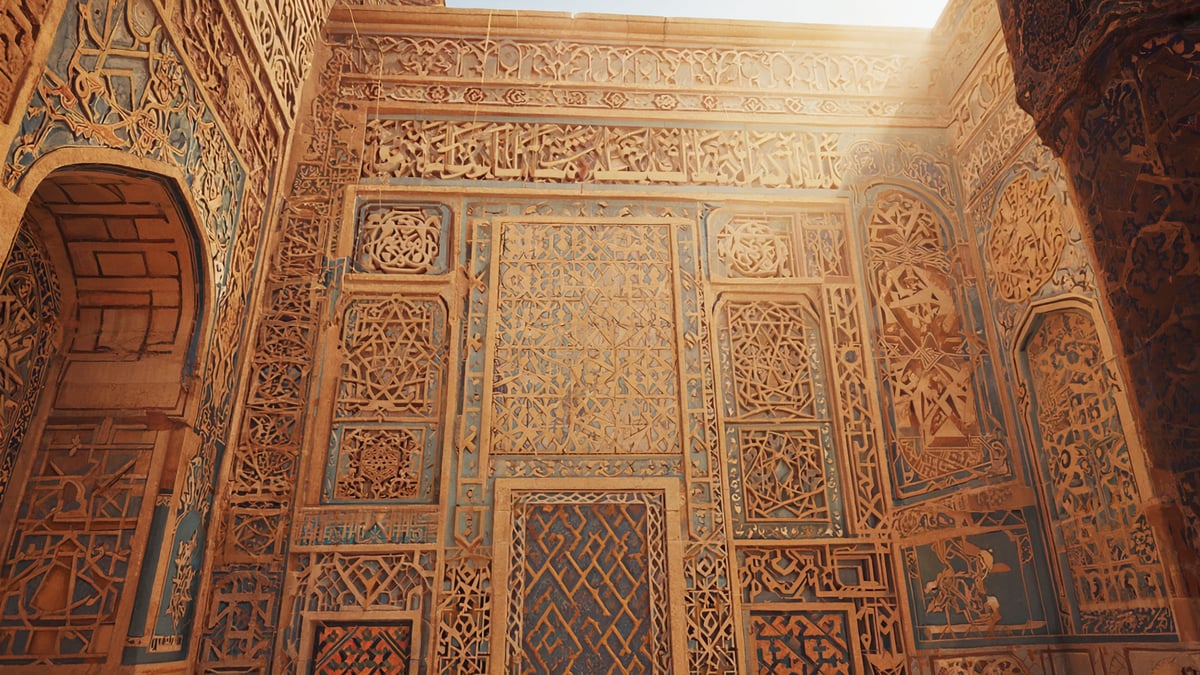
Moroccan cuisine is one of the great underrated food traditions in the world, and Marrakech is its most accessible gateway for UK visitors. The city offers everything from street food at under £1 to multi-course tasting menus in palatial surroundings, and the mid-range is particularly strong.
The Dishes Worth Seeking Out
Tagine is the obvious starting point: slow-cooked stews served in conical clay vessels, combining meat or fish with preserved lemons, olives, dried fruits, and a complex blend of spices. Lamb tagine with prunes and almonds, and chicken tagine with preserved lemon and olives, are the two versions that appear on virtually every menu. The best are cooked for hours over charcoal rather than gas.
B'stilla (also spelled pastilla) is a sweet-savoury pastry pie, typically filled with pigeon or chicken, almonds, and eggs, dusted with cinnamon and icing sugar. It sounds unlikely and tastes extraordinary. It is a Moroccan dish of Andalusian origin, and finding a well-made version is one of the genuine culinary highlights of a Marrakech visit.
Mechoui is whole slow-roasted lamb, traditionally cooked in an underground pit. The best mechoui in Marrakech is found in the Mechoui Alley (Derb Dabachi) just northeast of Djemaa el-Fna, where vendors sell it by weight, served with cumin salt and warm bread. It is available from morning until it sells out, typically by early afternoon.
Harira is the national soup: a thick, warming broth of tomatoes, lentils, chickpeas, fresh herbs, and spices. It is traditionally eaten to break the fast during Ramadan but is available year-round, and a bowl with a chebakia (honey pastry) on the side costs almost nothing.
Where to Eat: A Practical Tier System
| Tier | Setting | Typical Cost (per person) | Best For |
|---|---|---|---|
| Street food | Djemaa el-Fna stalls, Mechoui Alley, souk snack vendors | £1–£4 | Lunch, snacking, authentic experience |
| Local restaurants | Small medina restaurants, Gueliz neighbourhood spots | £6–£15 | Everyday dining, local food without tourist markup |
| Mid-range restaurants | Riad restaurants open to non-guests, rooftop dining | £15–£30 | Special dinners, couples, atmospheric settings |
| Fine dining | Palace restaurants, luxury riads, Palmeraie resort venues | £35–£80+ | Honeymoons, celebrations, tasting menus |
Morocco is a Muslim-majority country and alcohol is not universally available. Licensed restaurants in tourist areas, hotel bars, and the Gueliz neighbourhood do serve alcohol, but many medina restaurants do not. Fresh juices, mint tea, and avocado smoothies (a Moroccan speciality) are ubiquitous and excellent alternatives.
Atlas Mountains Day Trips: Getting Out of the City
One of the features that distinguishes Marrakech from most comparable city break destinations is the accessibility of dramatic mountain scenery within a very short drive. The High Atlas Mountains begin their ascent roughly 30 kilometres south of the city, and the contrast between the medina's ochre walls and the snow-capped peaks visible from the city in winter is one of the defining visual experiences of a Marrakech visit.
The Ourika Valley
The Ourika Valley is the most accessible Atlas day trip from Marrakech, roughly 60 kilometres south of the city and reachable in about an hour by car. The valley is a narrow gorge carved by the Ourika River, lined with Berber villages, terraced gardens, and small cafés perched over the rushing water. At the head of the valley, the village of Setti Fatma offers access to a series of waterfalls reached by a 20-30 minute hike. The valley is lush and green from spring through autumn, making it a vivid contrast to the arid landscape of the plains.
Organised day trips from Marrakech to the Ourika Valley are widely available and typically include transport, a guided walk, and lunch at a riverside café. The Ourika Valley is also home to a number of Berber women's cooperatives producing argan oil, saffron, and other local products, and visits to these cooperatives are often included in organised tours.
Imlil and the Toubkal Massif
For more serious mountain engagement, Imlil is the gateway village for treks into the Toubkal Massif, which includes Jebel Toubkal at 4,167 metres, the highest peak in North Africa. Imlil sits at around 1,740 metres elevation and is roughly 1 hour 45 minutes from Marrakech by car.
A day trip to Imlil without summit ambitions is entirely worthwhile on its own terms. The village itself is a cluster of stone houses in a dramatic valley setting, with mule tracks leading to higher villages, walnut groves, and mountain streams. Even a two-hour walk above Imlil delivers views that are genuinely spectacular. For those with more time and fitness, a two-day ascent of Toubkal (overnight at a mountain refuge) is one of the most achievable high-altitude experiences in the world, requiring no technical climbing skills.
Aït Benhaddou
Strictly speaking, Aït Benhaddou is not an Atlas Mountains day trip but a Draa Valley excursion, roughly 190 kilometres south of Marrakech via the Tizi n'Tichka mountain pass. The pass itself, crossing the High Atlas at 2,260 metres, is a significant experience regardless of the destination. Aït Benhaddou is a fortified city (ksar) that has been a UNESCO World Heritage Site since 1987 and has served as a filming location for numerous major productions. It is a long day from Marrakech (allow 10-12 hours total) but one that delivers an extraordinary range of landscape and historical experience in a single journey.
The Hammam Experience: A Guide for First-Timers
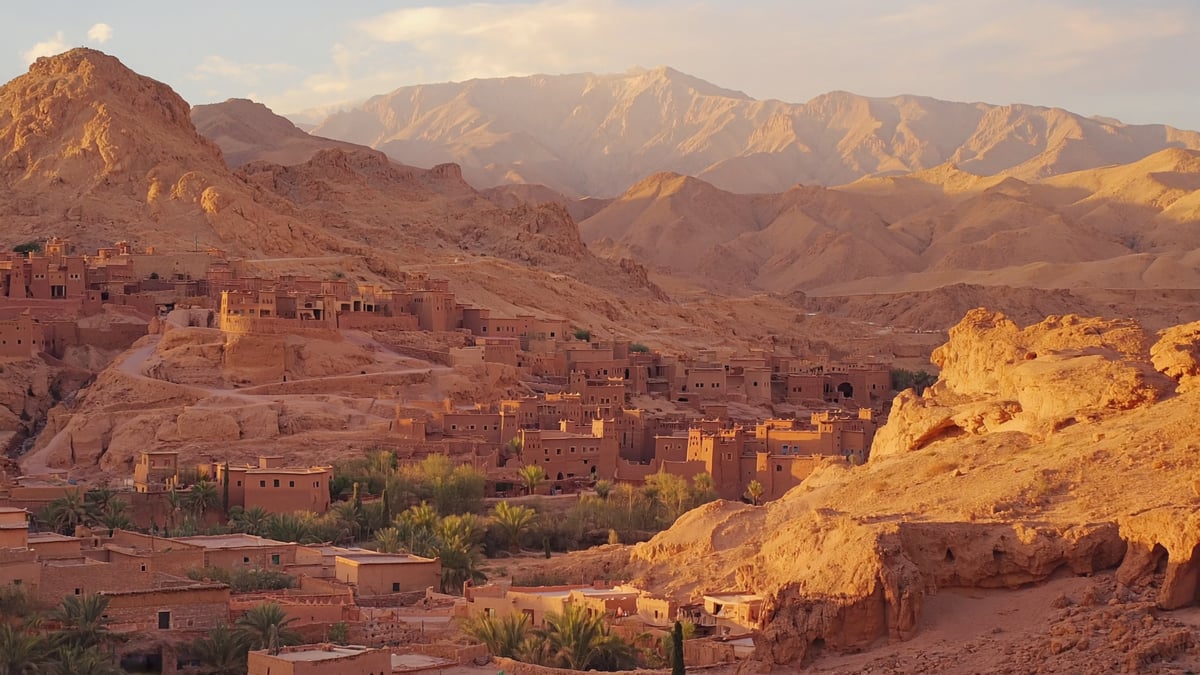
A traditional hammam visit is one of the most culturally authentic things to do in Marrakech and one of the most misunderstood by first-time visitors. Understanding what to expect removes the uncertainty and allows the experience to be what it is: deeply relaxing, historically resonant, and genuinely good for your skin.
The traditional hammam process involves moving through rooms of increasing heat, followed by a vigorous scrub using a kessa (exfoliating mitt) that removes dead skin, followed by a black soap (beldi) treatment and, in many establishments, an argan oil massage. The entire process takes 45-90 minutes depending on which treatments are included.
Types of Hammam Available
There are two distinct categories of hammam experience in Marrakech:
Public hammams (hammam beldi) are neighbourhood bathing facilities used by local residents. Entry costs a few dirhams and the experience is entirely authentic, communal, and occasionally bewildering for visitors who don't know the protocol. They are single-sex, with men and women using separate facilities or visiting at different times. The scrub attendant typically speaks no English. This is a genuine cultural immersion for those comfortable with that level of uncertainty.
Tourist hammams are spa-style facilities designed for visitors, with English-speaking staff, private rooms or clearly delineated spaces, published menus of treatments, and significantly higher prices (typically £20-50 per person for a full treatment). Quality varies considerably. The best are excellent; the worst are rushed and overpriced. Booking through a riad concierge or a reputable operator is the most reliable approach.
A mid-range tourist hammam experience of around £25-35 per person, including the full scrub, black soap treatment, and a 30-minute massage, represents excellent value by UK spa standards and is highly recommended as a dedicated half-day activity on day two or three of a stay.
Marrakech Package Holidays: What UK Travellers Actually Get for Their Money
The question of whether to book a Marrakech trip independently or as a package is one that most UK travellers engage with at some point in their planning. The honest answer is that packages offer real advantages for Marrakech specifically, for reasons that go beyond simple price comparison.
Marrakech has a number of logistical friction points that packages resolve neatly. Airport transfers in Marrakech require navigating taxi negotiations at arrival (official petit taxis are metered but not all drivers use the meter; airport taxis operate at fixed rates that should be confirmed in advance). The medina's addressing system is famously opaque, meaning that first-time visitors can spend a significant amount of time and frustration finding their riad. Flight options change frequently and price windows are short. A well-structured package removes all of these friction points.
What a GlobeHunters Marrakech Package Includes
GlobeHunters Morocco city break packages for UK travellers combine direct flights from major UK airports, riad or hotel accommodation with breakfast, airport transfers, and selected activities into a single bookable package with ATOL protection. Packages are available across a range of budgets:
| Package Tier | Accommodation Style | Duration | Price From (per person) | Best For |
|---|---|---|---|---|
| Essential | 3-star riad or hotel, medina location | 3 nights | From £349pp | Budget travellers, solo visitors, short breaks |
| Classic | 4-star boutique riad, central medina | 4–5 nights | From £549pp | Couples, first-time visitors, cultural explorers |
| Premium | 5-star luxury riad or Palmeraie resort | 5–7 nights | From £899pp | Honeymooners, luxury travellers, special occasions |
All GlobeHunters packages include ATOL financial protection, meaning your money is protected if the airline or accommodation provider fails. For a destination like Morocco, where booking through local operators directly can leave UK travellers without recourse in the event of problems, this protection has genuine practical value.
To explore current availability and pricing, visit the GlobeHunters Morocco holiday packages page or call the team on 0208 944 4514.
When to Visit: A Month-by-Month Reality Check
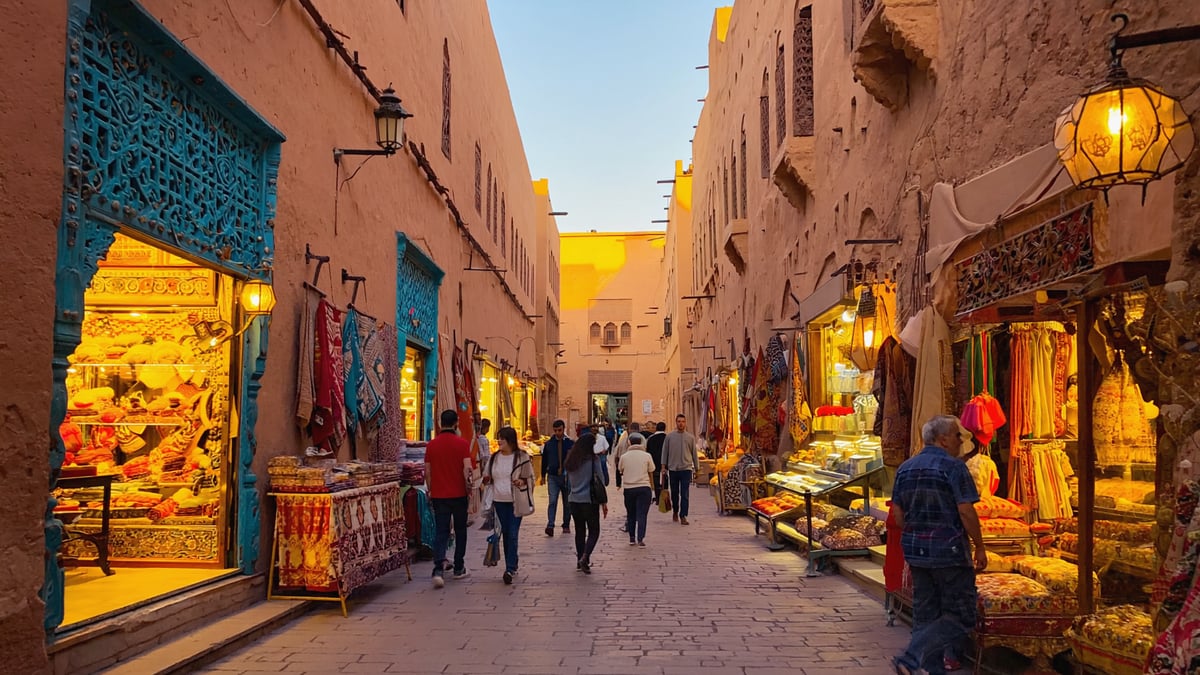
Marrakech is genuinely a year-round destination, but the experience varies considerably by season. Understanding this helps UK travellers match their visit to their priorities rather than simply booking around school holidays by default.
Spring (March to May): The Optimal Window
Temperatures in spring range from around 18°C to 28°C, wildflowers are in bloom in the Atlas foothills, and the city operates at a comfortable pace before peak summer heat and tourist numbers arrive. This is widely considered the best time to visit for first-timers. March and April in particular offer excellent conditions for both city sightseeing and mountain day trips.
Summer (June to August): Hot, Busy, and Worth Planning Around
Marrakech in July and August is genuinely hot, with temperatures regularly reaching 38-42°C in the medina. The heat is dry rather than humid, which makes it more bearable than equivalent temperatures in Southeast Asia, but it does significantly affect how much ground you can cover on foot during the middle of the day. Visiting in summer is perfectly viable if you plan your days around early morning activity (before 11am), a midday rest at the riad, and late afternoon and evening exploration. Summer also brings the highest tourist numbers and corresponding pressure on accommodation prices.
Autumn (September to November): The Second Peak
September and October see temperatures drop back to the 25-32°C range, crowds thin as European school holidays end, and the city feels more manageable. November is cooler still and excellent for walking. This is arguably the best value window of the year: good weather, lower prices than summer, and a pace that feels more relaxed.
Winter (December to February): Cool, Quiet, and Underrated
Winter in Marrakech surprises most UK visitors. Daytime temperatures of 18-22°C feel warm after a British December or January, evenings are cool enough to require a jacket, and the Atlas Mountains above 2,000 metres are snow-covered. The city is at its quietest, prices are at their lowest, and the quality of light for photography is exceptional. The main downside is the possibility of rain, particularly in January and February, though precipitation is relatively infrequent.
Ramadan, which shifts through the calendar year on the lunar cycle, deserves specific mention. Visiting during Ramadan requires some adaptation: many restaurants open later, some street food vendors are absent during daylight hours, and the general atmosphere is more muted during the day. However, the evenings during Ramadan are spectacular, with the city coming alive after iftar (the breaking of the fast) in a way that has no equivalent at other times of year. It is not a time to avoid; it is a time to approach with awareness.
Practical UK Traveller Information: Health, Safety, Money, and Getting Around
The practical realities of visiting Morocco are straightforward for UK travellers, and most of the concerns that appear on travel forums are either overstated or easily managed with basic preparation.
Entry Requirements and Documentation
UK passport holders do not require a visa for Morocco for stays of up to 90 days. A valid UK passport with at least six months' validity beyond the travel dates is required. The UK Government's Morocco travel advice page is the authoritative source for current entry requirements, health advisories, and safety information, and should be checked before travel.
Health and Medical Preparation
No vaccinations are currently mandatory for UK travellers visiting Morocco. The NHS recommends ensuring routine vaccinations are up to date (including hepatitis A for those eating street food or in local restaurants) and considering typhoid vaccination depending on travel style. Tap water in Marrakech is technically treated but the pipes in the medina are old; bottled or filtered water is the standard approach for visitors. Pharmacies (pharmacies) in Marrakech are well-stocked and pharmacists are generally trained to provide advice on minor ailments.
Money and Payments
The Moroccan dirham (MAD) is a closed currency, meaning it cannot be purchased in the UK before travel. Currency exchange is available at the airport on arrival (rates are acceptable rather than excellent), at banks and bureau de change offices in Gueliz, and at some medina money changers (whose rates and practices vary). ATMs are widely available in Gueliz and at major banks; less reliable inside the medina. A Starling, Monzo, or similar fee-free UK bank card is the most practical tool for cash withdrawals in Morocco, avoiding the double conversion fees charged by traditional UK banks on foreign currency transactions.
Cash is essential for the medina. Most souk stalls, street food vendors, and small restaurants are cash-only. Cards are accepted at larger tourist restaurants, hotel restaurants, and the major museums.
Getting Around
Within the medina, walking is the only practical option. Streets are too narrow for cars in most areas and mopeds and donkeys have right of way in any case. Outside the medina, petit taxis (small metered taxis, typically Fiat Dinos) are the standard option. The meter should always be used; if a driver refuses to use it, get out and find another taxi. Grand taxis (larger shared taxis operating on fixed routes) are used for longer distances, including day trips to the Atlas Valley approaches. Ride-hailing apps including Careem and inDriver operate in Marrakech and provide fixed-price rides without meter negotiation.
Cultural Considerations for UK Visitors
Morocco is a conservative Muslim-majority country, and Marrakech, while relatively cosmopolitan by Moroccan standards, operates within that broader cultural context. Some practical points:
- Dress modestly when visiting mosques, religious sites, and residential medina neighbourhoods. Shoulders and knees covered is a reasonable baseline. This applies to both men and women.
- Public displays of affection are generally disapproved of in traditional areas of the medina.
- Photography of people requires consent, particularly of women and in residential areas. Ask before photographing.
- Friday is the main day of prayer; some sites may have restricted access around the midday prayer period.
- Tipping is customary and expected in restaurants (10% is appropriate), for hammam staff, tour guides, and anyone who provides a service. Carry small denomination dirhams specifically for this purpose.
A Sample Three-Night Marrakech Itinerary
For travellers arriving on a Thursday evening flight from a UK airport and returning Sunday evening, the following structure maximises the experience within the time available.
Day One (Friday): Medina Orientation and the Djemaa el-Fna
Arrive Thursday evening, settle into the riad, and decompress with mint tea on the rooftop. Friday morning: riad breakfast, then a slow walk through the Mouassine neighbourhood and into the souks, with no agenda beyond orientation. Lunch at a local restaurant near the Bahia Palace. Afternoon: visit the Bahia Palace and the Mellah market. Early evening: position yourself on a rooftop café around the Djemaa el-Fna at sunset, then dinner at the food stalls in the square.
Day Two (Saturday): Historical Sites and Hammam
Early morning: Saadian Tombs at 9am (before crowds), then El Badi Palace. Late morning: Jardin Majorelle and the YSL Museum (pre-book). Afternoon: hammam appointment (book through the riad), followed by rest during the hottest part of the day. Evening: dinner at a mid-range riad restaurant, either at your own riad or at a nearby establishment recommended by your concierge.
Day Three (Sunday): Atlas Mountains Day Trip
Arrange a driver through the riad or via a Viator-listed operator for an Ourika Valley day trip. Depart by 8am to make the most of the morning light and avoid midday heat. Lunch at a valley-side café. Return to Marrakech by 4pm for a final souk shopping session before airport departure. The drive back through the edges of the Atlas foothills at golden hour is one of the most beautiful thirty minutes available on any European-accessible itinerary.
Extending to five nights allows the addition of a full Imlil/Toubkal day trip, a dedicated cooking class (widely available and consistently rated among the best activity experiences in the city), and a more relaxed pace throughout that removes the sense of racing between sites.
Video Guide: Marrakech Through a Traveller's Lens
Before you finalise your plans, this video provides an excellent visual introduction to the medina, the souks, and the Atlas Mountain landscape that awaits:
Frequently Asked Questions About Marrakech City Breaks for UK Travellers
How long does the flight from the UK to Marrakech take?
Direct flights from London (Gatwick and Heathrow) take approximately 3 hours 30 minutes to 3 hours 45 minutes. Flights from Manchester and Birmingham run slightly longer at around 4 hours. Direct services operate from multiple UK airports, making Marrakech one of the most easily accessible North African destinations for UK travellers.
Do I need a visa to visit Morocco from the UK?
No. UK passport holders can enter Morocco for up to 90 days without a visa. You will need a passport with at least six months' validity beyond your travel dates. Check the UK Government's Morocco travel advice for the latest entry requirements before travel.
Is Marrakech safe for UK tourists?
Marrakech is generally safe for tourists. The main risks are petty theft (pickpocketing in crowded areas), scams targeting tourists (fake guides, commission-based shop steerers), and traffic hazards in the medina. The UK Government currently rates Morocco as a standard travel destination with no exceptional risk advisory. Exercising normal urban caution and staying aware of your surroundings covers the vast majority of risks.
What is the best time of year to visit Marrakech from the UK?
Spring (March to May) and autumn (September to November) offer the most comfortable temperatures for sightseeing and the best balance of weather and value. Winter visits (December to February) are increasingly popular for budget-conscious UK travellers and offer cooler but very pleasant conditions. Summer is viable but requires heat management strategies.
How much spending money do I need for Marrakech?
A comfortable daily budget for two people, excluding accommodation (covered in a package), is approximately £60-80 per day, covering meals at local and mid-range restaurants, entrance fees, hammam, transport within the city, and shopping. Budget travellers can manage on significantly less; those seeking fine dining and premium activities should budget upwards of £120-150 per day for two.
What is a riad and is staying in one worth it?
A riad is a traditional Moroccan townhouse built around a central courtyard, converted into a guesthouse or boutique hotel. Staying in a riad is widely considered one of the defining experiences of a Marrakech visit, providing an authentic architectural context, personalised service, and a peaceful contrast to the medina streets outside. For most UK visitors, the riad experience is not just worth it but central to why Marrakech feels different from any other city break destination.
Can I drink alcohol in Marrakech?
Alcohol is available in licensed restaurants, hotel bars, and venues in the Gueliz (new city) neighbourhood. It is not available in traditional medina restaurants or street food settings. Morocco's legal drinking age is 18. The availability of excellent fresh juices, mint tea, and non-alcoholic alternatives makes this less of a constraint than it might initially appear.
Are Morocco city break packages from the UK worth booking?
For most UK travellers, yes. Package deals from operators like GlobeHunters bundle flights, riad accommodation, airport transfers, and ATOL financial protection into a single booking, removing the logistical complexity of arranging each element separately and providing legal financial protection that independent bookings do not. The package price is frequently competitive with or better than piecing together the same components independently, particularly for travel during peak periods.
What is the currency in Morocco and can I use cards?
The currency is the Moroccan dirham (MAD). Dirhams cannot be purchased in the UK before travel; exchange on arrival at the airport, at banks, or at bureau de change offices. Cards are accepted at hotels, larger restaurants, and museums, but cash is essential for the souks, street food, and small medina businesses. A fee-free UK card (such as Starling or Monzo) is recommended for ATM withdrawals to avoid foreign transaction fees.
How do I get from Marrakech airport to the medina?
Marrakech Menara Airport is approximately 6 kilometres from the medina. Official airport taxis operate at fixed rates (confirm the price before departure; expect to pay around 70-100 dirhams, roughly £5-8). The No.19 bus also runs from the airport to Djemaa el-Fna. Transfers are included in most GlobeHunters packages, removing this first-arrival friction point entirely.
Is Marrakech suitable for families with children?
Yes, with some caveats. Marrakech works well for families with children aged 8 and above who can manage significant walking on uneven surfaces and cope with the sensory intensity of the medina. Younger children can find the noise and crowds of the souks overwhelming. The Jardin Majorelle, Atlas Mountain day trips, and camel riding experiences in the Palmeraie are consistently popular with families. Riad stays suit families well as the courtyard provides a private outdoor space.
What language is spoken in Marrakech and will English work?
The main languages are Moroccan Arabic (Darija) and Amazigh (Berber). French is widely spoken as a second language and is the practical language of business, government, and tourism. English is spoken in tourist areas, at hotels and riads, and by guides, but is less reliable in residential neighbourhoods and traditional shops. Learning a few words of French or basic Arabic (shukran for thank you, la shukran for no thank you) is genuinely appreciated and practically useful.
Key Takeaways for Your Marrakech City Break
- Marrakech is accessible from multiple UK airports on direct flights of under four hours, with minimal time difference and no visa requirement for UK passport holders.
- A riad stay is central to the Marrakech experience, not a luxury add-on. Mid-range riads (£80-150 per night) deliver a quality of setting and service that has no equivalent in European city break destinations at similar prices.
- The medina's complexity is a feature, not a bug. Accept that navigation requires patience, use two or three landmark anchors (Djemaa el-Fna, Koutoubia Mosque), and budget more time than you think you need for getting between sites.
- Spring and autumn are the optimal seasons for first-time visitors. Winter is excellent value and underrated. Summer is viable with heat management strategies.
- The Atlas Mountains are genuinely accessible as a day trip. The Ourika Valley suits most visitors; Imlil appeals to those wanting more serious mountain engagement.
- A hammam visit is a non-negotiable addition to any Marrakech itinerary. Budget half a day and book through your riad concierge for the most reliable quality.
- Package holidays remove significant friction for first-time visitors, particularly around airport transfers, medina navigation on arrival, and financial protection. GlobeHunters Morocco packages start from £349 per person and include ATOL protection.
- Cash is essential in the medina. Carry dirhams for souks, street food, and small businesses. A fee-free UK card minimises ATM withdrawal costs.
Ready to book your Marrakech city break? Explore current availability, compare riad packages, and speak to a travel specialist who knows the destination by visiting holidays.globehunters.com/holiday/morocco or calling GlobeHunters on 0208 944 4514.
About the author
Spiros Maragkoudakis · Chief Commercial Officer
Ready to Book Your Marrakech Holiday?
Our travel experts are ready to help you plan the perfect trip. Call us today or browse our latest deals.
Ready to Start Planning?
Speak to our travel experts for personalised advice and the best deals on your next holiday.
Call 0208 944 4514