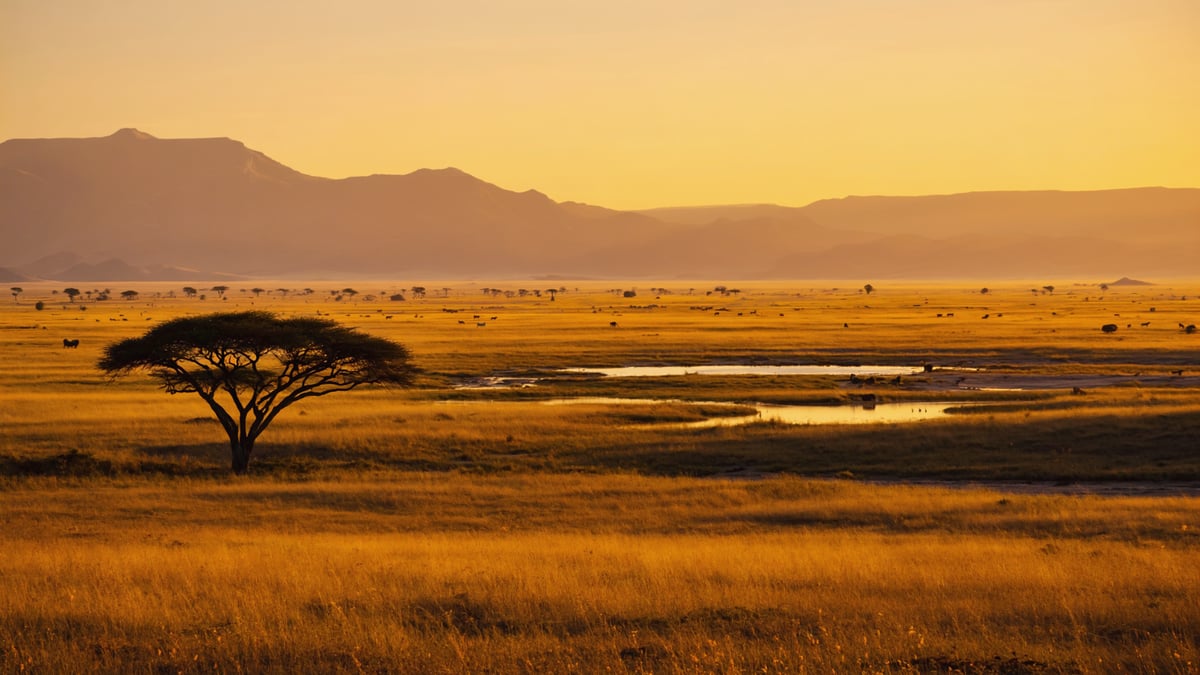
Most people who dream of an African safari think of the Serengeti or the Masai Mara. Botswana rarely tops the shortlist, and that is precisely why it delivers something those more famous destinations cannot. Where others offer volume, Botswana offers silence. Where others fill jeeps and share sightings, Botswana limits visitor numbers so strictly that you might spend an entire morning watching a pride of lions without another vehicle in sight. The Okavango Delta, a UNESCO World Heritage Site and one of the planet's most extraordinary ecosystems, floods into the Kalahari Desert and creates a labyrinth of lagoons, papyrus channels, and palm-fringed islands that exist nowhere else on earth. Add Chobe National Park, home to Africa's largest elephant population, and you have a safari itinerary that belongs in a different category entirely.
This guide is written for UK travellers who want the full picture: what to expect on the ground, how to get there, when to go, how much to budget, and how to find a Botswana safari holiday package that doesn't require remortgaging your house. GlobeHunters has been helping UK travellers reach exactly these kinds of destinations since 2003, and Botswana, while demanding a slightly higher investment than a standard beach break, is achievable with the right planning.
Why Botswana Operates Differently to Every Other Safari Destination
Botswana made a deliberate, government-level decision to pursue low-volume, high-value tourism, a model that protects its wilderness and, as a side effect, produces a dramatically better experience for the travellers who do visit. Understanding this policy context helps you plan more effectively and set the right expectations before you board your flight from the UK.
The country's approach was formalised in the 1980s and 1990s when the government chose not to follow the mass-tourism path taken by neighbouring Kenya and Tanzania. Instead, it restricted the number of tourist beds inside protected areas, set high daily conservation fees, and channelled revenue directly into community trusts and anti-poaching operations. The results speak for themselves: Botswana has one of the lowest poaching rates on the continent, its elephant population has grown to well over 130,000 (the largest in the world, according to IUCN African elephant assessments), and its wilderness areas remain genuinely wild.
For UK travellers comparing Africa package holidays, this creates an important pricing reality. Botswana is not the cheapest safari destination. A night at a quality bush camp in the Okavango Delta typically costs more than equivalent accommodation in the Kruger region of South Africa or on the Kenyan plains. However, what that price buys is fundamentally different: a private game drive with just your vehicle and a guide, mokoro (dugout canoe) excursions through lily-covered channels, and the kind of stillness that only arrives when human density is genuinely low.
The practical implication for your planning: Botswana rewards travellers who commit to it properly. A three-night minimum in the Delta, combined with two or three nights in Chobe, produces a trip that justifies the journey from the UK. Rushing through on a single night to tick a box is both expensive per experience and a disservice to what the destination offers.
The Conservation Fee Structure UK Travellers Should Know
When booking a safari camp in Botswana, you will encounter daily conservation levies and park entry fees that are included in most all-inclusive camp rates. These are not hidden extras, they are built into the cost and fund the infrastructure that makes the experience possible. Some camps in private concessions outside the national parks operate under slightly different fee structures. Always confirm with your operator whether conservation fees are included in your quoted package price.
The Okavango Delta: What Makes It Genuinely Unlike Anywhere Else
The Okavango Delta travel guide staple explanation goes like this: an inland river flows into the Kalahari Desert and fans out into a seasonal wetland before the water evaporates or filters into the sand. That description is accurate but fails to convey what the place actually feels like from the seat of a mokoro at dawn, with a fish eagle calling overhead and a hippo surfacing ten metres to your left.
The Delta covers roughly 15,000 square kilometres at peak flood, creating one of Africa's most diverse habitats. Permanent water channels support papyrus beds and water lilies. Seasonal floodplains attract vast herds of buffalo, zebra, and wildebeest. Raised islands covered in ancient fig and sausage trees shelter leopards, wild dogs, and lions. The interaction between all of these micro-environments within a relatively compact area is what makes the Delta exceptional for wildlife viewing.
The Flood Cycle and What It Means for Your Safari
One of the most counterintuitive facts about the Okavango is that the flood arrives in the dry season. Rain falls in the Angolan highlands from November to February, and that water travels slowly south through the Okavango Panhandle, reaching the Delta between June and August, exactly when Botswana is bone dry and at its coolest. This creates a remarkable spectacle: water spreading across a parched landscape, drawing wildlife from hundreds of kilometres around.
The flood peak (roughly June to August) is when the Delta is most photogenic and most expensive. Water levels are high, mokoro and boat safaris are central to the experience, and wildlife concentrations are extraordinary. The dry season (May to October overall) is the classic safari window: animals cluster around water sources, vegetation is sparse enough to see through, and temperatures are manageable.
The shoulder and green seasons (November to April) bring lush landscapes, newborn animals, exceptional birdlife including migrant species from Europe, and meaningfully lower camp rates. Some remote camps close during the heaviest rains, but the Delta remains accessible and rewarding year-round for travellers who know where to look.
| Month | Flood Level | Wildlife Viewing | Temperatures | Camp Availability | Relative Cost |
|---|---|---|---|---|---|
| January–February | Low, rising | ⚠️ Good birding, scattered mammals | Hot, 35°C+ | Some closures | Lower |
| March–April | Rising | ✅ Green season, newborns | Warm, 28–32°C | Most camps open | Lower |
| May–June | Arriving flood | ✅ Excellent, game concentrates | Cool, 20–25°C | All open | Mid–High |
| July–August | Peak flood | ✅ Outstanding across all species | Cool, 18–23°C | All open, busy | Peak |
| September–October | Receding | ✅ Exceptional game, hot weather | Hot, 30–38°C | All open | High |
| November–December | Low | ⚠️ Good but dispersed | Very hot, rains begin | Most open | Lower |
Choosing Your Area Within the Delta
The Okavango is large enough that different areas offer genuinely different experiences. The Moremi Game Reserve, in the eastern Delta, combines permanent water with dry land and is accessible by road from Maun, making it the most budget-accessible part of the Delta and home to some of Africa's most reliable leopard sightings. The northern concessions (areas like NG32, NG34, NG26) are private, fly-in only, and deliver the most exclusive experience. The Panhandle in the northwest is a narrower channel system famous for tiger fish and bird life, with a distinctly different character from the main Delta.
For a first visit from the UK, the combination of one private concession camp (fly-in, northern Delta) plus Moremi gives you both the exclusive wilderness experience and a taste of the broader ecosystem.
Chobe National Park: Africa's Elephant Capital
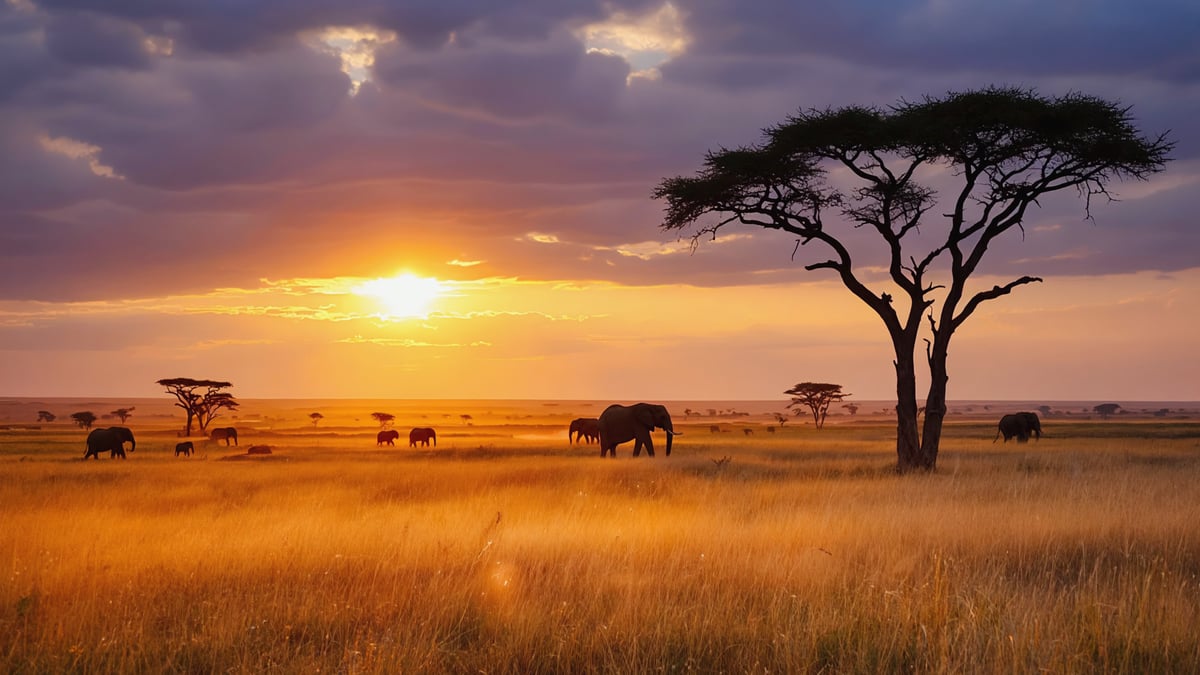
Chobe National Park sits in northern Botswana, roughly a four-hour drive from the Delta, and it delivers a safari experience that is the opposite of Okavango's intimate character. Where the Delta is subtle and quietly spectacular, Chobe is overwhelming in scale. Herds of 300 elephants move to the Chobe River at dusk. Vast buffalo herds kick up dust across open floodplains. Nile crocodiles slide off sandbanks into the current. Lion prides follow the movement of their prey in open country that makes viewing straightforward.
The Chobe Riverfront, the park's most accessible section, is where the majority of visitors spend their time, and for good reason. Boat safaris on the Chobe River at late afternoon light produce photographic conditions that rival anything on the continent. Elephant herds cross the river, hippos surface in every direction, and the golden hour stretches long in the dry season. The town of Kasane, on the park boundary, also functions as a gateway for Victoria Falls (a 90-minute drive into Zimbabwe), which many UK travellers combine with their Botswana itinerary.
Chobe Versus the Okavango: Which Should You Prioritise?
The honest answer is: both, if your budget allows. They complement rather than replicate each other. The Okavango gives you the water-based, intimate, multi-environment experience. Chobe gives you drama and scale, particularly for large mammals. UK travellers on a 10-to-12-night Botswana itinerary typically split their time with three to four nights in a Delta camp, two nights in Chobe, and optional days at Victoria Falls or the Central Kalahari.
If you are limited to a shorter trip, the Okavango Delta should be your priority, it is the more unique global experience. Chobe, while extraordinary, can be seen as part of a broader southern African circuit including Kruger or Zimbabwe. The Delta has no true equivalent anywhere on earth.
| Feature | Okavango Delta | Chobe National Park |
|---|---|---|
| Primary experience | Water-based, intimate, multi-habitat | Open plains, river safaris, scale |
| Access from UK | Fly into Maun, then light aircraft | Fly into Kasane or drive from Victoria Falls |
| Best for elephants | ⚠️ Present but not the main draw | ✅ World's largest population |
| Best for leopard | ✅ Moremi is outstanding | ⚠️ Present but less reliable |
| Mokoro/boat safaris | ✅ Central to the experience | ✅ Excellent river boat trips |
| Walking safaris | ✅ Excellent on islands | ⚠️ Limited in riverfront zone |
| Budget accessibility | ⚠️ Fly-in camps expensive; Moremi more accessible | ✅ Kasane lodges more affordable |
| Wild dog sightings | ✅ Among the best in Africa | ⚠️ Occasional |
Botswana Things to Do: Beyond the Game Drive
A common misconception about Botswana is that the entire experience revolves around sitting in a vehicle watching animals. The reality is far richer. The Botswana things to do list extends well beyond the standard game drive, and the activities available in the Okavango Delta in particular are some of the most experientially distinctive on the continent.
Mokoro Excursions
The mokoro is a traditional dugout canoe, historically carved from jackalberry or sausage trees (modern versions are often fibreglass to protect tree stocks), propelled by a poler who stands at the rear and navigates silently through lily-covered channels. Mokoro excursions in the Okavango are among the most meditative wildlife experiences available anywhere. You sit low at water level, eye-to-eye with the lilies, watching kingfishers dart overhead and listening to the sound of water parting around the hull. Close approaches to hippos require your poler to navigate carefully, and they do so with a confidence built on years of experience. Most camps include mokoro trips as part of their activity programme.
Walking Safaris
Botswana's private concessions allow walking safaris that are genuinely off-road and into genuine wilderness. Armed guides with extensive tracking knowledge lead small groups (typically two to six people) through woodland and along drainage lines, reading animal signs, identifying plants, and occasionally encountering buffalo or elephant on foot. The intensity of a walking safari, where the dynamic between human and animal is entirely different from inside a vehicle, is something many travellers describe as the most memorable part of their entire trip.
Night Drives
Most private camps and some national park areas permit night drives, using spotlights to locate nocturnal species. Aardvark, porcupine, civets, serval, and the elusive pangolin are all possible sightings after dark. The Okavango's private concessions are particularly good for night drive permits, which are not available in all areas of the national parks.
Cultural Visits to San Communities
The Central Kalahari region is home to communities of San people, some of the world's oldest surviving hunter-gatherer cultures. Responsible operators organise visits that are community-led, with proceeds going directly to the community. These interactions, learning traditional tracking techniques, medicinal plant use, and fire-making, add a profound human dimension to a Botswana itinerary that most visitors find unexpectedly moving.
Fishing in the Panhandle
The Okavango Panhandle is one of Africa's premier tiger fish destinations. These aggressive, powerfully built freshwater fish provide sport fishing that attracts dedicated anglers from across the UK and Europe. Catch-and-release is standard practice. Specialist fishing camps in the Panhandle cater specifically to this market and can be incorporated into a wider Botswana itinerary for travelling groups with mixed interests.
Horseback Safaris
Several operators in the Delta offer multi-day horseback safaris, moving through the landscape on horseback in a way that allows extraordinarily close approaches to wildlife, particularly plains game, which accepts horses as non-threatening. This is a niche but genuinely spectacular way to experience the Delta for confident riders.
Getting to Botswana from the UK: Flights, Transfers, and Logistics
The routing from the UK to Botswana's main safari areas requires some planning, but it is well-established and manageable with the right package. There are no direct flights from the UK to Botswana's main airports. All routes involve at least one connection.
UK to Maun (Okavango Delta Gateway)
The most common routing is London Heathrow to Johannesburg (OR Tambo International) with South African Airways, British Airways, or Virgin Atlantic, followed by a connecting flight to Maun on Air Botswana or similar regional carriers. Total journey time including connection is typically 14 to 18 hours. Some travellers route via Nairobi (Kenya Airways), Addis Ababa (Ethiopian Airlines), or Dubai (Emirates to Johannesburg then connect) depending on fare availability. Once in Maun, bush camps in the northern Delta are reached by light aircraft (Cessna or similar), which is usually a 20-to-45-minute flight over the Delta, spectacular in itself.
UK to Kasane (Chobe Gateway)
Kasane is served by regional connections from Johannesburg and occasionally from Nairobi. Some travellers reach Kasane overland from Victoria Falls Airport (Zimbabwe), which receives direct flights from Johannesburg and is roughly 90 minutes by road. This Victoria Falls to Kasane routing is popular for combined Zimbabwe/Botswana itineraries.
ATOL Protection and Package Bookings
UK travellers booking flights and accommodation as part of a package holiday are protected under the Civil Aviation Authority's ATOL scheme, which covers you financially if the operator fails. This is a meaningful consideration for long-haul safari bookings where significant sums are paid in advance. Always confirm your package is ATOL-protected when booking through any UK travel agent.
What a Botswana Safari Holiday Actually Costs from the UK
Transparency on pricing is essential for planning a Botswana trip, because the range is genuinely wide and the reasons for it are worth understanding. This is not a destination where the expensive option is simply a fancier room, the price difference between a budget camp and a luxury concession reflects fundamentally different levels of exclusivity, guiding quality, and access.
The Three Price Tiers
Budget/Mid-Range: Accommodation at lodges and camps in Maun itself, or road-accessible camps in Moremi, combined with scheduled light aircraft transfers rather than private charters. Camp rates in this tier run from roughly £250 to £450 per person per night all-inclusive. UK travellers can build a 10-night Botswana itinerary in this tier (flights, transfers, accommodation, activities) for approximately £3,500 to £5,000 per person.
Luxury: Private concession camps in the northern Delta, boat-in or fly-in access, fully inclusive guiding and activities, small camp sizes (6 to 16 guests maximum). Camp rates run from £500 to £900 per person per night. A 10-night luxury Botswana itinerary from the UK runs approximately £6,500 to £10,000 per person.
Ultra-Luxury: Private camps with exclusive-use options, helicopter transfers, bespoke itineraries. These camps can exceed £1,200 per person per night. This tier is beyond the scope of standard package holidays but worth knowing about for honeymooners or special occasion travellers with flexible budgets.
What All-Inclusive Actually Includes
Most Botswana safari camps operate on a fully all-inclusive model that covers accommodation, all meals, selected alcoholic and soft drinks, twice-daily game activities (morning and afternoon/evening drives, mokoro trips, walking safaris), laundry, and in most cases local park fees and conservation levies. What is typically NOT included: flights to/from Maun or Kasane, light aircraft transfers between camps, premium spirits, and personal shopping. Always request a clear inclusions list before booking.
GlobeHunters Africa Package Holidays
GlobeHunters offers curated Africa package holidays UK packages that combine international flights, accommodation, and activities for travellers who want the complexity managed for them. For Botswana itineraries specifically, the GlobeHunters team can combine flights from UK airports, gateway accommodation in Johannesburg or Maun, and bush camp stays across the Delta and Chobe. Packages start from around £2,499 per person for a shorter itinerary combining flights and accommodation. For the most current pricing and availability, browse GlobeHunters Africa holiday deals or call the team on 020 8944 4700 for a bespoke Botswana itinerary.
Practical Information for UK Travellers: Visas, Health, and Safety
Botswana is one of Africa's most stable, well-governed, and traveller-friendly destinations. UK citizens benefit from one of the world's stronger passports when travelling here, and the practical requirements are relatively straightforward compared to some other long-haul destinations.
Visas for UK Citizens
UK citizens do not currently require a visa to enter Botswana for stays of up to 90 days. You will need a valid UK passport with at least six months' validity beyond your return date and evidence of onward travel. Passport control at Sir Seretse Khama International Airport (Gaborone) and Maun Airport is generally efficient. Always check the latest entry requirements via the UK Government's official Botswana travel advice page before booking, as requirements can change.
Health Requirements and Vaccinations
The NHS recommends travellers to Botswana are up to date with routine vaccinations (including MMR, tetanus, and typhoid) and strongly advises anti-malarial medication. Botswana's malaria risk is concentrated in the northern regions, the Okavango Delta and Chobe are both in malaria zones. Consult your GP or a travel health clinic at least six to eight weeks before departure to allow time for any vaccinations and to start malaria prophylaxis on the correct schedule. Yellow fever vaccination is not required for UK travellers arriving directly, but may be required if you transit through certain countries, check your specific routing.
The Travel Health Pro Botswana country guide (published by the National Travel Health Network and Centre) provides current, detailed health advice for UK travellers.
Currency and Payments
Botswana's currency is the Pula (BWP). As of current exchange rates, one British pound buys approximately 14 to 16 Pula, though this fluctuates. Most safari camps operate in US dollars or South African Rand for settlements above camp-inclusive costs, and international credit cards (Visa, Mastercard) are accepted at larger lodges and Maun-based businesses. Carry some local currency for smaller purchases, curio stalls, and tips. ATMs are available in Maun and Kasane but can be unreliable, draw cash before heading to remote camps.
Tipping Culture
Tipping in Botswana safari camps is customary and genuinely appreciated. A standard guide tip runs from USD $10 to $20 per person per day (roughly £8 to £16). Many camps have a communal tip box that is shared among the entire staff team, which is considered more equitable and is often preferred by camp management. Some camps provide guidance on tipping amounts in your pre-arrival information, follow their lead.
Safety and Travel Advice
Botswana has a strong safety record for tourists. Violent crime targeting visitors is rare, and the country consistently ranks among Africa's most politically stable and corruption-free nations. The main practical safety considerations are wildlife-related: always follow your guide's instructions around dangerous animals, never walk outside of camp at night unaccompanied, and respect the guidance given during briefings at each camp. The UK Foreign, Commonwealth and Development Office currently rates Botswana as a destination with standard travel precautions, no specific security advisories for tourist areas.
Choosing the Right Camp: A Decision Framework for UK Travellers
The choice of camp in the Okavango Delta is the single most impactful decision in your Botswana itinerary. The right camp for a honeymooning couple differs significantly from the right camp for a family with teenagers or a solo traveller joining a group safari. Use the following framework to narrow your options before speaking to a specialist.
The Five-Factor Camp Selection Model
- Exclusivity requirement: How important is it to have the bush to yourself? If very important, prioritise private concession camps in the northern Delta. If moderately important, Moremi-adjacent camps still deliver excellent game viewing with lower price points.
- Activity priorities: If mokoro is essential, confirm water levels during your travel window. If walking safaris are a priority, confirm your camp holds a walking concession. If night drives matter, check whether the camp's permit zone allows them.
- Group size and composition: Families with young children should look for camps that accept children and have family-specific activities (some camps have minimum age requirements of 12 or 16 for certain activities). Solo travellers should check whether the camp has other single guests or whether you will be sharing activities with couples.
- Physical accessibility: Some Delta camps require boarding light aircraft on bush airstrips, walking on sandy paths, and sitting in open vehicles for two to three hours at a stretch. If any of these are challenging, discuss this with your operator before booking, some camps are more accessible than others.
- Budget ceiling: Be honest about your all-in budget including flights, and work backwards. A specialist can match you to camps that deliver the best experience within your range rather than upselling you into a tier that creates financial stress.
Camp Types at a Glance
| Camp Type | Access | Typical Capacity | Price Range (per person/night) | Best For |
|---|---|---|---|---|
| Private concession fly-in | Light aircraft only | 6–16 guests | £500–£900+ | Honeymooners, wildlife enthusiasts, luxury seekers |
| Moremi / road-accessible lodge | 4x4 road transfer | 20–40 guests | £250–£450 | Families, budget-conscious travellers |
| Mobile tented camp | Varies | 6–12 guests | £350–£600 | Adventure travellers, multi-area itineraries |
| Chobe riverfront lodge | Road from Kasane | 30–60 guests | £200–£400 | Groups, families, elephant enthusiasts |
| Panhandle fishing camp | Road or light aircraft | 8–20 guests | £200–£350 | Anglers, birdwatchers |
Combining Botswana with Other Southern African Destinations
Botswana's location in the heart of southern Africa makes it a natural centrepiece for a multi-country itinerary. UK travellers making the long journey from London are increasingly combining Botswana with two or three other destinations to justify the flight time and spread the cost of international airfares across a richer itinerary.
Botswana and Victoria Falls
The combination of Chobe and Victoria Falls is among the most popular in all of southern African travel, and for good reason. The falls are accessible from both the Zimbabwe side (Victoria Falls town) and the Zambia side (Livingstone), and Kasane is just 90 minutes from Victoria Falls Airport. Spending two nights at Victoria Falls before or after Chobe adds one of the world's natural wonders to the itinerary at minimal additional travel complexity. The falls are at their most dramatic between March and July when the Zambezi is running high.
Botswana and South Africa
Johannesburg functions as the primary international hub for both destinations, making a combined trip logical for flight routing. Many UK travellers begin with two or three nights in Cape Town or the Cape Winelands (an entirely different landscape and experience), transit through Johannesburg, and finish in Botswana. This creates a trip with genuine contrast: urban culture, vineyard landscapes, coastal scenery, and then the deep wilderness of the Delta.
Botswana and Zambia
Zambia's South Luangwa National Park, widely regarded as one of the finest walking safari destinations in Africa, combines beautifully with the Okavango Delta. Both destinations share a commitment to low-volume, high-quality tourism and walking as a primary activity. This pairing suits travellers who want the full range of African wilderness experiences without the more commercial feel of some East African circuits.
Botswana and Zimbabwe
Zimbabwe's Hwange National Park, adjacent to Botswana's northeast border, hosts one of the largest elephant populations in southern Africa and is geographically close to both Chobe and Victoria Falls. A Zimbabwe-Botswana circuit is achievable in 10 to 12 nights and covers extraordinary terrain without requiring multiple long-haul flights.
Botswana as a Honeymoon Destination for UK Couples
Botswana has a quietly growing reputation as one of Africa's finest honeymoon destinations, and it earns that reputation without the contrivances that sometimes make dedicated honeymoon resorts feel manufactured. The experience is romantic not because of rose petals on the bed (though some camps oblige) but because of what surrounds you: silence, stars, extraordinary wildlife, and the feeling of being genuinely far from the world.
Private concession camps in the northern Delta are particularly suited to honeymooners. Most have just six to eight guest tents, which means you share game drives with a small number of other travellers and have ample time in camp to do nothing except sit on your private deck and watch the waterway in front of you. Bush dinners under the stars, guided mokoro excursions at sunset, and the complete absence of phone signal (a feature, not a bug, for many couples) create an intimacy that is difficult to replicate.
For UK honeymooners with a higher budget, some private concession camps offer exclusive buyout options, effectively renting the entire camp for your party. This is increasingly popular for small groups of close friends or family celebrating significant occasions, not just honeymoon couples. Prices for exclusive buyouts vary significantly by camp and season; the GlobeHunters team can advise on which camps offer this option and at what cost.
Frequently Asked Questions About Botswana Safari Holidays for UK Travellers
Is Botswana suitable for first-time safari travellers?
Absolutely. Botswana is exceptionally well set up for first-time safari visitors. Camp staff are experienced at briefing guests who have never been on safari, guides explain everything from animal behaviour to plant ecology with patience, and the all-inclusive structure means you never have to navigate unfamiliar logistics on the ground. The main adjustment for first-timers is accepting that safari is not a zoo, animals are not always visible, and the experience of searching and tracking is part of the value.
How long should I spend in Botswana?
A minimum of seven nights is recommended to justify the journey from the UK. Ten to twelve nights allows for a proper Delta experience (three to four nights), Chobe (two nights), and ideally a day or two at Victoria Falls or another destination. Travellers who spend fewer than four nights in the Delta often feel they have only scratched the surface of what it offers.
Do I need a 4x4 vehicle in Botswana?
For independent travel in Moremi or Chobe, a 4x4 is essential, the roads inside the parks are sand tracks that are impassable in a standard vehicle, particularly after rain. However, most UK travellers on package or guided itineraries are transported by camp vehicles or light aircraft and do not need to hire their own vehicle. If you plan any self-drive element, book a proper 4x4 and carry recovery equipment.
What is the best time of year to visit Botswana from the UK?
The dry season (May to October) is the classic safari window and the most popular among UK travellers. July and August represent the peak of both the flood and the safari season. The shoulder months of May/June and September/October deliver excellent game viewing with slightly lower camp rates. The green season (November to April) suits birdwatchers, budget-focused travellers, and those who appreciate lush landscapes over maximum game concentration.
Is Botswana safe for solo travellers?
Yes. Botswana is one of Africa's safest countries for solo travellers. Safari camps manage solo guests as part of shared game drive vehicles, and the all-inclusive structure means you are always within a guided, managed environment. Solo travellers should be aware that single supplements at most camps add a meaningful cost (typically 50% to 100% of the per-person rate), ask your operator about single-friendly camps or departure dates with other solo travellers.
Can I visit Botswana on a budget?
Relative to some African destinations, Botswana is expensive, but it is not inaccessible. Budget travellers can focus on Moremi Game Reserve (road-accessible, lower camp rates), travel in the green season, and book well in advance to access promotional rates. A basic 7-night Botswana safari from the UK (flights plus accommodation) can be achieved from around £3,000 per person with careful planning and flexible dates.
What wildlife can I expect to see in Botswana?
Botswana offers outstanding big five sightings (lion, leopard, elephant, buffalo, and rhino, though rhino are found mainly in specific private reserves and Khama Rhino Sanctuary). Beyond the big five, the Delta and Chobe are exceptional for African wild dog (one of the continent's most endangered predators), hippo, crocodile, giraffe, zebra, red lechwe, sitatunga, and over 550 bird species. Wild dog sightings in particular are far more reliable in Botswana than in most other African countries.
What should I pack for a Botswana safari?
Pack lightweight, neutral-coloured clothing (khaki, olive, beige) for game activities. Avoid white, black, or bright colours that stand out in the bush or attract insects. Evenings can be genuinely cold from May to August, a fleece and windproof layer are essential. A good hat, high-factor sun protection, insect repellent (DEET-based for malaria areas), and binoculars are non-negotiable. Weight restrictions on light aircraft between camps are strictly enforced, most allow 15 to 20kg per person in soft bags only. Hard-shell suitcases cannot be accommodated in the luggage holds of light aircraft.
Do I need travel insurance for Botswana?
Comprehensive travel insurance is essential, not optional. Your policy must cover medical evacuation, which in the event of a serious injury or illness in a remote Delta camp means helicopter transfer to Maun and potentially onward to Johannesburg. Medical evacuation costs without insurance can reach tens of thousands of pounds. Ensure your policy covers activities including game drives and walking safaris.
How do I book a Botswana safari holiday from the UK?
The most straightforward approach is to use a UK-based specialist travel agent with Botswana experience. GlobeHunters can build a complete itinerary from your UK departure airport, managing international flights, Maun gateway accommodation, camp bookings, and light aircraft transfers. Call 020 8944 4700 or browse current Africa holiday deals on the GlobeHunters website to start your planning.
Are there direct flights from the UK to Botswana?
No direct flights currently operate between the UK and Botswana. All routes require at least one connection, most commonly in Johannesburg (South Africa), with onward flights to Maun or Kasane. Journey time from London is typically 16 to 20 hours including connection. Some travellers route via Nairobi, Addis Ababa, or Dubai depending on fare availability.
What currency should I bring to Botswana?
US dollars, South African Rand, and British pounds are all accepted at most safari camps alongside the local Pula. US dollars are the most universally useful currency for tipping and settling extras at camp. Draw local Pula in Maun or Kasane for smaller purchases and market shopping. ATMs in Maun are functional but can run out of cash during busy periods.
Key Takeaways for UK Travellers Planning a Botswana Safari
- Botswana's low-volume tourism policy is not marketing copy, it genuinely means fewer vehicles, more private experiences, and better conservation outcomes than most comparable African destinations.
- The Okavango Delta has no true equivalent anywhere on earth. The combination of water-based and land-based wildlife experiences in a pristine wilderness setting is unique to this destination.
- Time your visit for May to October for the classic safari experience, or November to April for lower prices, lush landscapes, and exceptional birding.
- Budget realistically. A genuine Botswana safari from the UK starts at around £3,000 per person for a budget itinerary and rises significantly for private concession camps. The cost reflects a fundamentally different quality of experience.
- UK citizens do not need a visa for stays up to 90 days, but do need malaria prophylaxis and up-to-date vaccinations for the northern regions.
- Pack light. Weight limits on light aircraft between camps are strictly enforced, and soft bags only are permitted.
- Combine with neighbouring countries for maximum value from your long-haul flight. Victoria Falls, South Africa, Zambia, and Zimbabwe all pair naturally with Botswana.
- Book early for peak season. The best camps in the northern Delta fill their July and August allocations six to twelve months in advance. If peak season is important to you, plan accordingly.
- Use a UK specialist. The logistics of a multi-camp Botswana itinerary (flights, light aircraft timings, weight limits, activity bookings) are significantly easier to navigate with an experienced operator. GlobeHunters can be reached on 020 8944 4700.
About the author
Spiros Maragkoudakis · Chief Commercial Officer
Ready to Book Your Safari Holiday?
Our travel experts are ready to help you plan the perfect trip. Call us today or browse our latest deals.
Ready to Start Planning?
Speak to our travel experts for personalised advice and the best deals on your next holiday.
Call 020 8944 4700