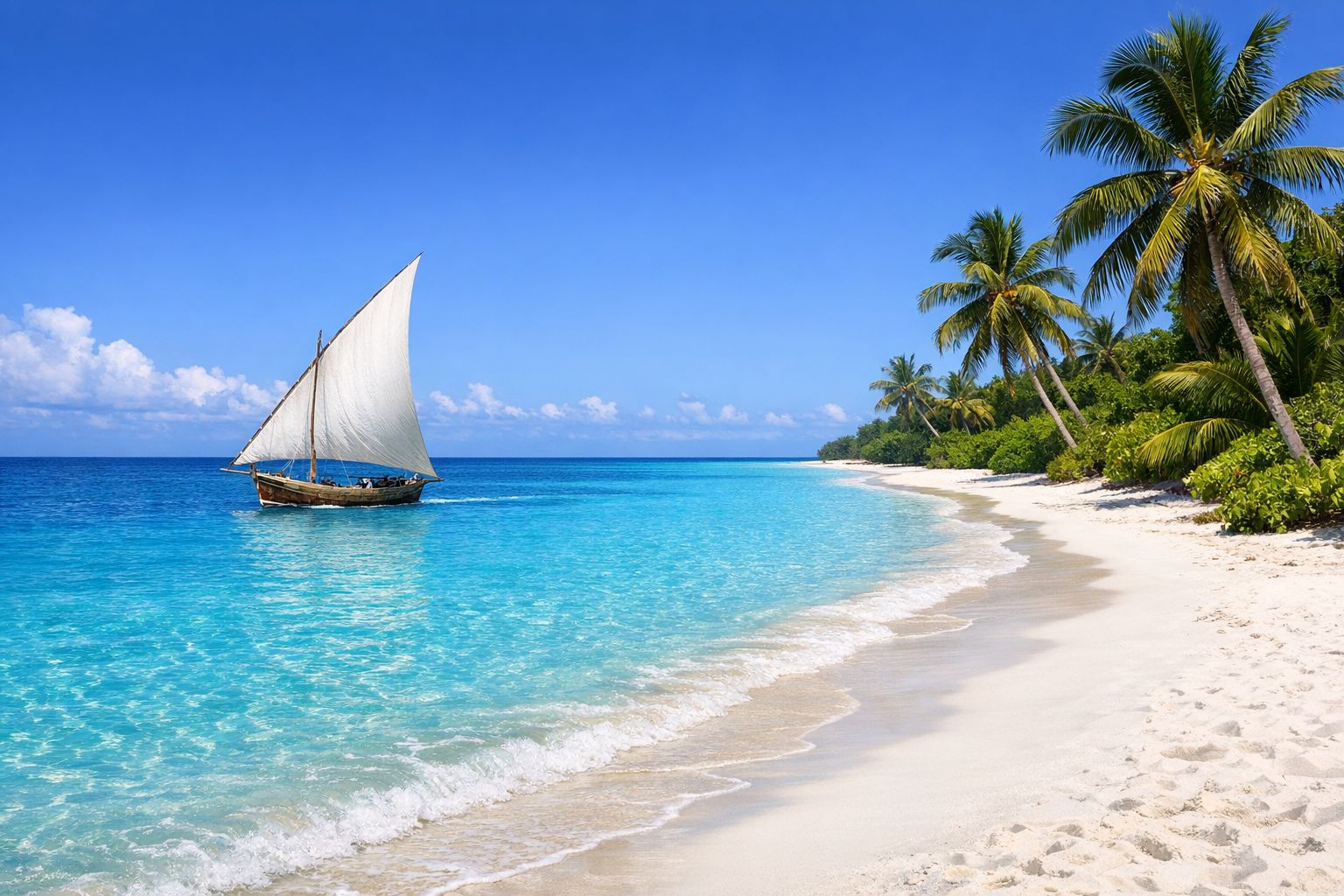
Picture this: at dawn, you are crouched in an open-sided Land Cruiser on the Serengeti plains, watching a lioness drag her kill through golden grass while a thousand wildebeest thunder past on the horizon. Three days later, you are sipping a cold Kilimanjaro beer on a coral-sand beach in Zanzibar, the Indian Ocean turning every shade of turquoise you did not know existed. This is Tanzania, and few destinations on earth let you witness the greatest wildlife spectacle in nature and then decompress on one of the world's most beautiful island coastlines, all within a single two-week holiday from the UK.
For UK travellers, Tanzania is more accessible than most people assume. Competitive scheduled routing via Nairobi, Addis Ababa, and Doha keeps fares reasonable (direct UK–Zanzibar flights are not due to launch until 2027), and the country's tourism infrastructure, built over decades of safari travel, is genuinely excellent. The challenge is not getting there; it is building a trip that balances the Serengeti's endless plains, the volcanic spectacle of the Ngorongoro Crater, the spice-scented streets of Stone Town, and the powder-white beaches of the Zanzibar coastline, all without either rushing or overspending.
Step 1: Understand Tanzania's Geography and Decide Which Regions to Include
Before you book a single flight or lodge, you need to understand how Tanzania's key destinations relate to each other geographically, because the distances involved will shape your entire itinerary. Tanzania is a large country, roughly four times the size of the United Kingdom, and the main safari circuits sit in the north, while Zanzibar lies offshore in the Indian Ocean to the east.
Northern Circuit: The Safari Heartland
The Northern Safari Circuit is where the majority of UK travellers spend their safari days, and for good reason. It contains three of Africa's most celebrated wildlife areas in close geographic proximity.
Arusha is the gateway city, a bustling, energetic town at the foot of Mount Meru. Most flights from the UK land at Kilimanjaro International Airport (JRO), which sits between Arusha and Moshi, and the majority of safaris depart from here. Arusha itself is worth a half-day for the excellent Arusha National Park if you have time to spare, but most travellers treat it as a logistics hub.
Tarangire National Park sits roughly 120 kilometres south of Arusha and is an underrated addition to any Northern Circuit itinerary. It is famous for its enormous elephant herds and its ancient baobab trees, and during the dry season its Tarangire River draws wildlife in extraordinary concentrations. Many itineraries skip Tarangire in favour of more time in the Serengeti, but adding a single night here rewards travellers with an atmosphere that feels noticeably quieter and more remote than the main Serengeti hubs.
Lake Manyara National Park is another option between Arusha and Ngorongoro. It is compact but famous for its tree-climbing lions (a behaviour not fully explained by zoologists), its vast flocks of flamingos on the alkaline lake, and its dense forest zones that support baboons, blue monkeys, and hippos.
Ngorongoro Conservation Area surrounds the world's largest intact volcanic caldera, a 600-metre-deep bowl roughly 20 kilometres across that contains one of the densest concentrations of wildlife on the planet. The crater is often described as Africa's Garden of Eden, and a single full-day game drive inside its walls typically yields sightings of lions, elephants, black rhinos (one of the few places in East Africa where rhino sightings are relatively reliable), hippos, flamingos, and vast herds of zebra and wildebeest.
The Serengeti is the centrepiece of any Tanzania safari holiday. Covering roughly 14,750 square kilometres, it is one of the oldest ecosystems on earth and home to the annual Great Migration, the largest overland movement of animals anywhere on the planet. Its different zones (Seronera in the central Serengeti, the northern Mara region near the Kenyan border, and the southern and western corridors) offer different wildlife experiences at different times of year.
Zanzibar: The Beach Finale
Zanzibar is not part of mainland Tanzania in the administrative sense (it is a semi-autonomous region), but it is the natural complement to a Northern Circuit safari. The island sits roughly 35 kilometres off the coast and is served by its own airport (ZNZ), with multiple daily flights from Dar es Salaam and direct connections from Kilimanjaro. Most travellers fly from the Serengeti or from Arusha to Zanzibar, avoiding any need to return to a mainland city. The total travel time between Serengeti airstrips and Zanzibar is usually three to four hours, including a brief transit.
Zanzibar divides broadly into Stone Town (the historic UNESCO-listed capital on the western side of the island), the northern beaches around Nungwi and Kendwa (calmer seas year-round, better for swimming), and the east coast beaches around Paje and Jambiani (stronger winds, popular with kitesurfers, but stunning at low tide). Most couples and honeymooners choose the north or northeast coast; families tend to appreciate the calmer northern waters.
Step 2: Choose the Right Time of Year for Your Tanzania Holiday
The timing of your Tanzania safari holiday from the UK is arguably the single most important planning decision you will make, because the wildlife experience in the Serengeti changes dramatically depending on the month, and Zanzibar's weather follows a distinct seasonal pattern that does not always align with safari season.
The Great Migration Calendar
The Great Migration is a year-round event: the herds never stop moving. But the most dramatic moments occur at specific times of year.
| Month | Migration Location | Key Highlight | Zanzibar Weather |
|---|---|---|---|
| January–February | Southern Serengeti / Ndutu | Calving season, thousands of wildebeest calves born; cheetah and lion action peaks | ✅ Hot and dry, excellent beach weather |
| March–May | Southern Serengeti (March), moving through the central and western Serengeti (April–May) | Long rains; landscapes are lush and green; fewer tourists; lower prices | ⚠️ Long rainy season on Zanzibar; some beach hotels close |
| June–July | Western Corridor / Grumeti | Grumeti River crossings begin; crocodile action; dry season starts | ✅ Cool and dry; good beach conditions |
| August–October | Northern Serengeti / Mara River | Mara River crossings, the most dramatic single wildlife spectacle in Africa | ✅ Dry and warm; peak beach season |
| November | Eastern and central Serengeti, returning south | Short rains; herds dispersing; dramatic skies for photography | ⚠️ Short rains begin; patchy weather |
| December | Southern Serengeti / Ndutu | Herds congregating; calving begins late December | ✅ Improving weather; festive season peak prices |
For most UK travellers booking a two-week Tanzania holiday, July to October represents the optimal window: the dry season means game viewing is at its most concentrated (animals gather around water sources), the Mara River crossings are happening, and Zanzibar is in fine form. June is an excellent shoulder-season choice that delivers very similar wildlife with slightly lower lodge prices.
January and February offer a genuinely different but equally spectacular experience: the calving season in the southern Serengeti sees more predator action than at any other time of year, and Zanzibar's beach weather is superb. This window is particularly popular with UK travellers wanting to escape January in Britain.
Step 3: Sort Your UK Passport, Visa, and Health Requirements
Tanzania has straightforward entry requirements for UK passport holders, but the health preparation requires more lead time than most travellers expect. Begin this step at least eight weeks before departure.
Visa Requirements for British Travellers
UK passport holders require a visa to enter Tanzania. The most convenient option is the Tanzania e-Visa, which can be applied for online through the Tanzania Immigration Services portal. A single-entry tourist visa costs USD $50 (approximately £40 at current exchange rates). Processing can take up to around 10 working days, so applying at least two to three weeks before travel is advisable to allow time for any queries.
If your itinerary includes a trip to Kenya (for example, if you are taking a northern Serengeti camp that operates across the Masai Mara border), you will need a Kenyan entry authorisation as well as your Tanzanian visa. Note that the East Africa Tourist Visa covers Kenya, Uganda and Rwanda only, not Tanzania. Discuss this with your GlobeHunters consultant if a cross-border itinerary is on the table.
Your UK passport must be valid for at least six months from the date you arrive in Tanzania and have at least one blank page. Check the latest FCDO entry requirements before you travel.
Vaccinations and Health Preparation
- Hepatitis A and Typhoid: Both are strongly recommended for Tanzania travel.
- Malaria prophylaxis: Tanzania is a malaria-endemic country. Antimalarial medication is strongly recommended for all travellers. The most commonly prescribed options for Tanzania are Atovaquone/Proguanil (Malarone), Doxycycline, and Mefloquine. Your GP or travel clinic will advise on the most appropriate option based on your medical history. Book this appointment early, as some medications need to be started before arrival.
- Rabies: Recommended for travellers spending significant time outdoors, particularly those visiting rural areas or working with animals.
Travel insurance with full medical evacuation cover is non-negotiable for Tanzania travel. Medical facilities outside Arusha and Dar es Salaam are limited, and a medical evacuation to Nairobi or the UK can cost tens of thousands of pounds without adequate insurance. GlobeHunters recommends ensuring your policy specifically covers safari activities and light aircraft transfers between airstrips.
Step 4: Build Your Tanzania Safari Itinerary
A well-structured Tanzania itinerary balances game drive days, travel transitions, and rest time, avoiding the common mistake of cramming too many parks into too few days. The minimum realistic itinerary for a meaningful safari-and-beach combination is 10 nights; 12 to 14 nights is the sweet spot for most UK travellers.
The Classic 12-Night Safari and Beach Structure
This itinerary structure works well for couples, honeymooners, and families arriving into Kilimanjaro Airport:
- Night 1: Arusha (overnight to recover from the flight, collect yourself, and prepare kit)
- Nights 2–3: Tarangire National Park (2 full game drive days; excellent elephant and baobab landscape)
- Night 4: Ngorongoro Crater rim (overnight at a crater-rim lodge for sunrise access)
- Day 5: Morning crater descent game drive (typically five to six hours on the crater floor); transfer to central Serengeti in the afternoon
- Nights 5–8: Serengeti National Park, central Seronera area (4 nights; morning and afternoon game drives; sundowners on the plains)
- Day 9: Fly from Serengeti airstrip to Zanzibar (typically via Arusha or direct depending on operator)
- Nights 9–12: Zanzibar beach (4 nights; Stone Town half-day, spice tour, snorkelling, or simply relaxing)
For travellers specifically targeting the Mara River crossings (August to October), the Serengeti nights should be in the northern Serengeti near the Kenyan border rather than at Seronera. This requires a bush flight between Serengeti zones (typically USD $150 to $250 per person) but is worth every penny.
Adapting for the Great Migration Calving Season (January–February)
If you are travelling in January or February, restructure the Serengeti nights to focus on the Ndutu area in the southern Serengeti, close to the Ngorongoro Conservation Area boundary. Ndutu is where the herds calve and where cheetah, lion, and hyena activity peaks. Some lodges in the Ndutu area are mobile camps that move with the herds, offering an exceptionally immersive experience.
Adding Kilimanjaro or a Northern Beach Extension
Travellers with three weeks available sometimes add a Kilimanjaro trek (the Marangu Route usually takes five or six days) or extend the Zanzibar stay to include a boat trip to the quieter island of Pemba or a dive trip to Mnemba Atoll. These are specialist additions best discussed with a GlobeHunters consultant on 0208 944 4514.
Step 5: Choose Your Safari Accommodation Style and Price Point
Safari accommodation in Tanzania ranges from budget tented camps at under £100 per person per night to ultra-luxury private conservancy lodges at over £1,000 per person per night, and the choice fundamentally shapes the experience. Understanding the tiers helps you allocate budget intelligently rather than simply paying more for better beds.
Safari Accommodation Tiers: What You Actually Get
| Tier | Typical Structure | What's Included | Best For | Approx. Per Night (Full Board) |
|---|---|---|---|---|
| Budget | Permanent tented camp or basic lodge | Meals, shared facilities, group game drives | Solo travellers, backpackers, budget-conscious adventurers | £80–£150 pp |
| Mid-Range | Comfortable tented lodge or fixed lodge | En-suite facilities, meals, private or semi-private game drives | Most UK couples and families | £150–£350 pp |
| Luxury | Luxury tented camp or boutique lodge | All-inclusive, private vehicle, specialist guide, bush dinners | Honeymooners, special occasion travellers | £350–£700 pp |
| Ultra-Luxury | Private conservancy camp or exclusive-use villa | Fully all-inclusive, private guide and vehicle, bespoke experiences, helicopter transfers | Bucket-list travellers, privacy seekers | £700–£1,500+ pp |
For most UK travellers on a GlobeHunters package, the mid-range to lower-luxury tier delivers the optimal balance: comfortable, atmospheric tented accommodation with en-suite facilities, excellent food, knowledgeable guides, and private or semi-private game drives. Inside the national parks, the difference between a mid-range and a luxury lodge is largely about exclusivity and aesthetics, as the game viewing often uses the same park roads; private conservancies can add extras such as night drives.
The Ngorongoro Crater Rim: A Special Case
Crater-rim lodges deserve a separate mention. Staying on the rim means waking to mist rolling across the caldera before sunrise, then descending for the day's game drive before returning to altitude in the evening. The temperature on the rim is significantly cooler than the floor, and the experience of watching the sun rise over a UNESCO World Heritage Site from your lodge veranda is genuinely unforgettable. The rim lodges tend to sit in the mid-range to luxury tier and are a worthwhile upgrade from lodges further from the crater, as there is no overnight accommodation on the crater floor itself.
Step 6: Understand Ngorongoro Crater Specifically, The UK Traveller's Perspective
The Ngorongoro Crater is one of the most visited and most discussed wildlife destinations in Africa, and it is worth understanding how it differs from the Serengeti before you go. The Ngorongoro Conservation Area Authority manages access strictly, with vehicle numbers and descent times controlled to protect the ecosystem.
The crater floor covers roughly 260 square kilometres and is a self-contained ecosystem. Because the steep caldera walls make it difficult for most animals to leave, the wildlife density is extraordinary: approximately 25,000 large animals are resident on the crater floor at any given time, including a small, closely protected population of black rhino (making the Ngorongoro one of the best places in Africa for a rhino sighting), a large population of lions, spotted hyena clans, hippo pools, and, for much of the year, flamingos on the alkaline Lake Magadi at the crater's centre.
A Ngorongoro crater safari UK travellers should know has specific logistics. Descent into the crater requires a park entry fee plus a separate crater service fee, which your GlobeHunters package will include. Vehicles must leave the crater by a set time each evening (currently 6pm), which means your guide will structure the day around maximising time on the floor. Picnic lunches are taken at designated spots, and vehicles are not permitted to drive off-road on the crater floor.
The most common disappointment for first-time visitors is expecting the Ngorongoro to feel as wild and open as the Serengeti. It does not: the crater is compact, and on busy days there can be vehicle queues at lion sightings. The solution is to prioritise early descent (gates open at 6am) and to position your vehicle away from clusters of other tourists. Your guide's experience is critical here, so ask your GlobeHunters consultant about the experience and licensing of the guides your ground operator uses.
Step 7: Plan Your Serengeti Safari Days Like a Pro
The Serengeti rewards travellers who understand its rhythms, and maximising game drive time requires more strategy than simply driving until you find something interesting. Here is how to approach each Serengeti day intelligently.
The Serengeti Dawn Drive
Gates in the Serengeti open at 6am, and the first two hours after dawn are consistently the most productive for predator activity. Lions are often still active from overnight hunts, cheetahs are scanning termite mounds for prey, and leopards occasionally linger in acacia trees before retreating from the heat. Insist on a 5:30am departure from camp so you reach the key areas at first light. Lodges and camps provide early morning tea and a packed breakfast to accommodate this.
Midday Strategy
Between roughly 10am and 3pm, large mammals rest in shade and activity slows. Rather than sitting in a hot vehicle doing nothing, use this window for your camp's midday activities: a bush walk with an armed ranger, lunch at a viewpoint, or simply returning to camp for a rest. Some operators offer optional activities such as hot-air balloon safaris over the Serengeti, which launch at dawn and offer an entirely different perspective on the landscape. A Serengeti balloon safari typically costs several hundred US dollars per person (check current rates with your consultant) and is a memorable once-in-a-lifetime experience.
The Afternoon Drive and Sundowner
The second productive window runs from approximately 3:30pm until dusk. This is when predators begin moving again, elephants come to waterholes, and the light turns from harsh midday white to the golden hour that makes Serengeti photography exceptional. Most guides will position the vehicle for a sundowner stop, a traditional safari moment involving cold drinks from the vehicle's cool box while watching the sun set over the plains, before returning to camp by torchlight.
Night Drives: What UK Travellers Should Know
Night drives are generally not permitted within Serengeti National Park or the Ngorongoro Conservation Area, but they are offered in some private concessions and wildlife management areas outside the national park boundaries. If nocturnal wildlife is a priority, ask your GlobeHunters consultant about itineraries that include a conservancy night in areas where spotlighting is allowed. This opens up chances of encounters with aardvark, serval, pangolin, and porcupine that daytime safaris rarely deliver.
Step 8: Plan Your Zanzibar Beach Extension
The safari-and-beach Tanzania combination is the most popular UK itinerary structure for good reason: the contrast between the raw, dust-and-adrenaline world of the Serengeti and the sensory softness of Zanzibar's beaches is as satisfying a travel experience as exists anywhere. But Zanzibar deserves more planning attention than most travellers give it.
Stone Town: A Half-Day You Should Not Skip
Zanzibar's capital, Stone Town, is a UNESCO World Heritage Site and one of the best-preserved Swahili trading towns in East Africa. Its labyrinthine coral-stone alleys, carved wooden doors, Arab-Indian-African architecture, and spice-scented street food make it one of the most atmospheric urban environments on the continent. Most beach resorts are roughly an hour or more by road from Stone Town, and the standard approach is to spend your first day on the island exploring the town before heading to your beach hotel.
Key Stone Town experiences include the Forodhani Gardens night market (evening street food; mandatory), the Old Fort, the Palace Museum (Beit el-Sahel), and a visit to the former Slave Market site at the Anglican Cathedral, which provides sobering historical context for the island's colonial past.
Choosing the Right Beach Area
The beach area you choose depends heavily on what you want from your Zanzibar days. The north coast around Nungwi and Kendwa offers calm, swimmable water year-round because it is protected from the south-east trade winds. The east coast (Paje, Jambiani, Bwejuu) is more exposed, has dramatic tidal variation with vast sandbars at low tide, and is the centre of Zanzibar's kite-surfing scene. For most UK couples and families on a safari-and-beach Tanzania UK holiday, the north coast delivers the most reliable beach experience.
Snorkelling and Diving Around Zanzibar
Zanzibar's underwater world is exceptional. Mnemba Atoll, a small private island off the northeast coast, is widely regarded as one of the best snorkelling and diving sites in the Indian Ocean, with coral gardens, sea turtles, dolphins, and occasional whale sharks. Day trips to Mnemba typically cost USD $80 to $120 per person including snorkelling equipment, and some lodges on the north coast include these trips in their package rates. Certified divers can arrange multi-dive packages through PADI-accredited dive centres based at most north coast hotels.
The Spice Tour
Zanzibar earned its historical name as the Spice Island from its role as a centre of clove, nutmeg, cinnamon, and black pepper cultivation. A half-day spice tour through the island's interior farms is a genuinely interesting way to spend a morning, involves walking through working spice plantations, tasting fresh fruit straight from the tree, and learning about the island's agricultural history. Most beach hotels can arrange this as a day-trip excursion for around USD $30 to $50 per person.
Step 9: Book Your Tanzania Safari Package Through GlobeHunters
Booking a Tanzania safari as a package rather than piecing together individual components independently saves both money and significant planning time, particularly when it comes to coordinating the bush flight segments, the lodge sequencing, and the Zanzibar connecting flight.
What a GlobeHunters Tanzania Package Includes
GlobeHunters Tanzania safari packages combine return flights from UK airports (including London Heathrow, London Gatwick, Manchester, and Birmingham where routing allows), accommodation on a full-board basis throughout the safari, park entry fees, game drive vehicles with licensed professional guides, domestic bush flights between Serengeti zones where applicable, and accommodation in Zanzibar. The all-in pricing model means there are no hidden surprises beyond personal spending money, optional activities, and gratuities for guides and camp staff.
Package pricing for a Tanzania safari holiday from the UK through GlobeHunters varies with trip length, accommodation tier and travel season, and luxury lodge upgrades and honeymoon packages are also available. Check live pricing at the time of booking for an accurate quote.
To see current availability and live pricing, visit the GlobeHunters holidays website or call the team directly on 0208 944 4514. The consultants who handle Tanzania bookings are experienced safari travellers themselves and can walk you through itinerary options, lodge comparisons, and the best departure dates for your specific priorities.
Why Package Beats DIY for Tanzania
Tanzania's safari logistics are genuinely complex in ways that are not obvious from the outside. Domestic bush flights operate on small propeller aircraft with strict baggage allowances (typically 15kg total, in a soft bag), and flight schedules between airstrips are not always publicly bookable. Coordinating a lodge sequence that places you in the right Serengeti zone at the right time, while also ensuring your Zanzibar connecting flight departs at a sensible hour, requires direct relationships with ground operators that independent travellers rarely have. GlobeHunters' established relationships with Tanzania operators mean your itinerary has the flexibility to adapt when (not if) an airstrip delay or weather disruption affects a transfer.
Step 10: Prepare Your Kit, Currency, and Cultural Expectations
Arriving in Tanzania prepared for the physical and cultural realities of safari travel makes the difference between a trip that flows smoothly and one that generates constant small frustrations.
What to Pack for a Tanzania Safari
The cardinal rule of safari packing is neutral colours: khaki, olive, beige, and brown. Dark blue and black attract tsetse flies, and bright colours make you conspicuous to wildlife during bush walks. Beyond colours, the key items are:
- Lightweight long-sleeved shirts and trousers (sun and insect protection)
- A warm fleece or light down jacket (Serengeti mornings and Ngorongoro evenings can be surprisingly cold)
- A wide-brimmed hat and high-factor SPF sunscreen
- Binoculars (8x42 is the standard recommendation for safari; do not rely on your phone camera for distant wildlife)
- A small soft-sided duffel bag for bush flights (hard-shell suitcases are not permitted on light aircraft)
- A headtorch and spare batteries (camps in remote areas have limited electricity hours)
- Insect repellent with DEET (particularly important at dawn and dusk)
- A basic first aid kit including rehydration sachets and blister plasters
Currency and Money in Tanzania
Tipping is an important part of Tanzania's tourism economy and is expected. A rough guide for UK travellers is the equivalent of USD $10 to $15 per person per day for your safari guide, around USD $5 per person per day for your camp, and USD $5 to $10 per person for any specialist activity guide. Check with your consultant on the current preferred currency for tips. Your GlobeHunters booking documentation will include a tipping guidance sheet.
Cultural Respect in Tanzania and Zanzibar
Tanzania is a country where religious and cultural respect is taken seriously. Mainland Tanzania is majority Christian with a large Muslim minority, while Zanzibar is predominantly Muslim. On Zanzibar, modest dress is expected outside beach resort grounds: cover shoulders and knees when visiting Stone Town, markets, or any local community. Removing shoes before entering mosques is mandatory, and photography of local people without permission is considered rude.
Learning a few words of Swahili makes a genuine difference to local interactions. "Jambo" (hello), "Asante" (thank you), and "Karibu" (welcome/you're welcome) go a long way and are invariably met with warm appreciation.
Frequently Asked Questions: Tanzania Safari Holiday from the UK
How long is the flight from the UK to Tanzania?
Direct flights from London to Kilimanjaro Airport do not currently operate on a scheduled basis. The most common routing is via Nairobi (Kenya Airways, or British Airways to Nairobi with an onward connection), Addis Ababa (Ethiopian Airlines), Doha (Qatar Airways), or Dubai (Emirates). Total travel time including connection is typically 13 to 16 hours. Ethiopian Airlines and Qatar Airways tend to offer competitive pricing for the route; GlobeHunters sources the best available fares through its Duffel flight platform at the time of booking.
What is the best airport to fly into for a Tanzania safari?
Kilimanjaro International Airport (JRO), located between Arusha and Moshi, is the standard entry point for Northern Circuit safaris and is the recommended arrival airport for most GlobeHunters Tanzania packages. Julius Nyerere International Airport in Dar es Salaam (DAR) is an alternative if your itinerary starts in the south, though this requires an additional domestic connection to reach the Northern Circuit. Zanzibar has its own international airport (ZNZ) if you are starting or ending your trip on the island.
Do I need a Yellow Fever certificate to enter Tanzania from the UK?
A Yellow Fever vaccination certificate is not required for UK travellers arriving directly from Britain, as the UK is not classified as a Yellow Fever risk country. However, Kenya and Ethiopia are both Yellow Fever risk countries, so if your routing via Nairobi or Addis Ababa involves a layover of more than 12 hours, or you leave the airport during your connection, Tanzania may require proof of vaccination. Check the current entry requirements with the UK Foreign Commonwealth & Development Office Tanzania travel advice page and with a travel health professional before departure.
Is Tanzania safe for UK tourists?
Tanzania's main tourist areas, including the Northern Safari Circuit, Arusha, Zanzibar, and the established safari camps, are visited by large numbers of UK tourists each year. The FCDO advises against all but essential travel to any area within 20km of Tanzania's border with the Cabo Delgado province of Mozambique, which is far from the main safari and beach areas, and has recently reported wildfires in the Kilimanjaro area. Travellers should exercise standard urban caution in Dar es Salaam and Arusha (particularly regarding bag snatching and phone theft), avoid walking alone after dark in urban areas, and follow their guide's instructions at all times in wildlife areas. The FCDO Tanzania travel advice page is the authoritative source for current guidance; check it before booking and again before you travel.
What is the Serengeti like compared to Ngorongoro Crater?
The Serengeti offers a vast, open-plains experience with a sense of genuine wilderness. Game drives can cover enormous distances, and the scale of the landscape is central to its appeal. The Ngorongoro Crater is more concentrated: a smaller, contained area with extraordinary wildlife density but a more managed atmosphere. Most travellers find that visiting both creates a complementary experience rather than a repetitive one, and GlobeHunters recommends including both in any Tanzania itinerary of 10 nights or more.
Can I visit the Serengeti and Zanzibar in the same holiday?
Yes, and this safari and beach Tanzania UK combination is the most popular GlobeHunters Tanzania itinerary. The connection between the Serengeti and Zanzibar is made either by a direct flight from a Serengeti airstrip or by a bush flight to Arusha or Kilimanjaro Airport followed by a connecting flight to Zanzibar (ZNZ). Total travel time is typically a few hours, depending on the routing and connection. GlobeHunters coordinates all domestic flight connections as part of the package.
What is the best Zanzibar beach area for a safari-and-beach couple?
For most UK couples arriving after a safari, Nungwi on Zanzibar's northern tip is the most popular choice: calm swimming water year-round, a lively selection of restaurants and beach bars, and a range of accommodation from boutique beach hotels to larger resorts. Kendwa, a short walk south of Nungwi, is slightly quieter and particularly popular with honeymooners. The northeast coast around Matemwe offers a more remote, exclusive atmosphere and is the closest beach area to Mnemba Atoll for snorkelling day trips.
How much spending money should I budget for Tanzania beyond the package price?
Most UK travellers budget an additional £400 to £700 per person for a two-week Tanzania holiday, covering guide tips (approximately USD $150 to $200 per person), optional excursions (balloon safari, snorkelling, spice tour), drinks and meals outside the package, and souvenir shopping. The Zanzibar beach portion of the trip tends to generate the most additional spending, particularly on watersports, excursions, and evening dining in Stone Town.
Is Tanzania suitable for families with children?
Tanzania is an excellent family destination, particularly for children aged eight and above who can sit in a game drive vehicle for two to three hours at a stretch and engage with the wildlife experience. Some lodges have minimum age policies (particularly those using light aircraft transfers or offering walking safaris), so it is important to check age restrictions when selecting accommodation. Zanzibar's north coast beaches, with their calm, shallow water, are excellent for families with younger children. GlobeHunters' consultants can advise on the most family-appropriate lodge selection for your children's ages.
What is the single biggest mistake UK travellers make when planning a Tanzania safari?
The most consistent planning error is trying to visit too many parks in too short a time. A rushed itinerary that moves every day never allows you to settle into the rhythm of a place, and the transfer time between parks is greater than many travellers expect. Two or three nights in the Serengeti is the minimum for a meaningful experience; four nights is better. Quality over quantity is the consistent advice from every experienced Tanzania safari operator, and GlobeHunters builds this principle into every itinerary it recommends.
Does GlobeHunters offer honeymoon Tanzania packages?
Yes. GlobeHunters offers bespoke honeymoon Tanzania packages combining romantic safari lodges with private-pool beach villas in Zanzibar. Honeymoon packages typically include room upgrades, romantic dinners, and complimentary touches at lodges when notified in advance. Speak to the team on 0208 944 4514 or visit the GlobeHunters website to discuss honeymoon-specific options.
What is the luggage allowance for Tanzania safari flights?
This is one of the most frequently overlooked logistics points for UK travellers. International flights to Kilimanjaro typically allow 23kg hold luggage plus hand luggage, consistent with standard airline policy. However, domestic bush flights within Tanzania (the small propeller aircraft used between Serengeti airstrips, Arusha, and Zanzibar) typically impose a strict 15kg total allowance in a soft-sided bag. This means you need to pack your safari kit into a soft duffel and either leave a hard suitcase in secure storage at your Arusha hotel or ship it directly to Zanzibar. Your GlobeHunters booking confirmation will include specific guidance on this.
Key Takeaways for UK Travellers Planning a Tanzania Safari Holiday
- Start with geography: the Northern Circuit (Tarangire, Ngorongoro, Serengeti) and Zanzibar are the core of any Tanzania holiday from the UK, and they connect easily via domestic flights.
- Timing matters enormously: July to October delivers the Mara River crossings and excellent beach weather on Zanzibar; January to February delivers the calving season and superb Zanzibar sun.
- Plan health preparation early: seek travel health advice on malaria prophylaxis and vaccinations at least six to eight weeks before departure, and apply for the Tanzania e-Visa at least two to three weeks before you travel.
- Quality over quantity in the Serengeti: two nights is a minimum; three to four nights in a single zone delivers a far richer experience than rushing between camps.
- The Ngorongoro Crater is a different experience to the Serengeti: more concentrated, more managed, but extraordinary for rhino sightings and sheer wildlife density. Include at least one crater descent day.
- Zanzibar's north coast beaches are the best all-round choice for UK travellers, offering calm swimming water, a good choice of accommodation, and easy access to Stone Town and Mnemba Atoll.
- Pack soft bags for bush flights and budget for guide tips, optional excursions, and Zanzibar extras beyond your package price.
- A GlobeHunters package is a simple way to book a Tanzania safari from the UK, combining flights, accommodation and safari arrangements in one booking. Pricing varies by trip length, accommodation tier and season, so check live pricing: call 0208 944 4514 or visit holidays.globehunters.com to get started.
Tanzania does not offer a holiday experience so much as a transformation. The scale of the Serengeti recalibrates your sense of what is normal; the silence of a Ngorongoro dawn reminds you what the world was before cities; and the warm, unhurried pace of a Zanzibar afternoon is the perfect counterweight to both. For UK travellers willing to make the journey, it delivers a return that few destinations can match. The practical steps are manageable. The experience is unforgettable.
About the author
Spiros Maragkoudakis · Chief Commercial Officer
Ready to Book Your The Holiday?
Our travel experts are ready to help you plan the perfect trip. Call us today or browse our latest deals.
Ready to Start Planning?
Speak to our travel experts for personalised advice and the best deals on your next holiday.
Call 0208 944 4514