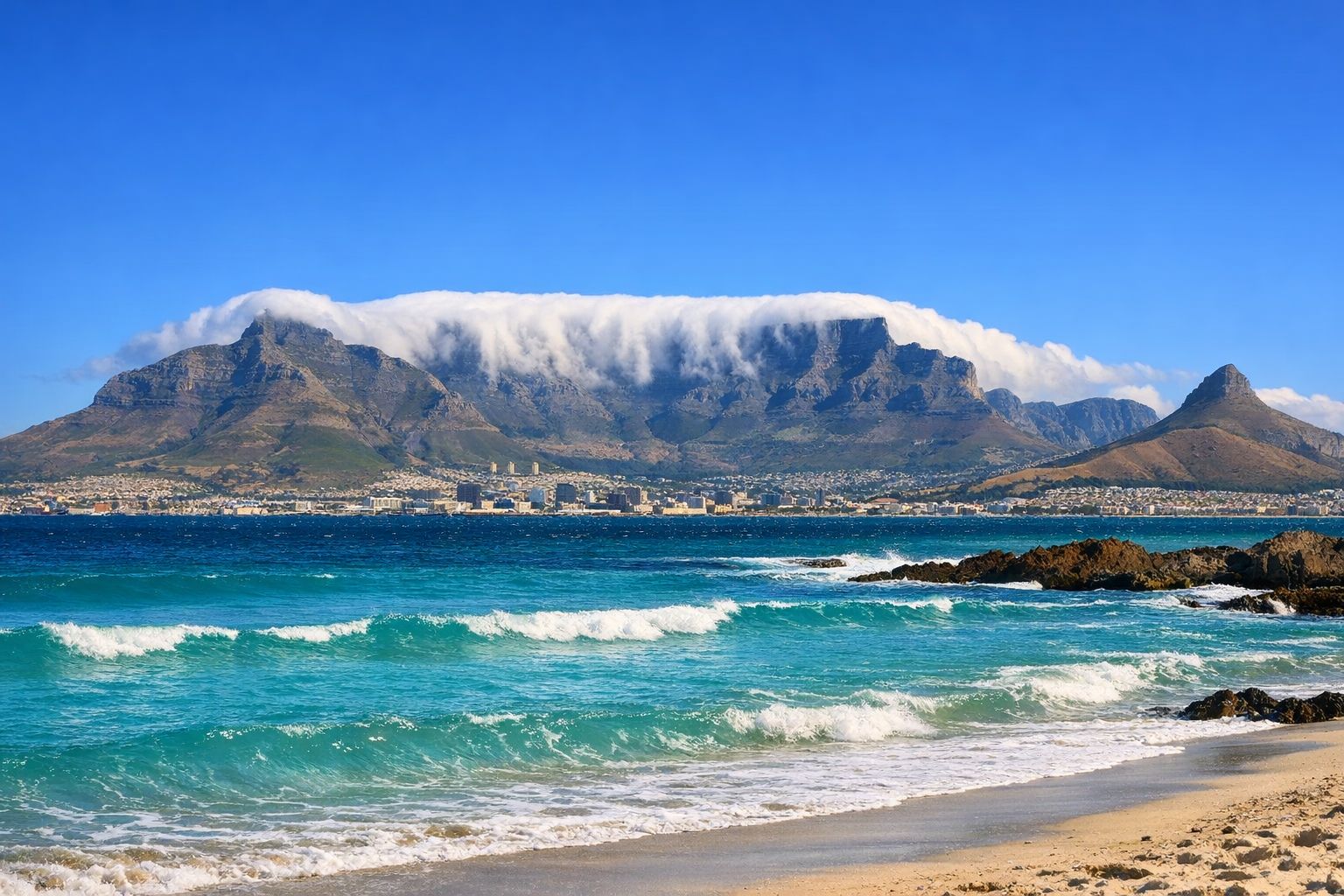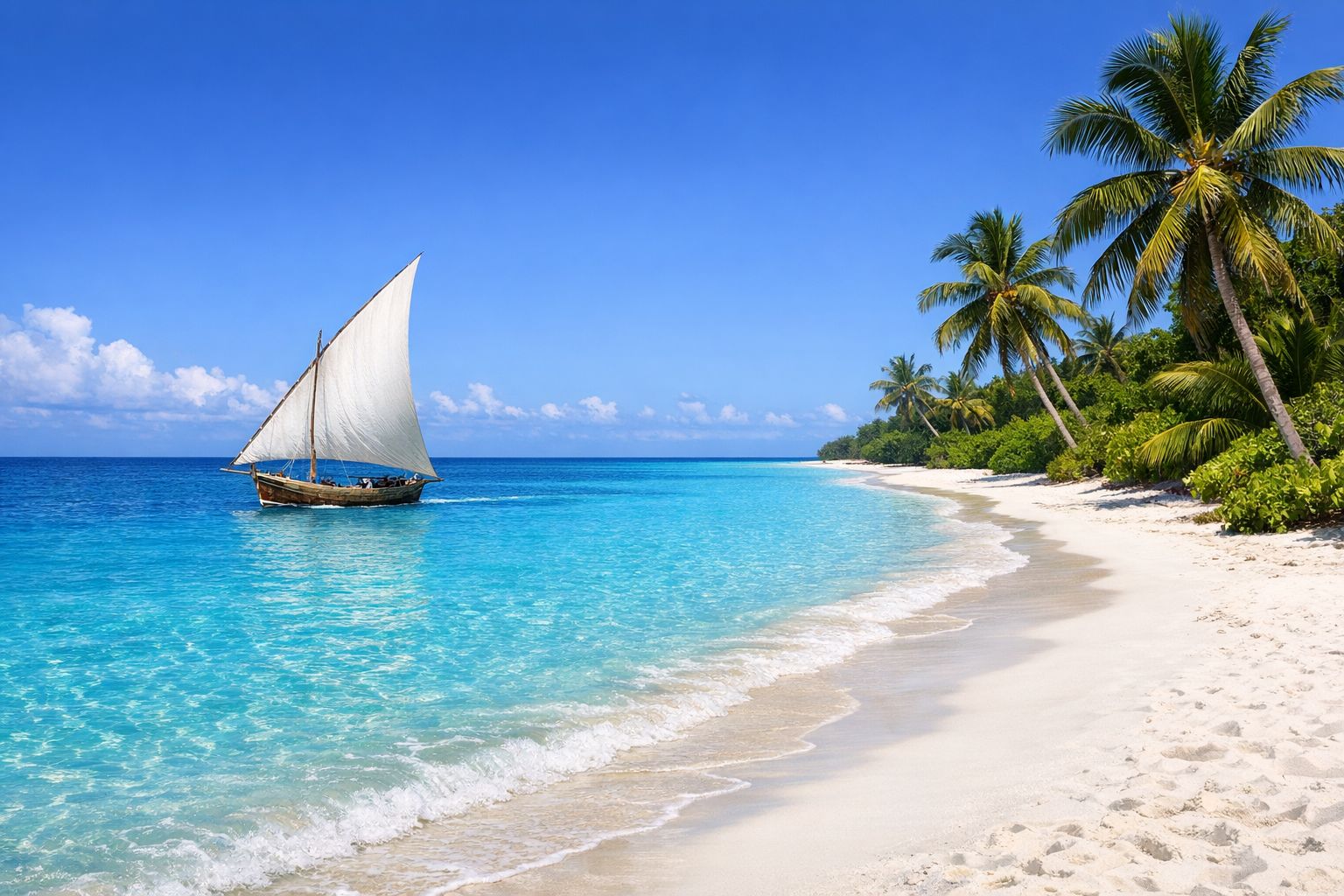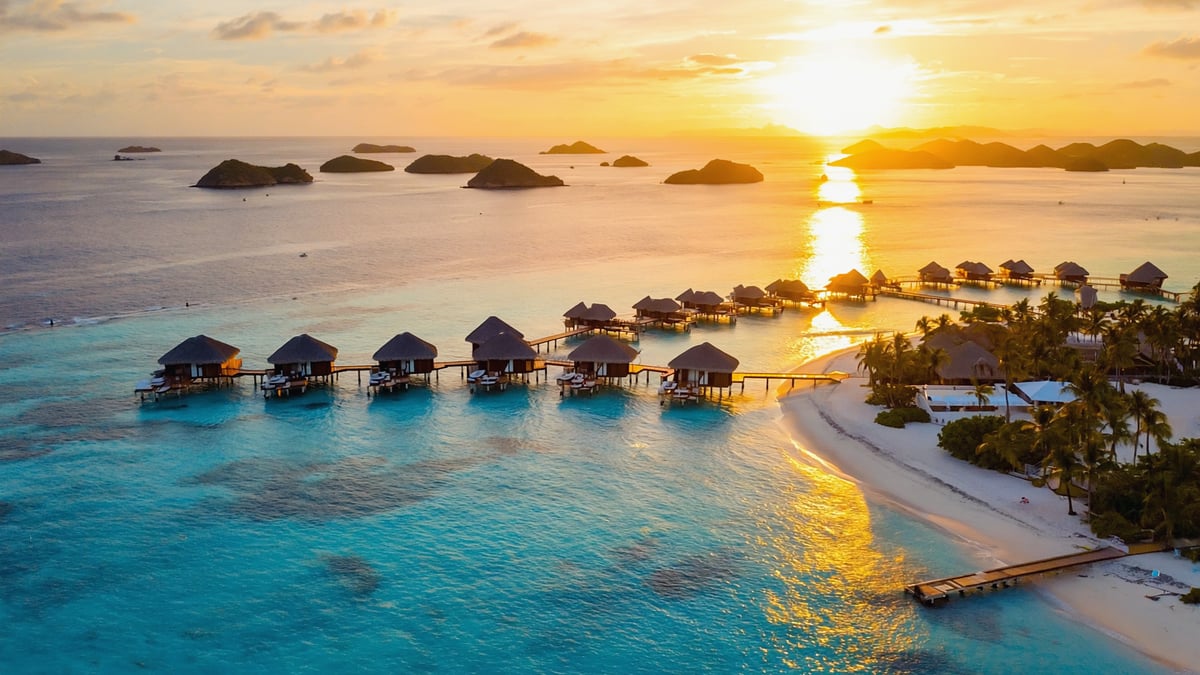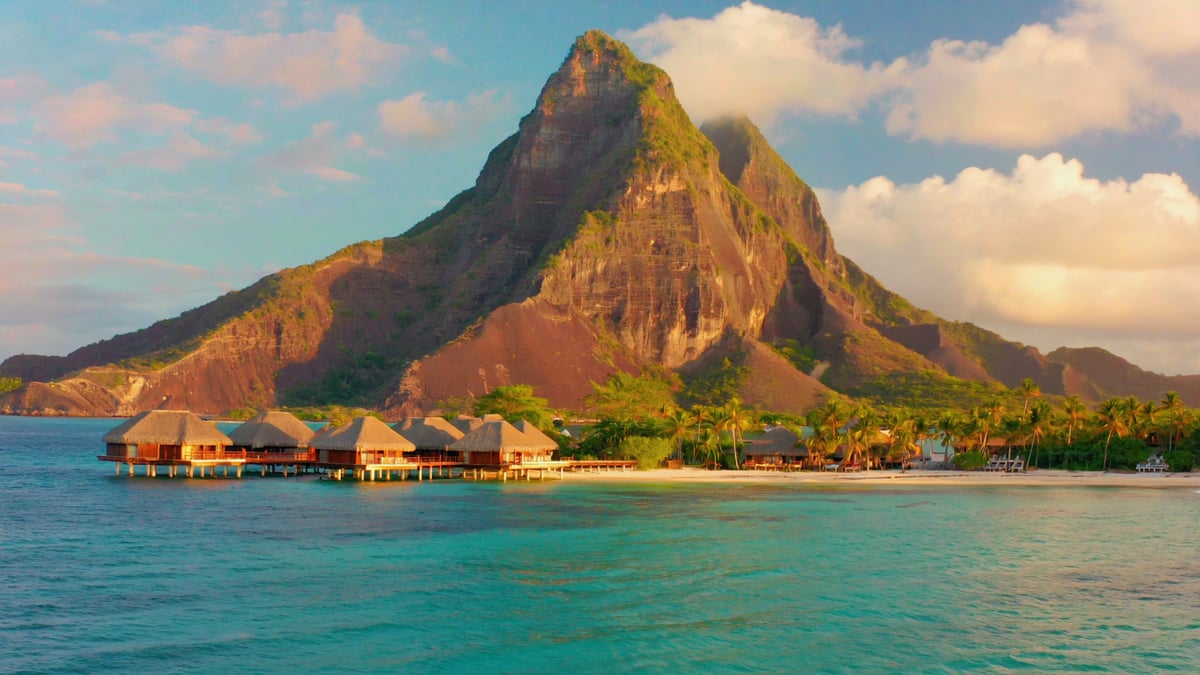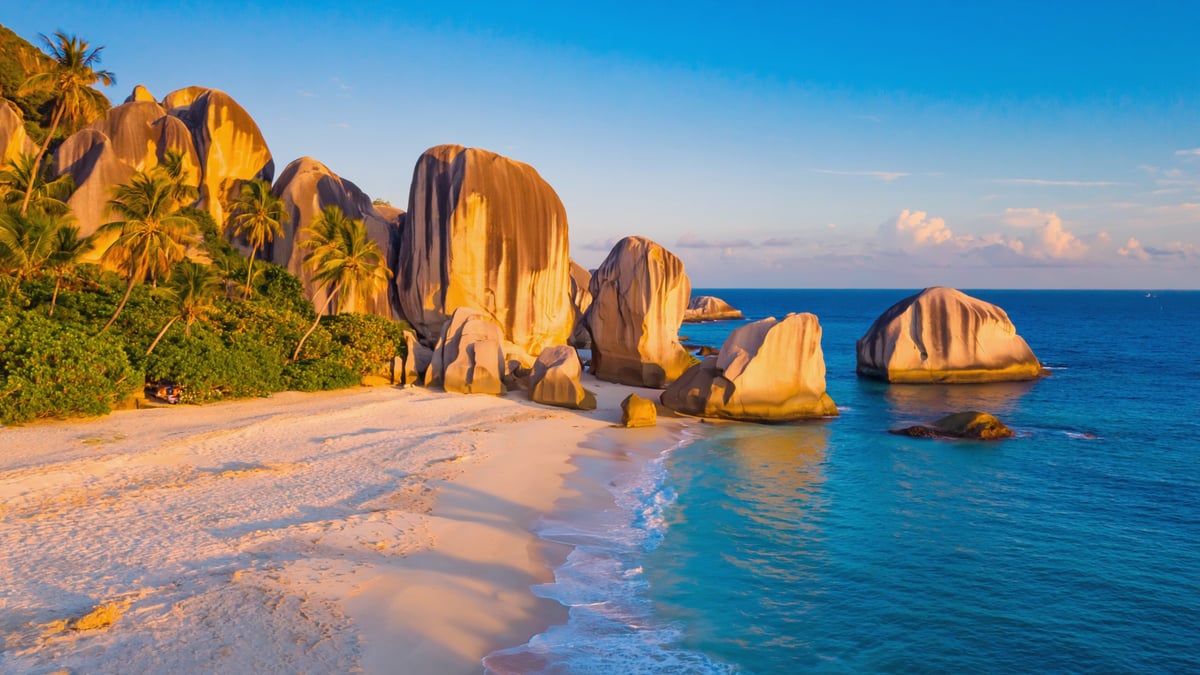
There is a particular kind of silence you find on Anse Lazio beach in the Seychelles. Not the silence of emptiness, but the silence of something so overwhelmingly beautiful that language temporarily fails. Pale pink granite boulders the size of houses sit half-submerged in water so transparent you can count the fish twenty feet below the surface. The coconut palms lean at theatrical angles. The Indian Ocean stretches, uninterrupted, to the horizon. If you have ever wondered what paradise actually looks like, this is a reasonable answer.
The Seychelles archipelago occupies a unique position in the world of luxury travel. It is not a destination you visit casually. It demands effort, budget, and intention. But for UK travellers who commit to the journey, it delivers something genuinely rare: a collection of 115 islands strewn across the western Indian Ocean that feel genuinely unspoiled, genuinely wild, and genuinely extraordinary. This guide covers everything a UK traveller needs to plan a Seychelles holiday properly, from visa requirements and flight routes to the best beaches, local dishes, and honest daily budget breakdowns.
Book Your Seychelles Holiday Now
GlobeHunters offers Seychelles package holidays including flights and hotels at competitive prices, from £1,599pp with UK flights.
View Seychelles Packages & Prices →Or call us: 0208 944 4514
Destination Overview: What Makes the Seychelles Genuinely Different
The Seychelles is an archipelago nation located in the western Indian Ocean, roughly 1,500 kilometres east of the African mainland and 4,000 kilometres south-west of India. It sits between latitudes 4°S and 10°S, placing it firmly within the tropics and outside the cyclone belt that affects other Indian Ocean destinations such as Mauritius and the Maldives. That last point matters enormously for travel planning: the Seychelles does not experience the destructive tropical cyclones that can wreck a holiday elsewhere in the region.
The archipelago divides into two distinct island groups. The Inner Islands, centred on Mahé, Praslin, and La Digue, are the famous granite islands, geologically ancient and botanically extraordinary. These are the islands of the iconic pink boulders, the Vallée de Mai palm forest, and the majority of the luxury resorts. The Outer Islands are largely coral atolls, remote, flat, and wildlife-rich. Most visitors concentrate on the Inner Islands, though the Outer Islands are gaining attention for ultra-exclusive private island experiences.
Essential facts for UK travellers:
- Capital city: Victoria (on Mahé), the smallest capital city in Africa
- Official languages: Seychellois Creole, English, and French. English is widely spoken in hotels, restaurants, and tourist areas.
- Currency: Seychellois Rupee (SCR). As of current exchange rates, approximately SCR 18-20 to £1, though this fluctuates. Many hotels and tour operators quote prices in US dollars or euros.
- Time zone: GMT+4, meaning the Seychelles is 4 hours ahead of UK time (3 hours ahead during British Summer Time). This is one of the more manageable time differences for long-haul destinations.
- Visa requirements for UK nationals: No visa is required before travel. UK passport holders receive a free visitor's permit on arrival, valid for one month and extendable to three months. You will need a valid passport (6 months validity recommended), proof of onward travel, confirmed accommodation, and evidence of sufficient funds. The Seychelles Immigration Department handles extensions at their offices in Victoria.
- Health requirements: No mandatory vaccinations are required for entry from the UK. The NHS Travel Health pages recommend checking hepatitis A and typhoid coverage. No malaria risk exists in the Seychelles, which is a significant practical advantage over many African destinations.
- Electricity: 240V, UK-style three-pin sockets. No adaptor needed for UK travellers.
- Driving: Left-hand side, same as the UK. Car hire is available and straightforward on Mahé and Praslin.
The country gained independence from Britain in 1976, and the British colonial legacy is visible in the infrastructure, legal system, and widespread English usage. Seychellois society is a fascinating creole blend of African, Asian, French, and British influences, reflected in the food, music, and architecture of Victoria's old town.
When to Go: Navigating the Seychelles' Two Distinct Seasons
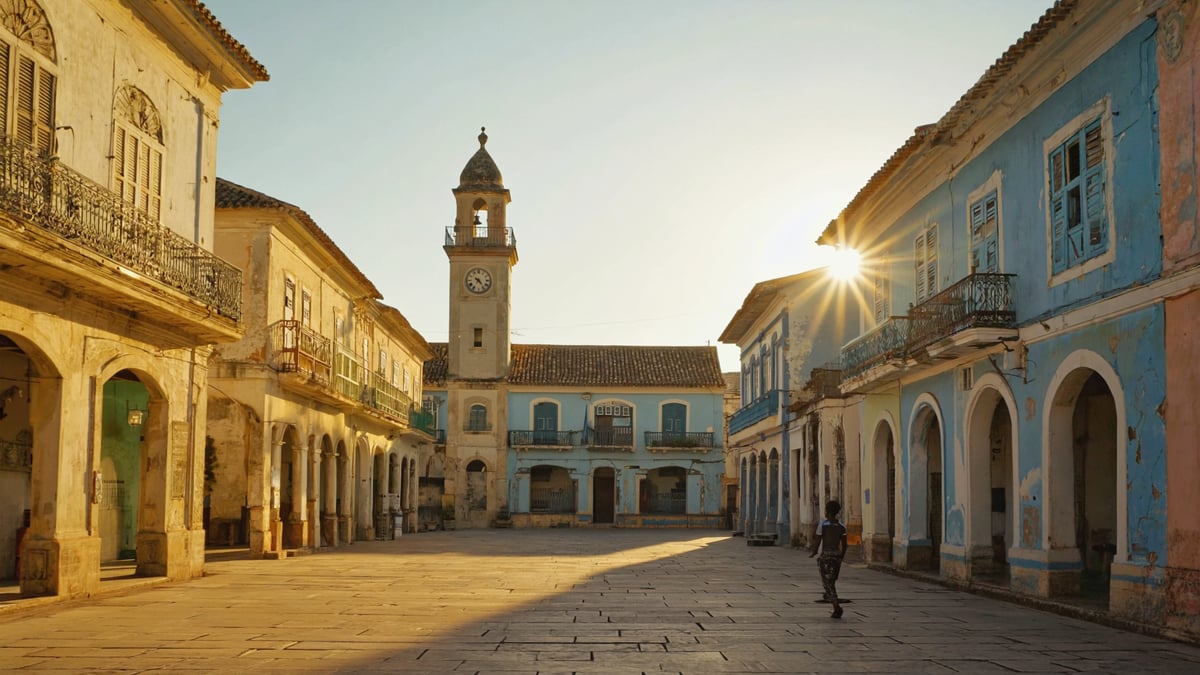
The Seychelles operates on a two-season calendar driven by the monsoon winds, and understanding this rhythm is the single most important piece of planning intelligence a UK traveller can have. Get the timing wrong and you may find your dream beach facing rough seas and persistent rain. Get it right and the islands deliver near-perfect conditions.
The Northwest Monsoon Season (November to April)
The northwest monsoon brings calmer seas, lighter winds, and the warmest temperatures of the year. Water temperatures sit around 28-30°C, visibility for snorkelling and diving is excellent on the sheltered western coasts of the main islands, and the overall feel is languid and tropical. This is the period when Mahé's west coast beaches, including Beau Vallon, are at their most swimmable. December through February is the driest period within this season.
This is also peak season. Prices at the top resorts climb significantly from mid-December through January, driven by the Christmas and New Year surge. Expect to pay a premium of 30-50% above standard rates during the festive fortnight. Book at least six months in advance for this window.
The Southeast Trade Wind Season (May to October)
From May, the southeast trades pick up, bringing stronger winds, rougher seas on the southern and eastern coasts, and slightly cooler temperatures (still a perfectly warm 26-27°C). The trade winds are refreshing rather than unpleasant, and this season has a very real advantage: the east coast of Praslin and the sheltered coves of La Digue remain calm, while the overall atmosphere is greener and more dramatic. This is also the best season for surfing on Mahé's southern coast.
May to October is considered shoulder or low season at many properties, making it significantly better value. Some visitors actually prefer this period for the dramatic skies, the greener landscape, and the noticeably fewer crowds on the most popular beaches.
The Optimal Travel Window
For most UK travellers balancing weather, value, and beach conditions, April, October, and November represent the sweet spot. These transitional months sit between the two monsoon seasons, delivering calm seas, pleasant temperatures, good visibility for water activities, and prices that sit below the December-January peak. April and November in particular are widely regarded as the finest months to visit.
Festivals and Events
- Festival Kreol (late October/early November): A week-long celebration of Creole culture across the islands, featuring music, dance, food, and art. One of the Indian Ocean's most vibrant cultural festivals.
- Subios Underwater Festival (November): A diving and underwater photography festival based on Mahé, attracting divers and marine photographers from across the world.
- Seychelles Carnival (April): A colourful street carnival in Victoria featuring performers and floats from across the Indian Ocean region.
Where to Stay: A Neighbourhood Guide to the Main Islands
Choosing where to base yourself is arguably the most consequential decision in a Seychelles holiday. Each of the three main islands has a distinct character, and the right choice depends entirely on what kind of traveller you are.
Mahé: The Hub Island
Mahé is the largest island and home to the international airport and the capital, Victoria. It is the most developed island, with the widest range of accommodation and the best transport connections. It is not, however, the most beautiful, though it has genuine highlights including the Morne Seychellois National Park and the beaches of Beau Vallon in the north and Anse Intendance in the south.
Beau Vallon is the most tourist-oriented area on Mahé, with a long sandy beach, a strip of restaurants and bars, and good value hotels. It suits travellers who want activity, convenience, and accessibility without the seclusion of the outer islands.
For budget travellers: Guesthouses and self-catering chalets on Mahé offer the best value in the Seychelles. Expect to pay £60-120 per night for a decent guesthouse room near Beau Vallon. The Eden Bleu Hotel near Eden Island offers modern rooms from approximately £90-130 per night.
For mid-range travellers: The Coral Strand Smart Choice Hotel on Beau Vallon beach offers well-appointed rooms from approximately £180-250 per night. The Savoy Resort and Spa, also on Beau Vallon, delivers near-luxury facilities at mid-range entry prices.
For luxury travellers: The Constance Ephelia Resort on Mahé's Port Launay bay is one of the island's finest properties, with multiple pools, multiple restaurants, a world-class spa, and direct beach access. Rates typically start from £450-700 per night. The Four Seasons Resort Seychelles perches dramatically on the hillside above Petite Anse with private plunge pools and villa-style accommodation from approximately £800 per night.
Praslin: The Idyllic Middle Island
Praslin is the second-largest island and, for many visitors, the emotional heart of the Seychelles. It is home to Anse Lazio, consistently ranked among the world's finest beaches, the Vallée de Mai UNESCO World Heritage palm forest, and a collection of resorts that manage to feel genuinely secluded without being inaccessible.
For mid-range travellers: The Coco de Mer Hotel and Black Parrot Suites offers comfortable rooms with a central location from approximately £200-300 per night. Château de Feuilles, a boutique property with panoramic views, delivers intimate luxury at accessible prices.
For luxury travellers: Lemuria Resort is Praslin's flagship luxury property, with a championship golf course, multiple beach access points, and spacious villas from approximately £600-900 per night. The L'Archipel hotel is a smaller, more intimate alternative with characterful Creole-style bungalows.
La Digue: The Romantic Slow Island
La Digue is the star of the Seychelles' visual identity. The island is small enough to explore by bicycle (the primary mode of transport), unhurried to a degree that feels almost anachronistic, and home to Anse Source d'Argent, one of the most photographed beaches on earth. The iconic pink granite formations and shallow turquoise lagoon here are simply unmatched anywhere in the world.
For mid-range travellers: Le Repaire Boutique Hotel offers charming rooms in a colonial-era building from approximately £180-240 per night. Villa Veuve is a popular guesthouse with a lovely pool and garden setting.
For luxury travellers: The Domaine de L'Orangeraie Resort and Spa is La Digue's most prestigious address, with elegant villas, a spa, and multiple restaurants from approximately £400-650 per night.
Top Things to Do in the Seychelles
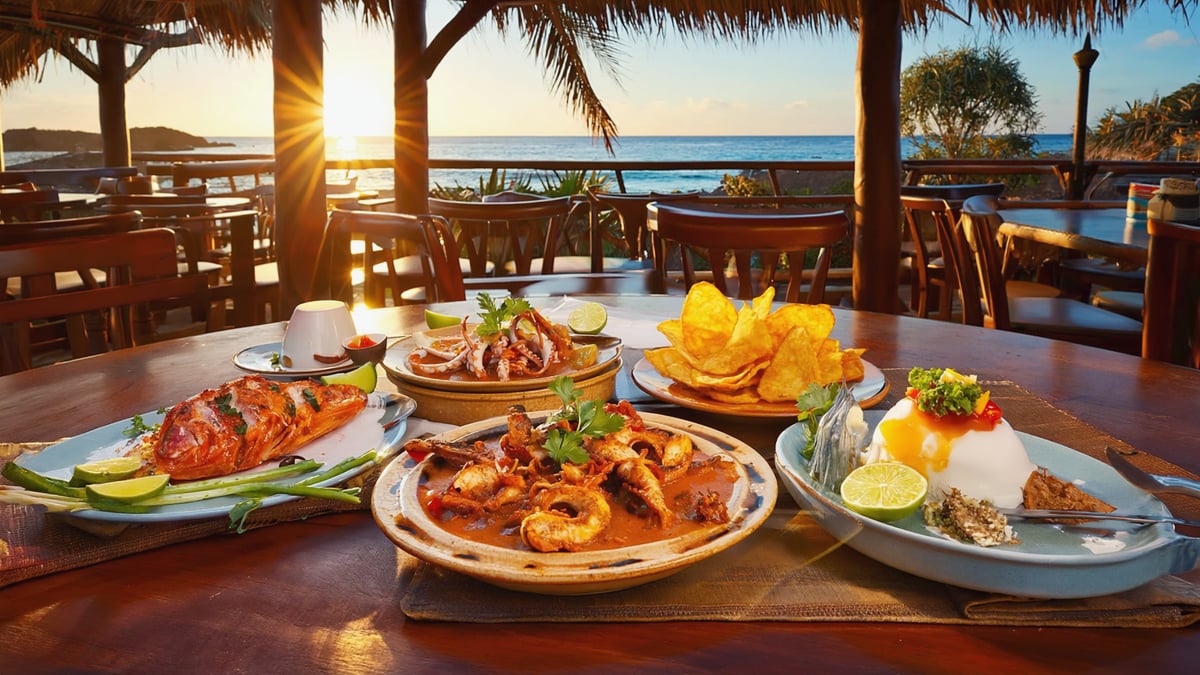
The Seychelles' activities divide naturally between the marine world and the terrestrial one. The best approach is to allocate time for both, since the underwater environment is as extraordinary as anything on land.
1. Anse Lazio Beach, Praslin
No entrance fee. Open at all times. Rated consistently among the world's top beaches, Anse Lazio on Praslin's northwest tip offers powder-soft sand, clear water, and the signature granite boulders that frame every photograph. The beach is accessible by taxi or hire car from Grand Anse. Arrive before 10:00 or after 15:00 to avoid the peak tour groups. A beach restaurant serves excellent grilled fish.
2. Vallée de Mai, Praslin
Entry: approximately SCR 300 (around £15-17) for adults, SCR 150 for children. Open 08:00-17:30 daily. This UNESCO World Heritage Site is the natural habitat of the Coco de Mer palm, which produces the world's largest seed. The ancient forest is genuinely primeval in atmosphere. The rare black parrot of the Seychelles is spotted here. Allow two to three hours minimum. Bring insect repellent and water.
3. Anse Source d'Argent, La Digue
Entry: approximately SCR 100 (around £5) as part of a fee to cross L'Union Estate. Open 08:00-17:00. This is the most photographed beach in the Seychelles and possibly the world. The shallow lagoon, dramatic granite formations, and soft sand create a landscape that looks almost artificially beautiful. Bring water shoes as the sea floor can be rocky in places.
4. Snorkelling and Diving
The Seychelles sits within the Coral Triangle adjacent area and hosts extraordinary marine biodiversity. Anse Lazio and St Pierre Island (near Praslin) are premier snorkelling spots accessible without a boat. For diving, operators on all three main islands offer PADI courses and guided dives. A single guided dive typically costs £50-80 per person. The marine reserve around Sainte Anne Island near Mahé offers excellent visibility and abundant reef fish, sea turtles, and rays.
5. Victoria Market and Old Town, Mahé
Free entry. Victoria's Sir Selwyn Selwyn-Clarke Market (known simply as the Victoria Market) opens Monday to Saturday from approximately 06:00-17:00. It is the finest introduction to Seychellois daily life: stalls piled with tropical fruit, fresh tuna, dried spices, and local crafts. The Old Town around Independence Avenue has several well-preserved colonial-era buildings and the famous miniature Big Ben clock tower.
6. Morne Seychellois National Park Hiking
Free entry to the national park. Guided hike operators charge approximately £30-60 per person. The park covers almost half of Mahé's land area and offers trails ranging from gentle forest walks to the challenging summit route up Morne Seychellois at 905 metres. The Copolia Trail (approximately 3km return) is the most popular, leading to a natural viewpoint with panoramic island views. Start early: the trails can be hot by late morning.
7. Giant Aldabra Tortoise Encounter
The Aldabra giant tortoise is the world's largest land tortoise and native to the Seychelles. While the main Aldabra Atoll population is a UNESCO World Heritage Site not open to general tourism, several properties and reserves on Mahé, Praslin, and La Digue keep accessible tortoise populations. L'Union Estate on La Digue has a free-roaming tortoise enclosure (entry included with beach fee, see above). Fregate Island Private hosts one of the larger free-roaming populations.
8. Island Hopping by Ferry
The Cat Cocos ferry service connects Mahé, Praslin, and La Digue. Mahé to Praslin takes approximately one hour at a cost of around SCR 600-800 (£30-45) per person each way. Praslin to La Digue takes approximately 15 minutes at around SCR 250-350 (£12-18) each way. The inter-island ferries are comfortable and reliable, making it practical to spend nights on multiple islands. Book in advance during peak season.
9. Sunset Cruise
Multiple operators on all three islands offer sunset catamaran cruises typically priced at £60-100 per person, usually including snorkelling stops, a seafood meal, and free-flowing drinks. The silhouette of the granite islands against an Indian Ocean sunset is one of the great visual experiences of travel in this part of the world.
10. Spa Day at a Luxury Resort
Several of the major resorts open their spa facilities to non-staying guests by appointment. A 60-minute Seychellois massage incorporating coconut oil and local botanicals typically costs £80-130. The Six Senses Zil Pasyon on Félicité Island and the COMO Shambhala treatments at COMO Cocoa Island are referenced widely as benchmark experiences in the Indian Ocean region, though the latter is technically in the Maldives. Most Mahé and Praslin luxury resort spas deliver comparable quality.
Food and Dining: The Creole Kitchen of the Indian Ocean
Seychellois cuisine is one of the genuinely underrated food traditions in the world, drawing on French techniques, African ingredients, South Asian spicing, and the extraordinary abundance of the Indian Ocean. If you arrive expecting generic resort food and leave having eaten only at hotel restaurants, you will have missed the point entirely.
Essential Dishes to Try
- Grilled red snapper (bourgeois): The bourgeois, or red snapper, is the prestige fish of the Seychelles. Grilled simply with garlic and lemon and served with rice and fried breadfruit, it is the definitive Seychellois meal. Available at virtually every local restaurant from around £12-20.
- Octopus curry (kari zourit): A slow-cooked octopus curry with coconut milk, turmeric, and chilli. Rich, complex, and deeply satisfying. A staple of local canteens and roadside restaurants.
- Ladob: A sweet dish made with plantain, breadfruit, or sweet potato cooked in coconut milk and vanilla. Served as dessert or, in its savoury version, as a side dish with fish.
- Chatini: A fresh chutney or salsa made from mango, papaya, or bilimbi, typically served as an accompaniment to grilled fish or curries. Bright, acidic, and essential.
- Shark chutney (satini reken): A uniquely Seychellois preparation of boiled shark flesh mixed with bilimbi and spices, served cold. Stronger in flavour than it sounds and genuinely worth trying.
- Fresh coconut water: Served directly from the green nut for around SCR 30-50 (£1.50-2.50) at markets and beach stalls. Deeply refreshing and ubiquitous.
Best Dining Areas
Beau Vallon beach strip, Mahé: The most accessible concentration of restaurants for visitors, ranging from upmarket beachfront dining to casual fish grills. Marie Antoinette Restaurant in Victoria is a Mahé institution, serving traditional Creole meals in a historic colonial villa at around £15-25 per person for a multi-course set menu. The Boat House on Beau Vallon is popular for fresh seafood and sunset views.
Grand Anse, Praslin: Several good local restaurants cluster around the main beach area. Prices are slightly lower than Mahé, and the quality of fresh fish is excellent. Look for daily-catch boards outside local restaurants.
La Digue village: The compact village near the ferry jetty has several small Creole restaurants serving outstanding value home-cooked food. A full meal of fish curry, rice, and chatini in a local restaurant costs around £8-14 per person.
Street Food and Markets
The Victoria Market on Mahé is the best destination for street-level eating. Fresh fruit juices, samosas, and grilled skewers are available from early morning. The Friday evening fish market at Beau Vallon is a social event as much as a food destination, with vendors grilling fresh catch directly on the beach from around 18:00.
Dietary Considerations
Vegetarians and vegans will find the Seychelles manageable but not effortless. The cuisine is heavily fish-focused, and many dishes use fish stock even when fish is not the primary ingredient. Fruit, vegetables, and rice are abundant. Larger resorts universally cater to dietary requirements with advance notice. Halal options are available at several restaurants in Victoria, reflecting the Seychelles' Muslim minority community. Gluten-free dining is best navigated at resort restaurants, which are accustomed to dietary requests from international guests.
Getting to the Seychelles from the UK
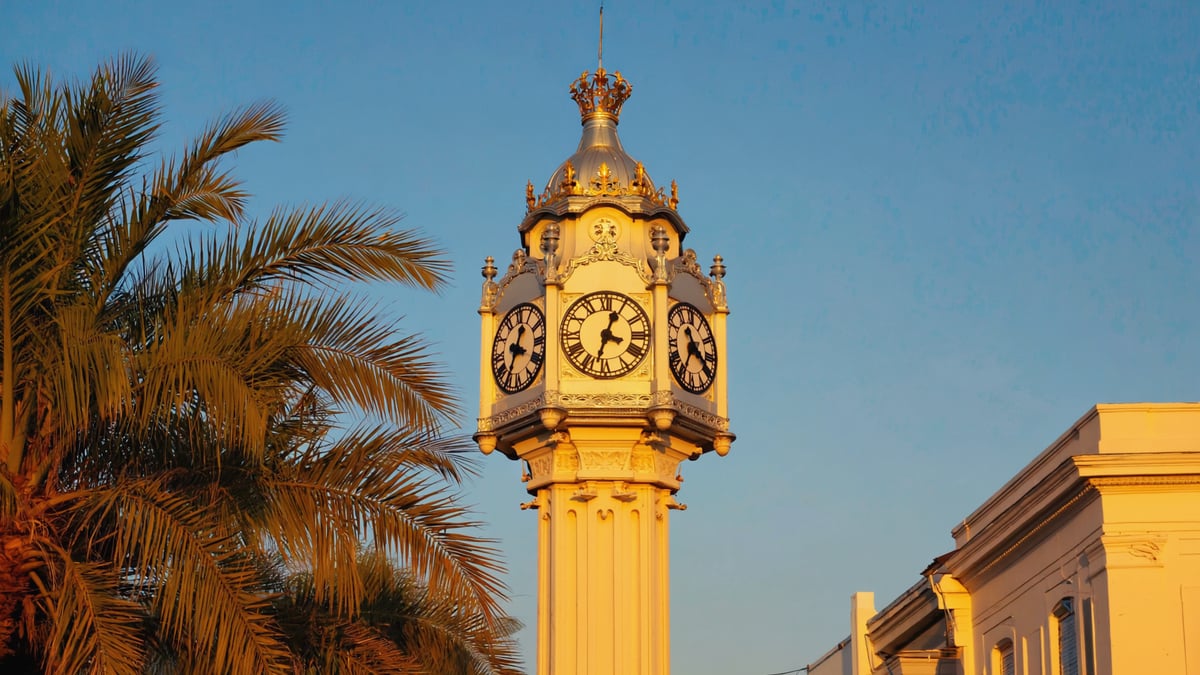
The Seychelles is genuinely accessible from the UK, but it requires a direct or single-stop long-haul flight. Understanding the route options helps significantly with budgeting and booking timing.
Flight Routes and Airlines
All flights arrive at Seychelles International Airport (SEZ) on Mahé, the country's sole international gateway. The flight distance from London is approximately 9,000 kilometres.
| Route | Airlines | Duration | Type |
|---|---|---|---|
| London Heathrow (LHR) to Mahé (SEZ) | Air Seychelles, British Airways (codeshare) | Approx. 10.5-11 hrs | Direct |
| London Heathrow via Dubai (DXB) | Emirates | Approx. 13-15 hrs total | 1 stop |
| London Heathrow via Abu Dhabi (AUH) | Etihad Airways | Approx. 13-15 hrs total | 1 stop |
| London Heathrow via Addis Ababa (ADD) | Ethiopian Airlines | Approx. 14-16 hrs total | 1 stop |
| Manchester (MAN) via Dubai or Doha | Emirates, Qatar Airways | Approx. 14-17 hrs total | 1 stop |
Typical Flight Costs
Return economy flights from London to Mahé typically range from £600-900 per person when booked three to six months in advance. Business class returns sit in the range of £2,000-3,500 per person. December and January flights command the highest prices. Booking as part of a package holiday through an operator like GlobeHunters typically delivers better combined flight-and-hotel value than booking independently, particularly during peak season when hotel rates are most volatile.
Airport Transfers
Seychelles International Airport is located on the northeast coast of Mahé, approximately 10 kilometres from Victoria and the main tourist areas. Licensed taxis are available outside arrivals. A taxi to Beau Vallon takes approximately 20-30 minutes and costs around £15-25 depending on exact destination. Pre-booked hotel transfers are the most convenient option and are typically included in package holidays. Car hire is available at the airport from around £35-60 per day.
Getting Between Islands
Inter-island travel from Mahé is by ferry (Cat Cocos) or small domestic aircraft (Air Seychelles and small charter operators). The ferry is the most used option for Praslin and La Digue. Domestic flights from Mahé to Praslin take approximately 15 minutes and offer extraordinary aerial views of the granite islands, typically costing £40-80 each way. For remote outer islands and private island resorts, helicopter transfers are the norm and are usually included in premium resort packages.
Budget Guide: What a Seychelles Holiday Actually Costs
Honesty is important here. The Seychelles is not a cheap destination, and any guide that suggests otherwise is doing you a disservice. However, it is also not uniformly expensive across every category. Food and local transport are relatively affordable; accommodation is where the costs concentrate.
| Category | Budget Traveller (per person/day) | Mid-Range (per person/day) | Luxury (per person/day) |
|---|---|---|---|
| Accommodation (per person sharing) | £40-65 | £100-180 | £300-700+ |
| Meals (3 per day) | £15-25 | £35-60 | £80-150+ |
| Local transport | £5-12 | £15-30 | £30-80 |
| Activities and excursions | £10-20 | £30-60 | £80-200+ |
| Daily total (per person) | £70-122 | £180-330 | £490-1,130+ |
Total Holiday Cost Estimates (10 nights, per person, flights included)
| Travel Tier | Estimated Total Cost (per person) | Notes |
|---|---|---|
| Budget | £1,400-1,900 | Guesthouses, local restaurants, buses, free beaches |
| Mid-range | £2,400-4,200 | 3-4 star hotels, mix of local and resort dining, some excursions |
| Luxury | £5,500-15,000+ | 5-star or private island resorts, fine dining, private charters |
GlobeHunters' Seychelles package holidays start from £1,599 per person including return flights and hotel accommodation, offering strong value against booking independently, particularly for the flight-and-hotel combination at peak periods.
Money and Payments
The Seychelles operates a dual-currency economy in tourist areas. Many hotels, restaurants, and tour operators price in US dollars or euros, but Seychellois rupees are accepted everywhere and are the better option for local markets, buses, and small restaurants. ATMs are available in Victoria and at major resort areas on Mahé and Praslin. Notify your UK bank before travel to avoid card blocks. Visa and Mastercard are widely accepted at hotels and larger restaurants. Some smaller guesthouses and local eateries are cash-only.
Travel Tips and Safety for UK Visitors
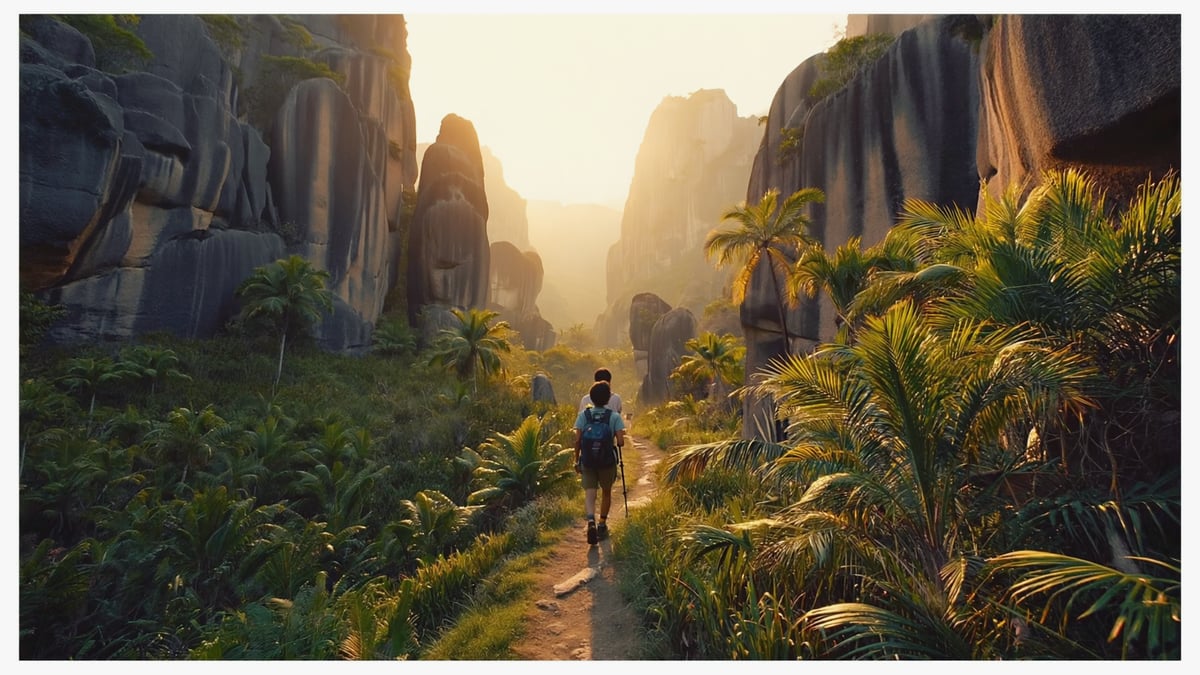
The Seychelles is one of the safest destinations in the African and Indian Ocean region for international visitors. That said, a well-prepared traveller is always a better traveller.
Safety
The Seychelles has a low rate of violent crime against tourists. Petty theft, particularly bag snatching and opportunistic theft from beaches and vehicles, does occur in tourist areas. Standard precautions apply: do not leave valuables unattended on beaches, use hotel safes for passports and large amounts of cash, and be aware of your surroundings in Victoria's market area.
The UK Foreign, Commonwealth and Development Office (FCDO) travel advice for the Seychelles currently rates the islands as safe with no specific regional advisories. Check this page before travel for the most current guidance.
Health
As noted earlier, the Seychelles is malaria-free. The biggest health risks are sunburn (the equatorial sun is intense), jellyfish stings (particularly on the southeast coast during trade wind season), and sea urchin spines on rocky beach entries. Bring high-SPF sunscreen (note that reef-safe formulas are strongly encouraged given the marine protected areas), water shoes, and a basic first aid kit. Tap water quality varies by island: bottled water is recommended. Medical facilities on Mahé are reasonably good; Praslin and La Digue have basic clinics. Serious medical cases are evacuated to Mahé or, if necessary, abroad. Comprehensive travel insurance with medical evacuation cover is essential.
Customs and Etiquette
- Seychellois society is generally relaxed and welcoming of tourists, but modest dress is appreciated away from the beach. Cover shoulders and legs when visiting Victoria's market, churches, and mosques.
- Tipping is not mandatory but appreciated. A 10% tip at restaurants is standard for good service. Hotel staff and dive guides also appreciate tips.
- Photography of locals requires permission. Seychellois people are generally happy to be photographed when asked politely.
- Collecting coral, shells, and marine organisms is illegal and subject to fines. The Seychelles takes marine conservation seriously: the Seychelles Marine Parks Authority manages several protected areas and the rules are enforced.
- Do not feed or disturb wildlife, including giant tortoises, sea turtles, and nesting birds. Many nesting sites have protected status.
Packing Essentials for the Seychelles
- Reef-safe sunscreen (SPF 50+) in large quantities, hotel prices are high
- Lightweight, quick-dry clothing for the tropical heat
- A light waterproof layer for afternoon showers (brief but heavy, especially in the wet season)
- Snorkelling mask and fins (rental quality varies; bringing your own saves money)
- Water shoes for rocky beach entries
- Insect repellent for forest hikes and evenings
- A dry bag for beach and boat days
- Modest cover-ups for Victoria and village visits
- Copies of passport and travel insurance documents stored separately from originals
Connectivity
Mobile coverage on the three main islands is reasonable, with 4G available in most tourist areas. Roaming charges from UK providers can be significant. Local SIM cards (from Cable & Wireless Seychelles or Airtel Seychelles) are available at the airport and in Victoria for a modest cost. Most hotels and resorts offer Wi-Fi, though speeds vary. Very remote outer island properties may have limited connectivity by design.
The Seychelles as a Honeymoon Destination: What Sets It Apart
The Seychelles competes directly with the Maldives for the title of the world's premier Indian Ocean honeymoon destination, and the comparison is worth making explicitly. Both offer extraordinary marine environments, luxury accommodation, and a sense of genuine remoteness. The Seychelles differentiates itself on three dimensions that matter to many honeymooners.
First, landscape variety. The Maldives is flat coral atolls and water villas. Beautiful, but visually uniform. The Seychelles offers granite mountains, ancient forests, varied beaches, and wildlife encounters that give the holiday a more exploratory, adventurous dimension alongside the pure relaxation.
Second, cultural texture. The Seychelles has a living Creole culture, a real capital city, local restaurants, festivals, and markets. Honeymooners who want more than resort life have somewhere genuine to explore.
Third, island hopping. A Seychelles honeymoon can combine three or four distinct islands, each with a different character, creating a natural arc of experiences. Starting on Mahé for arrival logistics, moving to Praslin for the best beaches and forests, and ending on La Digue for slow, romantic island life is a classic structure that many honeymooners find deeply satisfying.
For an Indian Ocean honeymoon that goes beyond the beautiful-but-passive beach resort experience, the Seychelles is the stronger choice for couples who want both luxury and genuine discovery.
Plan Your Dream Seychelles Honeymoon
GlobeHunters specialises in romantic Seychelles packages combining flights, luxury hotels, and island transfers. Packages from £1,599pp.
Explore Seychelles Honeymoon Packages →Or call us: 0208 944 4514
Frequently Asked Questions About Seychelles Holidays
Do UK citizens need a visa to visit the Seychelles?
No. UK passport holders do not require a visa in advance. A free visitor's permit valid for one month is issued on arrival at Seychelles International Airport on Mahé. You will need a valid passport, proof of onward travel, confirmed accommodation details, and evidence of sufficient funds. Extensions to three months are available from the Seychelles Immigration Department in Victoria.
What is the best time of year for a Seychelles holiday from the UK?
April, October, and November are widely regarded as the optimal months, sitting between the two monsoon seasons with calm seas, pleasant temperatures, good water visibility, and prices below the December-January peak. The Christmas and New Year period is the most expensive and most crowded window. May to September offers good value but rougher seas on some coasts.
How long does the flight from the UK to the Seychelles take?
Direct flights from London Heathrow to Mahé take approximately 10.5 to 11 hours. One-stop itineraries via Dubai, Abu Dhabi, Doha, or Addis Ababa add 2-5 hours to the total journey time depending on the stopover duration.
Which island is best for a first visit to the Seychelles?
A combination of at least two islands is recommended for a first visit. Spending three to four nights on Praslin (for Anse Lazio and the Vallée de Mai) and two to three nights on La Digue (for Anse Source d'Argent and the relaxed atmosphere) delivers the quintessential Seychelles experience. Use Mahé primarily as your arrival and departure hub, adding a night or two for Victoria's market and the national park.
Is the Seychelles safe for UK tourists?
Yes. The Seychelles is one of the safest destinations in the African and Indian Ocean region. The UK FCDO currently lists the islands with no specific safety advisories. Petty theft in tourist areas is the primary concern. Standard travel precautions (securing valuables, using hotel safes, being aware of surroundings) are sufficient. The country has no malaria, no venomous land animals of significance, and no cyclone risk.
How much does a Seychelles holiday cost from the UK?
A budget traveller spending 10 nights can manage the full trip including flights for approximately £1,400-1,900 per person by staying in guesthouses and eating at local restaurants. A mid-range 10-night trip with 3-4 star hotels costs roughly £2,400-4,200 per person including flights. Luxury trips to 5-star resorts and private islands run from £5,500 to £15,000 or more per person. GlobeHunters packages start from £1,599 per person with flights included.
Is the Seychelles good for snorkelling and diving without prior experience?
Yes. Several of the Seychelles' best snorkelling spots, including the waters around Anse Lazio and St Pierre Island near Praslin, are accessible to beginners without a boat. The calm, clear waters during the northwest monsoon season (November to April) are particularly suitable for novice snorkellers. For diving, PADI Discover Scuba introductory dives are available from operators on all three main islands, costing approximately £70-100 per person for a supervised introductory experience.
Can you island hop in the Seychelles without a private charter?
Absolutely. The Cat Cocos ferry service connects Mahé, Praslin, and La Digue on a scheduled basis. Mahé to Praslin costs approximately £30-45 each way and takes about one hour. Praslin to La Digue takes 15 minutes and costs approximately £12-18 each way. Domestic Air Seychelles flights between Mahé and Praslin are also available. Island hopping on public transport is practical and affordable.
What currency should I bring to the Seychelles?
The local currency is the Seychellois Rupee (SCR). US dollars and euros are also widely accepted in tourist areas. ATMs dispensing rupees are available in Victoria, Beau Vallon, and Grand Anse Praslin. For the best rates on everyday spending, use the local currency at markets, local restaurants, and buses. Notify your UK bank before travel to prevent card blocks.
Is the Seychelles suitable for families with children?
Yes, though it is more commonly chosen by couples and honeymooners. Families with children benefit from the calm lagoon beaches (particularly at low tide), the tortoise encounters on La Digue, snorkelling in shallow reef areas, and the whale watching opportunities during the right season. Many resorts offer children's clubs and family room configurations. The lack of malaria and the absence of dangerous wildlife on land makes the Seychelles a lower-risk tropical destination for families than many alternatives.
What vaccinations do I need for the Seychelles?
No vaccinations are mandatory for entry from the UK. The NHS recommends ensuring standard UK vaccinations are up to date and checking your hepatitis A and typhoid coverage before travel. There is no malaria in the Seychelles. Check the NHS Travel Health pages or consult a travel health clinic at least six weeks before departure for personalised advice.
Are all-inclusive Seychelles holidays available from the UK?
All-inclusive packages are available but less prevalent than in destinations like the Dominican Republic or Turkey. Several larger resorts on Mahé and Praslin offer all-inclusive rates. However, given the quality of local restaurants and street food, many travellers find that a half-board or room-only arrangement actually delivers a better holiday experience by encouraging exploration beyond the resort grounds. GlobeHunters can advise on the best board basis for different budgets and travel styles.
Key Takeaways for Your Seychelles Holiday
- Book well in advance for December-January. Peak season prices at top resorts rise significantly and availability shrinks fast. A minimum of six months' advance booking is recommended for the festive period.
- Visit at least two islands. A single-island Seychelles trip misses the point. The combination of Praslin and La Digue is the minimum recommended itinerary; adding Mahé for arrival logistics and a day of culture rounds out the experience perfectly.
- April, October, and November are the sweet spots. Calm seas, fewer crowds, competitive prices, and consistently good weather make these transition months the optimal choice for most UK travellers.
- No malaria, no visa, no cyclone risk. These three factors make the Seychelles a significantly simpler destination to plan than many tropical alternatives.
- Package holidays deliver genuine value here. The combination of flight volatility and high hotel rates means that a GlobeHunters package consistently outperforms independent booking on total cost, especially during peak season.
- Eat outside your resort. The Creole food scene, particularly at local restaurants and the Victoria Market, is one of the most underrated aspects of a Seychelles trip. Budget some meals away from your hotel every day.
- The Seychelles is a genuine alternative to the Maldives for honeymooners who want landscape variety, cultural texture, and island-hopping adventure alongside the luxury beach experience.
Book Your Seychelles Holiday Now
GlobeHunters offers holiday packages including flights and hotels at competitive prices, with Seychelles packages from £1,599pp. Speak to our travel specialists to build your perfect Indian Ocean escape.
View Seychelles Packages & Prices →Or call us: 0208 944 4514
About the author
Spiros Maragkoudakis · Chief Commercial Officer
Ready to Book Your Seychelles Holiday?
Our travel experts are ready to help you plan the perfect trip. Call us today or browse our latest deals.
Ready to Start Planning?
Speak to our travel experts for personalised advice and the best deals on your next holiday.
Call 0208 944 4514