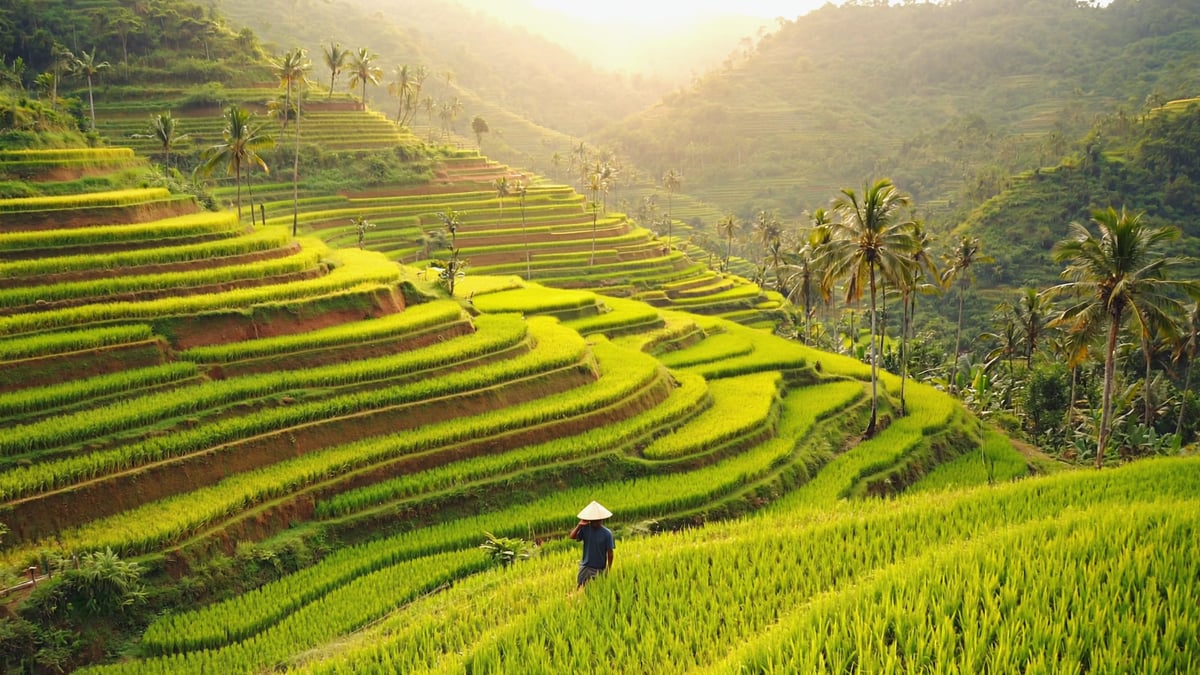
There is a moment — and every traveller who has been to Bali knows the one — when you round a bend on a narrow road above Ubud, the engine cuts out, and you hear nothing but the sound of water moving through ancient rice terraces. The air smells of incense and wet earth. A temple gate frames the view. And you think: this is exactly why I came here.
Bali is one of those rare destinations that lives up to every photograph, every story, and every superlative thrown at it — and then quietly exceeds them. For UK travellers, it represents one of the most rewarding long-haul journeys available: a single island that delivers jungle treks, surf breaks, UNESCO-recognised cultural landscapes, world-class spa retreats, and some of Southeast Asia's most creative cuisine, all within a relatively compact geography. Whether you are planning a honeymoon, a solo adventure, a family holiday, or simply the kind of trip you will talk about for the next decade, Bali delivers.
This guide covers everything you need to plan your Bali holiday in 2026 — from the best time to travel and where to stay, to daily budget breakdowns and insider tips that most tourists never discover.
Bali at a Glance: What Kind of Destination Is This?
Bali is an Indonesian island province located in the westernmost part of the Lesser Sunda Islands, sitting between Java to the west and Lombok to the east. It is one of over 17,000 islands that make up Indonesia, but it is uniquely distinctive: while the rest of Indonesia is predominantly Muslim, Bali practises its own form of Hinduism — Balinese Hinduism — which permeates every aspect of daily life, from the tiny flower offerings (canang sari) placed on pavements each morning to the elaborate cremation ceremonies that can stop traffic for hours.
Essential facts for UK travellers:
- Language: Bahasa Indonesia (official) and Balinese; English is widely spoken in tourist areas
- Currency: Indonesian Rupiah (IDR). As a general guide, roughly 20,000 IDR equals approximately £1, though exchange rates fluctuate — always check current rates before travel
- Time zone: WITA (Central Indonesian Time), which is UTC+8 — 7 or 8 hours ahead of the UK depending on British Summer Time
- Capital of Bali: Denpasar, though most tourists base themselves in Seminyak, Ubud, Canggu, or Kuta
- International airport: Ngurah Rai International Airport (DPS), near Denpasar
- Visa requirements for UK travellers: As of 2026, British passport holders can obtain a Visa on Arrival (VoA) at Ngurah Rai Airport for stays up to 30 days, extendable for a further 30 days. The fee is approximately 500,000 IDR (around £25). Alternatively, the Indonesian e-VOA (electronic Visa on Arrival) can be purchased online before travel, which saves time at the airport — highly recommended during peak season
- Electricity: 230V, Type C and Type F plugs — bring a universal adaptor
- Driving: Left-hand traffic — the same as the UK — though roads can be chaotic. Most visitors use Grab (the regional equivalent of Uber) or hire a private driver
Bali covers approximately 5,780 square kilometres — roughly half the size of Yorkshire — which means you can experience dramatically different landscapes within a single day's drive. The volcanic interior, dominated by Mount Agung (3,031m) and Mount Batur (1,717m), gives way to lush rice paddy terraces, dense jungle, and then coastal zones ranging from the dramatic cliffs of Uluwatu in the south to the black sand beaches of the north.
When Should You Visit Bali? A Month-by-Month Breakdown
The best time to visit Bali for most UK travellers is between May and October, when the island sits within its dry season — delivering reliable sunshine, lower humidity, and ideal conditions for outdoor activities. However, the nuances matter considerably, and the "wrong" season in Bali still beats most European destinations.
Dry Season: May to October
This is Bali at its most photogenic. Skies are clear, rice terraces glow vivid green, and the surf on the west coast (Seminyak, Canggu, Uluwatu) reaches its most consistent form. July and August represent peak season — coinciding with UK school summer holidays — which means higher prices for flights and accommodation, busier temples and attractions, and the need to book well in advance. June and September are the sweet spot: dry weather, slightly lower prices, and noticeably fewer crowds at key sites like Tanah Lot and the Tegallalang Rice Terraces.
Wet Season: November to April
The wet season brings daily rainfall, typically in intense but short afternoon downpours rather than continuous grey drizzle. Temperatures remain warm (typically 26–31°C), and mornings are often brilliantly sunny. Many experienced Bali travellers deliberately visit during this period — prices drop significantly, the island is greener and more atmospheric, and popular sites are noticeably quieter. January and February see the heaviest rainfall and are generally best avoided unless you plan to spend significant time in spas and indoor experiences.
Key Festivals and Events
- Nyepi (Balinese New Year / Day of Silence): Typically falls in March. The entire island shuts down for 24 hours — no flights, no vehicles, no lights. An extraordinary cultural experience if you are already on the island, but avoid planning arrival or departure around this date
- Galungan and Kuningan: A 10-day Hindu festival celebrating the victory of good over evil, held roughly every 210 days. Penjor (tall bamboo poles adorned with offerings) line every road — one of Bali's most visually spectacular sights
- Bali Arts Festival: Running through June and July each year in Denpasar, featuring traditional dance, music, and craft exhibitions
- Kuta Carnival: An annual beach festival held in September/October, featuring surf competitions and cultural performances
Our recommendation for 2026: If you have flexibility, target late May or the first three weeks of September. You will secure the best balance of reliable weather, competitive pricing, and a more authentic experience than the peak August crowds allow.
Where to Stay in Bali: A Neighbourhood Guide for Every Budget
Choosing where to stay in Bali is one of the most consequential decisions of your trip — the island's different regions have entirely distinct personalities, and the right base depends entirely on what you want from your holiday.
Seminyak & Kerobokan — Best for Style and Nightlife
Seminyak is Bali's most sophisticated beach district: a strip of boutique hotels, high-end beach clubs, creative restaurants, and designer shops running along the west coast. It attracts a cosmopolitan crowd and offers Bali's best sunset spots. Kerobokan, immediately north, is slightly calmer and increasingly popular with longer-stay visitors who want proximity to Seminyak's amenities with a quieter residential feel.
- Budget: Guesthouses and small warungs from around £20–35/night
- Mid-range: Boutique hotels with pools from £60–120/night
- Luxury: Private villa resorts from £200–500+/night
Canggu — Best for Surfers and Digital Nomads
Canggu has evolved from a sleepy surf village into one of Bali's most energetic neighbourhoods, with a thriving café scene, excellent surf breaks at Echo Beach and Batu Bolong, and a young, international atmosphere. It retains more local character than Seminyak while offering excellent facilities. Ideal for solo travellers and couples who want activity and social energy alongside their beach time.
Ubud — Best for Culture and Nature
Set in the cool highlands 45 minutes north of the coast, Ubud is Bali's cultural heart — home to the royal palace, the best traditional dance performances, the famous rice terraces, and a thriving wellness scene. It is the base of choice for travellers seeking a more introspective, culturally immersive experience. The surrounding villages — Tegallalang, Penestanan, Campuhan —
- Budget: Homestays and guesthouses from £15–30/night
- Mid-range: Jungle villas and boutique retreats from £50–110/night
- Luxury: Private cliff-edge villas from £180–400+/night
Uluwatu & the Bukit Peninsula — Best for Surf and Clifftop Views
The southern Bukit Peninsula is where Bali's most dramatic scenery meets its most serious surf culture. Uluwatu's clifftop temple is one of the island's great sights, and the hidden beach coves accessed by steep limestone staircases — Padang Padang, Bingin, Balangan — are genuinely spectacular. Accommodation here ranges from basic surf hostels to some of Bali's most jaw-dropping luxury cliff resorts.
Sanur — Best for Families and Calmer Stays
Sanur is Bali's most relaxed resort town: a long beachfront promenade, calm protected waters (ideal for children and non-swimmers), and a lower-key atmosphere than the party zones of Seminyak and Canggu. It is also the departure point for fast boats to the Gili Islands and Lombok. Excellent value mid-range hotels make it a smart choice for families.
Book Your Bali Holiday Now
GlobeHunters offers holiday packages to Bali including flights and hotels at competitive prices — from just £1,099 per person for 7 nights.
View Bali Package & Prices →Or call us: 0208 944 4514
Top Things to Do in Bali: 10 Unmissable Experiences
Bali rewards both the active adventurer and the slow traveller who wants nothing more than a book and a villa pool. The following list covers the island's essential experiences — each one chosen because it genuinely delivers on its reputation.
1. Tegallalang Rice Terraces, Ubud
The UNESCO-recognised subak irrigation system that feeds the Tegallalang terraces has been operating for over a thousand years, and standing among them at dawn — when mist still clings to the valley and the light is golden — is one of Bali's defining moments. Entry costs approximately 15,000–50,000 IDR (roughly £1–£2.50) depending on which access point you use. Arrive before 08:00 to beat the tour groups. Insider tip: walk north along the terrace path for about 20 minutes to find viewpoints that rarely appear on social media.
2. Tanah Lot Temple
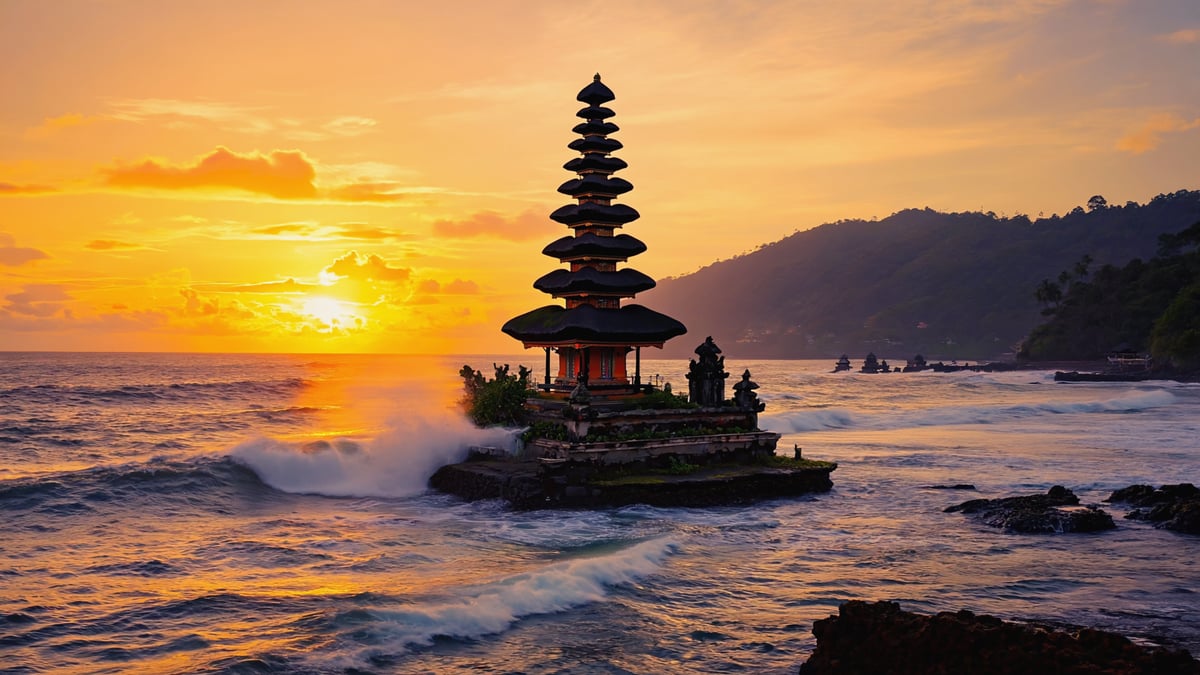
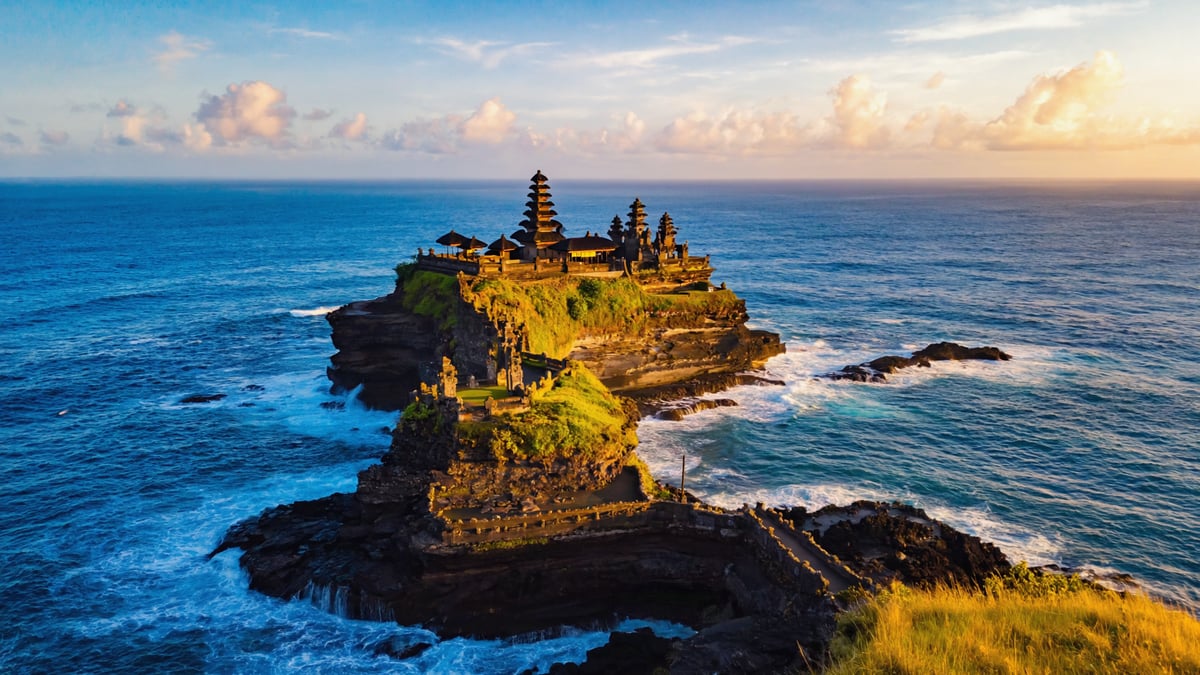
Built on an offshore rock formation and accessible only at low tide, Tanah Lot is Bali's most photographed temple — and for good reason. Sunset here, when the temple silhouettes against a burning sky, is genuinely spectacular. Entry is approximately 60,000 IDR (around £3). Arrive 90 minutes before sunset for a good vantage point;
3. Uluwatu Temple and Kecak Fire Dance
Perched 70 metres above the Indian Ocean on sheer limestone cliffs at Bali's southwestern tip, Uluwatu Temple (Pura Luhur Uluwatu) is one of Bali's six key directional temples. The nightly Kecak fire dance performance — held at the clifftop amphitheatre at sunset — is a magnificent piece of traditional theatre, with a chorus of 70+ men chanting rhythmically as the story of the Ramayana unfolds. Entry to the temple is approximately 50,000 IDR (£2.50); Kecak tickets are around 150,000 IDR (£7.50). Book ahead during peak season.
4. Mount Batur Sunrise Trek
Waking at 02:00 to begin a two-hour ascent of an active volcano is, admittedly, not for everyone. But the reward — watching the sun rise over the caldera lake from a vantage point at 1,717 metres, with the peak of Mount Agung visible in the distance — is the kind of experience that stays with you permanently. Most trekkers join guided groups departing from Kintamani; all-inclusive guided packages including transport, equipment, and breakfast on the summit cost approximately £25–40 per person. The volcano is active — check current status with the Indonesian Centre for Volcanology and Geological Hazard Mitigation before your trek.
5. Ubud Sacred Monkey Forest Sanctuary
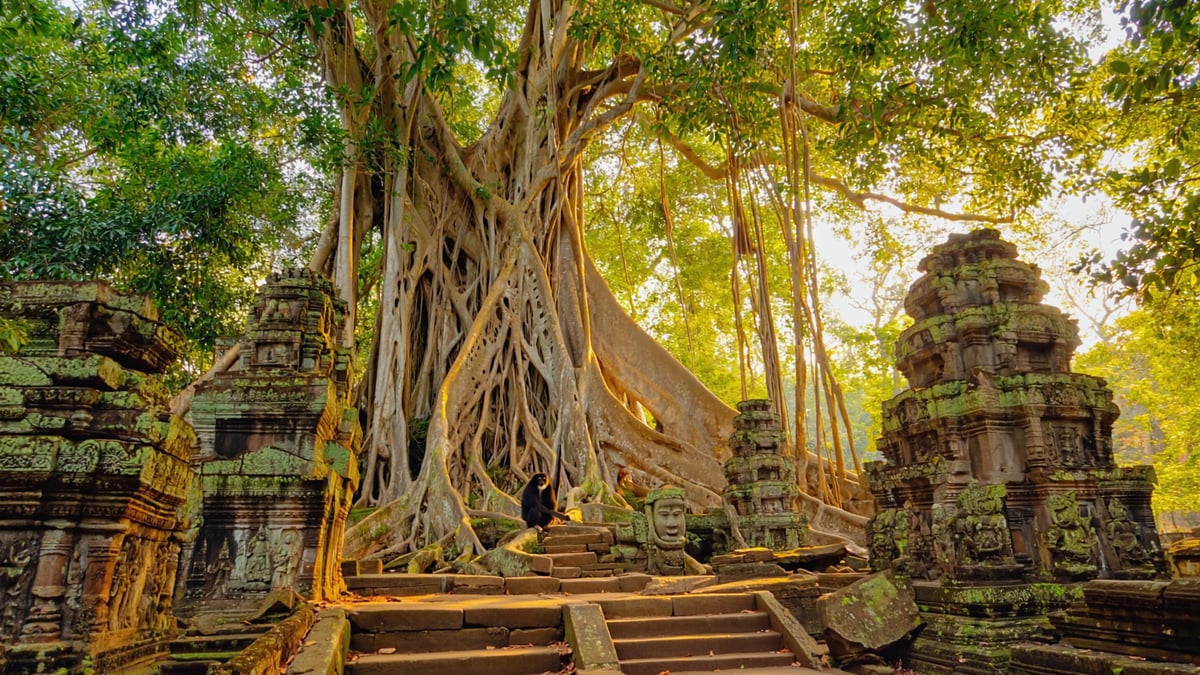
The Monkey Forest in central Ubud is home to over 700 long-tailed Balinese macaques living within a sacred Hindu temple complex. It is genuinely atmospheric — ancient temple stones half-consumed by tree roots, dense tropical forest, and macaques going about their business with complete indifference to human visitors. Entry is 80,000 IDR (approximately £4). Keep bags zipped, remove sunglasses (they will be stolen), and do not bring food in.
6. Traditional Balinese Spa Treatment
Bali is one of the world's great spa destinations, and a traditional Balinese massage — using long, flowing strokes, palm pressure, and skin rolling — should be considered an essential cultural experience rather than an indulgence. Mid-range spa treatments run from approximately 150,000–400,000 IDR (£7.50–£20) for a 90-minute massage. Avoid the cheapest street-front parlours and opt for a reputable spa in your accommodation area. Ubud has some of the island's finest wellness retreats.
7. Waterbom Bali Water Park
Consistently rated among Asia's best water parks, Waterbom in Kuta is an excellent option for families and a genuinely fun day for adults. It features a range of slides from gentle to genuinely terrifying, a lazy river, and a strong food and drink offering. Entry is approximately £22–28 for adults, with child rates available. Open daily 09:00–18:00.
8. Surfing Lessons at Kuta or Canggu
Bali's west-facing coastline receives consistent swell year-round, and Kuta Beach has been welcoming beginner surfers for decades. Two-hour group surf lessons with equipment hire cost approximately £15–25 per person at most surf schools along the beach. More experienced surfers should head to Uluwatu, Padang Padang, or Medewi for more challenging breaks. The surf season peaks between June and September on the west coast.
9. Tirta Empul Temple and Holy Spring Ritual
One of Bali's most spiritually significant sites, Tirta Empul near Tampaksiring contains a sacred spring that has been used for ritual purification for over a thousand years. Visitors are welcome to participate in the melukat (purification bathing ritual) at the temple's purification pools — one of the most genuinely moving cultural experiences available in Bali. Entry is approximately 50,000 IDR (£2.50). Bring or rent a sarong; proper dress is required.
10. Day Trip to Nusa Penida
A 30–45 minute fast boat from Sanur delivers you to Nusa Penida, a rugged island that has become one of Bali's most dramatic recent discoveries. Kelingking Beach — with its T-Rex-shaped cliff and turquoise cove — is extraordinary, as are the natural infinity pool at Angel's Billabong and the sea caves at Crystal Bay. Day trips including boat transfer and a driver/guide cost approximately £35–55 per person. The roads are rough; go with a guide rather than attempting self-navigation.
Eating in Bali: A Food Lover's Guide
Balinese cuisine is one of Southeast Asia's most distinctive and underappreciated food cultures. Built around a complex spice paste called base genep — a blend of shallots, garlic, ginger, galangal, turmeric, and other aromatics — it delivers layers of flavour that reward repeated exploration. The island's food scene ranges from humble roadside warungs (local eateries) to internationally acclaimed restaurants that would hold their own in any global city.
Essential Dishes to Try
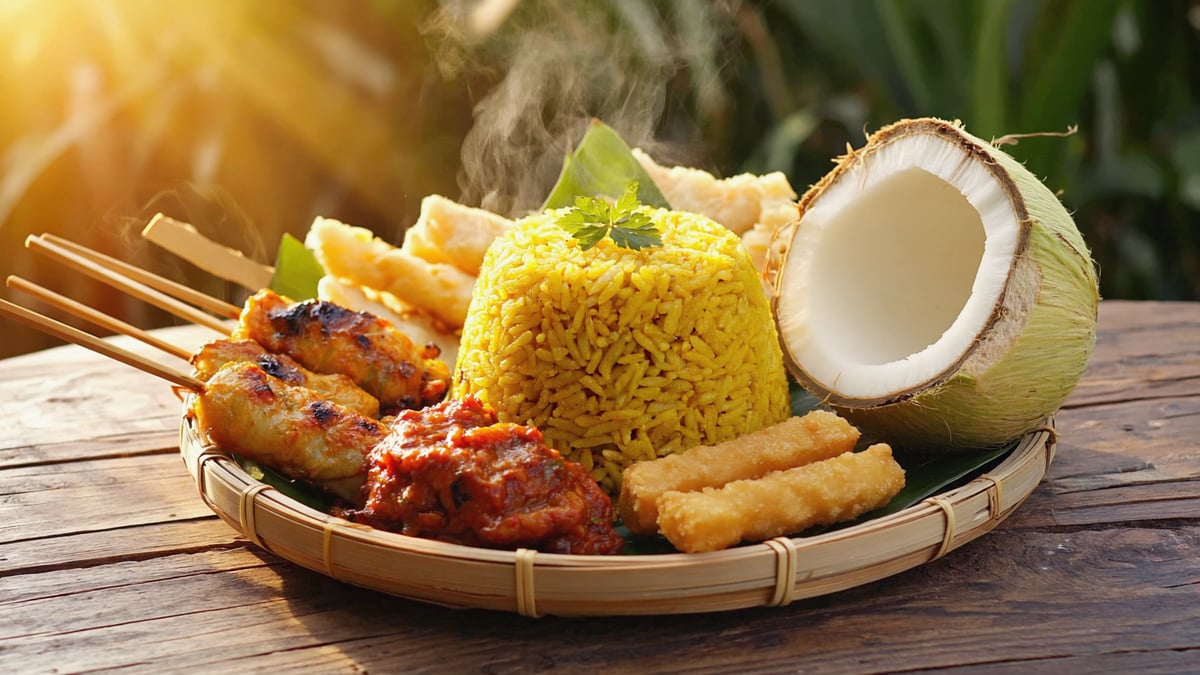
- Babi guling: Bali's most iconic dish — a whole suckling pig roasted on a spit with turmeric, lemongrass, and chilli, served with crispy skin, lawar (spiced minced meat salad), and steamed rice. The best versions are found at traditional warungs that have been making it for generations. Note: this is pork-based and not suitable for Muslim or vegetarian travellers
- Bebek betutu: Slow-cooked duck marinated in base genep spice paste and wrapped in banana leaves — deeply flavourful and aromatic
- Nasi campur: The everyday Balinese meal — steamed rice surrounded by small portions of various dishes including vegetables, tempeh, tofu, meat, and sambal. The Balinese version is more intensely spiced than its Javanese counterpart
- Lawar: A traditional salad of finely chopped vegetables, coconut, and minced meat or fish, seasoned with spice paste and fresh blood in the traditional version (lawar merah)
- Sate lilit: Minced fish or chicken mixed with spiced coconut and wrapped around lemongrass skewers — lighter and more fragrant than standard satay
- Jaja Bali: Traditional Balinese sweets and cakes made from rice flour and palm sugar, often vibrantly coloured with natural plant dyes
Where to Eat and Drink
For authentic local food at the lowest prices, seek out warungs — family-run eateries where a full meal with rice, multiple dishes, and a drink costs approximately 30,000–60,000 IDR (£1.50–£3). The best warungs have no menu and no English signage; look for the ones full of locals at lunchtime.
Ubud's central market area and the streets surrounding Jalan Dewi Sita are excellent for mid-range dining with genuine Balinese character — many restaurants here use organic local produce and offer strong vegetarian and vegan options. Bali is one of Southeast Asia's most vegetarian-friendly destinations, with a substantial number of restaurants catering specifically to plant-based diets.
Seminyak's restaurant strip along Jalan Kayu Aya and the surrounding streets offers Bali's most cosmopolitan dining — Japanese, Italian, Mediterranean, and fusion restaurants sit alongside high-quality Balinese and Indonesian options. Expect to pay £10–25 per person for a full dinner in this area.
For sundowners and beach club dining, Seminyak and Canggu are unrivalled. Potato Head Beach Club, Ku De Ta, and Finns Beach Club are among the most celebrated — cocktails run to approximately £6–10,
Dietary considerations: Vegetarians and vegans are exceptionally well catered for in Ubud in particular, where the wellness culture has driven a thriving plant-based food scene. Halal food is readily available across the island. Coeliac travellers should exercise caution with soy sauce-based dishes and seek specific guidance at restaurants.
Getting to Bali from the UK: Flights, Routes, and Transfers
Bali is a long-haul destination from the UK, and flight planning is worth doing carefully — the difference between a comfortable journey and an exhausting one often comes down to layover duration and airline choice.
Flight Routes and Airlines
There are currently no direct non-stop flights from the UK to Bali's Ngurah Rai International Airport (DPS). All routes involve at least one stopover, most commonly in the Middle East, Southeast Asia, or East Asia. The most common options for UK travellers include:
- Via Singapore (SIN): Singapore Airlines and its budget subsidiary Scoot operate this route; the Singapore hub is well-regarded, with a short layover easily manageable. Total journey time: approximately 17–19 hours
- Via Kuala Lumpur (KUL): Malaysia Airlines and AirAsia X offer connections through KLIA; competitive pricing makes this a popular option. Total journey time: approximately 16–18 hours
- Via Dubai (DXB) or Abu Dhabi (AUH): Emirates and Etihad both offer this routing; comfortable aircraft and long layover options make the UAE hub a reasonable choice for families. Total journey time: approximately 18–21 hours
- Via Doha (DOH): Qatar Airways operates this route; the airline is consistently well-reviewed for long-haul comfort. Total journey time: approximately 18–20 hours
Flights depart from multiple UK airports including London Heathrow (LHR), London Gatwick (LGW), Manchester (MAN), and Birmingham (BHX), though routing options vary by departure airport.
Typical Flight Costs
Economy return flights from the UK to Bali typically range from approximately £550–900 per person booked well in advance, rising to £900–1,400+ during peak season (July–August) or when booked close to departure. Business class return fares generally start from around £2,000–3,000 per person.
GlobeHunters' Bali packages start from £1,099 per person including return flights and 7 nights' hotel accommodation — often representing better value than booking flights and hotels separately, particularly when factoring in the convenience of a single booking and dedicated customer support.
Airport Transfers
Ngurah Rai Airport is located just south of Kuta, approximately 10 km from Seminyak and 25–30 km from Ubud. Options include:
- Pre-booked private transfer: The most comfortable and reliable option; costs approximately £8–15 to Seminyak or Kuta, £20–30 to Ubud. Your hotel can usually arrange this
- Grab (app-based taxi): Grab is available from the designated zone outside arrivals; significantly cheaper than metered taxis but can be slow during peak times
- Official metered taxis: Available from the official rank; avoid touts who approach you in the arrivals hall offering "fixed price" rides
Bali Budget Guide 2026: What Will Your Holiday Actually Cost?
One of Bali's great appeals for UK travellers is the extraordinary value it offers — a destination that feels genuinely luxurious without requiring a luxury budget. Here is a realistic daily spending breakdown by travel style, excluding flights and accommodation.
Budget Traveller: £25–45/day
Staying in guesthouses or homestays (£15–25/night), eating exclusively at warungs and local markets (£5–10/day on food), using Grab for transport, visiting free or low-cost temples and beaches, and skipping the beach clubs. This is a genuinely comfortable budget — you will eat well, see plenty, and feel no sense of deprivation.
- Accommodation: £15–25/night (not included in daily spend figure)
- Meals: 3 meals at warungs — approximately £5–8
- Transport: Grab rides and occasional scooter hire — £3–6
- Attractions: Temples and free beaches — £3–8
- Snacks and drinks: £2–5
Mid-Range Traveller: £60–100/day
Staying in boutique hotels or private villas with pools (£50–100/night), mixing warung meals with mid-range restaurant dinners, joining organised tours and activities (rice terrace trekking, cooking classes, temple tours), and enjoying one or two beach club visits.
- Meals: Mix of warungs and restaurants — £15–25
- Transport: Private driver for day trips — £20–30
- Activities: Organised tours and experiences — £15–30
- Drinks and extras: £10–20
Luxury Traveller: £150–300+/day
Private cliff-top or jungle villa (£200–500+/night), fine dining restaurants, private guided tours, helicopter transfers, luxury spa treatments, and exclusive beach club access. Bali's luxury offering has expanded dramatically and now competes seriously with Maldives and Phuket at the top end.
Package Holiday Value
GlobeHunters' 7-night Bali package from £1,099 per person (including flights) breaks down to approximately £157/day all-in for a mid-range traveller when you factor in the flight cost — exceptional value for a long-haul destination at this quality level. View the full package breakdown and current pricing.
| Budget Tier | Daily Spend (excl. accommodation) | 7-Night Total (excl. flights & hotel) |
|---|---|---|
| Budget | £25–45 | £175–315 |
| Mid-Range | £60–100 | £420–700 |
| Luxury | £150–300+ | £1,050–2,100+ |
Travel Tips, Safety, and Essential Practicalities
Bali is a remarkably welcoming and safe destination, but there are specific cultural, health, and practical considerations that every UK traveller should understand before arrival. Getting these right means smoother experiences at temples, better interactions with locals, and fewer avoidable problems.
Cultural Etiquette and Temple Visits
Dress respectfully at temples and sacred sites: A sarong and sash are required to enter any Balinese temple — these are usually available to borrow or rent at the entrance for a small fee (typically 10,000–20,000 IDR). Cover shoulders and knees as a minimum. During temple ceremonies, follow the lead of local worshippers and do not walk in front of people who are praying.
The Balinese greeting: A gentle nod or a pressed-palms gesture (namaste-style) is always appreciated. Balinese people are exceptionally warm but value courtesy and calm — loud, pushy behaviour is noticed and creates poor impressions.
Women during menstruation: By Balinese Hindu custom, women who are menstruating should not enter temples. This is a genuine religious requirement, not a suggestion.
The left hand: In Balinese and Indonesian culture generally, the left hand is considered unclean. Always use your right hand to give or receive items, money, or food.
Health and Vaccinations
The NHS recommends that UK travellers to Bali are up to date with standard vaccinations and consider additional protection against hepatitis A, typhoid, and — depending on itinerary — rabies. The NHS Fit for Travel Indonesia page provides current, specific health advice for this destination.
Rabies is present in Bali — the island experienced a significant outbreak in the late 2000s. Pre-exposure vaccination is strongly recommended, particularly if you plan to visit rural areas, trek, or interact with animals (including the Monkey Forest macaques). If bitten or scratched by an animal, seek medical attention immediately — do not wait.
Tap water is not safe to drink anywhere in Bali. Use bottled water for drinking and brushing teeth. Be cautious with ice at very cheap street stalls; reputable restaurants and hotels use filtered ice.
Dengue fever is present year-round. Use DEET-based insect repellent, particularly at dawn and dusk, and wear long sleeves in the evenings.
Safety Considerations
Bali is generally very safe for tourists. Violent crime against visitors is extremely rare. The main risks are:
- Traffic accidents: Bali's roads are chaotic, and scooter accidents are the most common cause of injury among tourists. If you hire a scooter, ensure you have appropriate insurance and wear a helmet. Never drink and ride
- Petty theft: Bag-snatching from scooters occurs in busy areas — wear bags across your body and keep valuables out of sight
- Scams: The most common involve inflated taxi fares, fake tours, and money exchange fraud. Use reputable money changers (look for those displaying official Bank Indonesia licences) and always count your money before leaving the counter
- Ocean currents: Bali's beaches can have powerful rip currents. Always swim between the flags at patrolled beaches (primarily Kuta and Legian) and respect ocean warnings
Money and Tipping
ATMs are widely available in tourist areas. Inform your bank before travel to avoid cards being blocked. Exchange rates at airport kiosks are generally poor — change a small amount on arrival for immediate needs, then find a reputable money changer in your area. Tipping is not obligatory but is warmly appreciated: 10,000–20,000 IDR for good service at a warung, 50,000–100,000 IDR for restaurant meals, and a similar amount per day for hotel housekeeping is considered generous and appropriate.
Packing Essentials for Bali
- Lightweight, breathable clothing (the heat and humidity are real)
- A light waterproof layer or packable rain jacket — essential even in dry season for afternoon storms
- Sarong (useful for temple visits, beach cover-ups, and as a light blanket on cold-conditioned flights)
- High-SPF sunscreen — sun protection is critical; UV levels are intense near the equator
- DEET-based insect repellent
- Reef-safe sunscreen — many Bali dive and snorkel operators now require it, and it is better for the coral ecosystems
- Plug adaptor (Type C/F)
- Portable power bank
Frequently Asked Questions About Bali Holidays from the UK
Do UK travellers need a visa to visit Bali in 2026?
British passport holders do not need to arrange a visa before travel. You can obtain a Visa on Arrival (VoA) at Ngurah Rai Airport valid for 30 days, extendable for a further 30 days, for approximately 500,000 IDR (around £25). Alternatively, purchase the e-VOA online before departure to save time at immigration. Ensure your passport is valid for at least 6 months beyond your intended return date.
How long is the flight from the UK to Bali?
There are no direct flights from the UK to Bali. With one stopover (typically in Singapore, Kuala Lumpur, Dubai, or Doha), total journey time is approximately 16–21 hours depending on your route and layover duration. Most UK travellers find the Singapore or KL routing most efficient in terms of total travel time.
What is the best time of year to visit Bali from the UK?
The dry season runs from May to October and offers the most reliable weather. For the best combination of good weather, competitive prices, and manageable crowds, late May, June, and September are ideal. July and August are peak season — busier and more expensive, but still excellent. School holiday families should note that August is the peak of peak season in Bali.
How much spending money do I need per day in Bali?
Budget travellers can manage comfortably on £25–45/day excluding accommodation. Mid-range travellers should budget £60–100/day for a comfortable mix of restaurants, organised activities, and transport. Luxury travellers spending on private villas, fine dining, and premium experiences should budget £150–300+/day.
Is Bali safe for solo female travellers?
Bali is widely regarded as one of Southeast Asia's safer destinations for solo female travellers. Violent crime is rare. Standard precautions apply — do not walk alone in unlit areas at night, use reputable transport (Grab rather than accepting rides from strangers), and be aware that local attention can be persistent in very touristy areas. Ubud, in particular, has a well-established community of solo female travellers and feels extremely safe.
What currency should I bring to Bali?
The Indonesian Rupiah (IDR) is the local currency. US dollars are widely accepted as a secondary currency at upmarket hotels and some tourist shops, but you will generally get better value paying in IDR. Exchange cash at reputable money changers rather than banks (which offer worse rates) and always count notes carefully before leaving the counter. Avoid unlicensed money changers offering suspiciously good rates — exchange fraud is a known issue.
What vaccinations do I need for Bali?
The NHS recommends checking you are up to date with standard UK vaccinations and consulting your GP or travel health clinic about hepatitis A, typhoid, and rabies vaccination. Pre-exposure rabies vaccination is particularly recommended given the animal population in Bali. Visit the NHS Fit for Travel website for current health advice specific to Indonesia.
Is Bali good for families with children?
Bali is an excellent family destination. Sanur is the most family-friendly beach resort with calm, shallow waters. Waterbom Bali in Kuta is a world-class water park. The Monkey Forest in Ubud delights children. Rice terrace walks, cooking classes, and temple visits can all be adapted for family travel. Most hotels cater well for families, and the warm, child-friendly culture of the Balinese people makes travelling with children here a pleasure.
Can I drink the tap water in Bali?
No — tap water is not safe to drink anywhere in Bali. Use sealed bottled water for drinking and brushing teeth. Reputable hotels and restaurants use filtered ice, but exercise caution at very cheap street stalls. Many hotels provide complimentary refillable water bottles to reduce plastic waste — a positive environmental initiative worth supporting.
What is the currency exchange rate between GBP and IDR?
Exchange rates fluctuate, but as a rough guide, £1 is approximately equivalent to 19,000–21,000 IDR. Always check current rates via a reliable source such as a bank or currency service before travel, and use this as a guide rather than a fixed figure when budgeting.
Is Bali suitable for vegetarians and vegans?
Yes — Bali, particularly Ubud, is one of Southeast Asia's most vegetarian and vegan-friendly destinations. The wellness culture has driven a thriving plant-based food scene, and many restaurants offer extensive vegan menus. Traditional Balinese food does contain meat and fish, but plant-based alternatives are widely available. Always specify dietary requirements clearly, as fish sauce and shrimp paste can appear in dishes not labelled as containing them.
What should I wear at Balinese temples?
Covered shoulders and knees are required at all temples and sacred sites. A sarong and sash must be worn — these can usually be borrowed or rented at the temple entrance for a small fee. Avoid tight or revealing clothing when visiting religious sites as a general rule, even outside formal entry requirements. Many travellers carry a light sarong in their day bag for impromptu temple visits.
Plan Your Bali Holiday with GlobeHunters
Bali is a destination that rewards those who approach it with curiosity rather than a checklist. Yes, the Tegallalang Rice Terraces are worth seeing. Yes, the Uluwatu sunset is as good as advertised. But the most enduring memories from a Bali holiday tend to be the unexpected ones: a conversation with a temple priest during a morning ceremony, stumbling upon a village procession in full ceremonial dress, or watching a master carver work in a Ubud workshop while the rain hammers the banana leaves outside.
The island has absorbed millions of visitors without losing the essence of what makes it remarkable — a living, practised spirituality that expresses itself in art, architecture, cuisine, dance, and the daily rhythms of ordinary life. For UK travellers willing to look even slightly beyond the beach clubs and infinity pools, Bali offers a depth of cultural experience that few destinations can match.
Whether you are planning a romantic week for two, a family adventure, a solo journey of self-discovery, or simply the kind of holiday you have been promising yourself for years, 2026 is an excellent time to make it happen. Flight routes are well-established, the island's infrastructure has matured considerably, and the value for UK travellers — particularly when booked as a package — remains exceptional.
Book Your Bali Holiday Now
GlobeHunters offers holiday packages including flights and hotels at competitive prices — Bali from just £1,099 per person for 7 nights including return flights from the UK and hotel accommodation.
View Bali Package & Prices →Or call us: 0208 944 4514
Ready to Start Planning?
Speak to our travel experts for personalised advice and the best deals on your next holiday.
Call 0208 944 4514