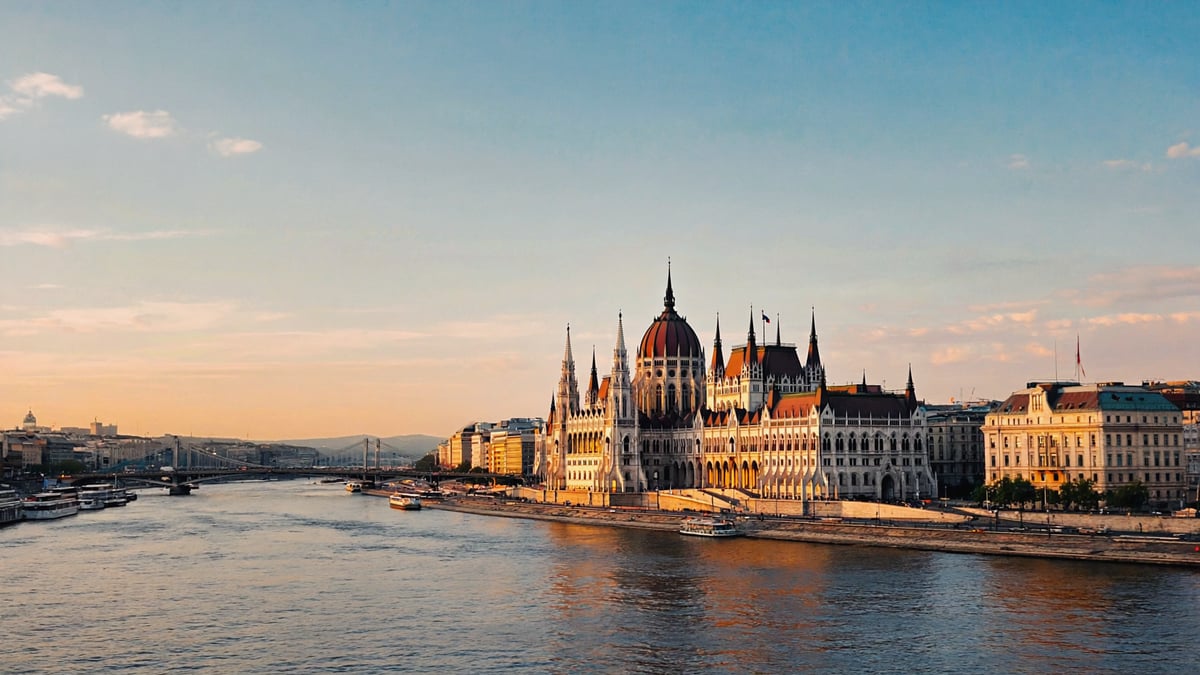
There's a moment — and every seasoned traveller knows it — when a city stops being a place on a map and becomes something you carry with you. In Budapest, that moment tends to arrive without warning. It might be stepping out of Keleti station at dusk to find the Parliament building glowing gold across the water, or sinking into a 38°C thermal pool while snow drifts quietly overhead, or discovering that the crumbling courtyard you just wandered into is actually one of Europe's most celebrated bars. Budapest doesn't ease you in gently. It gets under your skin immediately, and it stays there.
For UK travellers, this city punches well above its weight. It's under three hours from London, cheaper than almost any Western European capital, architecturally jaw-dropping, and stuffed with experiences you simply cannot replicate elsewhere. Whether you're planning a romantic city break, a solo adventure, a family trip, or a blow-the-budget honeymoon, Budapest delivers — often in the same afternoon. This guide gives you everything you need to plan the perfect 2026 trip, from the best thermal baths and ruin bars to where to eat, sleep, and how to do it all without overspending.
Budapest at a Glance: What Kind of City Is This, Really?
Budapest is the capital of Hungary, situated at the geographic heart of Central Europe on the banks of the Danube River, which divides the city into its two historic halves: hilly Buda on the west bank and flat, vibrant Pest on the east. The two were separate cities until 1873, and that dual identity still shapes the character of the place — Buda is quieter, greener, and dominated by the castle district, while Pest is the city's beating heart: the restaurants, the nightlife, the grand boulevards, and the ruin bars.
Administratively, Budapest is divided into 23 districts, each with its own personality. The city sits roughly in the centre of the Carpathian Basin, bordered by Slovakia to the north, Austria to the west, and Ukraine and Romania to the east. It's a genuinely Central European city — not quite Eastern Europe, not quite Western, and all the more fascinating for it.
Key Facts for UK Travellers
- Language: Hungarian (Magyar) — one of Europe's most linguistically unique languages, unrelated to any Slavic or Germanic tongue. Don't worry: English is widely spoken in tourist areas, hotels, and restaurants. A few words of Hungarian (köszönöm for "thank you", kérem for "please") will earn you genuine warmth.
- Currency: Hungarian Forint (HUF). As of 2026, the approximate exchange rate sits around 480–500 HUF to the pound, though always check a reliable source like XE's live GBP to HUF converter before you travel. Budapest is pleasingly affordable: a sit-down dinner with wine rarely exceeds £15–20 per person.
- Time Zone: Central European Time (CET), which is UTC+1 in winter and UTC+2 (CEST) in summer — one hour ahead of the UK.
- Visa Requirements: Hungary is an EU member state and part of the Schengen Area. As of 2026, UK citizens can visit Hungary visa-free for up to 90 days within any 180-day period under the standard Schengen rules. Note that ETIAS (the EU's new electronic travel authorisation system) was introduced for UK travellers; check the official ETIAS information page for the latest requirements before booking.
- Getting Around the City: Budapest has an excellent public transport network — metro, trams, buses, and the historic funicular up to Buda Castle. A 24-hour travel card costs around 2,500 HUF (approximately £5), making it one of the most cost-effective city transport systems in Europe.
- Safety: Budapest is considered a safe destination for tourists. Standard urban precautions apply — watch for pickpockets on the metro and in crowded tourist areas.
One thing that often surprises first-time visitors is the sheer scale of Budapest's architecture. This was once the co-capital of the Austro-Hungarian Empire, one of the most powerful states in 19th-century Europe, and the buildings reflect that ambition. The Hungarian Parliament is the third-largest parliament building in the world. The Great Market Hall could comfortably house a cathedral. Even the thermal bath complexes are palaces in their own right. You don't come to Budapest for modest pleasures.
When Should You Visit Budapest in 2026?

The best time to visit Budapest for most UK travellers is late spring (May–June) or early autumn (September–October), when temperatures are comfortable, crowds are manageable, and the city's outdoor culture is in full swing. That said, Budapest is genuinely rewarding year-round — each season offers something distinct, and there's no truly "wrong" time to visit.
Season by Season
Spring (March–May) is arguably Budapest's most beautiful season. Temperatures climb steadily from around 10°C in March to a pleasant 20–22°C by late May. The city's parks and the Castle Hill gardens erupt in blossom, the outdoor terraces open up, and the tourist crowds haven't yet peaked. May is particularly special: long evenings, warm enough for riverfront dining, and accommodation prices that haven't hit summer highs. The Budapest Spring Festival, typically held in April, brings world-class classical music, opera, and cultural performances to venues across the city.
Summer (June–August) is peak tourist season. Temperatures regularly reach 28–35°C, the thermal baths gain a different, more festive energy (many offer outdoor pools and evening events), and the city's festival calendar goes into overdrive. Sziget Festival — one of Europe's largest music festivals — takes place on an island in the Danube each August, drawing hundreds of thousands of visitors. The flip side: accommodation prices rise significantly, popular attractions queue up, and the city centre can feel genuinely crowded. Book well in advance if you're planning a summer trip.
Autumn (September–October) rivals spring as the ideal window. The summer crowds thin out after mid-September, but the weather remains warm — often reaching 20°C well into October. The city takes on golden, amber tones; the wine harvest season begins in the surrounding regions; and the restaurant and bar scene feels more local and less tourist-facing. October is when Budapest's legendary ruin bar culture really comes into its own, with the indoor spaces firing up for the cooler months.
Winter (November–February) is Budapest's secret weapon. Yes, it's cold — temperatures frequently drop below freezing from December through February, and snow is common. But this is when the thermal baths earn their reputation most dramatically: sinking into steaming outdoor pools while frost settles on the surrounding stonework is a genuinely extraordinary experience. The Christmas markets, particularly those around Vörösmarty Square and St. Stephen's Basilica, are among the most atmospheric in Europe. Flights and hotels are at their cheapest, and the city wears a quiet, unhurried quality that summer visitors never see.
Quick Reference: Monthly Guide
| Month | Avg Temp (°C) | Crowds | Best For |
|---|---|---|---|
| January–February | 0–4°C | Low | Thermal baths, budget travel, romantic breaks |
| March–April | 8–16°C | Moderate | Spring Festival, sightseeing, value prices |
| May–June | 18–24°C | Moderate–High | Outdoor dining, river cruises, walking tours |
| July–August | 26–34°C | Very High | Sziget Festival, outdoor pools, long evenings |
| September–October | 14–22°C | Moderate | Wine season, ruin bars, autumn colours |
| November–December | 2–10°C | Low–Moderate | Christmas markets, thermal baths, festive atmosphere |
Where to Stay in Budapest: Neighbourhoods & Accommodation Guide
Budapest's most visitor-friendly neighbourhoods cluster around the central districts on both sides of the Danube, with each area offering a distinct atmosphere and price point. Choosing the right base dramatically shapes your experience of the city, so it's worth thinking carefully about what you want from your stay.
District V (Belváros-Lipótváros) — The Historic Centre
This is the classic tourist base: the Hungarian Parliament, the Chain Bridge, St. Stephen's Basilica, and the Great Market Hall are all within easy walking distance. Hotels here range from stylish boutique properties to major international chains. It's convenient, safe, and impressive — but also the most expensive part of Pest, and it can feel a little sanitised compared to neighbouring districts.
Budget picks: Look for guesthouses and smaller hotels in the side streets off Váci utca. Expect to pay around £45–70/night for a clean, well-located double room.
Mid-range: Several elegant 4-star hotels occupy beautifully restored 19th-century buildings in this district. Budget £90–150/night.
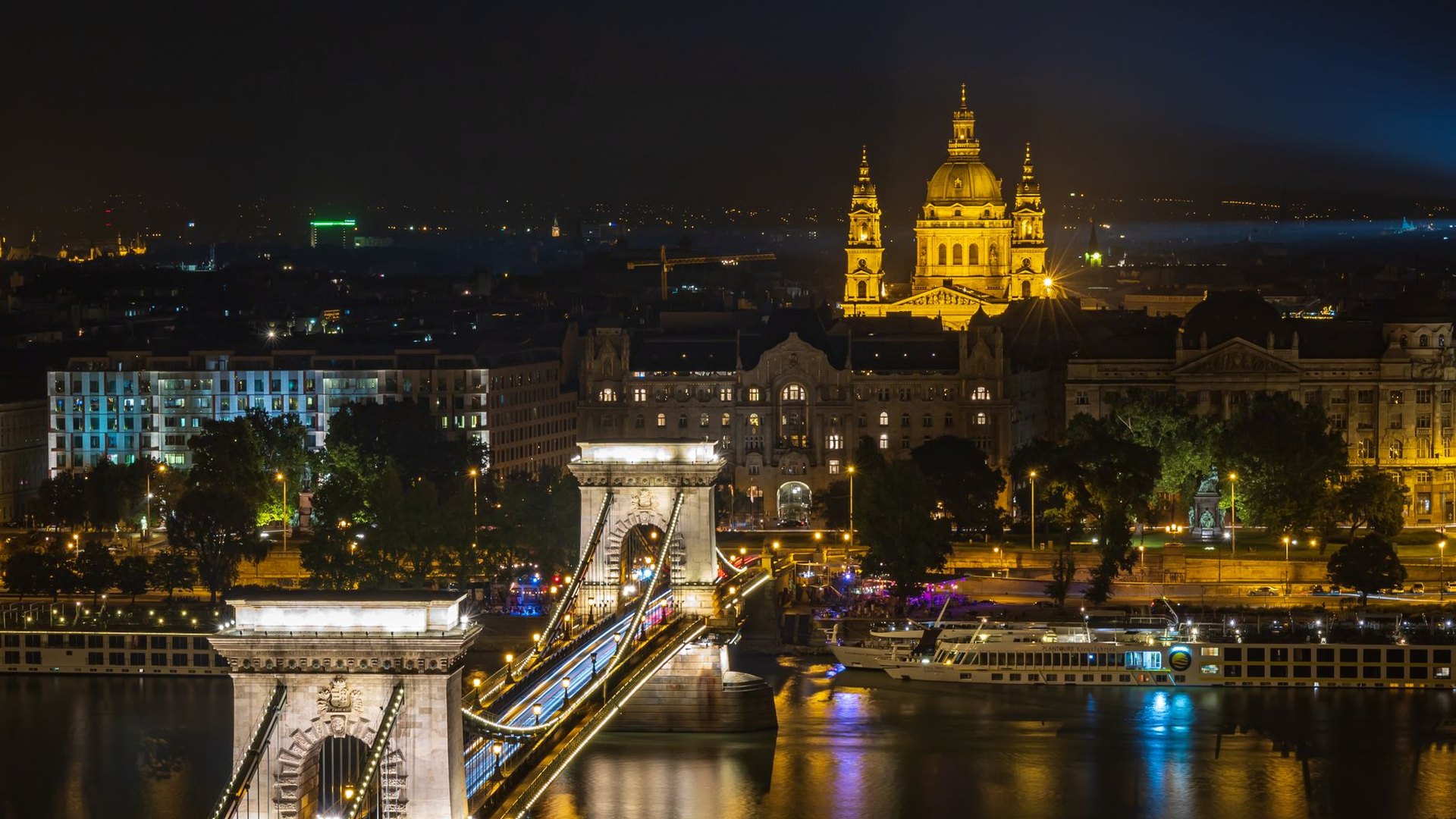
Luxury: The Four Seasons Hotel Gresham Palace, occupying a stunning Art Nouveau building directly on the Chain Bridge, is one of the great hotel experiences in Europe. Expect £300–500+/night.
District VII (Erzsébetváros) — The Jewish Quarter & Ruin Bar District
If you want to be at the epicentre of Budapest's famous nightlife and cultural scene, stay in the Seventh District. This is where Szimpla Kert (the original ruin bar) sits, alongside a dense concentration of restaurants, bars, cafés, and the magnificent Dohány Street Synagogue — the largest in Europe. It's lively, slightly gritty in the best possible way, and full of independent character. Accommodation is generally more affordable than District V.
Budget picks: Hostels and budget hotels abound here, many in beautifully atmospheric buildings. Expect £20–40/night for a hostel bed, £50–75 for a budget double.
Mid-range: Boutique hotels in converted townhouses are the sweet spot. Budget £80–130/night for something genuinely characterful.
Castle District (Várnegyed), Buda
Staying on the Buda side puts you in the quieter, more residential half of the city. The Castle District itself is a UNESCO World Heritage Site — cobbled streets, baroque architecture, Matthias Church, and Fisherman's Bastion. It's magical, especially in the evenings when the day-trippers have gone. The downside is that you're reliant on transport to reach Pest's restaurants and nightlife, and accommodation within the castle walls is limited and expensive.
Luxury: The Hilton Budapest occupies a site incorporating the ruins of a 13th-century Dominican church — a remarkable property. Expect £200–350/night.
District VI (Terézváros) — Andrássy Avenue
Running northeast from the city centre, Andrássy Avenue is Budapest's answer to the Champs-Élysées — a grand, tree-lined boulevard of opera houses, embassies, and elegant apartment buildings. This district is slightly less touristy than District V, with excellent metro connections (the UNESCO-listed Millennium Underground runs directly below Andrássy) and a superb selection of restaurants and wine bars.
Book Your Budapest Holiday Now
GlobeHunters offers 4-night Budapest holiday packages including flights and hotel accommodation at competitive prices — from just £349 per person.
View Budapest Packages & Prices →Or call us: 0208 944 4514
The Top Things to Do in Budapest: 10 Unmissable Experiences

Budapest rewards both the methodical planner and the spontaneous wanderer. Below are the ten experiences that define a proper Budapest visit — from the iconic to the genuinely surprising.
1. Széchenyi Thermal Baths
The crown jewel of Budapest's thermal bath culture, Széchenyi is the largest medicinal bath complex in Europe, occupying a magnificent neo-baroque palace in City Park (Városliget). Fed by natural hot springs reaching 74°C at source, the waters are cooled to various temperatures across 15 indoor pools and 3 outdoor pools. The outdoor pools, with their chess players and steaming water, are one of the great sights of European travel. Opening hours: Daily 06:00–22:00. Entry: Approximately 8,500 HUF (around £17) for weekday access; weekend prices are slightly higher. Cabin hire is extra. Book ahead online to avoid queues, especially at weekends.
2. Szimpla Kert & the Ruin Bar Scene
Budapest invented the ruin bar concept, and Szimpla Kert, opened in 2002 in an abandoned factory in the Jewish Quarter, remains the original and best. Multiple floors of mismatched furniture, street art, fairy lights, and vintage memorabilia fill what was once a derelict courtyard. On Sunday mornings it transforms into an organic farmers' market — an entirely different but equally wonderful experience. Entry: Free on most nights (a small cover charge may apply for special events). Open daily from around 12:00; busiest Thursday–Saturday evenings.
3. Buda Castle & the Castle District
The Royal Palace dominates the Buda skyline and houses the Hungarian National Gallery and the Budapest History Museum. The surrounding Castle District — a UNESCO World Heritage Site — is a labyrinth of medieval streets, baroque mansions, and hidden courtyards. Walk up via the funicular (sikló) from Clark Ádám Square for the full theatrical effect. Hungarian National Gallery: Open Tuesday–Sunday 10:00–18:00; entry approximately 3,800 HUF (around £7.50). The castle grounds are free to walk.
4. A Danube River Cruise at Sunset
Seeing Budapest from the water at dusk, when the Parliament and the castle are lit gold against a darkening sky, is one of those travel experiences that people describe decades later. Evening sightseeing cruises run nightly, with options ranging from basic one-hour tours to dinner cruises with live music. Typical cost: Basic evening cruise from around 6,500–8,000 HUF (£13–16); dinner cruises from approximately 20,000 HUF (£40). Book through your hotel or via the Viator platform for competitive pricing.
5. The Hungarian Parliament Building
The Parliament building is to Budapest what the Eiffel Tower is to Paris — the image that defines the city. Built between 1885 and 1904 in Gothic Revival style, it stretches for 268 metres along the Danube and contains 691 rooms. Guided tours run daily in English and take you through the ceremonial staircase, the crown jewels (Hungary's Holy Crown is kept here), and the main chamber. Tours: Non-EU citizens pay approximately 8,000 HUF (£16); book in advance via the official parliament website as tours sell out regularly.
6. Fisherman's Bastion
Perched atop Castle Hill next to Matthias Church, Fisherman's Bastion is a neo-Romanesque terrace offering arguably the best panoramic view in Budapest — the Danube, the Chain Bridge, and the entire Pest skyline spread before you. Built in the early 1900s as a decorative viewing platform, it's more fairy-tale folly than genuine fortification, but the views are real. Entry: The lower terrace is free; the upper terraces charge approximately 1,200 HUF (£2.50). Worth paying for the unobstructed views.
7. The Great Market Hall (Nagy Vásárcsarnok)
Budapest's central market hall is a cathedral of commerce — three floors of stalls selling Hungarian paprika, embroidery, salamis, pickles, pálinka (fruit brandy), and every form of Hungarian food craft. The ground floor is for serious shopping; the upper floor has food stalls serving langos (deep-fried dough with sour cream and cheese) and goulash at very reasonable prices. Opening hours: Monday 06:00–17:00, Tuesday–Friday 06:00–18:00, Saturday 06:00–15:00, closed Sundays. Entry is free.
8. Gellért Thermal Baths & Spa
If Széchenyi is the social, outdoor experience, Gellért is the architectural one. Set within the landmark Art Nouveau Gellért Hotel on the Buda bank, this bath complex is breathtaking — mosaic floors, ornate columns, stained glass ceilings, and thermal pools of varying temperatures. The outdoor wave pool operates in summer. Entry: From approximately 9,500 HUF (£19). Open daily 09:00–20:00. A quieter, more contemplative experience than Széchenyi.
9. The Dohány Street Synagogue
The largest synagogue in Europe and the second-largest in the world, the Dohány Street Synagogue is a breathtaking Moorish Revival building that seats around 3,000 people. The attached Jewish Museum and the Raoul Wallenberg Memorial Garden make this one of the most moving as well as most beautiful sites in Budapest. Entry: Approximately 6,000 HUF (£12). Open Sunday–Thursday 10:00–18:00 (shorter hours in winter); closed Saturdays and Jewish holidays.
10. Memento Park
On the outskirts of Budapest, this open-air museum collects the communist-era statues and monuments that were removed from public spaces after 1989 — giant Lenin figures, Soviet soldiers, and Workers' Movement heroes now stand in an eerie, thought-provoking outdoor gallery. It's a uniquely Central European experience that puts the city's 20th-century history into visceral context. Entry: Approximately 3,000 HUF (£6). Open daily 10:00–sunset. Accessible by direct bus from Deák Ferenc tér.
What to Eat & Drink in Budapest: A Food Lover's Guide
Hungarian cuisine is one of Europe's most underrated food traditions — hearty, deeply flavoured, paprika-forward, and rooted in centuries of Central European agricultural culture. Budapest's dining scene in 2026 ranges from grandmotherly canteens serving unchanged recipes to Michelin-starred restaurants reimagining the national larder with modern technique. Both ends of the spectrum are worth your time.
Essential Hungarian Dishes
Gulyás (Goulash) is the national dish, but the Hungarian version is a soup rather than the stew most British people expect — a rich, paprika-based beef broth with potato and caraway. Halászlé (fisherman's soup) is a fiery, bright-red river fish stew, particularly associated with the Danube and Tisza regions. Paprikás csirke (chicken paprikash) — braised chicken in a creamy paprika sauce, served with egg noodle dumplings called nokedli — is comfort food at its most satisfying.
For street food, lángos is unmissable: deep-fried dough topped with sour cream, cheese, and garlic. Find it at the Great Market Hall and at any outdoor market. Kürtőskalács (chimney cake) — sweet, doughy pastry wrapped around a cone and rolled in cinnamon sugar — is the ubiquitous street snack, particularly popular around Christmas markets.
For dessert, Dobos torte — a multi-layered sponge cake with chocolate buttercream and caramel — is the great Hungarian confection, invented in Budapest in 1885. The city's traditional cukrászdák (cake shops) take their Dobos torte seriously.
Where to Eat: The Best Restaurant Neighbourhoods
District VII (the Jewish Quarter) has the densest concentration of restaurants for all budgets, from traditional Hungarian brasseries to contemporary bistros and Jewish Hungarian fusion. District VI along Liszt Ferenc tér is one of the city's most atmospheric dining squares — a pedestrianised plaza lined with restaurant terraces that buzzes from lunch through to midnight. District IX (Ferencváros), particularly around Ráday utca, has become a serious food destination with a mix of Hungarian, international, and contemporary restaurants.
For a budget lunch, seek out a kifőzdé — a traditional Hungarian canteen serving home-cooked daily specials at extraordinary value. A two-course lunch with a soft drink rarely exceeds 2,500–3,500 HUF (£5–7). These are where the locals eat, and the food is often more authentic than anything in the tourist-facing restaurants.
Drinking Culture: Wine, Pálinka & Coffee
Hungary has a serious wine culture that British tourists rarely discover. The Tokaj wine region, just two hours northeast of Budapest, produces some of the world's most complex sweet wines; the Eger region produces excellent reds. Wine bars have proliferated across Budapest in recent years, and a glass of quality Hungarian wine in a good bar will cost you £3–6 — about half what you'd pay in London.
Pálinka — Hungarian fruit brandy, made from plums, apricots, pears, or cherries — is the national spirit and a serious cultural institution. Approach it with respect: quality pálinka is genuinely complex and warming; cheap pálinka is not. The traditional Budapest coffee house culture — kávéházi kultúra — is also worth experiencing: grand, ornate cafés like the New York Café or Gerbeaud on Vörösmarty Square serve excellent espresso in magnificent surroundings.
Dietary Considerations
Hungarian cuisine is traditionally meat-heavy, but Budapest's restaurant scene has evolved rapidly. Vegetarian and vegan restaurants are now well-established in the central districts. Gluten-free options are increasingly available in modern restaurants, though traditional Hungarian cooking relies heavily on wheat flour. Halal and kosher options are available in the Jewish Quarter, where several restaurants maintain kosher certification.
Getting to Budapest from the UK

Budapest is extremely well-connected to the UK, with multiple direct flight options from London and several regional airports, making it one of the most accessible Central European capitals for British travellers.
Flights
The main arrival point is Budapest Ferenc Liszt International Airport (BUD), located approximately 16km southeast of the city centre. Direct flights operate from multiple UK departure points:
- London Heathrow (LHR): British Airways and Wizz Air operate services. Flight time is approximately 2 hours 30 minutes.
- London Gatwick (LGW) & Luton (LTN): easyJet and Wizz Air offer frequent services, often at very competitive prices.
- London Stansted (STN): Ryanair operates routes to Budapest.
- Regional UK airports: Manchester, Edinburgh, Bristol, and Birmingham all have direct or one-stop connections to Budapest, primarily through Wizz Air, easyJet, and Ryanair.
Flying time from London is consistently around 2 hours 25–35 minutes, making Budapest genuinely feasible as a long weekend destination. Booking through GlobeHunters' package deals bundles your flight and hotel together, which typically delivers better value than booking separately — and gives you ATOL protection for the entire booking.
Airport to City Centre
Several transfer options connect the airport to central Budapest:
- 100E Airport Express Bus: Runs directly from the airport to Deák Ferenc tér (the city's main transport hub) in approximately 35–40 minutes. Cost: approximately 1,200 HUF (£2.50). Runs every 20–30 minutes throughout the day.
- Taxi: Official airport taxis (look for the yellow Főtaxi cabs) operate at fixed rates to the city centre — approximately 9,000–11,000 HUF (£18–22) depending on your destination district. Pre-book or use the official taxi rank; avoid unlicensed drivers.
- Rideshare apps: Bolt operates in Budapest and is generally cheaper than taxis for airport transfers. Confirm the price before confirming your booking.
- Private transfers: Pre-booked private transfers can be arranged through your hotel or via Viator; costs start from around £25–35 for a private car.
Your Budapest Budget: What to Realistically Expect to Spend
Budapest remains one of the best-value city break destinations in Europe for UK travellers, with daily costs typically running at roughly 40–60% of equivalent spending in London, Paris, or Amsterdam. Here's a realistic breakdown across three traveller types:
Budget Traveller: £40–60/day (excluding accommodation)
This is very achievable in Budapest. Breakfast at a local bakery costs under £2; a two-course lunch at a kifőzdé is £5–7; an evening meal at a mid-level restaurant with a glass of wine comes in at £12–18. Thermal bath entry at Széchenyi or Rudas costs £15–20. Public transport is negligible. A full day — breakfast, thermal baths, lunch, afternoon sightseeing (many attractions have free entry or are under £5), dinner, and a couple of drinks at a ruin bar — can be accomplished for well under £60.
Mid-Range Traveller: £80–130/day (excluding accommodation)
At this level you're eating at proper restaurants rather than canteens (£20–35 for a good dinner with wine), doing a Danube evening cruise (£15–20), visiting paid attractions without hesitation, and having a few cocktails at a nicer bar. You might also add a guided walking tour (£15–25) or a half-day excursion to a wine region. This is the comfortable sweet spot for most UK visitors.
Luxury Traveller: £200–400+/day (excluding accommodation)
Budapest's luxury offering has grown significantly in recent years. At this level you're dining at Michelin-starred restaurants (Budapest has a small but impressive constellation of starred establishments), staying at properties like the Four Seasons Gresham Palace, booking private guides, and taking private boat charters on the Danube. Even at the luxury tier, Budapest represents excellent value compared to equivalent spending in Western European capitals.
Typical 4-Night Cost Estimates
| Budget Level | Accommodation (per room) | Daily Spend (per person) | 4-Night Total (2 people) |
|---|---|---|---|
| Budget | £50–70/night | £40–60/day | £520–820 |
| Mid-range | £100–150/night | £80–130/day | £1,040–1,640 |
| Luxury | £250–500/night | £200–400/day | £2,600–5,600 |
GlobeHunters' Budapest packages start from £349 per person for 4 nights including flights and hotel — which, for a UK couple, represents exceptional value when you factor in the cost of booking each element separately, plus the peace of mind of ATOL protection.
Practical Travel Tips & Safety Advice for Budapest 2026

Budapest is a well-organised, traveller-friendly destination with relatively low crime rates and excellent tourist infrastructure. A few specific tips will help you travel smarter and avoid the handful of pitfalls that catch unwary visitors.
Money & Payments
While card payments are increasingly accepted across Budapest, Hungary remains significantly more cash-reliant than Western European capitals. Always carry some Forint, particularly for trams, buses, market stalls, smaller restaurants, and tips. ATMs (cash machines) are widely available throughout the city; use those attached to reputable banks rather than standalone machines in tourist areas, which sometimes apply unfavourable exchange rates. Avoid exchanging money at airport kiosks or hotel desks — rates are significantly worse than independent exchange offices in the city centre. Never exchange money with individuals on the street.
Scams to Know About
Budapest has a handful of well-documented tourist scams. The most common involves bars or clubs in the tourist areas — particularly around Váci utca — where visitors are invited in by friendly strangers, run up large bills, and then presented with inflated charges. Always check prices before ordering and stick to bars and restaurants you've researched or found through trusted review platforms. The city's genuine nightlife scene — particularly in the Jewish Quarter — is entirely legitimate and excellent; it's a specific type of tourist-trap venue in certain areas that to avoid.
Taxi scams involving unlicensed drivers are less common than they once were, but still occur. Use official yellow taxis or Bolt/rideshare apps where you can see the fare upfront.
Health & Practical Matters
The tap water in Budapest is safe to drink — it comes from natural springs and is of high quality. Hungary has a public healthcare system, and the European Health Insurance Card (EHIC) — or its UK replacement, the GHIC (Global Health Insurance Card) — provides access to state healthcare at reduced cost for UK travellers. Carry your UK Global Health Insurance Card (GHIC) and ensure you have comprehensive travel insurance regardless.
Pharmacies (gyógyszertár) are plentiful and well-stocked. Prescription medications are available at lower cost than in the UK in many cases. For emergencies, dial 112 (the European emergency number, which works across all EU countries).
Cultural Etiquette
Hungarians are generally formal in first interactions but warm once acquainted. A few cultural notes:
- Tipping: Service charges are not automatically added to bills. Tipping 10–15% is standard in restaurants; round up taxi fares. Note that in Hungarian culture, you tell the server how much you're paying (including tip) when they come to the table, rather than leaving cash after they've gone.
- Toasting: Hungarians traditionally do not clink beer glasses — a legacy of a historical event following the 1848 revolution. If you're drinking beer, it's considered bad form to chink glasses with a local. Wine and spirits are fine to toast with.
- Dress codes: When visiting the Dohány Street Synagogue or Matthias Church, shoulders and knees should be covered. Most thermal baths have a dress code — swimwear is mandatory; swim caps are sometimes required in certain pools.
- Photography: The Parliament building is free to photograph from outside; photography inside is restricted on tours. Ask permission before photographing individuals in markets or local settings.
Packing for Budapest
Whatever season you visit, pack comfortable walking shoes — Budapest's cobbled streets, Castle Hill climbs, and long riverfront promenades will cover serious mileage. For thermal baths, bring a swimsuit, flip-flops, and a small towel (though towels can be hired). In winter, pack proper layers: a Budapest January is genuinely cold, and the city doesn't soften its winters for tourists. A light rain jacket is worth bringing year-round — summer thunderstorms can be dramatic and sudden.
Frequently Asked Questions About Budapest Holidays
Is Budapest a good destination for a UK city break in 2026?
Absolutely. Budapest is consistently rated one of Europe's best-value city break destinations for UK travellers. It combines extraordinary architecture, unique thermal bath culture, excellent food and nightlife, and short flight times (under three hours from London), all at significantly lower prices than comparable Western European cities. It's equally well-suited to couples, solo travellers, families, and groups.
Do I need a visa to visit Budapest from the UK?
UK citizens can visit Hungary (an EU and Schengen Area member state) visa-free for up to 90 days in any 180-day period. From 2026, UK travellers are required to obtain ETIAS (European Travel Information and Authorisation System) authorisation before travelling to Schengen countries. Check the official ETIAS website for current requirements and application procedures before booking.
What currency does Budapest use, and should I take cash?
Budapest uses the Hungarian Forint (HUF), not the Euro. While card payments are increasingly accepted, Budapest remains more cash-reliant than many Western European cities. Always carry some Forint for markets, smaller restaurants, public transport, and tips. Exchange money at independent exchange offices in the city centre rather than at the airport or hotel.
How much does it cost to visit the Széchenyi Thermal Baths?
Entry to Széchenyi Thermal Baths costs approximately 8,500 HUF (around £17) for a weekday visit, with slightly higher weekend pricing. Locker and cabin hire are additional. It's strongly advisable to book online in advance, particularly at weekends and during summer, as entry is timed and the baths can reach capacity.
What is a ruin bar, and which is the best one in Budapest?
A ruin bar (romkocsma in Hungarian) is a bar or entertainment venue created within a derelict or abandoned building, typically decorated with mismatched vintage furniture, street art, and eclectic objects. The concept originated in Budapest in the early 2000s. Szimpla Kert in the Jewish Quarter (District VII) is the original and most famous ruin bar; others worth visiting include Fogasház, Instant-Fogas, and Ellátó Kert. The area around Kazinczy and Dob streets forms the heart of the ruin bar district.
Is Budapest safe for tourists?
Budapest is generally considered a safe destination for tourists. Violent crime against visitors is rare. The main risks are petty theft (pickpocketing on crowded metro lines and in tourist areas), overcharging at certain tourist-trap bars near Váci utca, and unlicensed taxi drivers. Standard urban awareness and a few basic precautions (use official taxis or ride-share apps, check bar prices before ordering, keep valuables secure) are sufficient for a safe trip.
When is the best time to visit Budapest for warm weather?
Late May through September offers the warmest and sunniest weather in Budapest. Peak summer (July–August) sees temperatures of 28–34°C with long daylight hours, though this is also the most crowded and expensive period. Late May and September represent the best balance of warm weather, manageable crowds, and reasonable prices.
Is Budapest worth visiting in winter?
Yes — winter is one of the most atmospheric times to visit Budapest. The thermal baths are at their most dramatic when temperatures drop; the Christmas markets (running from late November through December) are among the finest in Europe; flights and hotels are at their cheapest; and the city has a quiet, unhurried quality that summer visitors don't experience. Pack warm layers and waterproofs.
How long do you need in Budapest?
Four nights is the ideal minimum for a first visit — enough time to explore both Buda and Pest, visit two or three thermal baths, do a Danube river cruise, and spend a proper evening in the ruin bar district without feeling rushed. A week allows you to explore further, including day trips to the Danube Bend, Lake Balaton, or the Eger wine region.
Are there good day trips from Budapest?
Several excellent day trips are within easy reach. The Danube Bend (Dunakanyar) — including the historic towns of Visegrád, Esztergom, and Szentendre — is a scenic 30–60-minute drive or train journey north of the city. Eger, home to a famous castle and the Egri Bikavér (Bull's Blood) wine tradition, is approximately 1.5 hours by train. Lake Balaton, Central Europe's largest lake, is about 1.5 hours southwest — particularly worthwhile in summer.
Can I drink the tap water in Budapest?
Yes. Budapest's tap water comes from natural springs and is safe, clean, and of high quality. It's perfectly fine to drink from the tap throughout the city, which saves both money and plastic waste compared to buying bottled water.
How do I get from Budapest Airport to the city centre?
The most convenient budget option is the 100E Airport Express Bus, which runs directly to Deák Ferenc tér in approximately 35–40 minutes for around 1,200 HUF (£2.50). Official yellow taxis (Főtaxi) operate fixed-rate fares to the centre at approximately 9,000–11,000 HUF (£18–22). The Bolt rideshare app also operates from the airport. Private transfers can be pre-booked for around £25–35.
Is Budapest the Right City Break for You? Here's Our Honest Assessment

After all the facts, figures, and practical advice, here's the honest answer: Budapest is one of those rare destinations that genuinely delivers for almost every type of traveller, almost every time of year. It's not trying to be Paris or Barcelona. It's something entirely its own — a city shaped by Magyar culture, Ottoman occupation, Habsburg grandeur, Soviet-era history, and a post-1989 creative explosion that produced the ruin bar concept, a thriving contemporary art scene, and a restaurant culture that's quietly becoming one of Europe's most interesting.
For UK couples, it's a city break with genuine romance — thermal baths, candlelit wine cellars, Danube sunsets, and some of the most beautiful hotel architecture you'll find anywhere in Europe. For solo travellers, it's sociable, safe, and full of independent culture. For families, it's surprisingly accommodating — the baths are loved by children, the history is vivid and accessible, and the food is comforting and unfussy. For anyone on a tighter budget, it's one of the last European capitals where a genuinely excellent four-night break doesn't require you to make difficult financial choices.
The city does have a gravity to it. People who visit once tend to come back. The thermal baths, the ruin bars, the Parliament glowing at night across the river — these things don't lose their power on a second or third visit. They deepen.
If you've been thinking about Budapest and wondering whether it lives up to its reputation: it does. In 2026, it's better than ever — more connected, more creative, and still offering that rare combination of world-class culture and genuine affordability that's increasingly hard to find in modern European travel.
Book Your Budapest Holiday Now
GlobeHunters offers holiday packages including flights and hotels at competitive prices. Our 4-night Budapest package starts from just £349 per person — including return flights from the UK and hotel accommodation.
View Budapest Package & Prices →Or call us: 0208 944 4514
Ready to Book Your Budapest Holiday?
Our travel experts are ready to help you plan the perfect trip. Call us today or browse our latest deals.
Ready to Start Planning?
Speak to our travel experts for personalised advice and the best deals on your next holiday.
Call 0208 944 4514More Articles
Prague Holiday Guide 2026: Old Town, Czech Beer Culture & Gothic Architecture
Explore Prague in 2026. Charles Bridge, Old Town astronomical clock, beer gardens, and castle tours — city breaks from £349 pp.

Jordan Holiday Guide 2026: Petra, Dead Sea Floating & Wadi Rum Desert Camps
Plan your 2026 Jordan holiday. Petra by night, Dead Sea spa resorts, Wadi Rum stargazing, and Amman — from £999 pp with GlobeHunters.

Kyoto Holiday Guide 2026: Geisha Districts, Bamboo Forests & Zen Gardens
Your 2026 Kyoto holiday guide. Fushimi Inari, Arashiyama bamboo grove, geisha quarter, and tea ceremonies — from £1,399 pp with GlobeHunters.


Multiple British Travel Awards Winner