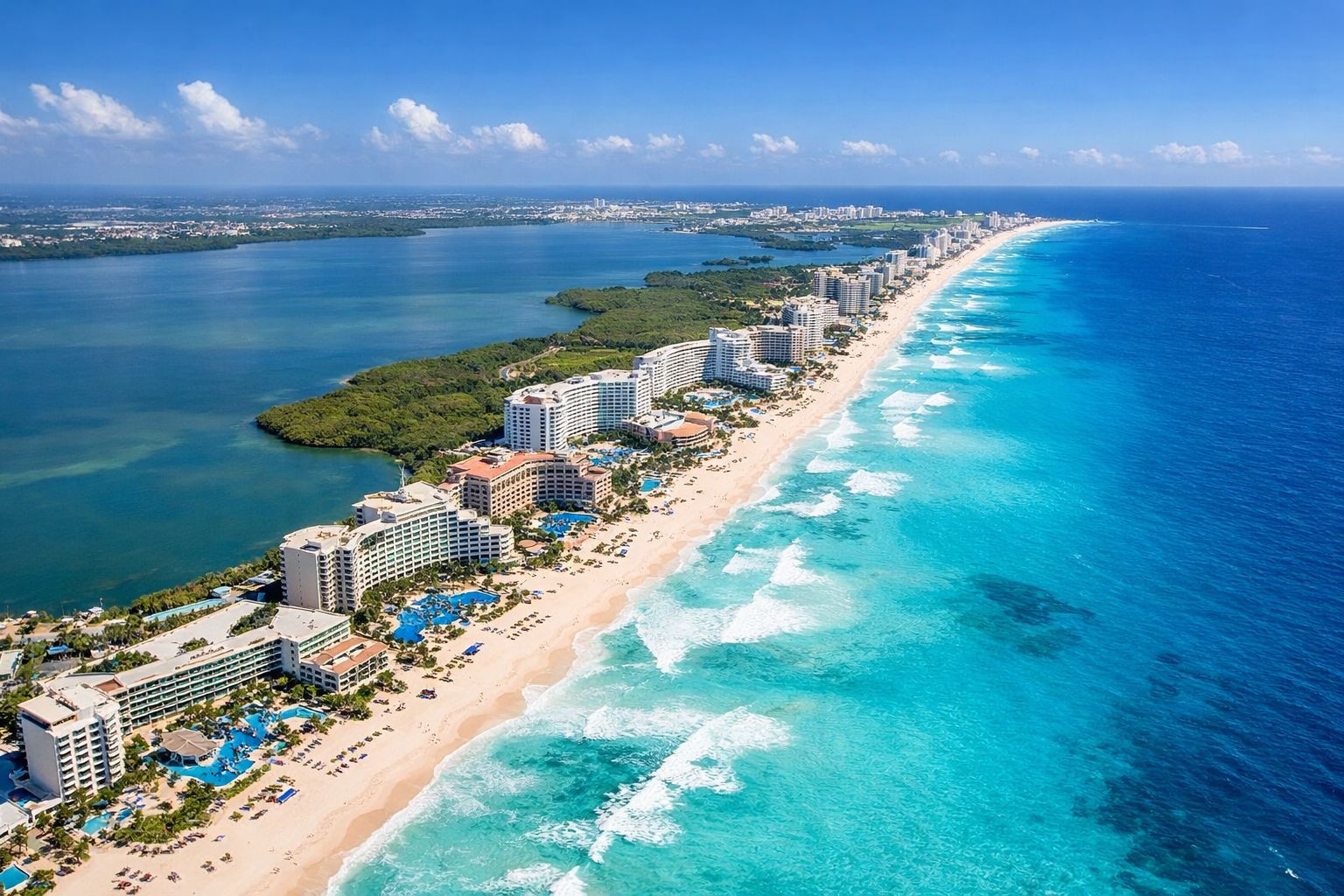
Cancun is one of those places British holidaymakers fall for the moment the plane door opens and the warm Caribbean air hits. Powder-white sand, water the colour of a swimming pool, palm trees, and a wall of all-inclusive resorts where the swim-up bar never closes. It is, on paper, the perfect long-haul beach holiday from the UK. But here is the thing nobody tells you until you have already paid your deposit: the single biggest decision you make is not which hotel you choose — it is whether you stay in Cancun at all, or head south into the Riviera Maya.
That one choice changes the feel of your entire trip: the kind of beach you wake up to, the seaweed situation, the price you pay, the nightlife on your doorstep and how far you sit from the big-ticket Mayan ruins and cenotes. This guide is written for UK buyers weighing it all up honestly — including the bits the glossy brochures gloss over.
Cancun or the Riviera Maya? The Decision That Shapes Everything
When people say “Cancun” they usually mean one of two very different things. There is Cancun proper — specifically the Hotel Zone, a 14-mile sandbar of resorts shaped like a number seven, just south of the airport. And there is the Riviera Maya, the stretch of coast running south from the airport towards Tulum, taking in Puerto Morelos, Playa del Carmen and a string of jungle-backed resort enclaves.
They share the same airport, the same turquoise sea and the same Mayan heritage. What they do not share is atmosphere. Cancun’s Hotel Zone is brash, busy and built for fun — think Las Vegas with a beach. The Riviera Maya is greener, more spread out and generally more laid-back, trading some convenience for a calmer, more boutique feel. Pick the wrong one for your group and you will spend the week wishing you had gone the other way.
Cancun’s Hotel Zone vs the Riviera Maya: Who Each One Suits
Rather than rank them, it is more useful to match each area to the kind of traveller you are. Here is the honest breakdown.
The Hotel Zone (Zona Hotelera), Cancun
This is the classic, postcard Cancun. A narrow strip of land with the Caribbean on one side and the calm Nichupte Lagoon on the other, lined end to end with big-name all-inclusive resorts. The beaches here are genuinely stunning, the sand stays cool underfoot, and almost everything is within a short taxi ride.
It suits you if you want convenience and energy. You are 15 to 20 minutes from the airport, so transfers are quick. Shopping malls, restaurants, the party strip and the famous nightclubs are all on the same road. Couples after a lively week, groups of friends, hen and stag parties, and first-time long-haul travellers who like everything close by all tend to love it. The trade-off is that it can feel built-up and commercial — this is not the place for jungle seclusion — and the nightlife noise carries.
Playa del Carmen
About 45 minutes south of the airport, Playa del Carmen is the Riviera Maya’s buzzing heart. Its pedestrianised Fifth Avenue (Quinta Avenida) is a long, walkable strip of bars, restaurants, gelato shops and boutiques set just back from the sand. It is the sweet spot for many couples and families — lively enough to walk out for dinner and a cocktail, relaxed enough that it never feels overwhelming.
Playa also has the best transport links for day trips: the ferry to Cozumel leaves from here, and it is a natural base for cenotes, Tulum and Chichen Itza. If you want a resort holiday but also want to step outside the gates and feel like you are actually in Mexico, this is usually the answer.
Tulum
Tulum is the bohemian, Instagram-famous end of the coast — roughly 90 minutes to two hours from the airport. Think eco-chic beach cabanas, yoga, beach clubs, a clifftop Mayan ruin overlooking the sea, and a deliberately rustic, barefoot-luxury vibe. It is gorgeous, and it suits couples, honeymooners and design-led travellers who want somewhere with character.
Be honest with yourself about the trade-offs, though. Tulum is the furthest transfer, the beach-zone hotels are pricier for what you get, and many of the boutique properties run on solar power with limited air-conditioning — charming for some, a dealbreaker for others in the heat. It also tends to be hit hardest by seaweed (more on that below). It is a wonderful place; it is just not the easy, everything-included option some expect.
Puerto Morelos
The quiet one, and a bit of a local secret. Puerto Morelos is a small fishing village roughly 20 to 30 minutes south of the airport, sitting between Cancun and Playa del Carmen. It has a sleepy town square, a protected reef just offshore that is brilliant for snorkelling, and a noticeably gentler pace. It suits families with young children and couples who want calm rather than nightlife, while still being close to everything. If the Hotel Zone sounds too much and Tulum too far, this is often the Goldilocks choice.
So which should you pick?
- Lively, convenient, first long-haul trip: Cancun Hotel Zone.
- Best all-rounder for couples and families: Playa del Carmen.
- Boho, scenic, honeymoon character: Tulum.
- Quiet, family-friendly, gentle pace: Puerto Morelos.
None of these is “better” — they are simply different holidays. If you are torn, this is exactly the sort of thing our Mexico specialists untangle every day; it is worth a quick conversation before you commit.
The All-Inclusive Reality: What You Actually Get
Mexico is the spiritual home of the all-inclusive holiday, and for good reason — eating out adds up, and the convenience of having food, drinks and most activities wrapped into one price is a genuine pleasure. But “all-inclusive” covers a huge spread of quality, so it pays to know what the label really means here.
At a good four to five-star resort, all-inclusive typically gets you: multiple restaurants (usually a main buffet plus several à-la-carte options — Italian, Mexican, steakhouse, Asian), unlimited drinks including branded spirits and cocktails, snacks through the day, room service at the higher end, non-motorised watersports like kayaks and paddleboards, the pools, the entertainment programme and the kids’ club. At the very top end, you move into “luxury all-inclusive”, where the à-la-carte restaurants are genuinely excellent, premium spirits flow, and the difference between buffet night and dining out largely disappears.
A few honest caveats worth knowing before you choose:
- Cheaper all-inclusives cut corners on drinks and dining. At the budget end you may get local-brand spirits only, fewer restaurant choices and tighter booking rules on the à-la-carte venues. Spending a little more per night often transforms the experience — this is the classic place where the lowest headline price is a false economy.
- The à-la-carte restaurants usually need booking. Popular venues fill up, so reserve early in your stay, especially in peak weeks.
- Tipping is customary in Mexico even at all-inclusive resorts. It is not compulsory, but a few dollars to bar and restaurant staff is the norm and is genuinely appreciated. Budget a little cash for it.
- Premium experiences sit outside the package. Speciality spa treatments, lobster dinners, certain motorised watersports and excursions are extra.
Adults-only vs family resorts
This is a real fork in the road, and the resorts are designed accordingly. Adults-only properties (often 18-plus) are built for couples and friends: quieter pools, more sophisticated dining, swim-up suites, a romantic or party-leaning atmosphere depending on the brand. Family resorts lean into water parks, kids’ and teens’ clubs, family suites and lively entertainment. There is no overlap worth gambling on — book an adults-only resort with the kids and you will be turned away. Tell us who is travelling and we will only show you properties that actually fit.
When to Go: Dry Season, Hurricane Season and the Honest Sargassum Picture
Timing matters more in this corner of Mexico than almost anywhere else, because three separate things are in play: the weather, hurricane risk and the seaweed. Here is the straight version.
The dry season (roughly December to April)
This is the prime window and the most reliable weather: warm, sunny days, lower humidity, calmer seas and very little rain. It is the most popular time with UK holidaymakers, which is why Christmas, New Year, February half term and Easter command the highest prices and book up earliest. If you want the postcard conditions and can travel then, do — just reserve well ahead.
The wet and hurricane season (roughly June to November)
Don’t write this period off entirely. The rain usually comes as short, heavy afternoon downpours rather than washed-out days, the landscape is at its greenest, and prices drop noticeably. The honest risk is hurricanes: the official Atlantic season runs June to November, with the highest probability of serious storms in September and October. Most weeks pass without incident, but a direct hit can disrupt a holiday, so if you travel in those two months it is worth being relaxed about plans and properly insured. The shoulder weeks of late spring and early summer often offer the best balance of decent weather and softer pricing.
The honest sargassum (seaweed) picture
This is the one thing we will not sugar-coat, because nothing sours a Caribbean beach holiday faster than an unexpected wall of seaweed. Sargassum is a brown seaweed that drifts in from the open Atlantic and can wash up on the Riviera Maya’s east-facing beaches. When it arrives in volume it piles up on the sand, can smell as it decomposes, and makes the shallows less inviting.
What you actually need to know:
- It is seasonal and variable. The worst influxes tend to fall roughly between April and August, though it varies year to year and week to week — some seasons are barely affected, others are heavy.
- Location makes a big difference. The exposed beaches of the Riviera Maya, including parts of Playa del Carmen and Tulum, are more prone to it. Cancun’s Hotel Zone tends to fare better, and the islands — Isla Mujeres and Cozumel — and west or north-facing bays are often much clearer because of how they sit to the currents. If a seaweed-free beach is non-negotiable for you, that should steer your choice of base.
- Good resorts manage it. Many properties run daily beach-cleaning crews and some deploy offshore barriers, so the picture at a well-run hotel is often far better than scare-story photos suggest.
The practical takeaway: if you are travelling in the higher-risk months and want to minimise the chance of seaweed, lean towards the Hotel Zone or build in an island day trip — and ask us which specific resorts have the best track record. It is exactly the kind of detail we factor in when we tailor a quote.
Excursions Worth the Money (and What to Skip)
One of the joys of this region is that you are not just buying a beach — you are on the doorstep of genuine wonders of the world. A resort-only week is lovely, but you would be missing the point. These are the trips actually worth your time and money.
- Chichen Itza. One of the New Seven Wonders of the World, and rightly so — the towering El Castillo pyramid is jaw-dropping in person. It is a long day (around two to three hours each way by coach), so it is worth it, but go early to beat the heat and the crowds. Pair it with a swim in a nearby cenote and lunch and you have a full, memorable day.
- Cenotes. If you do one thing beyond the beach, make it this. Cenotes are natural freshwater sinkholes — crystal-clear pools in caves and jungle that the Maya considered sacred. Swimming and snorkelling in them is magical and completely different from the sea. Gran Cenote, Dos Ojos and the cenotes around the Ruta de los Cenotes near Puerto Morelos are all popular for good reason.
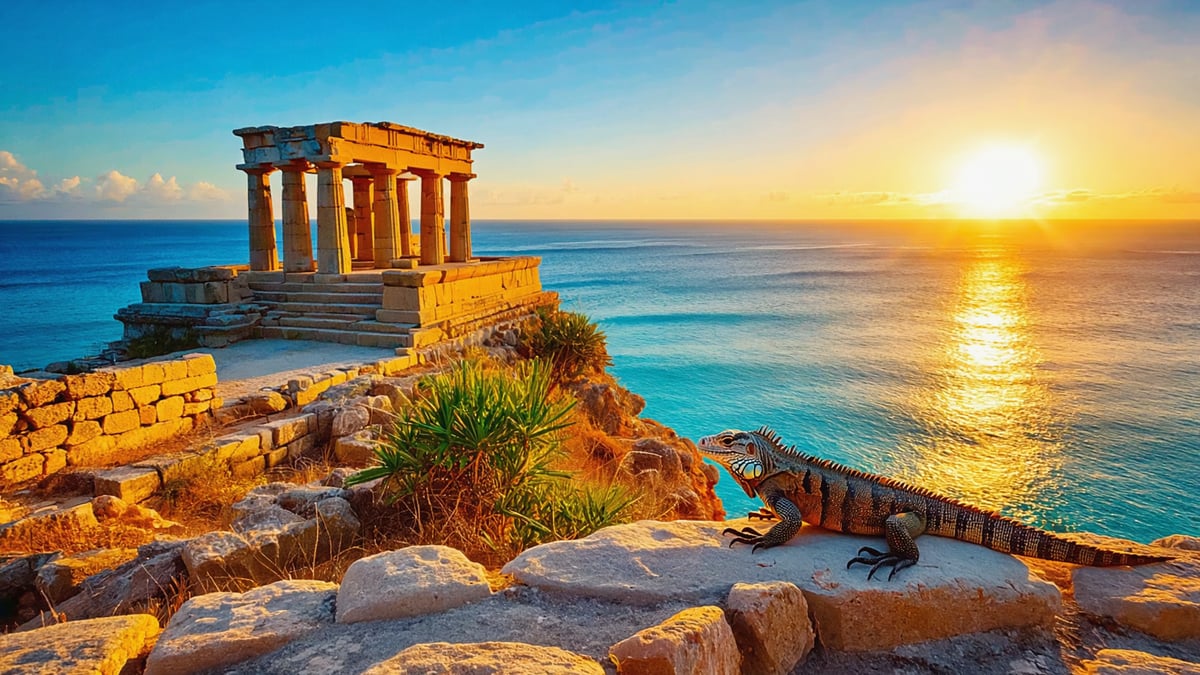
- Tulum ruins. The only major Mayan site set right on the coast, perched on a cliff above a turquoise bay. It is smaller and quicker to visit than Chichen Itza, and the setting — ruins above a swimmable beach — is unbeatable. Great as a half-day, ideally combined with a cenote or a beach club.
- Isla Mujeres. A short ferry from Cancun, this little island is the antidote to the resort strip: golf-cart-sized, with the gorgeous Playa Norte (often seaweed-free and shallow for ages) and excellent snorkelling. A brilliant, easy day out and a favourite with families.
What to be more cautious about: the heavily-marketed party-boat and timeshare-presentation “free” trips can be a false economy, and some of the bigger eco-parks, while fun, are pricey and busy. We are happy to tell you frankly which excursions earn their place and which are skippable — and many can be arranged as part of your package rather than booked on the ground.
Getting There: The Flight Reality from the UK
Cancun is a long-haul trip, and it helps to go in with realistic expectations on flights.
- Direct flights exist and are the easy option. There are direct services to Cancun from the UK — principally from London, with seasonal options from regional airports such as Manchester — taking roughly 10 to 11 hours outbound. Cancun’s airport is one of the busiest in the region and very well connected, so direct availability is far better than for many long-haul beach destinations.
- Connecting flights are usually cheaper but longer. Routing via a US or European hub can cut the fare, but adds hours and, importantly, if you connect through the United States you will need ESTA authorisation and must clear US immigration even in transit. For many families the extra cost of a direct flight is worth it to avoid that hassle.
- The time difference helps with jet lag. Cancun is around six hours behind the UK, so you tend to arrive in the afternoon feeling reasonably human, and the trip home is the slightly harder direction.
- Mind the transfer time on top. Remember that the airport is at the northern end — a Hotel Zone or Puerto Morelos resort is a quick hop, but Playa del Carmen and especially Tulum add a meaningful coach transfer after an already-long flight. Worth weighing if you have young children.
When we put together a tailored quote, we look at the whole journey — the best flight option for your departure airport, the transfer, and whether direct is worth the premium for your group.
What a Cancun Holiday Actually Costs in GBP
Prices move with the seasons, your departure airport and how far ahead you book, so treat these as honest planning ballparks rather than fixed quotes for a typical seven-night, all-inclusive package per person.
- Value / shoulder season: from around £850 to £1,200 per person for a solid three to four-star all-inclusive, flights included, in the quieter or wet-season months.
- Mid-range, good four-star, popular dates: roughly £1,300 to £1,900 per person — the sweet spot most UK holidaymakers land on for a strong resort in dry season.
- Premium and luxury all-inclusive: from around £2,000 per person and up, climbing well beyond that for five-star adults-only or high-end Tulum and for peak weeks such as Christmas, New Year and February half term.
A few things that genuinely move the price: travelling in school holidays (a significant premium), direct versus connecting flights, how early you book (long-haul Caribbean rewards booking ahead), and whether you choose adults-only or luxury tiers. Don’t forget a buffer for spending money too — excursions, tips, the odd meal out and treats. Mexico uses the peso, but US dollars are widely accepted in tourist areas, and it is sensible to carry some cash for tipping.
Because everything is bespoke, the real answer to “what will it cost me” comes from a tailored quote built around your dates, airport and group. You can browse our Cancun holiday packages for a feel, or request a quote and we will price up exactly what you have in mind.
Key Takeaways
- Your first decision is area, not hotel: Cancun’s Hotel Zone for lively convenience, Playa del Carmen for the best all-round base, Tulum for boho character, Puerto Morelos for quiet family calm.
- All-inclusive quality varies hugely — spending a little more per night usually transforms the food and drink, and adults-only versus family resorts are strictly separate.
- Dry season (December to April) is the safe bet; September and October carry the highest hurricane risk; sargassum seaweed is most likely roughly April to August and worse on exposed Riviera Maya beaches than the Hotel Zone and islands.
- The excursions are the point: Chichen Itza, the cenotes, Tulum’s clifftop ruins and Isla Mujeres are all worth it.
- Flights are around 10 to 11 hours direct; connecting via the US is cheaper but needs an ESTA — and remember transfer time once you land.
Cancun Holiday FAQs
Is Cancun or the Riviera Maya better for families?
Both work well, but Puerto Morelos and Playa del Carmen tend to suit families best — calmer beaches, shorter transfers than Tulum, and excellent family resorts with kids’ clubs and water parks. The Hotel Zone is family-friendly too but livelier at night. We will match you to resorts built for the ages of your children.
How bad is the seaweed, really?
It varies enormously by week, year and exact location. Some trips see none at all; others coincide with heavy influxes between roughly April and August. The Hotel Zone and the islands generally fare better than exposed Riviera Maya beaches, and good resorts clean their sand daily. If a clear beach is a priority, tell us — it genuinely shapes which resort and dates we recommend.
Do I need a visa for Mexico?
UK passport holders do not need a visa for tourism in Mexico for stays of this length — you receive entry permission on arrival. You do need a passport with sufficient validity. If your flights connect through the United States, that is separate and you will need an ESTA. Always check the latest official guidance before you travel.
Is the tap water safe to drink?
Stick to bottled or filtered water, which resorts provide. Reputable all-inclusive properties use safe ice and produce, and stomach upsets are far less common than the rumours suggest if you use a little common sense.
When is the cheapest time to go?
The wet-season and shoulder months (broadly late spring through to autumn, outside the school holidays) carry the lowest prices — with the trade-off of more rain and, in September and October, higher hurricane risk. Booking well ahead for any season is the single best way to keep costs down on a long-haul trip like this.
How far is Cancun airport from the resorts?
The Hotel Zone and Puerto Morelos are around 20 to 30 minutes; Playa del Carmen roughly 45 minutes; Tulum around 90 minutes to two hours. We factor the transfer into every itinerary so there are no surprises after a long flight.
Plan Your Cancun Holiday with GlobeHunters
Cancun and the Riviera Maya reward a bit of insider guidance — the right area for your group, a resort that matches whether you want lively or laid-back, dates that dodge the worst of the seaweed and storms, and a flight plan that suits your home airport. That is exactly what we do. Every GlobeHunters holiday is tailored, with flights, hotels and transfers handled for you, and excursions arranged if you want them.
Tell us your dates, your group and the kind of week you have in mind, and our Mexico specialists will build a quote around it — honestly, with the trade-offs explained. Enquire now for a tailored quote, take a look at our Cancun holiday packages, or browse holiday packages for more inspiration across Mexico and beyond.
Ready to Start Planning?
Speak to our travel experts for personalised advice and the best deals on your next holiday.
Call 0208 944 4514