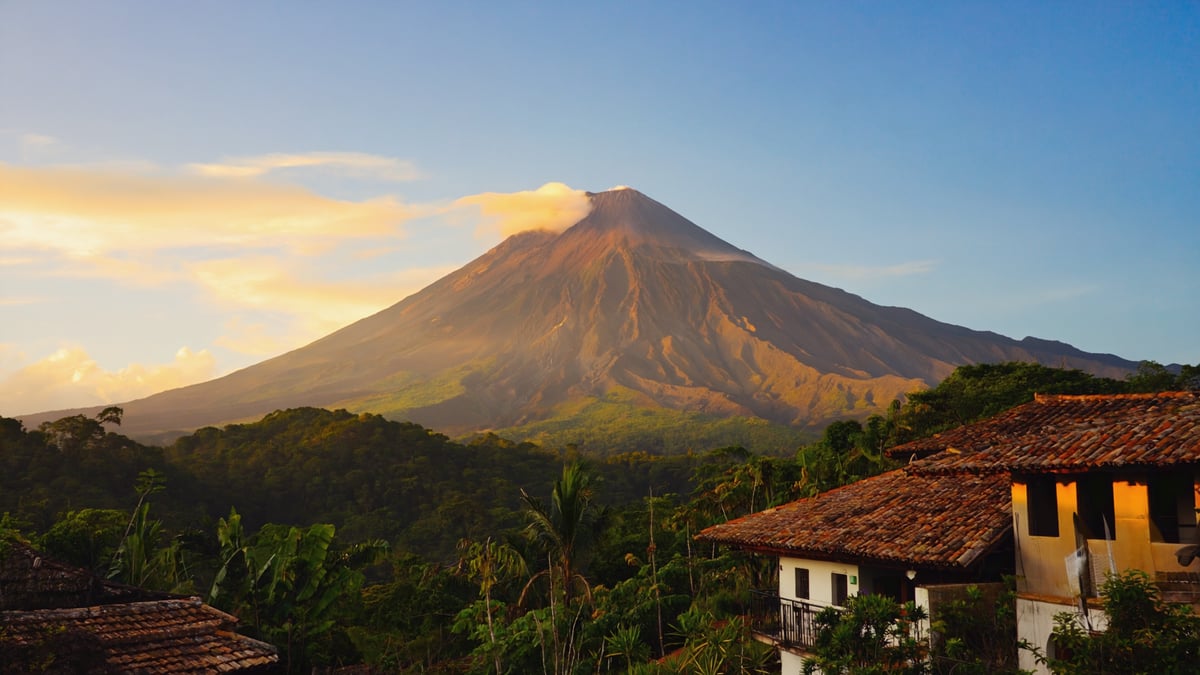
Costa Rica is one of those destinations where the planning is the whole battle. It is roughly the size of Scotland and Wales combined, yet it packs in active volcanoes, misty cloud forest, two completely different coastlines and some of the densest wildlife on the planet. The mistake most UK travellers make is treating it like a single place to "visit". It isn't. The trip you actually enjoy is decided long before you fly, by a handful of choices: which regions you stitch together, whether you go in the dry or the green season, and whether you want a hammock-and-cocktail beach week or a boots-and-binoculars adventure. This guide is built around those decisions, because getting them right is the difference between a brilliant holiday and an exhausting one.
This is why Costa Rica holidays almost always work best as a tailor-made, multi-centre trip rather than a single-resort package. Below we walk through how UK buyers genuinely put a route together, what each region is good for, what it honestly costs in pounds, and where the trade-offs hide.
Why Costa Rica Suits a Multi-Centre Trip (and Rarely a Single Resort)
Plenty of long-haul destinations reward you for sitting still. Costa Rica is the opposite. The country's appeal is the contrast between its environments, and those environments sit a few hours apart by road. Spend your whole week in one spot and you'll see a fraction of what makes the place special — and you'll spend the flight home wishing you'd moved around.
The standard, sensible shape of a Costa Rica trip is three "centres": a volcano-and-rainforest base, a cloud forest, and a Pacific beach. Each is a different climate, a different landscape and a different pace, and the journeys between them are part of the experience rather than dead time. This is exactly the kind of itinerary that tailor-made Costa Rica holidays are designed for — you're not buying a fixed product off a shelf, you're sequencing the right places in the right order with transfers, internal hops and the right style of lodge at each stop.
If you've only ever done fly-and-flop holidays, think of Costa Rica multi-centre holidays as a touring trip with comfortable stays built in, not a backpacking slog. You unpack two or three times, a driver or a short internal flight handles the moving, and each base earns its place.
The Three-Region Formula Most UK Travellers Choose
If you remember nothing else, remember this trio. It's the backbone of the majority of first-time Costa Rica itineraries because it covers volcano, forest and coast without zig-zagging across the country.
Arenal and La Fortuna: the volcano base
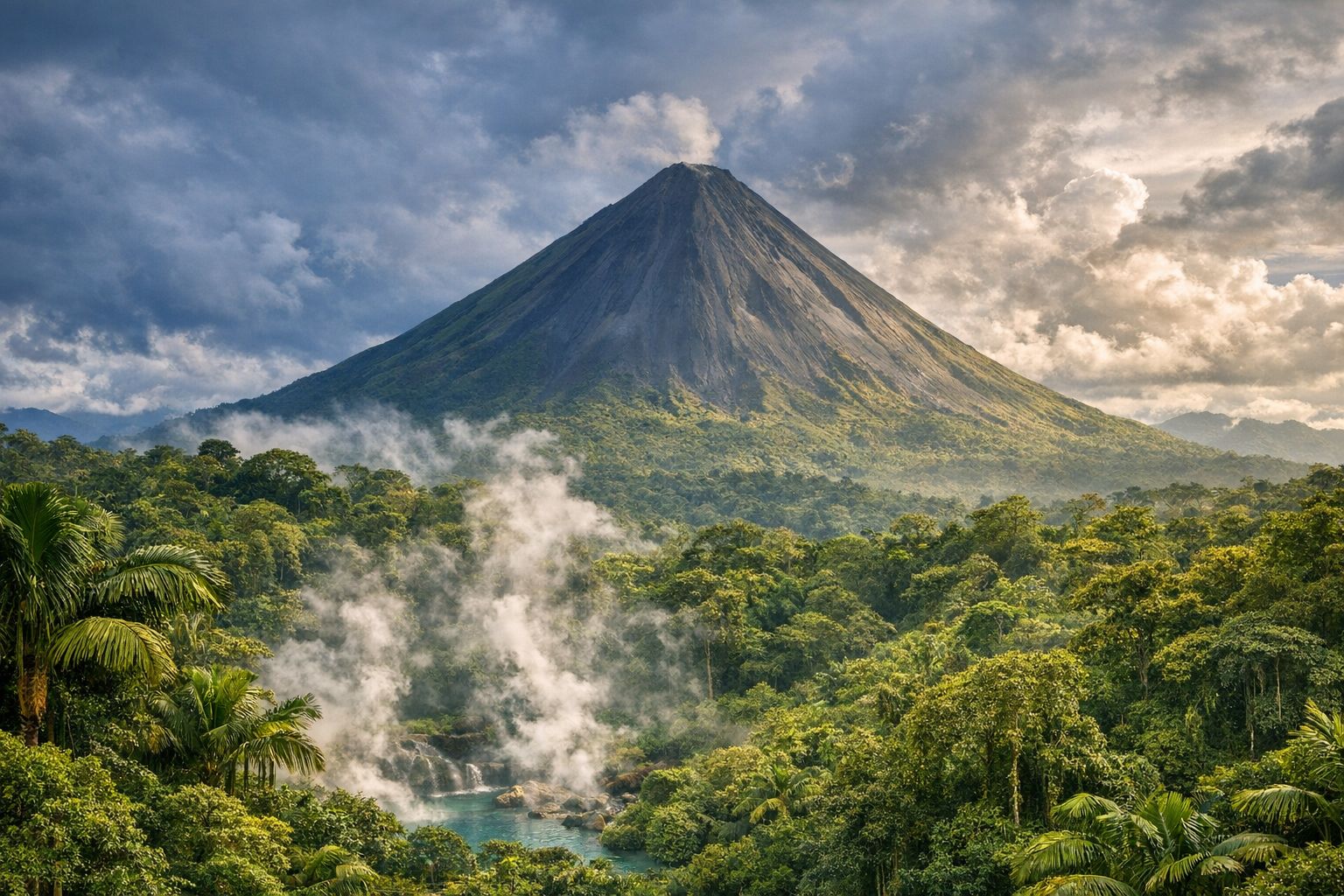
La Fortuna, the small town beneath the near-perfect cone of Arenal Volcano, is where most people start. It's an easy three-to-four-hour drive north-west of San José and it's the adventure-and-relaxation hub rolled into one. Days here are spent on hanging-bridge walks through primary rainforest, at the 70-metre La Fortuna waterfall, white-water rafting on the Balsa or Sarapiquí rivers, or doing very little at all. The signature evening is soaking in natural geothermal hot springs — Tabacón is the famous one, fed by water heated deep under the volcano — with the jungle steaming around you. Two to three nights is the right amount.
Monteverde: the cloud forest
From Arenal, the classic route to Monteverde is the "jeep-boat-jeep": a short vehicle leg, a launch across Lake Arenal, then up into the highlands on the other side. It turns a long road journey into a scenic half-day. Monteverde is cloud forest — cooler, wetter, draped in moss and orchids, and alive with birdsong. This is the birthplace of the canopy zip-line, so the adrenaline is here if you want it, but the real prize is the wildlife: this is one of the best places anywhere to glimpse the resplendent quetzal, plus hummingbirds in their dozens. Bring a fleece; people are routinely surprised that part of tropical Costa Rica needs a jumper. Two nights is plenty.
A Pacific beach: Manuel Antonio or Guanacaste
You finish on the coast, and here you choose. Manuel Antonio, on the central Pacific, pairs a compact national park with golden-sand beaches, and it's the easiest place in the country to see sloths and squirrel monkeys without trying hard — the park trails are genuinely accessible and the animals are right there. Guanacaste, further north (think Papagayo, Tamarindo, Nosara), is drier, sunnier and more resort-orientated, and it's where most of the beach hotels with that full "holiday" feel are clustered. Manuel Antonio suits travellers who want nature on the doorstep; Guanacaste suits those who want their last few days to feel like a proper beach break. Three to four nights to wind down.
That three-region formula is the spine of most of our Costa Rica holiday packages, and it's endlessly adjustable depending on how active or how relaxed you want each leg to be.
Going Wilder: the Osa Peninsula and the Caribbean Coast
The three-region route is the comfortable default. If you've got more time, or you're the sort of traveller who wants the parts other people don't reach, two add-ons change the character of the trip entirely.
The Osa Peninsula and Corcovado
Down in the remote south-west, the Osa Peninsula is home to Corcovado National Park, which National Geographic once described as the most biologically intense place on Earth. This is serious rainforest: scarlet macaws flying in pairs, tapirs, all four of Costa Rica's monkey species, and the genuine possibility — never a promise — of a big cat track in the mud. You reach it by small plane or a long drive plus a boat, you stay in eco-lodges rather than hotels, and the reward is wildness most visitors never see. It's for the adventurous, not the faint-hearted, and it adds noticeable cost and travel time. Worth every penny if it's your kind of thing.
The Caribbean side: Tortuguero and Puerto Viejo
The Caribbean coast is a different Costa Rica altogether — Afro-Caribbean culture, reggae rhythms, coconut-laced cooking and a slower, warmer mood. Tortuguero, reachable only by boat or plane, is a maze of jungle canals you explore by small craft, and it's a globally important nesting beach for green turtles, who haul ashore to lay between roughly July and October. Further south, Puerto Viejo and Cahuita offer laid-back beach villages, snorkelling reefs and a bohemian feel. Crucially, the Caribbean runs on a different weather clock to the rest of the country — more on that next, because it can rescue a trip in the months the Pacific is at its wettest.
Dry Season vs Green Season: the Trade-Off That Shapes Everything
Get the timing right and you remove most of Costa Rica's downsides. Get it wrong and you can spend a fortune to sit indoors. Here's the honest version.
Dry season (roughly mid-December to April)
This is the peak window and the safest bet: blue skies, firm trails, the easiest wildlife spotting and the most reliable beach weather, especially on the Pacific. The flip side is straightforward — it's busier, prices are at their highest, and the popular spots around Christmas, New Year and Easter book up early. If you want certainty and you're travelling with children in the school holidays, this is your season, and it's worth securing a browse holiday packages shortlist well ahead.
Green season (roughly May to November)
Don't let the word "wet" put you off — the green season is many seasoned travellers' favourite. For most of it the pattern is sunny mornings and a heavy afternoon downpour that clears, the landscape is impossibly lush, waterfalls are at full thunder, and rates are lower with fewer crowds. The genuine caveat is September and October, the wettest months on the Pacific and Central regions, when some rainforest activities can be washed out. The clever workaround: those same months are often the driest on the Caribbean coast, so a green-season trip weighted towards Tortuguero and Puerto Viejo can flip the weather in your favour. This is precisely where having someone build the route around the calendar pays off.
One season-specific bonus worth planning around: humpback whales visit the southern Pacific (Marino Ballena and the Osa) across two windows each year, and the mass olive-ridley turtle "arribadas" at Ostional are extraordinary. If wildlife events like these matter to you, say so early — they drive the dates.
Eco-Lodge or Beach Resort? Where You Sleep Changes the Holiday
Accommodation in Costa Rica isn't just about comfort level — it sets the entire tone of a leg, and the country does two very different things well.
- Eco-lodges put you inside nature. Think open-sided rooms with monkeys in the canopy at breakfast, naturalist guides, solar power and farm-to-table food, often in places with no through-traffic. They are the soul of a Costa Rica trip and the right call for Arenal, Monteverde, the Osa and Tortuguero. Some are rustic, some are genuinely luxurious, and the best of them are not cheap — but they are the experience.
- Beach resorts, concentrated in Guanacaste and around Papagayo, deliver the familiar pool-bar-spa holiday with the polish UK travellers expect, and they're ideal for the relaxing tail-end of a trip or for families who want a few days of pure downtime.
The smart move on most itineraries is to mix the two: eco-lodges for the forest and volcano legs where the location does the heavy lifting, then a resort to finish. You get the wildlife and the wind-down, in the right order.
What Wildlife You'll Actually See — and Where
Costa Rica protects more than a quarter of its land, and the wildlife is the number-one reason most people come. A realistic, no-hype picture of what to expect:
- Sloths — both two- and three-toed. Manuel Antonio and the Caribbean coast are the most reliable, and a good guide is the difference between seeing one and walking straight past it.
- Monkeys — howler, white-faced capuchin, spider and tiny squirrel monkeys, common across the Pacific lowlands.
- Birds — toucans, scarlet macaws (best on the Pacific and the Osa), and the elusive resplendent quetzal in the highland cloud forests of Monteverde and the San Gerardo de Dota area.
- Frogs and reptiles — red-eyed tree frogs, poison-dart frogs, and basking crocodiles at the Tárcoles River bridge on the way to the central Pacific.
- Sea turtles and whales — green turtles nesting at Tortuguero (around July–October), olive-ridley arribadas at Ostional, and humpbacks off the southern Pacific in season.
The honest truth: a knowledgeable local guide multiplies what you see many times over. Their spotting scope finds the sloth napping fifty feet up that you'd never notice alone. Build a few guided walks into the plan; it's the best money you'll spend.
How Long Do You Really Need?
This is the question we're asked most, and the answer is more than people hope. Costa Rican roads are scenic but slow — mountainous, winding and not built for speed — so distances that look short on a map eat half a day. Plan accordingly:
- 7 nights — tight, and only sensible for two centres (say Arenal plus one beach). Doable, but you'll feel rushed and you'll skip the cloud forest.
- 10–11 nights — the sweet spot for the classic three-region trio with time to actually relax at each stop. This is what we'd point most first-timers towards.
- 14 nights or more — lets you add the Osa or the Caribbean, slow the pace, and treat the beach finish as a proper holiday rather than an afterthought.
Given the long flight from the UK, it's rarely worth coming for less than ten nights. Internal flights (small planes hopping between airstrips in under an hour) are the trick for saving a day or two on the longest legs, and we'll build them in where they earn their keep.
What Costa Rica Holidays Cost from the UK
Costa Rica is not a budget Caribbean beach destination, and it's fairer to everyone to be upfront about that. It's a premium nature destination, and the price reflects protected wilderness, expert guiding and small, characterful lodges rather than mega-resorts. Rough per-person guidance, to set expectations:
- Flights: return economy from the UK typically lands somewhere around £700–£1,100 depending on season and how far ahead you book, more over Christmas and Easter.
- A 10–11 night three-region tailor-made trip: commonly works out from around £2,500–£4,000 per person including flights, transfers, mid-range-to-comfortable lodges and some guided activities — with plenty of room to go higher for luxury eco-lodges or further for the Osa.
- On the ground: meals, guided tours and park fees add up; a relaxed sit-down dinner with a couple of drinks runs perhaps £25–£45 a head, and most marquee activities sit in the £40–£90 range per person.
Two ways to manage the budget without gutting the trip: travel in the green season for materially lower rates, and let a specialist match the lodge tier to each leg — splurging where the location is the star and economising where you're mainly sleeping. Well-built Costa Rica package holidays bundle the flights, internal hops, transfers and stays into one price so you're not assembling — and paying for — each piece separately, and so nothing falls through the cracks between legs.
Getting There and Getting Around
There's no scheduled non-stop service from the UK to Costa Rica, so virtually everyone connects once. The most popular routings go via Madrid, or via a US or other European hub, into San José (SJO), the main international gateway and the natural start for the Arenal–Monteverde–central Pacific loop. If your trip is weighted towards the northern beaches of Guanacaste, flying into Liberia (LIR) instead can save hours of driving — a detail worth raising at the planning stage, because choosing the right arrival airport quietly reshapes the whole route. Note that a US connection means you'll need an ESTA even just to change planes; a European hub avoids that.
On the ground you have three options, and the best trips mix them: private transfers with a driver (relaxed, you watch the scenery, no navigating), self-drive in a 4x4 (freedom, but the roads and signage take some nerve), and internal flights to leapfrog the longest or most remote legs such as the Osa or Tortuguero. For most first-timers we lean towards private transfers and the odd internal hop, keeping self-drive for confident travellers who want to roam.
Sample Tailor-Made Routes to Spark Ideas
Every itinerary we build is bespoke, but these show how the pieces fit together:
- The Classic (10 nights): San José → Arenal/La Fortuna (3) → Monteverde (2) → Manuel Antonio (4) → fly home. Volcano, cloud forest and accessible beach-and-wildlife in one tidy loop.
- Beach-Led Family (11 nights): Liberia → Arenal (3) → Guanacaste resort (7) → home. Adventure up front, then a long, easy beach finish with the kids.
- Wild Costa Rica (14 nights): San José → Arenal (3) → Monteverde (2) → Osa Peninsula/Corcovado (4) → southern Pacific beach (4). For travellers who want the country at its rawest.
- Two Coasts (14 nights): San José → Tortuguero canals (2) → Arenal (3) → Monteverde (2) → Manuel Antonio (5). Caribbean jungle and Pacific sun in one trip — a smart green-season shape.
Honest Tips Before You Enquire
- Don't over-pack the map. Three or four bases in two weeks is the ceiling for enjoyment. More than that and the trip becomes a series of car journeys.
- Pack for two climates. Shorts for the coast and a fleece and light waterproof for the cloud forest highlands — people forget the second half.
- Budget for guides. They are the single biggest upgrade to your wildlife sightings, every time.
- Book popular dates early. The best small lodges have very few rooms, and dry-season peaks sell out months ahead.
- Embrace "pura vida". It's the national saying — a relaxed, glass-half-full approach to life. Build slack into the plan and let the place set the pace.
- Carry US dollars alongside colones. Both are widely accepted, and cards work in most places, but small rural spots can be cash-only.
Costa Rica Holidays: Frequently Asked Questions
How do I fly to Costa Rica from the UK?
With one connection. There's no non-stop service, so most UK travellers route via Madrid or another European hub, or via the US (which needs an ESTA even for a connection), into San José or Liberia. Total journey time is typically in the region of 13–16 hours including the layover.
Is Costa Rica suitable for families and first-time long-haul travellers?
Very much so. It's stable, friendly, English is widely spoken in tourism, the wildlife is a huge hit with children, and a multi-centre trip can be paced gently with a resort finish. Manuel Antonio in particular is brilliant for families thanks to easy walking and reliable animal sightings.
What's the best time of year to go?
The dry season (roughly mid-December to April) is the most reliable for sunshine and wildlife, but it's busiest and dearest. The green season (May to November) brings lush scenery, lower prices and afternoon showers; if you travel in the wetter September–October stretch, lean the route towards the Caribbean coast, which is often drier then.
How many days do I need?
Ten to eleven nights for the classic volcano–cloud forest–beach trio, and ideally fourteen if you want to add the Osa or the Caribbean. Less than a week isn't really worth the flight from the UK.
Can I combine Costa Rica with somewhere else?
Yes — it pairs naturally with Panama, Nicaragua or a few days in a US gateway city, and beach-lovers sometimes add an island stop. Tell our specialists what you have in mind and we'll shape a combined tailor-made route.
Do I need any vaccinations or special documents?
Requirements change, so always check the latest official UK travel advice before you go. Travel insurance with good medical and activity cover is strongly recommended given how much of the trip is outdoors and adventure-based.
Key Takeaways
- Costa Rica rewards a multi-centre, tailor-made trip — the magic is in the contrast between regions, not in sitting in one resort.
- The reliable first-timer formula is Arenal/La Fortuna, Monteverde cloud forest and a Pacific beach; add the Osa or the Caribbean if you have two weeks.
- Season is the biggest lever: dry season for certainty, green season for value and lushness, with the Caribbean as a wet-month workaround.
- Allow ten nights minimum, budget realistically (this is a premium nature destination), and put a few guided walks in the plan.
Plan Your Costa Rica Holiday with GlobeHunters
Costa Rica is a destination where a little expert planning transforms the trip — the right regions in the right order, the right season for what you want to see, and the right blend of eco-lodge and beach to match your pace. That's exactly what our specialists do: build the whole thing around you, then hand you a single, sorted itinerary.
Tell us how long you have, who's travelling and what you most want to experience, and we'll put together a tailor-made route with flights, transfers, internal hops and hand-picked stays. Enquire now to get a tailored quote, or speak to our Costa Rica specialists to start shaping your trip. You can also browse our holiday packages for inspiration before you request a quote — every Costa Rica holiday we arrange is built to order, so no two are quite the same.
Ready to Start Planning?
Speak to our travel experts for personalised advice and the best deals on your next holiday.
Call 0208 944 4514