ATOL PROTECTED | ABTA BONDED24/7 CUSTOMER SUPPORT
Globehunters
Miami Holiday Guide 2026: Art Deco, Beach Clubs & Vibrant Cuban Culture
Back to BlogTravel Guides

Miami Holiday Guide 2026: Art Deco, Beach Clubs & Vibrant Cuban Culture

Globehunters30 March 20268 min read

There's a moment, somewhere between your first sip of a mojito on Ocean Drive and the sight of a flamingo-pink Art Deco hotel glowing under the Miami sun, when you realise this city operates by its own rules entirely. Miami is not simply a beach destination — it's a living, breathing collision of cultures, architectures, sounds, and flavours that no other city on earth quite replicates. For UK travellers willing to make the transatlantic journey, it rewards you with something genuinely unforgettable: a place where the Caribbean meets Latin America, where world-class art sits beside neon-lit nightclubs, and where the Atlantic Ocean is never more than a few minutes' walk away.

This guide is your complete companion for planning a Miami holiday in 2026 — covering everything from the iconic Art Deco Historic District to the Cuban café culture of Calle Ocho, the best beach clubs on South Beach, and the practical details that make or break a trip. Whether you're a couple seeking sun and sophistication, a family chasing excitement, or a solo traveller hungry for culture, Miami has a version of itself tailored precisely for you.

GlobeHunters offers curated Miami holiday packages from £1,099 per person, combining return flights from UK airports, hand-picked hotel accommodation, and optional activity add-ons. Call 0208 944 4514 or browse Miami packages on GlobeHunters to start planning today.


Why Miami Belongs on Every UK Traveller's Bucket List

Miami Travel Video Guide

Watch this comprehensive video guide to discover the best things to see and do in Miami.

Miami earns its place on bucket lists not through a single attraction, but through the cumulative effect of everything it offers simultaneously. It is one of the few cities in the world where you can spend your morning in a world-class contemporary art museum, your afternoon on one of the most famous beaches on the planet, your evening in a rooftop cocktail bar, and your night dancing salsa in Little Havana — all without leaving the city limits.

For UK travellers specifically, Miami carries a particular appeal. The flight time from London is roughly nine to ten hours, making it a manageable long-haul destination without the gruelling journey of Southeast Asia or Australia. The time zone difference of five hours (GMT-5) is comfortable enough that jet lag rarely derails the first few days. English is universally spoken, though Spanish is equally prevalent and adds to the city's exotic character. And the weather? From November through April, Miami enjoys warm, dry, sunny conditions that feel like a genuine escape from British winters — with temperatures consistently in the mid-20s Celsius.

What truly sets Miami apart from other American sun destinations like Orlando or Las Vegas is its authentic cultural depth. This is a city shaped by Cuban exiles, Haitian immigrants, Colombian entrepreneurs, and Brazilian artists — a demographic mix that has produced a cuisine, music scene, and street culture unlike anything else in the United States. When you walk down Calle Ocho in Little Havana, you're not experiencing a theme park version of Cuban culture; you're stepping into a living community that has maintained its identity across generations.

The city also punches well above its weight in the arts. The Wynwood Walls street art district has become one of the most photographed places in America. The Pérez Art Museum Miami holds a collection that rivals institutions in New York and London. Art Basel Miami Beach, held each December, draws the global art world to the city for one of the most prestigious contemporary art fairs on the calendar. Miami is, in short, a city of surprising substance beneath the glamorous surface.

Miami at a Glance: Key Facts for UK Visitors

  • Flight time from London: Approximately 9–10 hours direct from Heathrow or Gatwick
  • Time difference: GMT-5 (5 hours behind UK)
  • Currency: US Dollar (USD); approximately $1.27 to £1 as of 2026
  • Language: English and Spanish widely spoken
  • Best time to visit: November to April for dry, warm weather
  • Visa requirements: UK citizens require ESTA authorisation (Electronic System for Travel Authorisation) — apply at the official US CBP ESTA portal before travel
  • Driving: Drive on the right; an International Driving Permit is recommended
  • Tipping culture: Standard 18–20% in restaurants and bars; tipping is expected

Exploring the Art Deco Historic District: A Walk Through Architectural History

Havana colourful vintage cars Cuba

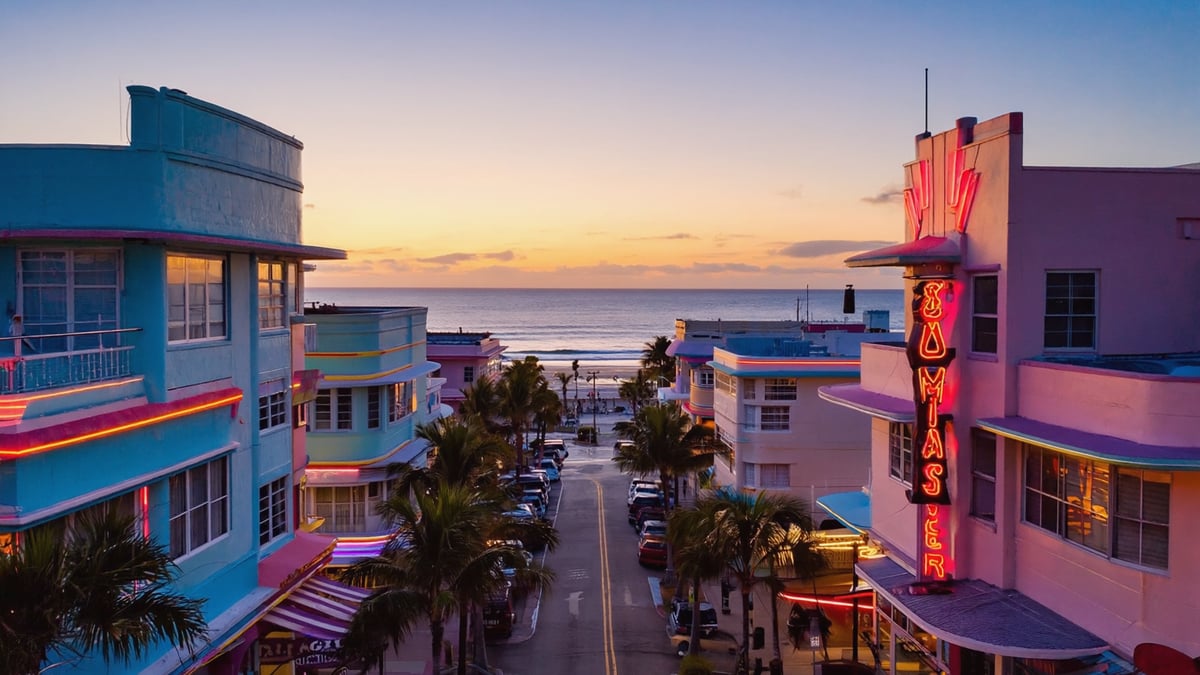
The Art Deco Historic District of South Beach is one of the most concentrated collections of Art Deco architecture in the world, and it is the visual heart of Miami's identity. Stretching along Ocean Drive and Collins Avenue between 5th and 17th Streets, this neighbourhood contains over 800 buildings constructed primarily between 1923 and 1943 — a remarkable density of preserved mid-century design that earned the area its place on the National Register of Historic Places.

What makes the district so visually arresting is not just the architecture in isolation, but the way it has been brought back to vivid life. In the 1980s, much of South Beach was in serious decline — neglected, underfunded, and overlooked. The Miami Design Preservation League, founded by Barbara Baer Capitman in 1976, fought to save these buildings from demolition and redevelopment, and their efforts transformed what could have been a lost neighbourhood into one of America's most distinctive urban environments. Today, the pastel-painted facades — seafoam greens, coral pinks, creamy yellows, and sky blues — are synonymous with Miami's brand identity worldwide.

What to Look For When You Walk the District

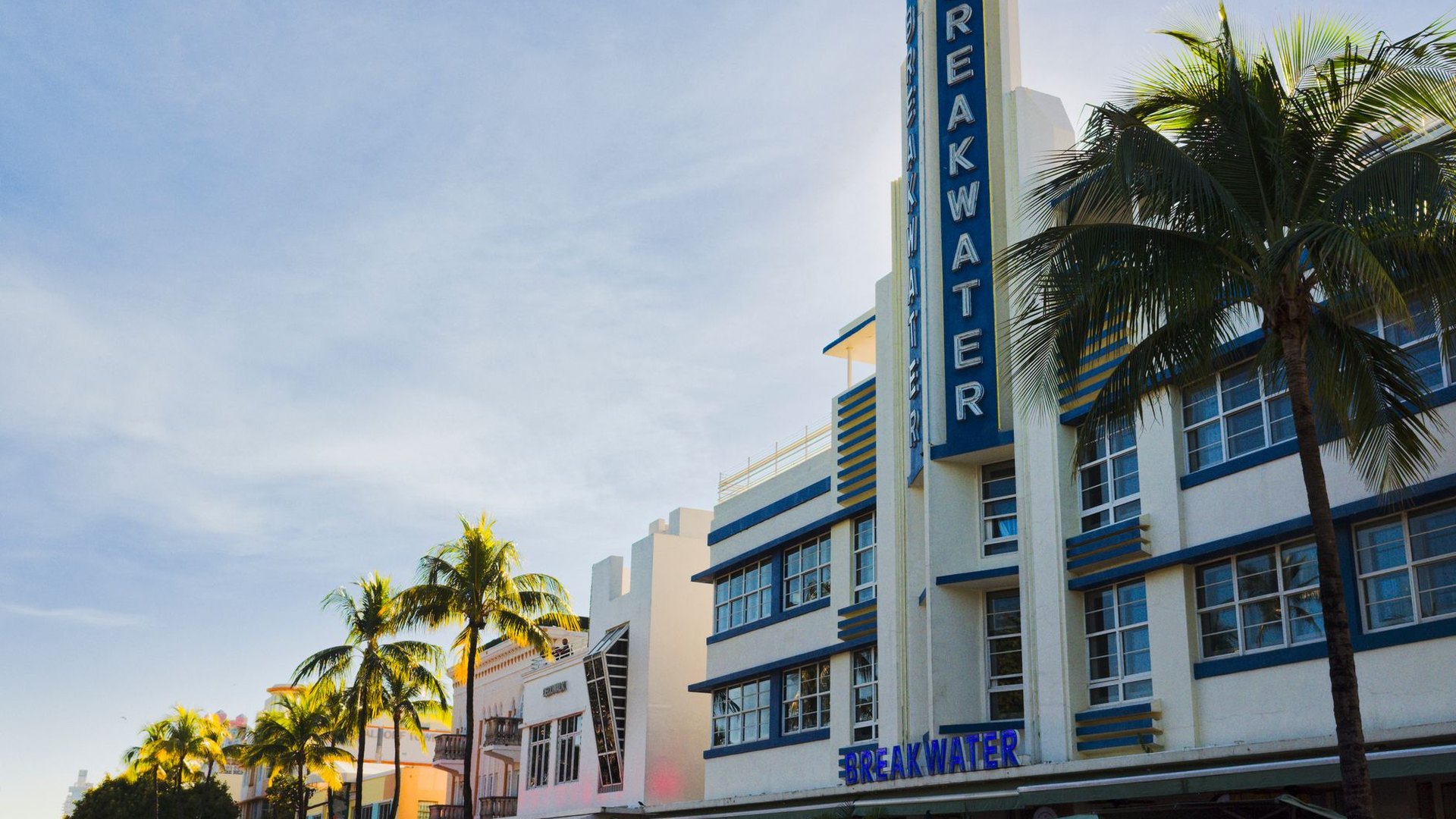
Even without an architecture degree, walking Ocean Drive is a genuine pleasure. The key design features of Miami Beach Art Deco include eyebrows (the flat concrete canopies projecting over windows to provide shade), porthole windows echoing the nautical influences of the era, racing stripes of horizontal banding that emphasise the streamlined aesthetic, and neon signage that comes alive spectacularly at dusk. Look up at the rooflines — you'll see stepped parapets, flagpoles, and geometric ornamentation that give each building its own personality within the wider architectural family.

The Carlyle, The Breakwater, and The Colony are among the most photographed hotels on the strip, each a perfect specimen of the Streamline Moderne style. The Park Central Hotel, with its distinctive eyebrow shading and nautical detailing, is another highlight. If you want structured context for what you're seeing, the Miami Design Preservation League runs excellent walking tours departing from the Art Deco Welcome Center on Ocean Drive — these run on weekend mornings and are highly recommended for architecture enthusiasts.

Beyond Ocean Drive: Collins Avenue and Washington Avenue

Most visitors focus on Ocean Drive, but Collins Avenue and Washington Avenue offer equally rewarding exploration with fewer crowds. Collins Avenue is home to some of Miami Beach's grandest hotel properties, including the Fontainebleau — a mid-century modern masterpiece designed by Morris Lapidus in 1954, which recently underwent a spectacular renovation and reopened as one of the city's most talked-about luxury destinations. Washington Avenue, meanwhile, has a grittier, more authentic energy — the street where locals shop, eat, and go about their daily lives alongside tourists.

For UK travellers, the Art Deco district offers something genuinely unlike anything available at home. Britain has its own rich architectural heritage, of course, but the specific combination of tropical heat, neon light, and mid-century American optimism that Miami's Art Deco represents is entirely unique. Spending a morning walking these streets — ideally early, before the heat intensifies and the crowds thicken — is one of the essential Miami experiences.


Miami's Beach Scene: From South Beach to the Hidden Coves

Miami Beach is justifiably world-famous, but understanding how to navigate it properly makes the difference between an average beach holiday and an exceptional one. The beach itself stretches for miles along the barrier island of Miami Beach, but different sections have dramatically different characters — knowing which suits your style is essential.

South Beach: The Iconic Stretch

The section of beach between 1st and 14th Streets — commonly referred to as South Beach or "SoBe" — is the most famous and most visited. The sand here is genuinely beautiful: wide, white, and powdery, with the Atlantic Ocean in shades of turquoise and deep blue depending on the light and weather. The beach is free to access, though the sun lounger and umbrella rentals operated by the major hotels can be expensive. Arriving early secures a good spot; by 10am in high season, the prime locations are taken.

The beach club scene is a defining feature of South Beach's social life. Properties like the Mondrian, the Standard, and the W South Beach operate pool and beach clubs that combine exceptional service with spectacular settings. For UK travellers accustomed to more reserved beach culture, the energy here can feel exhilarating — beach attendants, DJs playing from mid-morning, cocktail service delivered to your lounger, and a crowd drawn from across the Americas and Europe.

Mid-Beach and North Beach: A Calmer Alternative

Travelling north along the beach to the Mid-Beach area (around 23rd to 44th Streets) reveals a noticeably quieter and more residential character. The sand is equally beautiful, the crowds significantly thinner, and the overall atmosphere more relaxed. This section appeals particularly to families and couples seeking a less frenetic beach experience. North Beach, further still, is largely residential and offers an almost local feel — ideal if you're staying in a rental apartment and want to experience Miami Beach as residents do.

Crandon Park Beach: Key Biscayne's Secret

A short drive south of Downtown Miami across the Rickenbacker Causeway, Key Biscayne's Crandon Park Beach is arguably the most beautiful beach in the greater Miami area. Sheltered by the island's position, the water here is extraordinarily calm and clear, with a lagoon-like quality that makes it particularly suitable for children and less confident swimmers. The park surrounding the beach is vast and well-maintained, with picnic facilities and ample parking. For UK families accustomed to British seaside conditions, the contrast here is genuinely striking.

Practical Beach Tips for UK Visitors

  • Miami's UV index is significantly higher than the UK — factor 50 sunscreen is strongly advisable, especially in the first few days
  • Lifeguards operate during daylight hours on all main Miami Beach sections; swim between the flags
  • Alcohol is prohibited on public Miami Beach sections — beach clubs and hotel pools are where drinking is permitted
  • Afternoon thunderstorms are common from June to September; check the weather forecast daily during summer months
  • Public restrooms and outdoor showers are available at intervals along the main beach areas

Immersing Yourself in Cuban Culture: Little Havana and Calle Ocho

Old Havana street architecture

No visit to Miami is complete without spending time in Little Havana — the neighbourhood that perhaps more than anywhere else in the city embodies Miami's soul. Located just west of Downtown, Little Havana has been the cultural heart of Miami's Cuban-American community since the first major wave of Cuban exiles arrived following the 1959 revolution. Today, the neighbourhood is a living museum of Cuban heritage, with a vitality and authenticity that no tourist attraction could replicate.

Calle Ocho (Southwest 8th Street) is the main artery of Little Havana, and walking its length is an experience that engages all five senses simultaneously. The smell of Cuban coffee and cigar smoke mingles with the sound of salsa and son music drifting from open doorways. Elderly men play dominoes at Maximo Gomez Park (known locally as Domino Park) with an unhurried seriousness that feels timeless. Fruit stalls display tropical produce — mamey sapote, guanábana, plantains — that you won't find in any British supermarket. Murals covering building facades depict revolutionary heroes, tropical landscapes, and scenes of Cuban daily life.

What to Eat and Drink in Little Havana

Cuban cuisine is one of Miami's greatest gifts to the hungry traveller. The food reflects the island's Spanish, African, and Caribbean influences in dishes that are simultaneously simple and deeply flavourful. The Cuban sandwich — pressed Cuban bread filled with roast pork, ham, Swiss cheese, pickles, and mustard — is the neighbourhood's signature snack, and comparing versions across different establishments is a legitimate pursuit. Versailles Restaurant on Calle Ocho is perhaps the most famous Cuban restaurant in the world, a mirror-lined institution that has been feeding Miami's Cuban community since 1971 and operates as much as a cultural landmark as a place to eat.

Cuban coffee culture is equally important and quite different from anything you'll find in a British coffee shop. The cafecito is a tiny, intensely sweet shot of espresso that is the fuel of Cuban daily life. A cortadito adds a splash of steamed milk. The café con leche is the Cuban equivalent of a flat white, though with a sweetness and intensity that sets it apart. Most of the small ventanillas (walk-up windows) on Calle Ocho serve these for less than $2, and ordering one is a genuine cultural participation rather than simply buying a drink.

The Arts and Music of Little Havana

The neighbourhood's cultural life extends well beyond food and dominoes. The Ball & Chain, a bar and music venue on Calle Ocho, has been a centrepiece of the neighbourhood's nightlife since the 1930s and today presents live Latin music seven nights a week in a venue that perfectly captures the area's spirit. The monthly Viernes Culturales (Cultural Fridays) event transforms Calle Ocho into an open-air street festival, with live music, art exhibitions, and food stalls drawing both local residents and visitors in a celebration that feels genuinely communal rather than performative.

The Tower Theater on Calle Ocho, a 1926 Art Deco cinema that was restored in 2002, now operates as a cultural centre presenting Spanish-language and international films alongside community events. It's a beautiful building with an interesting programme, and worth checking for what's on during your visit.

Cigars: A Little Havana Tradition

Hand-rolled cigars are as much a part of Little Havana's identity as music and coffee. Several establishments on and around Calle Ocho employ master cigar rollers who work in full view of customers, crafting cigars with a skill passed down through generations. Even if you don't smoke, watching a torcedor at work is a fascinating glimpse into a craft that requires years to master. For those who do smoke, purchasing a hand-rolled cigar here and enjoying it on a shaded terrace with a mojito is one of those travel experiences that becomes a lasting memory.


Wynwood: Miami's Neighbourhood of Street Art and Creative Energy

A decade ago, Wynwood was an industrial neighbourhood of warehouses and light manufacturing plants. Today, it is one of the most visually arresting urban environments in the United States — a testament to what happens when artists are given space, permission, and an audience. The transformation was catalysed by the Wynwood Walls, an outdoor museum of large-scale street art created by developer Tony Goldman in 2009, which commissioned renowned street artists from around the world to cover the neighbourhood's blank warehouse exteriors with murals.

The Wynwood Walls have since become one of Miami's most visited attractions, and with good reason. The scale and quality of the work here is genuinely impressive — these are not casual graffiti tags but considered, technically accomplished large-format paintings that would be at home in contemporary galleries. The roster of artists who have contributed includes many of the most significant names in international street art, and the collection is continuously refreshed to maintain its relevance and vitality.

What Wynwood Offers Beyond the Walls

The success of the Walls catalysed a broader transformation of the neighbourhood. Today, Wynwood is home to a dense concentration of independent galleries, boutiques, restaurants, breweries, and cocktail bars that make it one of Miami's most rewarding areas to spend an afternoon and evening. The Wynwood Garage, the NW 2nd Avenue corridor, and the blocks surrounding the Walls are filled with businesses that reflect the neighbourhood's creative identity — design-led shops, farm-to-table restaurants, craft beer bars, and independent coffee roasters.

The Wynwood Brewing Company is a local institution worth visiting — a craft brewery occupying a converted warehouse space, serving a rotating range of beers brewed on-site. The outdoor courtyard, covered in murals and filled with picnic tables, is a quintessentially Wynwood experience. For UK visitors accustomed to the craft beer scene in cities like London and Manchester, the quality here is genuinely comparable — and the tropical setting adds an unmistakable extra dimension.

Wynwood is also the best neighbourhood in Miami for independent art gallery hopping. Unlike the more formal environment of the Pérez Art Museum, the galleries here operate with an open-door informality — you can wander in, speak directly with gallery staff about the work, and occasionally meet artists. First Saturdays, when many galleries hold openings simultaneously, is particularly vibrant.


Miami's Food Scene: A Culinary Map of the World

Varadero beach Cuba
Varadero beach Cuba

Miami's dining landscape is one of the most diverse and exciting in the United States — a direct reflection of the city's multicultural population. The Cuban influence is pervasive and foundational, but overlaid with Haitian, Colombian, Peruvian, Jamaican, Brazilian, and increasingly Japanese and Korean culinary traditions that create a food scene of remarkable range and quality.

Beyond Cuban: Miami's Global Dining Landscape

Peruvian cuisine has established a particularly strong foothold in Miami, driven by the city's significant Peruvian-American community. Ceviche — raw fish cured in citrus juice with chilli and red onion — is the dish that best exemplifies the Peruvian influence, and Miami's versions, made with the freshest Atlantic seafood, are exceptional. The Design District and Brickell neighbourhoods both have strong concentrations of Peruvian restaurants ranging from casual to fine dining.

The Design District, Miami's luxury shopping and dining quarter, has attracted some of the city's most celebrated chefs. The neighbourhood's restaurants tend toward the ambitious and expensive, but a meal in one of the Design District's top establishments is a genuine dining event — the kind of experience worth budgeting for as a special occasion during your stay. Equally, the Brickell neighbourhood — Miami's financial district — has a thriving restaurant scene oriented toward professionals and visitors who appreciate quality without necessarily wanting the full luxury price tag.

Seafood: Taking Advantage of Location

Miami's coastal position means seafood is both abundant and exceptional. Stone crab claws, available from October to May, are the city's signature seafood experience — meaty, sweet, and served cold with mustard sauce in a tradition that dates back decades. Joe's Stone Crab in South Beach, which has been serving stone crab since 1913, is an institution that every Miami visitor should experience at least once. Yes, there will be a queue; yes, it is worth it.

Grouper, snapper, mahi-mahi, and shrimp appear on menus across the city, invariably fresh and well-prepared. The fish sandwich — a fried or grilled fillet on a soft bun with the trimmings — is Miami's answer to the burger, and the best versions found at casual seafood shacks near the waterfront are among the most satisfying meals you'll eat in the city.

Brunch Culture

Miami takes brunch seriously. The combination of late-night culture (it's not unusual for clubs and bars to operate until 5am or later) and a relaxed attitude to weekend mornings has produced a brunch scene of impressive quality and creativity. Weekend brunch in South Beach typically involves bottomless cocktails, live music, and dishes that blend American breakfast traditions with Latin flavour profiles. Budget approximately $40–60 per person for a full South Beach brunch experience including drinks.


Nightlife and Entertainment: Miami After Dark

Miami's nightlife has a global reputation, and it lives up to it. The city operates on a schedule that would exhaust most British visitors accustomed to a 2am last orders culture — Miami's clubs don't reach peak energy until after midnight, and many operate until dawn. Understanding this rhythm is key to enjoying the nightlife without burning out.

South Beach Club Culture

The nightlife epicentre remains South Beach, where a cluster of world-class clubs operates along and around Collins Avenue. LIV at the Fontainebleau, E11even, and Story are among the most prominent venues — large-scale, technically sophisticated clubs booking internationally renowned DJs and attracting a genuinely global crowd. Entry prices can be significant (expect to pay $30–$50 or more for general admission, with VIP table service starting at several hundred dollars), and the queuing system rewards those who plan ahead and secure guest list placement.

For UK visitors accustomed to London's club scene — Fabric, Printworks, or Village Underground — the Miami experience feels both familiar and distinctly different. The music programming overlaps significantly with European electronic music culture, but the production values, the crowd energy, and the sheer scale of the spaces are characteristically American in their ambition.

Rooftop Bars: Miami's Best Elevated Views

Not every evening needs to be a club night. Miami's rooftop bar scene offers a more relaxed but equally glamorous alternative. Several hotels in South Beach and Downtown Miami operate rooftop venues with views across the city's skyline and the sparkling waters of Biscayne Bay. These spaces tend to peak between 8pm and midnight — ideal for pre-dinner drinks or a scenic wind-down after a day of exploring.

The Magic City is also home to a thriving live music scene beyond the clubs. Jazz bars, Latin music venues, and intimate live rooms operate across neighbourhoods from Wynwood to Little Havana, offering a more authentic and affordable evening entertainment option. The Ball & Chain in Little Havana, as mentioned earlier, is one of the best — but the city rewards explorers who venture beyond the obvious tourist circuit.


Day Trips and Excursions from Miami

Cuba salsa music and culture

Miami's geographic position makes it an excellent base for day trips that add remarkable variety to a holiday. The Everglades, the Florida Keys, and the Dry Tortugas are all within accessible reach, and each offers an experience entirely unlike the urban environment of the city itself.

The Everglades: America's Most Unique Ecosystem

The Everglades National Park, accessible in approximately an hour's drive from Miami, is one of the natural world's most extraordinary environments. The largest subtropical wilderness in the United States, the Everglades is a slow-moving river of grass covering 1.5 million acres — a landscape that supports an astonishing diversity of wildlife including American alligators, Florida panthers, manatees, and over 350 species of birds. For UK visitors accustomed to landscapes shaped by millennia of human habitation, the scale and wildness of the Everglades is genuinely humbling.

Airboat tours are the most popular way to experience the interior of the park — the flat-bottomed, fan-powered boats skim across the sawgrass at exhilarating speed, and experienced guides provide fascinating commentary on the ecology and wildlife. Walking the park's elevated boardwalk trails offers a slower, more contemplative alternative. Either way, the Everglades deserves at least a full day of your Miami itinerary.

The Florida Keys: Island Hopping on the Overseas Highway

Driving south from Miami on the Overseas Highway — a 113-mile road built over the ocean connecting the chain of coral islands known as the Florida Keys — is one of America's great road trip experiences. Key Largo, the first and largest key, is famous for its coral reef diving and snorkelling; John Pennekamp Coral Reef State Park here is the first underwater park in the United States. Further south, Islamorada offers excellent sport fishing and a relaxed, locals-oriented atmosphere. Key West, at the end of the chain, is a destination in its own right — a quirky, literary, deeply eccentric town that was home to Ernest Hemingway and Tennessee Williams and retains the spirit of bohemian freedom they were drawn to.

A day trip gets you to Key Largo comfortably; reaching Key West and back in a single day is possible but demanding. Many visitors who want to experience the full Keys properly extend their Florida trip with one or two nights in Key West.


Planning Your Miami Holiday: Practical Information for UK Travellers

Getting the logistics right transforms a good Miami holiday into a great one. Here are the key practical considerations for UK visitors planning their trip.

Getting There from the UK

Direct flights from London Heathrow to Miami International Airport are operated by British Airways and American Airlines, with journey times of approximately nine to ten hours. Direct services also operate from London Gatwick and Manchester on a seasonal basis. Miami International Airport is large and busy — allow significant time for immigration and customs processing on arrival, as queues can be substantial. The airport is approximately eight miles from South Beach, with taxi, rideshare (Uber/Lyft), and hotel shuttle options available.

Getting Around Miami

Miami is a car-dominated city, and renting a car is the most flexible way to explore beyond South Beach and the immediate tourist areas. UK driving licences are accepted; driving is on the right. An International Driving Permit is advisable though not legally required for UK visitors. Parking in South Beach is limited and expensive — valet parking is the norm at hotels and many restaurants.

Within South Beach itself, the South Beach Local free shuttle bus operates a loop connecting major points along the main tourist strip, and cycling is an enjoyable option on the dedicated beach path. The Miami-Dade public transit system connects the city more broadly, and rideshares are widely available and competitively priced by London standards.

Accommodation: Where to Stay in Miami

South Beach is the natural choice for first-time visitors — staying here puts you within walking distance of the beach, Ocean Drive, and the Art Deco district, and immerses you in the Miami experience from the moment you step outside. The neighbourhood offers accommodation at every price point, from boutique Art Deco hotels converted from historic buildings to large luxury resort properties on the beach.

Downtown Miami and Brickell offer a more contemporary, business-oriented hotel experience — often at lower price points than South Beach, with excellent transport links to the rest of the city. The Design District and Wynwood are increasingly popular for visitors who prioritise the arts and dining scene. For families or those seeking space, the Mid-Beach area offers larger resort properties with more family-friendly facilities.

GlobeHunters Miami Packages

GlobeHunters offers a range of Miami holiday packages designed specifically for UK travellers, combining return flights from UK airports with hotel accommodation and optional activity packages. Prices start from £1,099 per person for a seven-night package, with luxury options available for those seeking premium hotel experiences. The GlobeHunters team can tailor itineraries to suit couples, families, and solo travellers, incorporating Viator-sourced activity add-ons including Everglades airboat tours, Art Deco walking tours, and Wynwood street art experiences.

To explore current Miami package availability and pricing, visit the GlobeHunters Miami holiday packages page, or call the team directly on 0208 944 4514 for personalised advice and booking assistance.


Miami Travel Video: See the City Before You Go

Trinidad Cuba colonial town

Sometimes words aren't enough — watch this short film capturing Miami's beaches, Art Deco streets, and vibrant cultural life to get a feel for what awaits you.

[YouTube embed: Search "Miami Travel Guide 2026" for current destination video content]


Frequently Asked Questions About Miami Holidays

When is the best time to visit Miami from the UK?

The ideal window for UK visitors is November through April, when Miami enjoys warm, dry, and sunny weather with temperatures typically between 22°C and 28°C. This period avoids the summer humidity and the Atlantic hurricane season (June to November). December and January are peak season, meaning higher prices and larger crowds — February and March offer an excellent balance of good weather and slightly more manageable visitor numbers.

Do UK citizens need a visa to visit Miami?

UK citizens do not need a traditional visa to visit the United States for stays of up to 90 days, but they must obtain ESTA (Electronic System for Travel Authorisation) approval before travelling. Applications are made online via the official US government portal and are typically processed within 72 hours, though applying at least two weeks before departure is recommended. There is a small application fee payable online.

How many nights should I spend in Miami?

A minimum of seven nights is recommended to experience Miami's key neighbourhoods and take at least one day trip. Shorter trips of five nights are feasible but feel rushed. Ten to fourteen nights allows you to explore at a relaxed pace, add Keys or Everglades excursions, and genuinely absorb the city's character.

Is Miami safe for tourists?

The main tourist areas of Miami — South Beach, the Art Deco district, Wynwood, Little Havana, and the Design District — are generally very safe for visitors exercising normal urban awareness. As with any major city, pockets of higher crime exist in areas less frequented by tourists; your hotel concierge can advise on any specific areas to avoid during your stay. Standard precautions apply: don't leave valuables visible in hire cars, keep bags secure in busy areas, and be aware of your surroundings at night.

What currency should I bring to Miami?

Miami operates exclusively in US Dollars. Credit and debit cards (Visa and Mastercard) are accepted almost universally, and contactless payments are widely available. It is worth carrying some cash for small tips, street food vendors, and small establishments. Notify your UK bank of your travel dates to avoid cards being blocked for overseas use. Currency exchange rates are generally more favourable using a fee-free card (such as Monzo or Starling) than exchanging sterling at airport bureaux de change.

What should I pack for a Miami holiday?

Pack light, breathable clothing — linen, cotton, and moisture-wicking fabrics are ideal. Swimwear, sunglasses, and a high-factor sunscreen are essential. Evenings can be cool in winter months, so a light jacket or layer is useful from November to February. Smart-casual clothing is appropriate for nicer restaurants; some clubs and upscale venues enforce dress codes (no trainers, no sports shorts). A good-quality insect repellent is useful for Everglades excursions.

How much should I budget per day in Miami?

Miami is not a budget destination, particularly in South Beach. A realistic daily budget (excluding accommodation) for a couple is approximately $200–300 per day, covering meals, drinks, activities, and transport. Budget-conscious visitors can reduce this significantly by self-catering some meals, using public transport rather than taxis, and choosing free attractions (beaches, Wynwood Walls exterior viewing, Art Deco walking). Fine dining, beach clubs, and nightlife can push daily spend considerably higher.

Can I drink tap water in Miami?

Yes — Miami's tap water is safe to drink and meets US Environmental Protection Agency standards. However, many visitors find the taste slightly chlorinated; filtered water or bottled water is widely available if preferred.

Is Miami suitable for families with young children?

Miami is an excellent family destination, though some planning is required to focus on the right areas. Crandon Park Beach on Key Biscayne is ideal for families with young children due to its calm, shallow waters. The Miami Children's Museum on Watson Island is a world-class facility. The Phillip and Patricia Frost Museum of Science in Downtown Miami is highly engaging for older children with its exceptional aquarium and planetarium. South Beach itself is less family-oriented, with a nightlife and adult social scene that can feel overwhelming with young children.

What is the best neighbourhood to stay in for a first visit?

For first-time visitors, South Beach offers the most immersive and convenient base — you're within walking distance of the beach, the Art Deco district, and a concentration of restaurants and entertainment. For a slightly quieter experience with better value accommodation, Mid-Beach is an excellent alternative. Families may prefer the Design District or Coconut Grove for their more residential, spacious character.

What activities can I book through GlobeHunters for Miami?

GlobeHunters' Miami packages can include a range of Viator-sourced activity add-ons: Everglades airboat tours, Art Deco walking tours with Miami Design Preservation League guides, Wynwood street art and gallery tours, Key West day trip transfers, deep-sea fishing charters, sunset sailing cruises on Biscayne Bay, and South Beach food and cocktail tours. Contact the GlobeHunters team on 0208 944 4514 to discuss building your ideal activity itinerary.

How do I get from Miami Airport to South Beach?

The most convenient options are Uber/Lyft (approximately $30–45, 25–40 minutes depending on traffic), metered taxi (similar price), or hotel shuttle if your property offers one. The Miami Beach Airport Flyer bus service operates between Miami Airport and South Beach at a fraction of the cost, though with longer journey times and the need to manage luggage on public transport. Car hire is available at the airport and is the recommended option for anyone planning to explore beyond the immediate Miami Beach area.


Your Miami Adventure Starts Here

Miami in 2026 is a city at the height of its powers — culturally rich, architecturally spectacular, gastronomically thrilling, and possessed of a natural beauty that no amount of urban development has managed to diminish. From the moment you step onto Ocean Drive and feel the subtropical air and see the pastel Art Deco facades glowing in the morning light, to the final sunset you watch from a rooftop bar with a cold drink in hand and the Miami skyline silhouetted against an orange sky, this is a city that gets under your skin.

For UK travellers, Miami represents something genuinely valuable: a long-haul destination that is both culturally accessible and genuinely exotic, that rewards both the beach holiday seeker and the cultural explorer, and that offers experiences at every budget level from the surprisingly affordable to the extravagantly luxurious. It is a city that consistently exceeds expectations — partly because the expectations themselves are already high, and Miami still manages to surpass them.

GlobeHunters has been helping UK travellers reach destinations like Miami since 2003, and the team's expertise in building packages that genuinely suit individual needs — combining the right flights, the right hotels, and the right activities — makes the difference between a good trip and a memorable one. Miami packages start from £1,099 per person, with the GlobeHunters team available to discuss your specific requirements, travel dates, and budget.

Ready to make Miami your next adventure? Call GlobeHunters on 0208 944 4514 — lines are open Monday to Saturday — or browse current availability and pricing at holidays.globehunters.com. Your Miami holiday is waiting.

Ready to Book Your Cuba Holiday?

Our travel experts are ready to help you plan the perfect trip. Call us today or browse our latest deals.

Dubai holidays 2026Dubai travel guideDubai holiday packages UKbest time to visit DubaiDubai desert safari

Ready to Start Planning?

Speak to our travel experts for personalised advice and the best deals on your next holiday.

Call 0208 944 4514
Verified by Sysnet
IATA Member
ATOL Protected No. 10139
British Travel Awards 2014
British Travel Awards 2016
British Travel Awards 2018
British Travel Awards 21/22

Multiple British Travel Awards Winner

Praised by 98% of loyal customers