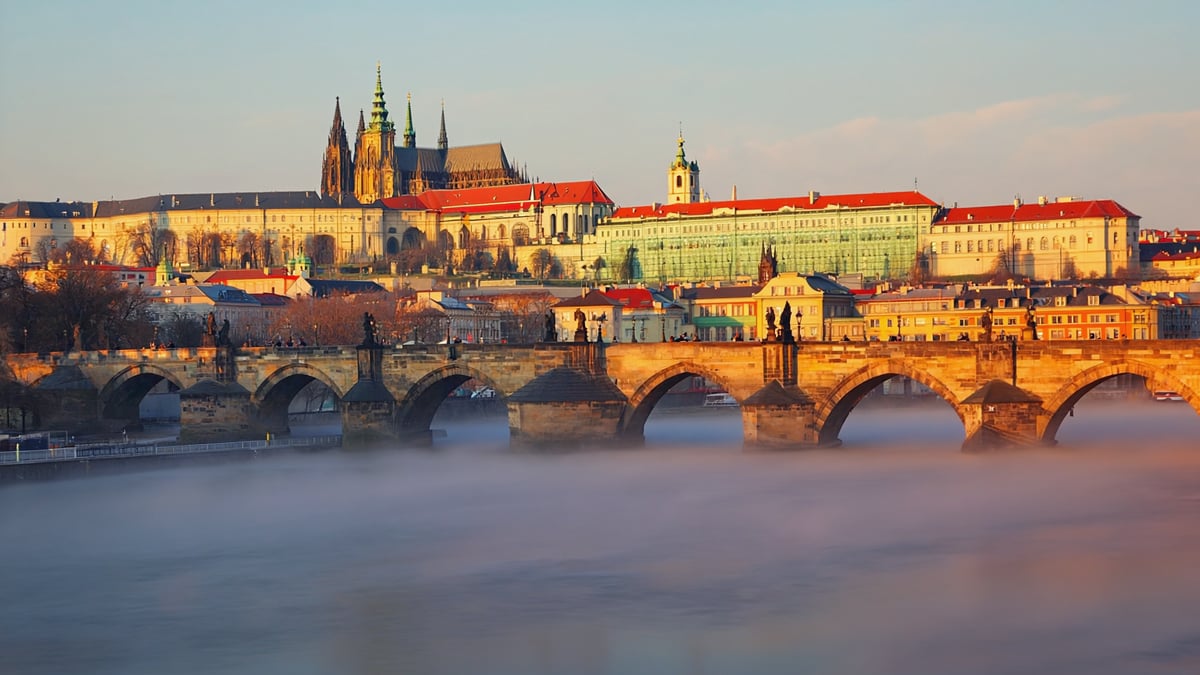
Few European capitals reward a long weekend quite like Prague. The Czech capital packs a thousand years of Gothic spires, baroque palaces and cobbled lanes into a compact, walkable centre, then quietly hands you change at the end of the night. For UK travellers it sits in a genuine sweet spot: a flight of barely two hours, a price tag that still feels gentle against the pound, and a city that looks just as good wrapped in winter mist as it does under spring blossom.
This guide is built around the decisions you actually have to make when you plan a trip here, not a checklist of postcard sights. How many nights is enough? Which neighbourhood should you base yourself in? How do you escape the worst of the crowds around the castle? Where do you drink Czech beer like a local rather than a tourist? And when, honestly, is the best time to go? Let's work through it.
Why Prague Works So Well as a UK City Break
Prague's appeal starts with how easy it is to reach. Direct flights leave from London (Heathrow, Gatwick, Stansted and Luton), Manchester, Birmingham, Edinburgh, Bristol and several other regional airports, and the journey is around two hours door-to-runway. You can fly out on a Friday evening and be sipping a beer beside the Vltava before the night is over.
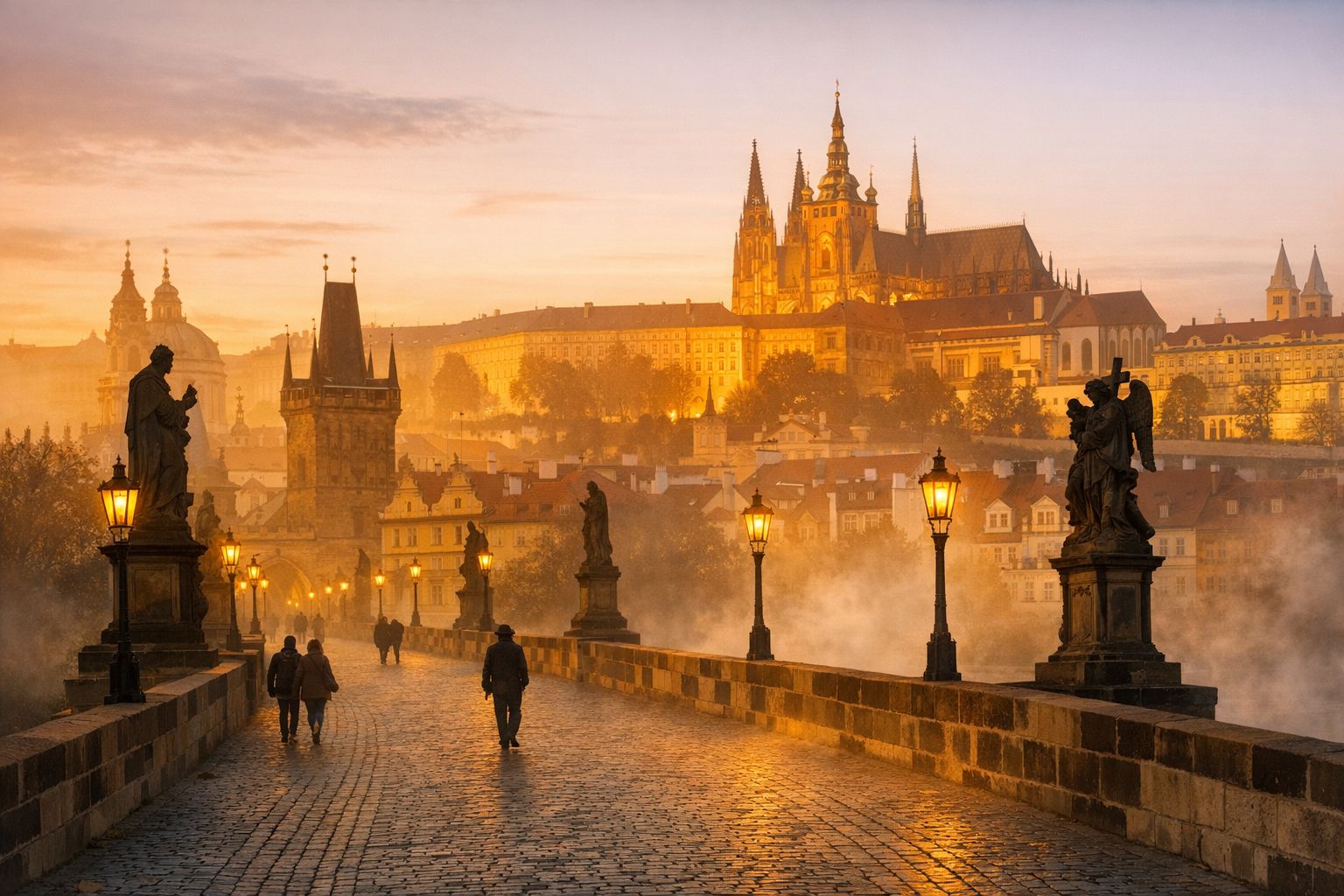
Then there's the city itself. Prague survived the twentieth century largely unbombed, so its historic core is astonishingly intact: a tangle of medieval streets, art nouveau facades and church towers that earned the whole centre UNESCO World Heritage status. The signature sights, Charles Bridge, the Astronomical Clock in the Old Town Square, Prague Castle and St Vitus Cathedral, all sit within comfortable walking distance of one another. You rarely need a taxi, and the trams and metro are cheap and efficient when your feet give out.
Crucially for a city break, Prague is dense. You are never trudging for half an hour between attractions the way you might in a sprawling capital. A morning's stroll takes you from the Old Town across the river and up to the castle, with a hundred photogenic detours along the way. That compactness is what makes even a short stay feel generous.
How Many Nights Do You Need in Prague?
This is the first real decision, and it shapes everything else, from the flights you choose to the budget you set. Here is how the options break down.
Two nights: the classic long weekend
Two nights, arriving Friday and leaving Sunday, is the most popular shape for a Prague break and it works. You'll have a full Saturday plus parts of two other days, which is enough to cover the headline core: Old Town Square and the Astronomical Clock, a walk across Charles Bridge at dawn before the crowds, the climb up to Prague Castle, and a proper Czech dinner with a few beers. It's fast-paced but satisfying, and the short flight means you're not wasting a day at either end.
Three nights: the sweet spot
For most couples and first-timers, three nights is the figure we'd nudge you towards. That extra day is what separates ticking off Prague from actually enjoying it. You can give the castle complex the half-day it deserves, wander the Jewish Quarter (Josefov) and its poignant synagogues and cemetery, climb Petřín Hill for the best view in the city, and still leave a long, lazy afternoon free for a riverside terrace or a beer hall with no agenda at all.
Four nights or more: depth and day trips
With four or five nights you can stop rushing entirely. This is the length that lets you fold in a day trip, the medieval town of Český Krumlov, the spa town of Karlovy Vary, or the bone-lined ossuary at Kutná Hora, and still have time for the quieter neighbourhoods most weekenders never reach. It's also the natural base length if you're pairing Prague with Vienna or Budapest, which we'll come to later.
Where to Stay in Prague: A District-by-District Guide
Where you base yourself matters more in Prague than in many cities, because the character changes sharply from one district to the next, and so does the price and the night-time noise. Here's what each of the main areas suits.
Staré Město (Old Town): the postcard heart
Staré Město is the historic centre, home to the Old Town Square, the Astronomical Clock and the eastern end of Charles Bridge. Staying here means rolling out of bed and into the action, with the headline sights on your doorstep and dozens of restaurants and bars within a few minutes' walk. The trade-off is obvious: it's the busiest, most touristy and generally the priciest part of the city, and the central squares can be lively well into the night. It suits first-timers on a short break who want zero commute to the sights and don't mind paying for the privilege.
Malá Strana (Lesser Town): baroque and romantic
Across the river beneath the castle, Malá Strana is, for many, the loveliest neighbourhood in Prague. Its baroque palaces, hidden gardens, the John Lennon Wall and steep cobbled lanes feel a notch calmer and more romantic than the Old Town, yet you're still only a stroll across Charles Bridge from everything. This is the choice for couples and anyone after atmosphere over convenience. Expect boutique hotels in converted historic buildings and prices to match, plus a few more hills to climb.
Nové Město (New Town): space and value
Don't be misled by the name, Nové Město was founded in the fourteenth century. This is where you'll find Wenceslas Square, the National Theatre and a grid of grand nineteenth-century boulevards. It's more spacious and workaday than the Old Town, with better-value hotels, big-name brands and excellent transport links, while still being a 10 to 15 minute walk from the main sights. A solid pick if you want a bit more room and a softer price, without sacrificing location.
Vinohrady: where locals actually live
If you'd rather feel like a temporary resident than a tourist, Vinohrady is the answer. This leafy, elegant residential district just east of the centre is full of art nouveau apartment blocks, tree-lined avenues, independent cafés, wine bars and some of the city's best neighbourhood restaurants. It's a short tram or metro ride, or a 20-minute walk, from the Old Town. Prices are gentler, the crowds evaporate, and the dining scene is where Prague's young professionals actually eat. Ideal for a longer stay, returning visitors, or anyone who finds the centre a little too polished.
Beyond the Castle Crush: Getting Past the Tourist Crowds
Prague's central core can feel overrun, especially on Charles Bridge and in the Old Town Square at midday in high season. The good news is that the crush is remarkably shallow. Walk five minutes in almost any direction and the crowds thin to nothing.
A few practical moves make all the difference. Cross Charles Bridge at first light or after dark, when the statues are floodlit and you can hear your own footsteps. Tackle Prague Castle either right at opening or in the late afternoon, when the coach groups have moved on, and don't overlook the quieter Golden Lane and castle gardens. For the city's best skyline view without the queues, skip the busier towers and climb Petřín Hill, reached by a charming little funicular, or head up to the Letná beer garden above the river.
To genuinely get beyond the tourist trail, point yourself at the neighbourhoods. Žižkov is the bohemian, slightly gritty district famous for having more pubs per head than almost anywhere in Europe, plus the surreal TV Tower with its crawling baby sculptures. Holešovice, a former industrial quarter north of the centre, now houses the DOX contemporary art centre and a buzzing covered market. And Vyšehrad, the original hilltop fortress to the south, offers castle-grade views, a beautiful neo-Gothic church and a peaceful cemetery, with barely a tour group in sight. These are the areas where Prague stops performing and simply gets on with being itself.
Czech Beer Culture, Done Properly
The Czechs drink more beer per head than any other nation on earth, and in Prague that culture is not a gimmick for visitors, it's the social fabric. Doing it properly is one of the real pleasures of a trip here, and it costs very little.
Start with the basics. The classic Czech pour is a pale lager, a světlý ležák, served fresh and cold, with Pilsner Urquell and Budvar the household names. Order a pivo and you'll usually get a half-litre; in a traditional pub the empties are simply replaced until you place a beer mat over your glass to signal you're done. A good local beer in an ordinary pub often costs around £2 to £3, sometimes less, which is part of why an evening out here feels so relaxed.
For the real thing, seek out a proper Czech beer hall or hospoda rather than the tourist-priced terraces on the main squares. Institutions like U Fleků, a brewery pouring its own dark lager since the fifteenth century, or the cavernous U Zlatého Tygra deliver the authentic, slightly gruff, beer-soaked atmosphere. Beyond the big brands, Prague's craft and microbrewery scene has exploded, with tank-beer pubs serving unpasteurised lager straight from the brewery and modern taprooms experimenting well beyond the classic pilsner. In the warmer months, the open-air beer gardens, Letná above all, with its river-and-spires panorama, are where the whole city seems to gather at sunset. Pair your beer with hearty Czech plates, roast pork with dumplings and sauerkraut, beef in creamy svíčková sauce, or a crisp fried cheese, and you've understood something essential about the place.
When to Go: Seasons, Crowds and Christmas Markets
Prague is a true year-round city, but the season you choose dramatically changes the experience, the crowds and the price.
Spring and autumn: the connoisseur's choice
April to June and September to October are, for our money, the finest windows. The weather is mild and pleasant for walking, the gardens and parks are at their best, and the visitor numbers sit below the summer peak. Autumn in particular drapes the city's many parks and hillsides in gold, and the light on the river is magical. These shoulder seasons usually offer the best balance of comfortable conditions, manageable crowds and sensible prices.
Summer: long days, full streets
July and August bring warm, sometimes hot weather, long daylight hours and a real buzz, the beer gardens are in full swing and the riverbanks come alive. The flip side is that this is peak season: Charles Bridge and the Old Town are at their most crowded, and hotel prices climb. If summer is your only option, lean hard on the early-morning and late-evening tactics above to dodge the worst of it.
Winter and the Christmas markets
Prague in the cold months is a different kind of beautiful. From late November through to early January, the Old Town Square and Wenceslas Square host some of Europe's most atmospheric Christmas markets, all mulled wine, roasting hams, hand-crafted gifts and a towering tree, often dusted with snow. It's genuinely magical, though it draws big festive crowds and the warm-weather beer gardens are closed. The deep winter weeks of January and February are the quietest and often the cheapest of all, frosty and crisp, with the spires looking properly Gothic under grey skies, if you don't mind bundling up warm.
What Prague Actually Costs: An Honest Look in Pounds
One of Prague's enduring draws for UK visitors is value. The Czech Republic uses the Czech koruna (CZK) rather than the euro, and prices, while higher than they were a decade ago, still feel kind against the pound, especially on food and drink.
Here's a realistic picture of day-to-day costs:
- A local beer (half-litre): around £2 to £3 in an ordinary pub, more on the tourist squares.
- A hearty pub dinner with a couple of beers: roughly £12 to £20 per person.
- A coffee: about £2.50 to £3.50.
- A 24-hour public transport ticket: a few pounds, covering trams, metro and buses across the city.
- Entry to Prague Castle (full circuit): around £15 to £20.
Accommodation spans the full range, from smart budget hotels to grand five-star palaces in the Old Town, and because the city is so walkable you can often save by basing yourself slightly out in Nové Město or Vinohrady without losing much convenience. The overall effect is that a couple can enjoy a genuinely characterful long weekend, good hotel, good food, plenty of beer, for noticeably less than the equivalent in Paris, Amsterdam or the Nordic capitals. A few honest tips: avoid changing money at the kiosks on the main tourist drag, where rates are poor, pay by card or use a reputable exchange, and ignore restaurants with touts on the doorstep of the Old Town Square in favour of somewhere a couple of streets back.
Pairing Prague with Vienna or Budapest
Prague sits at the heart of Central Europe, which makes it a superb anchor for a twin-city or even triple-city holiday. The three imperial capitals, Prague, Vienna and Budapest, form a natural trio, each within easy reach of the next.
Vienna lies around four hours from Prague by direct train or coach, and the comfortable rail journey through the Bohemian and Moravian countryside is part of the pleasure. Budapest is a little further but equally well connected. A classic combination is a few nights in Prague followed by a few in Vienna or Budapest, giving you two contrasting but complementary capitals in one trip, Prague's Gothic intimacy set against Vienna's imperial grandeur or Budapest's thermal-bath swagger.
These multi-centre itineraries are exactly the kind of trip that benefits from a tailored approach. Coordinating the flights, the train legs, the hotels in each city and the timings so it all flows is fiddly to do yourself, but straightforward when it's built for you. If a two- or three-city Central European holiday appeals, our specialists can stitch the whole thing together as a single, seamless package. You can browse our Prague holiday packages as a starting point and tell us what you'd like to add.
Prague for Couples, Groups and Special Occasions
Prague flexes easily to suit very different kinds of traveller, which is part of why it's such a dependable choice.
For couples, it's hard to beat. Sunset from Charles Bridge or Petřín Hill, candlelit dinners in vaulted medieval cellars, a romantic stay in a baroque boutique hotel in Malá Strana, an evening classical concert in a gilded historic hall, the city seems almost designed for two. It's a perennial favourite for honeymoons, anniversaries and milestone-birthday escapes.
For groups of friends, Prague delivers on the social side without ever feeling one-note. The famously good, famously cheap beer, the lively pub and beer-garden scene, the river cruises and the genuinely characterful nightlife make it a perennial choice for celebrations and reunions, while there's more than enough history and culture to fill the days between. It's a city where a group can eat and drink extremely well without anyone wincing at the bill.
For families, there's the toy-town castle, the changing of the guard, river boats, the Petřín funicular and mirror maze, and a centre compact enough that little legs aren't pushed too far. Whichever shape your party takes, the trip is best built around what matters to you, the right neighbourhood, the right hotel, the right balance of sightseeing and downtime, which is where a tailored package earns its keep.
Key Takeaways
- Three nights is the sweet spot for first-timers, two for a fast long weekend, four or more if you want day trips or a twin-city trip.
- Choose your district deliberately: Old Town for convenience, Malá Strana for romance, Nové Město for value and space, Vinohrady to live like a local.
- Beat the crowds by hitting Charles Bridge and the castle at the very start or end of the day, and exploring Žižkov, Holešovice and Vyšehrad.
- Drink the beer properly in a real hospoda or beer garden, not on the tourist squares, half a litre often costs little more than a couple of pounds.
- Spring and autumn offer the best balance of weather, crowds and price; winter brings magical Christmas markets; summer is busiest.
- Prague remains excellent value against the pound, especially on food and drink.
- It pairs beautifully with Vienna or Budapest for a Central European multi-centre holiday.
Prague Holidays: Your Questions Answered
How long is the flight to Prague from the UK?
Around two hours from London and most of southern England, and only a touch longer from the likes of Manchester, Edinburgh and Glasgow. Direct flights run from numerous UK airports, making Prague an easy choice even for a short weekend.
Is Prague expensive?
Compared with most Western European capitals, no. Food, drink and public transport in particular are very reasonable, a good pub meal with beers often lands around £12 to £20 a head. Hotels span every budget, and overall a Prague break tends to cost noticeably less than Paris or Amsterdam.
Do I need to speak Czech or change money before I go?
English is widely spoken in hotels, restaurants and the main tourist areas, so you'll get by comfortably. The currency is the Czech koruna; cards are accepted almost everywhere, so there's no need to carry large amounts of cash. If you do exchange money, avoid the street kiosks on the main tourist routes, which offer poor rates.
What's the best area to stay in Prague for the first time?
For a first visit on a short break, Staré Město (the Old Town) or the adjoining Nové Město put you within walking distance of the headline sights. If you'd prefer somewhere more romantic and atmospheric, Malá Strana beneath the castle is a wonderful choice. Tell us your priorities and we'll match the hotel to them.
Is Prague good for a winter break?
Very much so. The Christmas markets from late November to early January are among Europe's finest, and the city looks superb under frost and the occasional snow. Just pack warm layers, and bear in mind the open-air beer gardens close for the season.
Can you arrange a trip combining Prague with another city?
Yes. Prague pairs naturally with Vienna or Budapest, and we can build a tailored multi-centre itinerary covering the flights, transfers, inter-city travel and hotels in each place as one package. Just enquire / get a quote and tell us what you have in mind.
Plan Your Prague Holiday with GlobeHunters
Prague is one of those rare cities that delivers whatever you ask of it, a romantic two-night escape, a beer-soaked celebration with friends, a culture-rich long weekend, or the opening leg of a grand Central European adventure. The only real question is how you'd like yours to feel, and that's exactly what our specialists are here to shape.
Rather than a fixed, off-the-shelf trip, we put together tailored Prague holidays from the UK, the flights from your nearest airport, the right hotel in the right neighbourhood, transfers and any experiences or day trips you fancy, built around your dates and your budget. Prague holiday packages are a great place to begin, or browse holiday packages across our wider range. When you're ready, speak to our Prague specialists for a tailored quote, there's no obligation, just honest advice and a holiday built around you.
Ready to Start Planning?
Speak to our travel experts for personalised advice and the best deals on your next holiday.
Call 0208 944 4514