
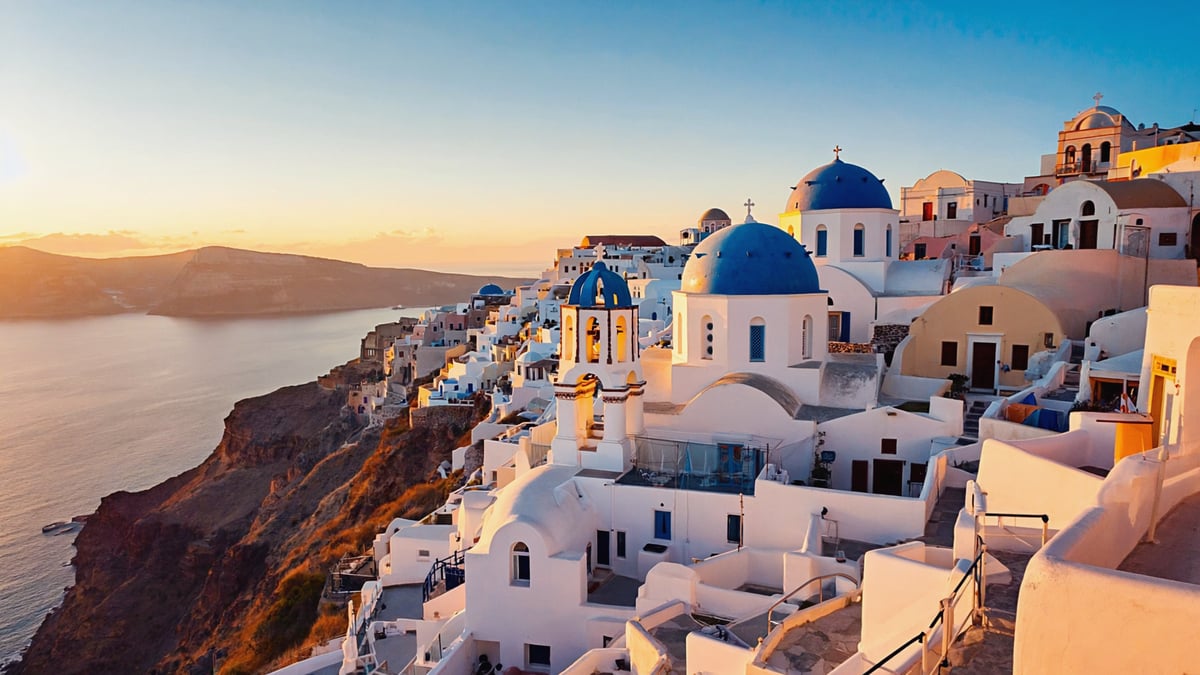
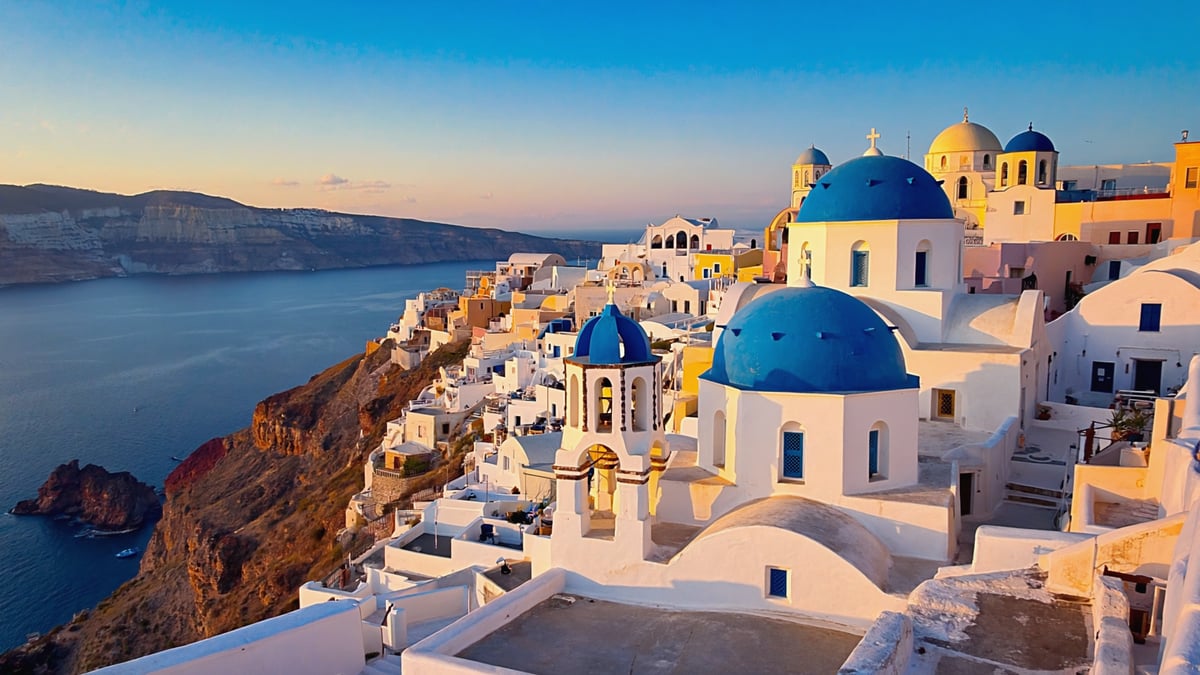
There is a moment that happens to almost every visitor to Santorini — usually somewhere around the second evening, glass of Assyrtiko in hand, watching the sun dissolve into the Aegean in a slow explosion of amber and violet — when the idea of ever leaving feels genuinely absurd. It is the kind of place that earns its reputation not through marketing, but through sheer, overwhelming beauty. The caldera. The cave houses carved into volcanic cliffs. The blue-domed churches. The silence of Oia at dawn before the cruise ship crowds arrive. Santorini is not a destination that needs selling. It needs navigating.
And that is precisely what this guide is for. Whether you are planning a Santorini holiday in 2026 for a honeymoon, an anniversary, a family break, or simply because you have promised yourself this trip for long enough — the difference between a good Santorini experience and an unforgettable one comes down to when you go, where you stay, what you prioritise, and what you quietly skip. This guide covers all of it, with honest advice, real pricing in pounds, and practical detail that goes well beyond the standard brochure copy.
Santorini at a Glance: What Kind of Island Is This, Really?
Santorini (officially Thira) is a volcanic island in the southern Aegean Sea, part of the Cyclades archipelago in Greece. It sits approximately 200 kilometres south-east of mainland Greece and is technically the remains of a massive volcanic caldera formed by one of the largest eruptions in human history, estimated to have occurred around 1,600 BCE. The result is a landscape unlike any other in Europe: steep cliffs dropping hundreds of metres to an almost perfectly circular bay, with the villages of Fira and Oia perched dramatically along the rim.
The island covers roughly 76 square kilometres and is home to a permanent population of around 15,000 people — a number that swells enormously during peak summer months when tourist arrivals can exceed 10,000 per day. Understanding that tension between intimacy and overcrowding is essential to planning a trip here well.
Essential Facts for UK Travellers
| Category | Details |
|---|---|
| Official Name | Thira (Santorini) |
| Country | Greece (EU member state) |
| Language | Greek (English widely spoken in tourist areas) |
| Currency | Euro (€) — approximately £1 = €1.17 (2026 rates) |
| Time Zone | EET (UTC+2 in summer; UTC+3 during EEST) |
| Ahead of UK | 2 hours ahead during British Summer Time |
| Flight Time from UK | Approximately 3.5–4 hours from London |
| Visa Requirements | UK passport holders do not require a visa for stays under 90 days within a 180-day period. Greece participates in the EU's ETIAS authorisation scheme, which UK travellers will need to obtain (fee: €7). Check current entry requirements with the UK Foreign, Commonwealth & Development Office before travelling. |
| Electricity | 230V, Type C/F plugs — bring an adaptor |
| Driving Side | Right-hand side |
Post-Brexit, UK travellers visiting Greece are treated as third-country nationals under EU rules. Your passport must be valid for at least three months beyond your planned departure date and must have been issued within the previous ten years. Always check the latest FCDO guidance before travel, as entry requirements can be updated.
When Should You Actually Visit Santorini in 2026?
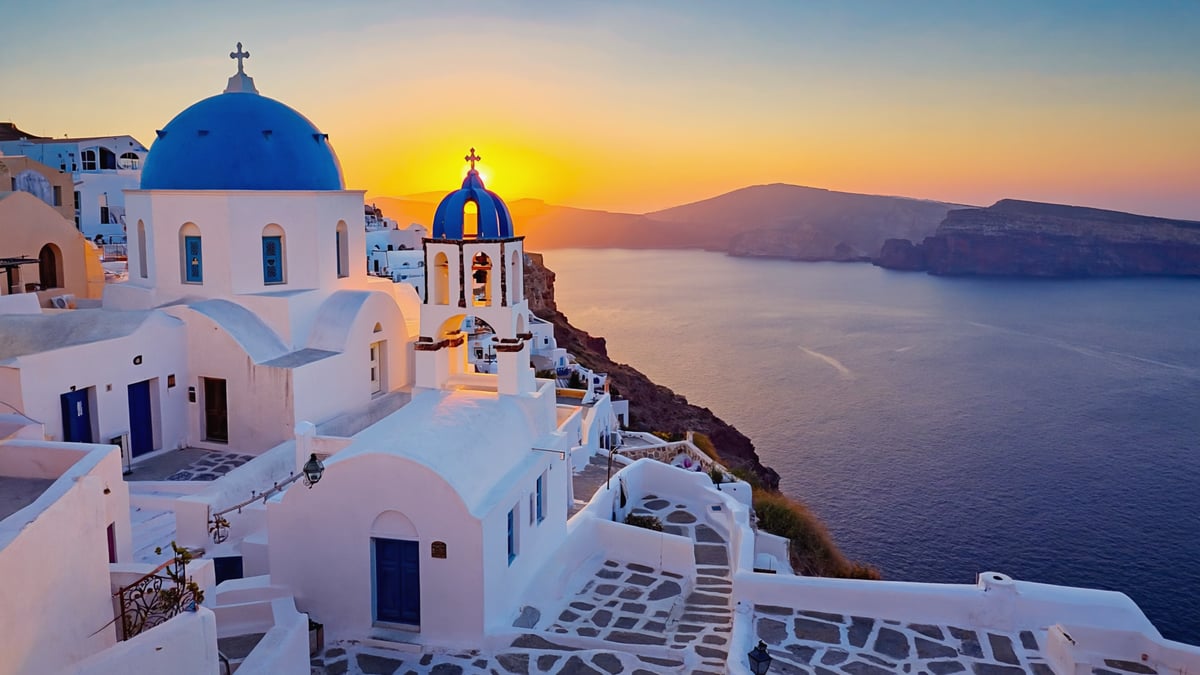
The honest answer most travel guides avoid giving: July and August are the worst months to visit Santorini for first-time travellers who care about experiencing the island rather than simply surviving it. Yes, the weather is perfect. Yes, everything is open. But the crowds at Oia for sunset can number in the thousands, accommodation prices reach their annual peak, and the narrow cobblestone pathways of Fira become genuinely difficult to navigate. The optimal window for most UK travellers is late May through June, or September into early October.
Month-by-Month Breakdown
| Month | Avg Temp (°C) | Crowd Level | Price Level | Verdict |
|---|---|---|---|---|
| April | 16–19°C | Low | £ | ⚠️ Cool evenings, most venues open. Good for walkers. |
| May | 20–24°C | Medium | ££ | ✅ Excellent balance of weather, value, and accessibility. |
| June | 25–28°C | Medium-High | ££–£££ | ✅ Ideal — warm, manageable, full season in swing. |
| July | 28–32°C | Very High | ££££ | ❌ Peak crowds, peak prices. Meltemi winds begin. |
| August | 28–33°C | Extreme | ££££ | ❌ Busiest month of year. Book 12+ months ahead. |
| September | 24–27°C | Medium | £££ | ✅ Arguably the best month — warm sea, thinning crowds. |
| October | 20–23°C | Low-Medium | ££ | ✅ Great value, quieter, some venues closing mid-month. |
| Nov–Mar | 10–16°C | Very Low | £ | ⚠️ Most businesses closed. For off-season explorers only. |
The Meltemi factor: Between July and August, a strong northerly wind called the Meltemi sweeps through the Aegean. It keeps temperatures slightly more bearable but can make boat trips uncomfortable and occasionally disrupts ferry services. If your plans include a sailing excursion or volcano boat trip, factor this in when choosing your travel window.
Santorini does not have major annual music festivals in the way that, say, Mykonos does. However, the island celebrates Greek Orthodox Easter with remarkable intensity — if you are visiting in late April 2026 (Easter falls on 12/04/2026), expect extraordinary candlelit processions, particularly in Pyrgos village, which is considered one of the finest Easter destinations in all of Greece.
Where to Stay: Choosing the Right Base on the Island
Where you stay in Santorini has a disproportionate impact on the quality of your holiday. The island is small but the geography — a crescent-shaped caldera rim with villages connected by winding roads — means that staying in the wrong area for your travel style can add significant frustration. The key decision is whether you want caldera views (stunning, expensive, often involves steps) or beach access (more relaxed, better value, requires a vehicle or bus to see the famous sites).
Fira (Thira Town) — Best for First-Timers and Mid-Range Budgets
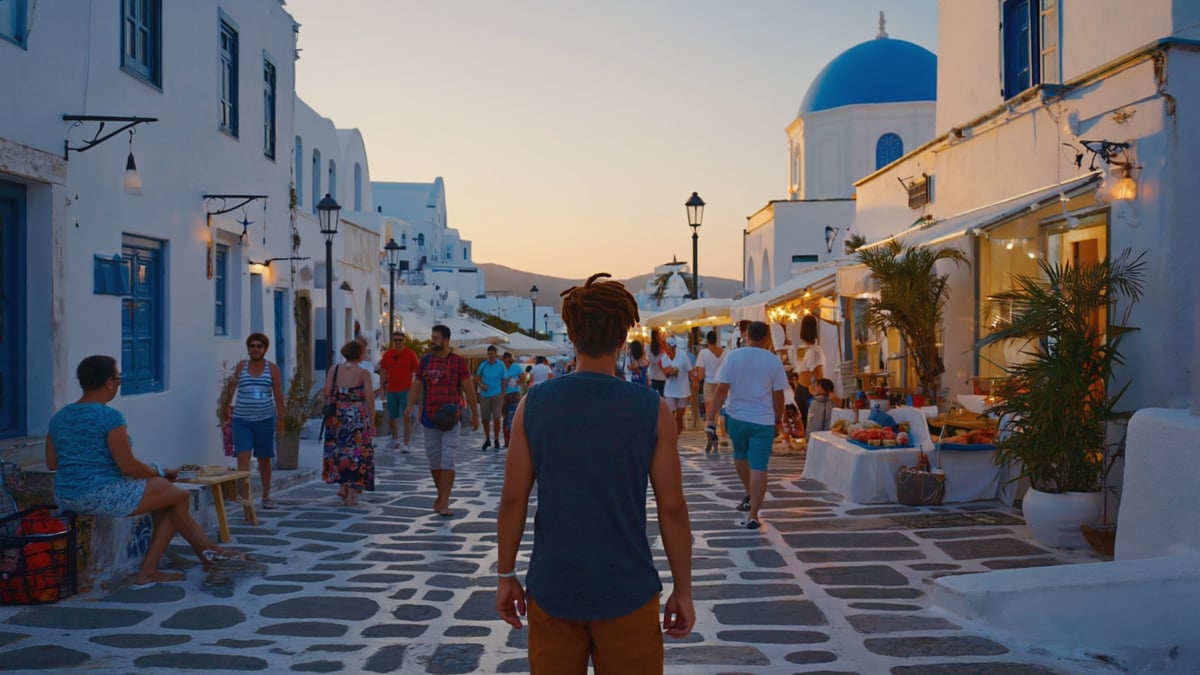
Fira is the island's capital and its busiest hub. It sits dramatically on the caldera rim with spectacular views, plenty of restaurants and bars, and good transport connections to the rest of the island. It is not the most romantic village on Santorini — that honour belongs to Oia — but it is the most practical. Budget travellers will find hostels and small guesthouses from around £35–£60 per person per night. Mid-range hotels with caldera views run £120–£250 per night for a double room. Avoid the very cheapest accommodation on the backstreets behind the main strip — you pay a little less but lose the view that makes Santorini what it is.
Oia — The Most Photogenic, the Most Expensive
Oia (pronounced "Ee-ah") is the village everyone imagines when they picture Santorini: the blue-domed churches, the cave houses, the sunset crowds. It sits at the northern tip of the island and is unquestionably the most beautiful settlement on Santorini. It is also the most expensive and the most visited. Luxury cave hotels with infinity pools here can cost £400–£1,200 per night in peak season. Even mid-range options rarely dip below £200. The streets are narrow and steep — genuinely challenging with luggage — but the experience of wandering Oia at 07:00 before the day-trippers arrive is worth almost any price.
Imerovigli — The Underrated Sweet Spot
Sitting between Fira and Oia on the caldera rim, Imerovigli is the highest point on the island and offers arguably the best unobstructed caldera views of anywhere on Santorini. It is noticeably quieter than both its neighbours, has excellent upscale accommodation, and is a short walk along the caldera path to Fira. This is the area serious repeat visitors tend to choose. Mid-range options start around £150–£250 per night; boutique luxury properties run £300–£600.
Perissa and Perivolos — Beach Access on a Budget
On the south-eastern coast, these twin black-sand beach villages offer a completely different Santorini experience. The beaches are long and volcanic, the vibe is more relaxed, and accommodation costs significantly less. A comfortable apartment here might run £60–£120 per night. The trade-off is that caldera views require a 20-minute drive. Families and budget travellers often find this the most practical base.
Kamari — Family-Friendly with Good Infrastructure
Kamari's beach resort area has a long promenade, good restaurants, and a reasonable selection of mid-range hotels from £80–£160 per night. It is more developed than Perissa but has better facilities for families. The open-air cinema here — Cinema Kamari, one of the oldest outdoor cinemas in Greece — is a genuine delight on a warm evening.
Book Your Santorini Holiday Now
GlobeHunters offers Santorini holiday packages including flights and hotels at competitive prices, with packages starting from £649pp from the UK.
View Package & Prices →Or call us: 0208 944 4514
Top Things to Do in Santorini: 10 Experiences Worth Planning Around
Santorini rewards travellers who plan specific experiences rather than simply arriving and wandering. The island's most famous moments — the Oia sunset, the volcano boat trip, the caldera path walk — all benefit from timing, advance booking, and knowing exactly what to expect. Here are the ten experiences that consistently define a great Santorini holiday, with practical detail that goes beyond the standard recommendation.
1. Watch the Sunset from Oia — But Do It Differently
The Oia sunset is one of the most famous spectacles in European travel, and the crowds reflect that. On a summer evening, the castle ruins viewpoint in Oia can host several thousand people. The insider move: instead of the main viewpoint, walk ten minutes north along the caldera path to the small chapel area, or book dinner at a restaurant with caldera-facing terrace seating — you get the same sunset with a table, a glass of wine, and none of the jostling. Alternatively, visit the sunset from Imerovigli's Skaros Rock for a near-identical view with a fraction of the crowd. No entry fee. Sunset times vary — approximately 20:45 in June 2026, 21:15 in July.
2. Hike the Caldera Path from Fira to Oia
This 10-kilometre trail along the caldera rim is one of the great walks in the Mediterranean. It passes through Firostefani and Imerovigli, offers continuous caldera views, and typically takes 3–4 hours at a moderate pace. Start at 07:00 to avoid the heat and the crowds, finishing in Oia in time for a late breakfast. Wear proper footwear — the path is uneven volcanic rock. Free. Take the local bus back (around €1.80/£1.50) or arrange a taxi.
3. Volcano and Hot Springs Boat Trip
The caldera contains the still-active Nea Kameni volcano, accessible by boat from Fira's old port (Ammoudi). The standard excursion takes 4–5 hours, includes a guided walk on the volcano's crater (it genuinely smells of sulphur and is impressively alien), a swim in the warm volcanic hot springs, and typically a stop at Thirasia, the quieter sister island. Cost: approximately €25–€40 (£21–£34) for the boat; volcano entry is an additional €5 (£4.25). Book through your hotel or at the port. Morning departures recommended.
4. Explore Ancient Akrotiri
Often described as the "Greek Pompeii," Akrotiri is a remarkably preserved Bronze Age settlement buried by the same volcanic eruption that created the caldera. The excavation site is covered by a modern protective roof and contains multi-storey buildings, intact frescoes, and sophisticated drainage systems dating back 3,600 years. Opening hours: typically 08:00–20:00 in summer (verify locally). Entry: approximately €12 (£10.25) for adults. This is genuinely one of the finest archaeological sites in Greece and is often underestimated by first-time visitors drawn to the beaches and sunsets.
5. Wine Tasting at a Caldera Winery
Santorini produces some of Greece's most distinctive wines, particularly Assyrtiko — a bone-dry white with volcanic minerality that has attracted serious international attention. The island's vines are trained in a unique basket shape (called kouloura) that protects them from the Meltemi winds. Wineries worth visiting include Santo Wines (large, cooperative, great views), Domaine Sigalas, and Estate Argyros. Wine tasting sessions typically cost €15–€30 (£13–£26) for three to five wines, often paired with local cheeses and fava. Book ahead in season.
6. Swim at the Red and Black Sand Beaches
Santorini's beaches are volcanic and therefore unusual — Red Beach near Akrotiri has dramatic red cliffs and rust-coloured sand, while Perissa and Kamari feature black volcanic sand. Red Beach is accessed via a short rocky path (take care — cliff erosion means some sections are restricted). Best visited before 11:00 or after 17:00 to avoid peak heat. No entry fee for beaches; sun lounger hire approximately €10–€15 (£8.50–£13) per day.
7. Take a Private Catamaran Sunset Cruise
For couples and small groups, a private or semi-private catamaran cruise around the caldera is one of Santorini's definitive experiences. Most include snorkelling stops, onboard dining (fresh seafood, Greek mezze), and a sunset viewing from the water — which is genuinely superior to the Oia viewpoint. Semi-private tours (small group, maximum 12 people): approximately €120–€160 (£103–£137) per person. Private catamaran hire: from €800–€1,500 (£684–£1,280) for a half day. Book well in advance for peak summer.
8. Visit Pyrgos Village and the Byzantine Castle
Pyrgos is the island's highest and most authentically Greek village — less visited than Oia or Fira, with a medieval castle (kasteli) at its summit offering 360-degree island views. The village has excellent tavernas, a slower pace, and is the best place on Santorini to experience Greek Easter ceremonies. Free to visit. Combine with a stop at Venetsanos Winery on the way back to Fira for a full half-day itinerary.
9. Discover the Museum of Prehistoric Thera
This small but extraordinary museum in Fira houses original frescoes and artefacts from the Akrotiri excavation, including the famous "Spring Fresco" — a swallow-and-lily painting that is one of the finest surviving examples of Minoan art. Entry: approximately €6 (£5.15). Opening hours: typically 08:00–20:00 in summer. Pairs perfectly with a visit to Akrotiri itself.
10. Eat at a Cliff-Edge Restaurant in Fira
The caldera-facing restaurants in Fira are not the cheapest dining option on the island, but the combination of food quality, wine selection, and the sheer drama of eating above a 300-metre volcanic cliff at dusk is an experience that defines Santorini for many visitors. Expect to pay £40–£70 per person for a full dinner with wine. Book at least 48 hours ahead in season for caldera-view tables.
Food and Dining in Santorini: What to Eat and Where to Find It
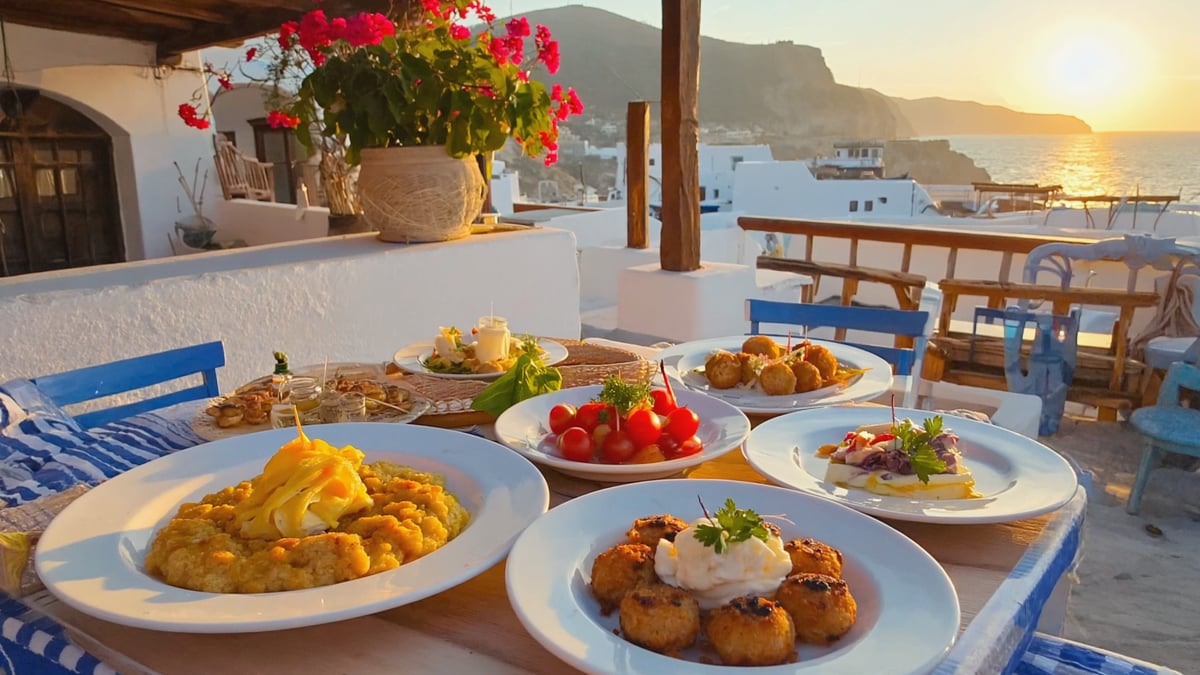
Santorini has a distinct local cuisine that goes well beyond standard Greek taverna fare — and knowing what to order makes a significant difference to the dining experience. The island's volcanic soil, minimal rainfall, and intense sun produce ingredients with concentrated, complex flavours: cherry tomatoes so sweet they bear no resemblance to supermarket varieties, white aubergines with a creamier texture than the purple kind, and the famous Santorini fava — a yellow split pea purée that bears no relation to broad beans despite sharing the name.
Dishes You Must Try
- Fava me Koukia: The island's signature dish — a smooth, lemony purée of Santorini split peas, topped with capers and red onion. Available almost everywhere; quality varies enormously.
- Tomatokeftedes (tomato fritters): Made with the island's famous small tomatoes, fresh herbs, and fried to a crisp. The best versions are intensely savoury and addictive.
- Chlorotyri: A fresh, tangy local cheese made from goat's and sheep's milk — often served drizzled with honey.
- Grilled octopus: A staple of caldera-view restaurants; look for places where it is hung to dry in the sun outside — a reliable sign of quality.
- Loukoumades: Deep-fried honey doughnuts — a street food best found at local festivals and the small shops in Fira's backstreets.
- Assyrtiko wine: The local white grape variety produces wines with extraordinary acidity and volcanic minerality. Order a glass at least once — preferably overlooking the caldera.
Where to Eat: Area by Area
For special occasion dining: The caldera-view restaurants in Fira and Oia are the obvious choice. Expect to pay a premium for the location, but quality in the better establishments is genuinely high. Amoudi Bay, down the steps below Oia, has a cluster of seafood tavernas right at the water's edge — the setting is extraordinary and the fish is exceptionally fresh. Tables here fill up fast; book by 10:00 on the day or the evening before.
For authentic Greek food at fair prices: Head to Pyrgos, Megalochori, or Vothonas — the inland villages that see fewer tourists. A full dinner for two with wine here can cost £40–£60, compared to £100+ for the same quality in Oia. The Messaria area also has well-regarded family-run tavernas that have been serving locals for generations.
Street food and quick bites: The bakeries in Fira open early and produce excellent spanakopita (spinach and feta pie) and tiropita (cheese pie) for around €2–€3 (£1.70–£2.55). For a proper gyros, the options in Fira's back streets are significantly better value than the tourist-facing restaurants. Dietary note: Greek cuisine is naturally accommodating for vegetarians, with an abundance of vegetable dishes, dips, and cheese options. Vegans will find it more challenging but manageable with some communication — the word nistisimo (Lenten food) often signals vegan-friendly dishes in traditional settings.
Getting to Santorini from the UK: Flights, Routes, and Transfers
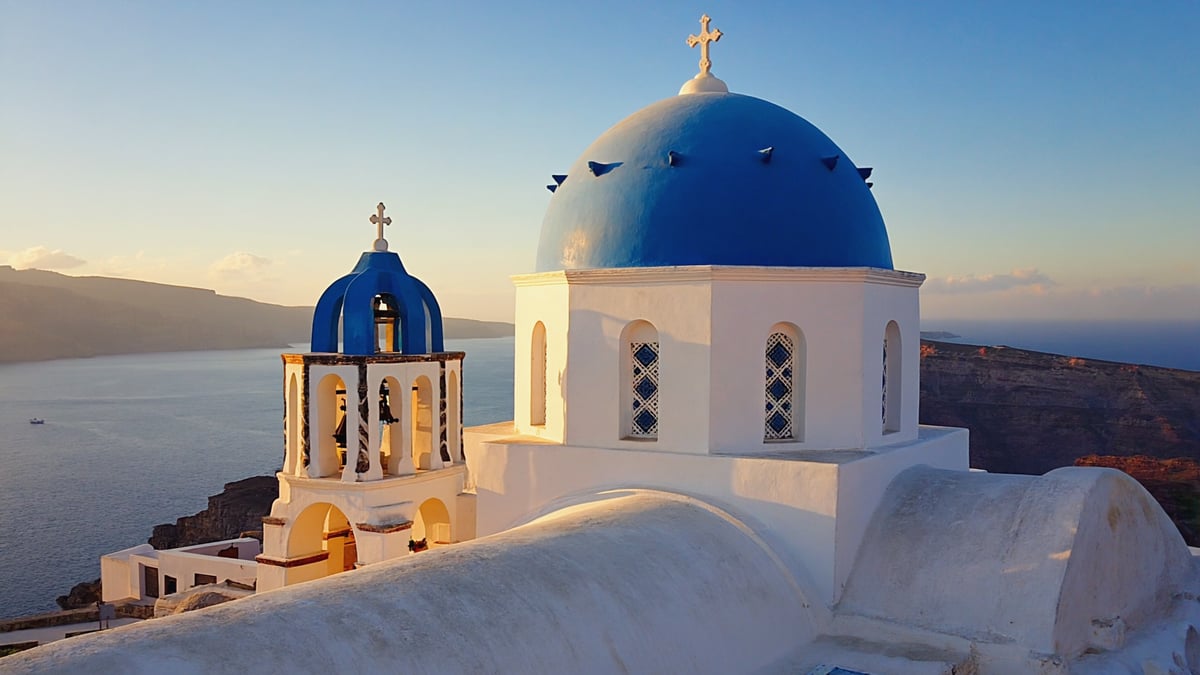
Santorini Thira International Airport (JTR) is a small regional airport located on the south-eastern edge of the island, approximately 5 kilometres from Fira. It handles a large volume of summer charter and scheduled traffic and can be chaotic during peak season — factor in extra time for baggage collection and transfers.
Direct Flights from the UK
Direct flights from UK airports to Santorini operate seasonally (typically late April to late October). Key routes and airlines include:
| UK Airport | Airlines (Typical) | Approx Flight Time | Typical Return Fare Range |
|---|---|---|---|
| London Gatwick (LGW) | easyJet, TUI | 3h 45m | £180–£380 return |
| London Heathrow (LHR) | British Airways | 3h 50m | £220–£450 return |
| Manchester (MAN) | TUI, Jet2 | 4h 00m | £190–£360 return |
| Birmingham (BHX) | TUI, Jet2 | 3h 55m | £185–£350 return |
| Edinburgh (EDI) | Jet2, TUI | 4h 15m | £195–£370 return |
| Bristol (BRS) | easyJet, TUI | 3h 50m | £185–£345 return |
Connecting via Athens: Outside the direct flight season, or for travellers whose nearest airport lacks a direct route, connecting through Athens (ATH) is the standard alternative. Aegean Airlines and Olympic Air operate frequent Athens–Santorini hops (around 45 minutes). The Athens connection can also work as a two-centre holiday — a few nights in Athens followed by Santorini is one of the most satisfying itineraries in Greek travel.
Airport to Accommodation Transfers
Santorini airport is small and transfer times are short. Options include:
- Pre-booked private transfer: £15–£35 depending on destination. Most reliable for caldera villages where road access is complex.
- Public bus (KTEL): Runs from the airport to Fira for approximately €1.80 (£1.55). Infrequent and often crowded in peak season.
- Taxi: Readily available at the airport. Fira costs approximately €12–€18 (£10–£15); Oia €25–€35 (£21–£30).
Important note for caldera village arrivals: If you are staying in Oia, Imerovigli, or the caldera-rim areas of Fira, be aware that vehicles cannot reach your accommodation directly. There will be steps — sometimes many steps — and porters or luggage assistance should be arranged in advance through your hotel.
Santorini Holiday Budget Guide 2026: What Things Actually Cost
Santorini is not cheap — but it is also not as expensive as many travellers fear, provided you plan intelligently. The common mistake is assuming the island operates at one price point. In reality, Santorini has a wide spread: from backpacker-friendly beach hostels to £1,000-per-night infinity pool suites. Here is a realistic daily budget breakdown across three tiers for a UK traveller in 2026, excluding flights.
| Category | Budget (£/day) | Mid-Range (£/day) | Luxury (£/day) |
|---|---|---|---|
| Accommodation (per person, sharing) | £25–£45 | £70–£130 | £200–£600+ |
| Food & drink | £20–£30 | £45–£70 | £100–£200+ |
| Transport (bus/taxi) | £3–£8 | £10–£20 | £25–£60 |
| Activities & entrance fees | £5–£15 | £20–£50 | £80–£200 |
| Total per person per day | £53–£98 | £145–£270 | £405–£1,060+ |
For a 7-night Santorini package holiday from the UK — including return flights, accommodation, and transfers — GlobeHunters packages start from around £649 per person in shoulder season, rising to £950–£1,400 per person for peak summer departures in quality caldera-view hotels. This represents genuinely competitive value compared to booking flights and accommodation separately, particularly given the complexity of Santorini's accommodation landscape.
Money-Saving Tips That Actually Work on Santorini
- Eat lunch at the caldera restaurants, not dinner. Many of the island's best-view restaurants offer identical food at significantly lower prices at lunch — the view is the same, the bill is 20–30% less.
- Use the KTEL bus network. The island's public buses are cheap, frequent between major villages, and perfectly adequate for most inter-village travel. A day's bus travel costs less than a single taxi ride.
- Buy wine at the supermarket. Decent Santorini Assyrtiko costs €8–€14 (£7–£12) in supermarkets versus €40–€70+ in caldera restaurants. Pick up a bottle and enjoy it from your hotel terrace.
- Book activities directly at the port or through your hotel rather than through third-party aggregators, where possible — pricing is often better.
- Travel in May or September — the same experience at meaningfully lower prices across accommodation, activities, and occasionally flights.
Travel Tips, Safety, and Practical Advice for Santorini 2026
Santorini is one of Europe's safest holiday destinations — serious crime is rare and the local population is largely dependent on tourism and therefore genuinely hospitable. That said, there are specific practical challenges the island presents that are worth addressing before you arrive, from physical accessibility to health considerations in the summer heat.
Physical Accessibility and the Steps Problem
This is the most underreported practical challenge of Santorini. The caldera villages — particularly Oia, Imerovigli, and the old port areas of Fira — involve significant numbers of stairs and steep, uneven cobblestone paths. This is beautiful and dramatic, but it presents real challenges for:
- Travellers with mobility impairments or joint conditions
- Parents with pushchairs or young children in carriers
- Anyone arriving with large, wheeled luggage
If this applies to your group, choose accommodation in Fira's upper town (accessible by cable car from the old port — €6/£5.15 each way) or in the beach villages on the east coast. Always confirm with your hotel whether your room involves steps before booking.
Health and Sun Safety
The combination of intense Mediterranean sun, white-painted surfaces reflecting UV light, and the reflective caldera means sunburn risk is higher than travellers typically expect. Use SPF 50+, wear a hat, and carry water — dehydration is a common issue, particularly for those doing the Fira-to-Oia hike. The island has a small hospital in Fira (Therassia Hospital) and several pharmacies; for serious medical issues, evacuation to Athens may be required. Comprehensive travel insurance including medical repatriation coverage is strongly recommended — the FCDO advises all UK travellers to hold appropriate insurance when visiting Greece.
Donkey Rides: An Ethical Consideration
The donkey rides on the 580 steps between Fira's old port and the town above have become a point of ethical concern in recent years, with animal welfare organisations raising issues about the treatment of working animals. Many travellers choose to take the cable car or walk instead. This is a personal decision but worth being aware of before you arrive.
Cultural Etiquette
- Dress modestly when visiting churches — shoulders and knees should be covered. This applies to both men and women.
- Tipping: Not obligatory but appreciated. Rounding up the bill or leaving €2–€5 on restaurant meals is standard practice.
- Haggling is not part of Greek commercial culture — fixed prices are the norm.
- Photography in churches: Always ask before photographing the interior of Orthodox churches. Photography of religious icons is often prohibited.
- Noise levels: The caldera villages are residential communities as well as tourist destinations. Noise after midnight is genuinely disruptive to locals and is taken seriously.
Getting Around the Island
Santorini is small enough to be explored without a hire car, though having one gives you significantly more flexibility. ATV/quad bikes are popular but carry a disproportionate share of the island's tourist accidents — exercise extreme caution, particularly on the winding roads between villages. A standard hire car costs approximately £30–£55 per day in shoulder season. The KTEL bus connects Fira with Oia, Perissa, Kamari, Akrotiri, and the airport on a regular schedule — timetables are posted at the main bus station in Fira.
Packing Recommendations for Santorini
- Comfortable, non-slip walking shoes — not flip-flops for the caldera path
- Reef shoes for volcanic beaches (the black sand gets extremely hot)
- Light layers for evenings — even in summer, sea breezes make evenings cool by 22:00
- EU-compatible plug adaptor (Type C/F)
- Reusable water bottle — tap water is not recommended for drinking; bottled water is inexpensive
- High-SPF sunscreen (often cheaper in UK supermarkets than on the island)
The GlobeHunters Framework: Choosing Your Ideal Santorini Holiday Type
One of the most useful things any Santorini guide can offer is not just information about the island, but a clear-headed framework for matching the island's different experiences to different types of traveller. Industry observation consistently shows that disappointment with Santorini usually comes not from the island falling short, but from a mismatch between expectations and the chosen itinerary. Here is an original decision framework for matching your travel profile to the right Santorini experience.
| Travel Profile | Best Base | Must-Do | Skip | Ideal Duration |
|---|---|---|---|---|
| Honeymoon / Romance | Oia or Imerovigli | Private catamaran, caldera dinner, wine tasting | Peak July/August crowds | 5–7 nights |
| First-Time Visitor | Fira | Caldera hike, Akrotiri, volcano trip, Oia sunset | Nothing — do it all | 5–7 nights |
| Family with Children | Kamari or Perissa | Beaches, Akrotiri, outdoor cinema, village market | Oia in August | 7 nights |
| Budget Traveller | Perissa | Caldera hike, beaches, bus network, local tavernas | Caldera restaurants for dinner | 5–7 nights |
| Food & Wine Enthusiast | Megalochori or Pyrgos | Multiple wineries, Amoudi Bay seafood, cooking class | Tourist-trap restaurants in Oia centre | 7–10 nights |
| Culture & History Seeker | Fira | Akrotiri, Prehistoric Thera Museum, Pyrgos castle, Ancient Thera site | Busy beach clubs | 5–7 nights |
This framework is particularly useful when booking a package holiday — knowing your profile ahead of time means you can specify your preferred base area and have accommodation matched accordingly, rather than defaulting to whichever hotel happens to be featured first in a brochure.
Book Your Santorini Holiday Now
GlobeHunters offers Santorini holiday packages including flights and hotels at competitive prices, with packages starting from £649pp from the UK. Our team can match you to the right area, hotel, and travel dates for your specific travel profile.
View Package & Prices →Or call us: 0208 944 4514
Frequently Asked Questions About Santorini Holidays for UK Travellers
Do UK travellers need a visa to visit Santorini in 2026?
UK citizens do not need a visa for short stays in Greece (under 90 days in any 180-day period). However, Greece participates in the EU's ETIAS travel authorisation system, which UK passport holders are required to obtain before travel. The ETIAS fee is €7 and the authorisation is applied for online. Always check the latest guidance on the FCDO Greece travel advice page before your trip.
What is the best time of year for a Santorini holiday from the UK?
Late May, June, and September are widely considered the optimal travel windows. The weather is warm and sunny, the sea is swimmable, and crowds and prices are significantly more manageable than peak July–August. September has the additional advantage of the warmest sea temperatures of the year, as the Aegean retains summer heat well into autumn.
How many days do you need in Santorini?
Five to seven nights is the sweet spot for most visitors. This allows time to see the main sites (Akrotiri, Oia, the volcano), do a boat trip, explore multiple villages, and have a few genuinely relaxed beach days without feeling rushed. Anything less than four nights tends to feel hurried; more than ten nights and the island's relatively small size becomes apparent.
Is Santorini good for families with young children?
Santorini can work very well for families, provided you choose the right base. The beach villages of Kamari and Perissa are far more family-friendly than the cliff-top caldera villages, with flat walking surfaces, good beach facilities, and a more relaxed pace. The caldera villages involve steep steps and narrow paths that are genuinely difficult with pushchairs and young children. Akrotiri archaeological site is excellent for children aged eight and above.
Is Santorini expensive compared to other Greek islands?
Yes — Santorini is one of the most expensive destinations in Greece. Accommodation, dining at caldera-view restaurants, and private excursions all command a premium. However, the island is not uniformly expensive: beach village accommodation, local tavernas in inland villages, and the public bus network all offer good value. A budget traveller staying in Perissa and eating at local restaurants can manage on £70–£100 per day.
Are there direct flights to Santorini from the UK?
Yes, but only during the summer season (typically late April to late October). Direct flights operate from London Gatwick, London Heathrow, Manchester, Birmingham, Bristol, and Edinburgh, among others. Outside this window, the standard route is to connect via Athens with Aegean Airlines or Olympic Air, adding approximately two hours to the total journey.
What is the Santorini caldera, and why is it significant?
The Santorini caldera is a large volcanic crater, approximately 12 kilometres across, formed by a cataclysmic eruption around 1,600 BCE. The eruption is considered one of the largest in human history and may have contributed to the decline of the Minoan civilisation on Crete. Today, the caldera is a bay surrounded by dramatic cliffs, with the island's most famous villages perched along the rim. The volcano is still technically active — the small island of Nea Kameni at the caldera's centre shows ongoing low-level volcanic activity.
How do I get from Santorini airport to my hotel?
The airport is small and located on the island's south-eastern edge, about 5 kilometres from Fira. Options include: public bus to Fira (approximately €1.80/£1.55, infrequent), taxi (approximately €12–€18/£10–£15 to Fira), or pre-booked private transfer (£15–£35 depending on destination). If your accommodation is in a caldera village, confirm arrangements with your hotel before arrival as vehicle access to some properties is limited.
Can I visit Santorini on a day trip from Athens?
Technically yes — there are daily Aegean Airlines flights from Athens to Santorini taking around 45 minutes. However, a day trip is rarely satisfying given the island's depth of experience. The minimum recommended stay for first-time visitors is three nights; five to seven nights is far preferable. If you are combining Athens with Santorini, a four-night/three-night split is a popular and highly satisfying itinerary.
Is Santorini suitable for solo travellers?
Santorini is welcoming for solo travellers, though it skews heavily romantic in its marketing and atmosphere. Solo travellers often report that the caldera path hike, the volcano trip, and the archaeological sites are easily done independently and are highly rewarding. The beach villages have a more social, backpacker-friendly vibe than the caldera towns. Hostels exist in Fira and the beach villages, and solo traveller communities are active on the island during summer.
What currency should I bring to Santorini?
Greece uses the Euro (€). Credit and debit cards are widely accepted across Santorini, including in most restaurants, shops, and hotels. However, carry some cash for smaller establishments, local bus fares, market purchases, and tips. ATMs are available in Fira and the main villages. UK bank cards with no foreign transaction fees (such as those from Starling, Monzo, or Chase UK) are particularly cost-effective for travel spending in Greece.
How physically demanding is visiting Santorini?
More demanding than many travellers anticipate. The caldera rim villages involve extensive stair-climbing, the Fira-to-Oia hike is a moderately challenging 10-kilometre walk over uneven terrain, and even navigating between restaurants and viewpoints in Oia involves constant climbing. Travellers with limited mobility should base themselves in the beach villages or choose Fira accommodation near the cable car. The island is not pushchair-friendly in its most scenic areas.
The Final Word: Why Santorini Deserves Its Reputation — and How to See It at Its Best
There is a reason Santorini appears more frequently on honeymoon and bucket-list travel boards than almost any other European destination. The combination of extraordinary geological drama, 3,600 years of human history, a world-class wine culture, and some of the most visually striking architecture in the Mediterranean is genuinely difficult to replicate anywhere else in the world. The island earns every superlative it receives.
The key to experiencing that version of Santorini — rather than the overcrowded, overpriced, Instagram-staging-ground that peak August can become — lies entirely in the choices made before you leave home. Travel in May, June, or September. Stay on the caldera rim rather than treating it as a day-trip destination. Wake up before the cruise ship crowds arrive. Eat at inland tavernas as well as the cliff-edge showrooms. Take the hike. Visit Akrotiri. Drink the local wine properly, at a vineyard, with time to understand what makes it remarkable.
Done well, a Santorini holiday 2026 delivers something rare in modern travel: a destination that exceeds expectations. GlobeHunters packages to Santorini are designed to handle the logistics — flights, transfers, and quality accommodation in the right areas — so that the experience itself is exactly what it should be. For those still weighing up their Greece holiday deals for 2026, Santorini package holidays from the UK represent one of the strongest value propositions in Mediterranean travel, particularly in the shoulder season windows where the island reveals itself at its most authentic.
Start Planning Your Santorini Holiday
GlobeHunters offers holiday packages including flights and hotels at competitive prices.
About the author
Spiros Maragkoudakis · Chief Commercial Officer
Ready to Book Your Santorini Holiday?
Our travel experts are ready to help you plan the perfect trip. Call us today or browse our latest deals.
Ready to Start Planning?
Speak to our travel experts for personalised advice and the best deals on your next holiday.
Call 0208 944 4514More Articles
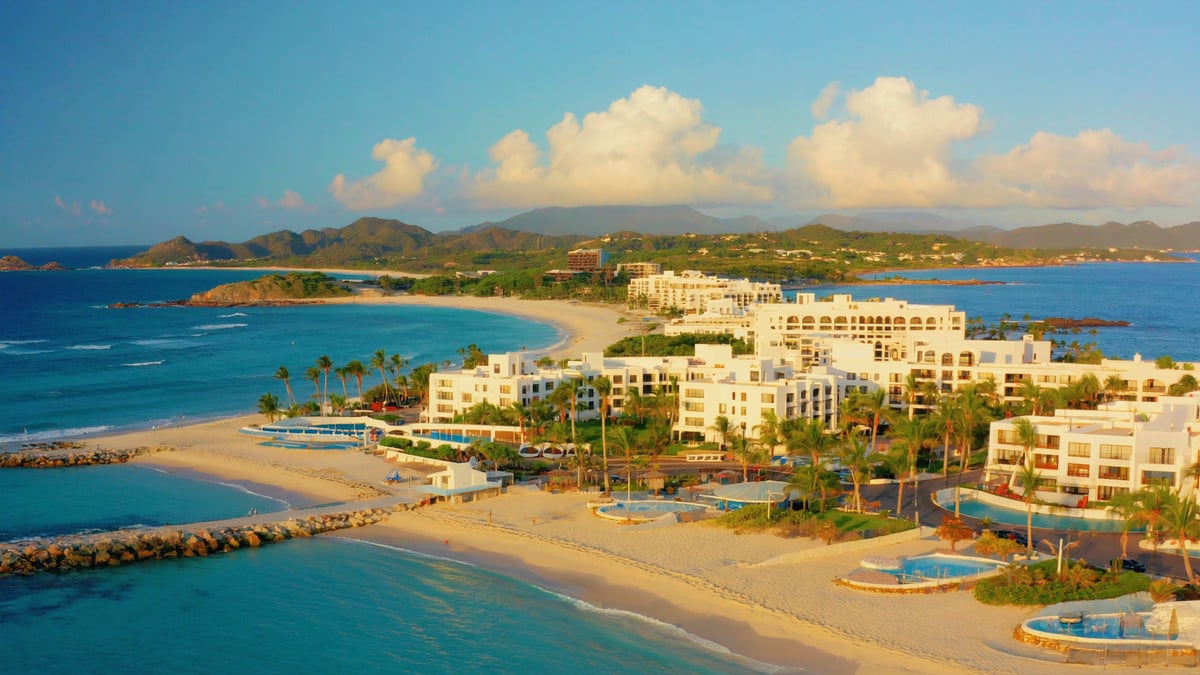
Punta Cana Holiday Guide 2026: Dominican Republic Beach Paradise for UK Travellers
Explore Punta Cana's palm-fringed beaches & all-inclusive resorts in 2026. GlobeHunters packages from £1,099pp including UK flights. Your Caribbean dream awaits.
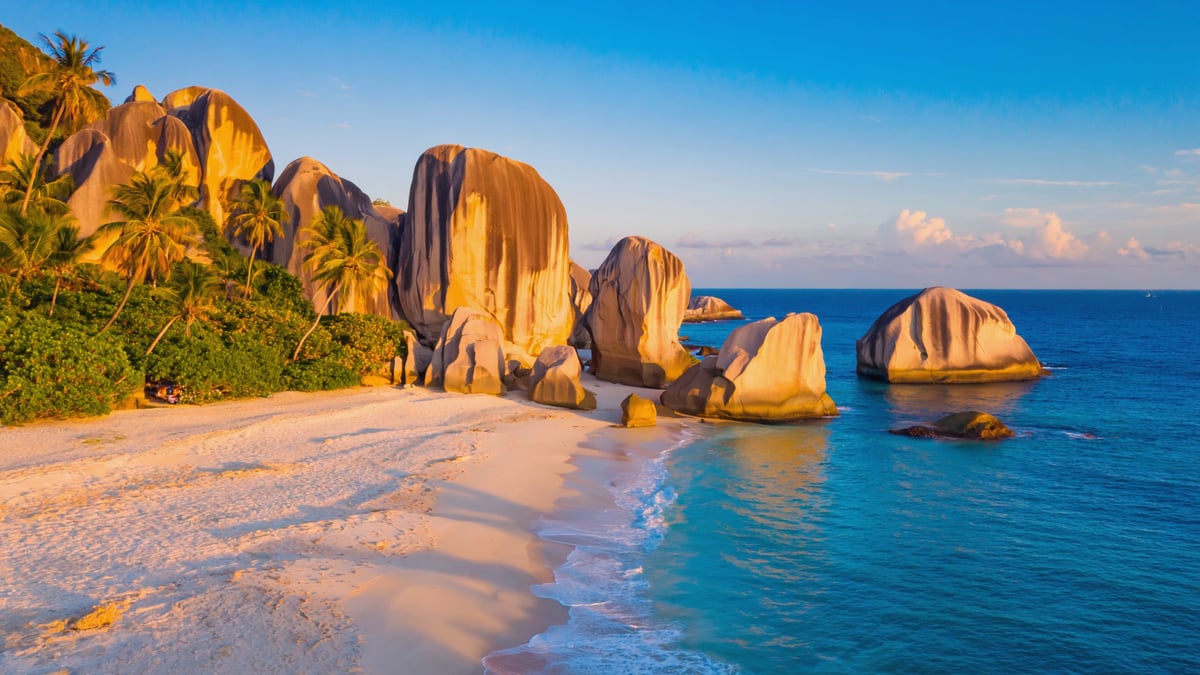
Seychelles Holiday Guide 2026: Ultimate Luxury Island Escape for UK Travellers
Discover the Seychelles' granite boulders, coral reefs & luxury resorts in 2026. GlobeHunters packages from £1,599pp with UK flights. Your tropical island guide.
Lanzarote Holiday Guide 2026: Volcanic Landscapes & Year-Round Sun for UK Travellers
Explore Lanzarote's volcanic beaches, wineries & resorts in 2026. GlobeHunters packages from £399pp including UK flights. The perfect year-round Canary escape.





Multiple British Travel Awards Winner