
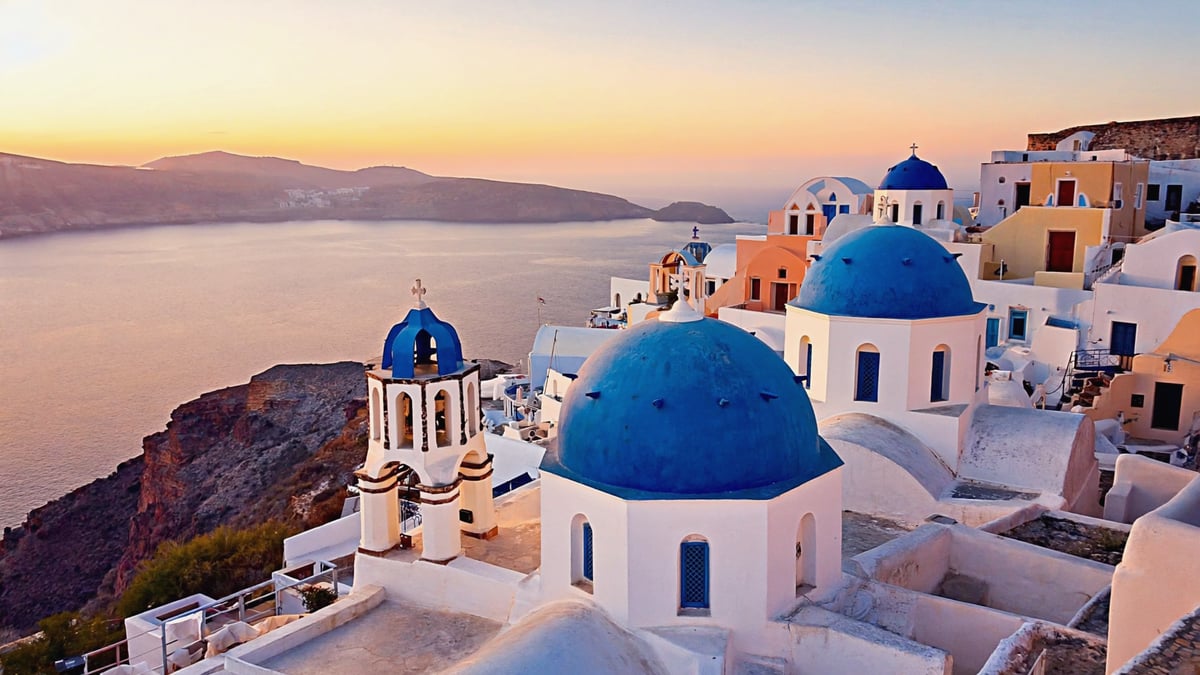
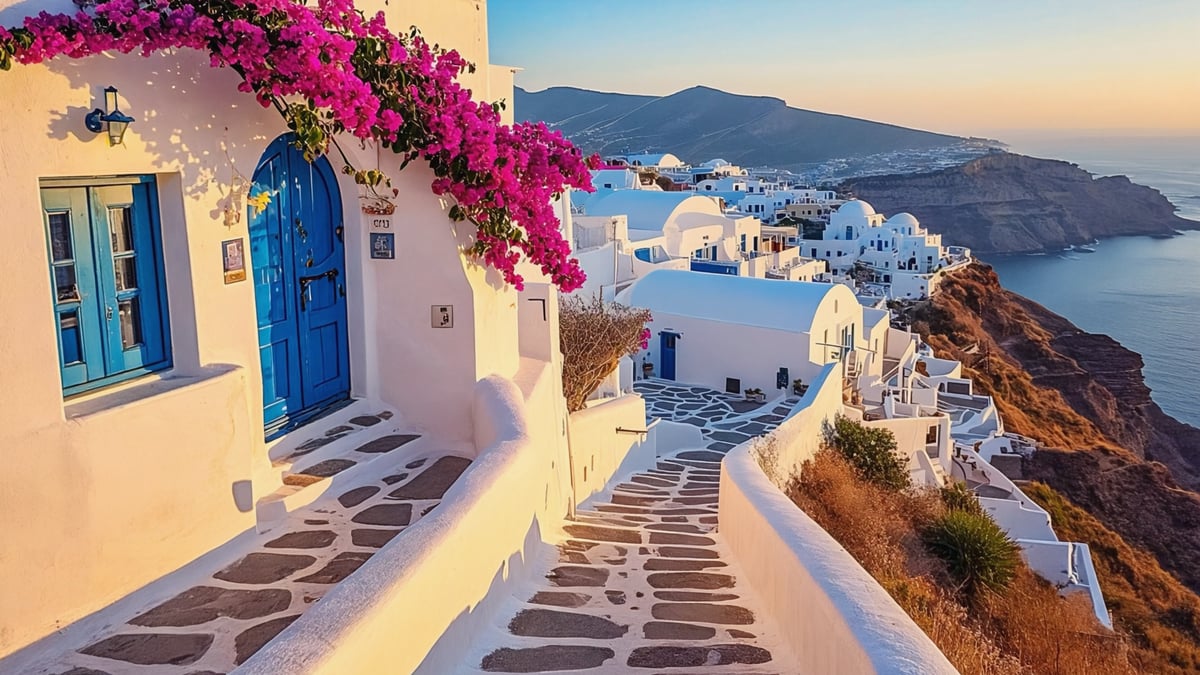
There is a moment — and every traveller who has experienced it will know exactly what you mean — when you round a corner on the caldera path in Oia and the Aegean Sea opens up before you in every shade of blue imaginable. The whitewashed walls glow gold in the afternoon light. The church domes are the precise colour of a summer sky. And somewhere below, several hundred metres down the volcanic cliff face, a catamaran cuts silently through water so clear it looks like glass. This is Santorini. And no photograph, however good, has ever done it justice.
What sets Santorini apart from every other Greek island — and arguably from every other Mediterranean destination — is that it is not merely beautiful. It is dramatically, almost theatrically beautiful. The island sits in the southern Aegean as the remnant of one of the largest volcanic eruptions in recorded human history, a catastrophe so colossal it may have contributed to the collapse of the Minoan civilisation. What remains is a crescent-shaped archipelago surrounding a submerged caldera: a geography that creates cliffs, colours, and sunsets unlike anywhere else on earth.
This guide is written for UK travellers planning a Santorini holiday in 2026 — whether you are booking a romantic escape for two, a honeymoon, or simply treating yourself to the kind of trip you have been putting off for years. We cover everything: when to go, where to stay, what to eat, how to get there, and how to make the most of every day on the island.
Santorini at a Glance: Geography, Practicalities & What Makes It Special
Santorini — officially named Thira (Θήρα) — is a Greek island in the Cyclades group, located in the southern Aegean Sea approximately 200 kilometres north of Crete. The island's dramatic landscape is the direct result of a massive volcanic eruption around 1600 BCE, which created the distinctive crescent shape and the deep caldera that defines the island's western coast. The main island of Thira, along with the smaller islands of Thirasia, Aspronisi, Nea Kameni, and Palea Kameni, forms the Santorini archipelago.
Language: Greek is the official language, though English is very widely spoken in tourist areas. You will have no difficulty communicating in hotels, restaurants, and shops.
Currency: Euro (€). As of mid-2026, the exchange rate hovers around £1 to €1.17–€1.20, though this fluctuates. It is worth checking live rates before you travel and considering a fee-free travel card such as Wise or Starling for the best exchange rates abroad.
Time Zone: Eastern European Time (EET), which is GMT+2 in winter and GMT+3 during Greek Summer Time (roughly late March to late October). During peak summer, Santorini is two hours ahead of the UK.
Visa Requirements for UK Travellers: Since Brexit, UK citizens are no longer EU members, but Greece remains visa-free for UK tourists for stays of up to 90 days within any 180-day period. You will need a valid passport (not just a national ID card) with at least six months' validity remaining. The EU's ETIAS travel authorisation system, which applies to visa-exempt third-country nationals including UK citizens, is expected to be operational in 2026 — check official guidance before booking as this may require a pre-registration fee of approximately €7.
Getting Around the Island: Santorini is relatively compact, but its terrain is hilly and the caldera villages are connected by a cliff-edge road. The main towns are Fira (the capital), Oia (the famous sunset village), Imerovigli, Pyrgos, and Akrotiri. A public bus network (KTEL) connects the major settlements, but taxis can be expensive and scarce in peak season. Hiring an ATV (quad bike) is popular and costs roughly €35–€50/day (approximately £30–£43), though the roads are narrow and can be challenging. Car hire is available but parking in Oia and Fira is nearly impossible in summer.
What Makes Santorini Special: Beyond the famous sunset views, Santorini offers volcanic beaches (with red, black, and white sand), a world-class wine-growing tradition built on ancient indigenous grape varieties, one of the Mediterranean's finest archaeological sites at Akrotiri, and a dining scene that rivals any European city. It is, without question, one of the world's most photogenic destinations — but it is also genuinely rich in culture, history, and experience.
When Is the Best Time to Visit Santorini?
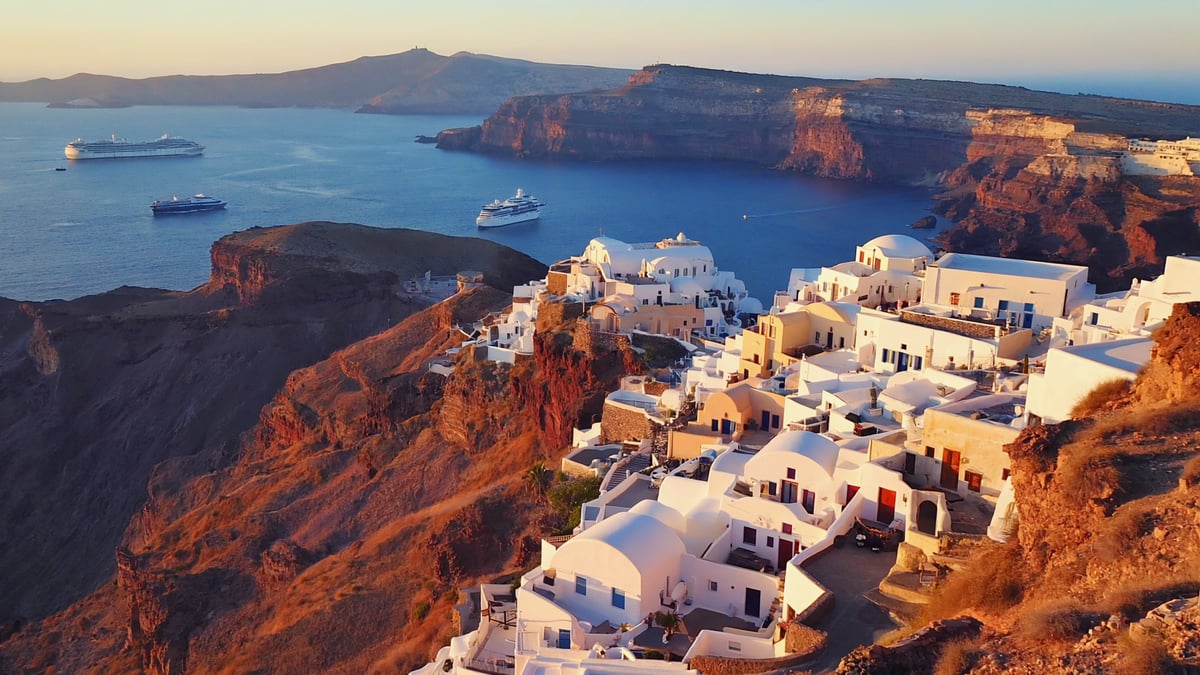
The best time to visit Santorini for most UK travellers is either late April to early June, or September to mid-October. These shoulder seasons offer warm weather, manageable crowds, lower prices, and the full range of restaurants and attractions open for business. July and August are peak season — spectacular but intensely busy and significantly more expensive.
Month-by-Month Breakdown
January–February: Santorini in winter is quiet to the point of being almost deserted. Many hotels, restaurants, and shops close entirely. Temperatures average around 12–14°C, and rainfall is possible. Not recommended for a typical beach holiday, but atmospheric for photographers and those seeking complete solitude. Prices are at their lowest.
March–April: The island begins to wake up. Easter (which falls in late April in 2026) is one of Greece's most important festivals, and Santorini celebrates with candlelit processions, traditional feasts, and a genuine sense of cultural warmth. Temperatures reach 16–19°C. Excellent value, and some of the most authentic experiences available.
May–June: This is arguably the sweet spot. Temperatures reach a comfortable 22–26°C, the sea is warm enough for swimming (though not at its warmest), tourist numbers are manageable, and the island's flowers are in bloom. Hotels and restaurants are fully open. Prices are noticeably lower than peak season. Early June is particularly recommended for couples and honeymooners who want the full Santorini experience without the intense crowds of August.
July–August: Peak season. Temperatures regularly exceed 30°C, occasionally touching 35°C. This is when Santorini's caldera villages become genuinely crowded — the path to the Oia sunset viewpoint can draw hundreds of people on a single evening. Accommodation prices are at their highest, and booking six to nine months in advance is strongly advised. That said, the sea is at its warmest (around 25°C), the atmosphere is electric, and the island is operating at full capacity.
September–October: Many experienced Santorini visitors consider September the finest month of the year. The summer crowds have thinned, prices drop noticeably, temperatures remain warm (24–27°C in September, 20–23°C in October), and the sea stays swimmable well into October. The grape harvest also takes place in September, and some wineries offer harvest experiences.
November–December: The island winds down rapidly after mid-October. A quieter, more introspective experience. Not suitable for beach holidays.
Key Events & Festivals
- Greek Orthodox Easter (April 2026): The most important celebration in the Greek calendar. Midnight church services, fireworks, and traditional lamb feasts on Easter Sunday.
- Ifestia Festival (Summer): An annual fireworks and music festival held in Fira, celebrating the island's volcanic heritage with simulated eruptions and live performances.
- Santorini International Music Festival (September): A classical music festival held in various atmospheric venues across the island.
- Wine Harvest (September): Several of the island's wineries — particularly in the villages of Megalochori and Pyrgos — offer guided harvest and tasting experiences during September.
Where to Stay in Santorini: Neighbourhoods & Accommodation Guide
Where you stay in Santorini will significantly shape your experience of the island. The choice of village matters as much as the hotel itself. The caldera-facing villages of Oia, Imerovigli, and Fira offer the iconic cliff-edge views but are pricier and busier; inland and southern villages like Pyrgos, Akrotiri, and Kamari offer more authentic, quieter experiences at lower prices.
Oia: The Iconic Choice
Oia (pronounced "ee-ah") is the village that defines Santorini in the global imagination. Perched at the northern tip of the crescent, it offers the most dramatic caldera views and the most photographed sunset on earth. The village's pedestrianised main street is lined with boutique hotels, art galleries, jewellers, and restaurants. Staying in Oia puts you at the heart of the Santorini experience, but it comes at a price — expect to pay significantly more than other parts of the island, and to navigate tourist crowds throughout the day.
Best for: Honeymooners, couples, luxury travellers, photographers.
Luxury: Cave-style cliffside suites with private plunge pools, often starting from €400–€700/night in peak season. Many of the world's most-photographed hotel pools are here.
Mid-range: Boutique guesthouses and smaller hotels with caldera views, typically €150–€300/night in shoulder season.
Fira: The Capital & Social Hub
Fira is Santorini's capital and its most connected town — the bus station, main port cable car, and greatest concentration of restaurants and bars are all here. It has caldera views, though the atmosphere is more urban and less intimate than Oia. Fira is the practical choice for first-time visitors who want to explore the whole island easily.
Best for: First-timers, solo travellers, those who want easy transport connections.
Budget: Hostel dorm beds from €25–€40/night; small guesthouses from €60–€100/night.
Mid-range: Caldera-view hotels from €120–€250/night in shoulder season.
Imerovigli: The Quiet Caldera Village
Perched between Fira and Oia on the highest point of the caldera rim, Imerovigli is quieter and more refined than either. It offers some of the most spectacular caldera views on the island — arguably better than Oia for pure panoramic drama — and the famous Skaros Rock hiking trail starts here. A genuine hidden gem for those who value peace and views over nightlife and restaurants.
Best for: Couples, honeymooners, those wanting luxury without the Oia crowds.
Mid-range to luxury: €150–€500/night depending on season and room type.
Pyrgos & Inland Villages: Authentic Santorini
The medieval hilltop village of Pyrgos is the island's highest point and offers stunning 360-degree views without the caldera-side price tags. Several excellent wineries are within walking or cycling distance. The atmosphere is genuinely local — this is where many Santorinians themselves live.
Best for: Budget travellers, wine enthusiasts, those seeking authentic Greek island life.
Budget to mid-range: Traditional guesthouses from €60–€150/night.
Kamari & Perissa: Beach Village Bases
Located on the eastern coast, these twin beach villages sit on Santorini's famous black sand beaches. They are far more affordable than the caldera villages, family-friendly, and offer a more typical Greek beach resort atmosphere. Less dramatic than the west coast, but genuinely enjoyable and great value.
Best for: Families, budget travellers, beach lovers.
Budget: Hotels from €50–€100/night.
Book Your Santorini Holiday Now
GlobeHunters offers Santorini holiday packages including flights from the UK and hotel accommodation — from just £899 per person for 5 nights. Competitive prices, curated options, and expert support from a team that knows the island.
View Package & Prices →Or call us: 0208 944 4514
Top Things to Do in Santorini: 10 Unmissable Experiences
Santorini rewards those who go beyond the sunset viewpoint and explore its volcanic landscape, ancient history, and maritime traditions. Here are ten experiences that genuinely define the island — with practical details to help you plan.
1. Watch the Sunset from Oia
No list of Santorini experiences can begin anywhere else. The Oia sunset is one of the world's great natural spectacles — the sun descends over the caldera and the Aegean turns gold, orange, and deep crimson as it drops below the horizon. The main viewpoint near the Byzantine castle ruins fills up one to two hours before sunset, so arrive early to claim a spot. Alternatively, book a sunset dinner at one of the caldera-edge restaurants nearby (budget €50–€100/person for dinner with wine) for a guaranteed view with a table. Sunset times in June hover around 8:30–9:00 PM; in September, around 7:30–8:00 PM. Free to watch from the public viewpoint.
2. Explore the Akrotiri Archaeological Site
The ancient city of Akrotiri is one of the Mediterranean's finest Bronze Age archaeological sites — a Minoan settlement perfectly preserved under volcanic ash for 3,600 years. Often called the "Pompeii of the Aegean," the site includes multi-storey buildings, sophisticated drainage systems, and remarkable frescoes. Entry costs approximately €12 (around £10) for adults. The site is covered and sheltered, making it a good choice even on hot days. Open Tuesday to Sunday, typically 08:00–20:00 in summer. Hire an audio guide (€3/£2.50) or book a guided tour for full context.
3. Sail the Caldera on a Catamaran
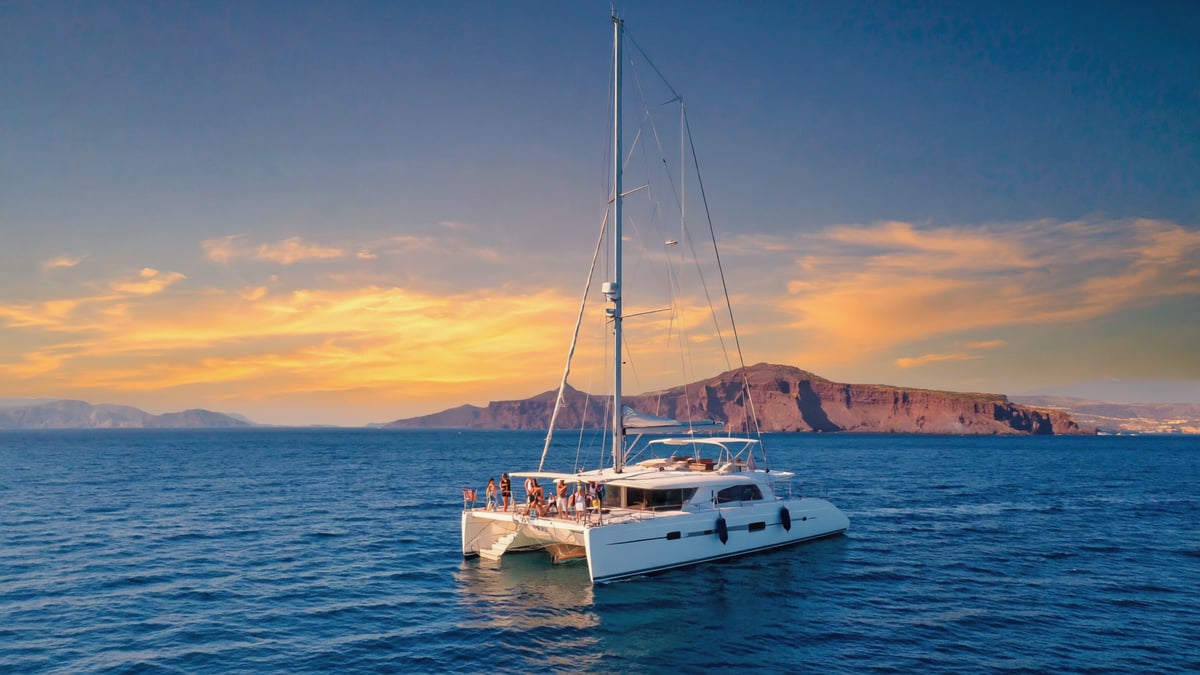
Seeing Santorini from the water is a completely different — and equally spectacular — experience. Catamaran tours of the caldera typically last four to five hours and include stops at the hot springs near Nea Kameni (where you can swim in naturally warm, mineral-rich water), the volcanic island of Nea Kameni itself, and often the Red Beach. Semi-private catamaran tours cost approximately €80–€120 per person (£68–£102), usually including lunch, snorkelling equipment, and open bar. Fully private charters are available from €800–€1,500/day. Book in advance during peak season.
4. Visit the Red Beach and Volcanic Coastline
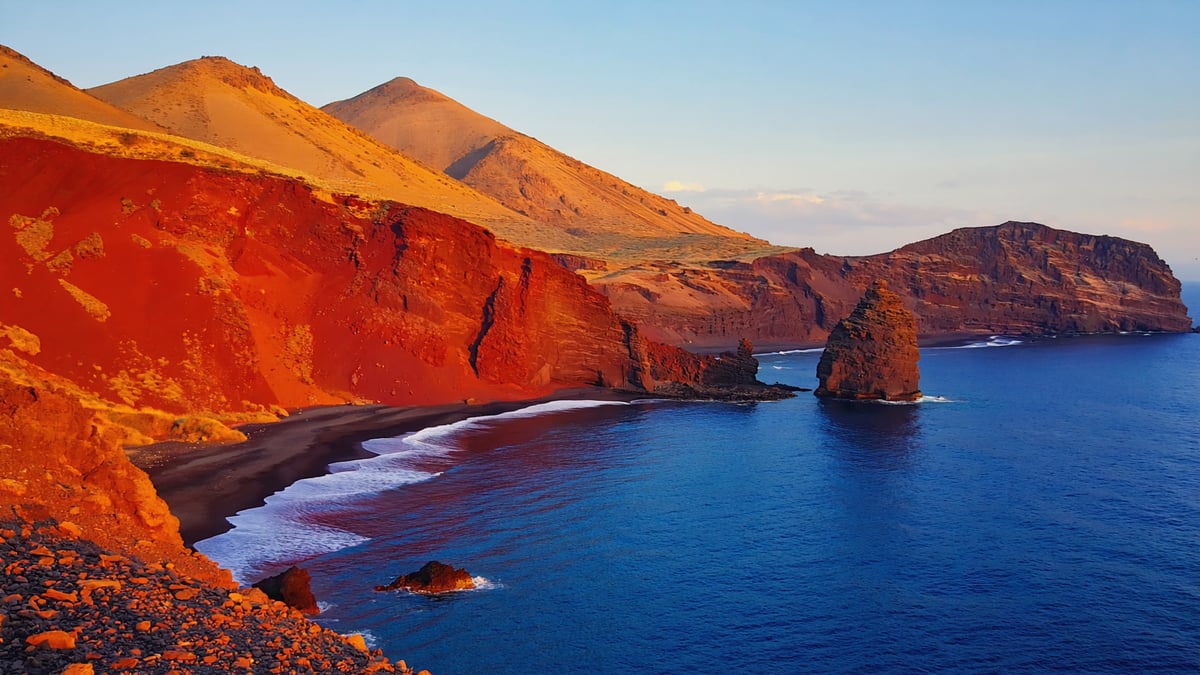
Located near Akrotiri in the island's south, the Red Beach is one of the most visually striking beaches in Europe — dramatic red and black volcanic cliffs towering above dark crimson sand. Access involves a short coastal walk (approximately 10 minutes each way) along a path that can be uneven; wear sturdy footwear. The beach itself has sunbeds (approximately €8–€12/pair) and a beach bar. Note: parts of the cliff face have been subject to rockfall warnings in recent years — stay within designated areas. Free to access.
5. Hike from Fira to Oia
The caldera rim walk from Fira to Oia is one of the finest coastal hikes in Europe — approximately 10 kilometres, taking three to four hours at a leisurely pace. The path follows the cliff edge the entire way, passing through Firostefani and Imerovigli, with unbroken caldera views throughout. The Skaros Rock detour adds another hour but rewards with 360-degree views. Start early in the morning to avoid midday heat (particularly important June–August) and finish in Oia for lunch. Wear proper footwear and carry water. Completely free.
6. Wine Tasting at a Caldera Winery
Santorini's wine heritage is genuinely extraordinary. The island's volcanic soil produces some of Greece's finest wines — particularly Assyrtiko, a crisp, mineral white wine that has earned international recognition, and the rare sweet wine Vinsanto, made from sun-dried grapes. Several wineries offer tastings with caldera views. Look for established estates in the Megalochori, Pyrgos, and Oia areas. Tasting sessions typically cost €15–€35 per person (£13–£30) for three to six wines, often with local mezze pairings. Book ahead for sunset tasting sessions, which sell out weeks in advance in peak season.
7. Explore the Village of Pyrgos
Pyrgos is the island's best-preserved medieval village and its highest point, with panoramic views stretching to the sea on all sides. The village's winding stone alleys, Venetian castle ruins, and collection of small Orthodox churches feel genuinely untouched by tourism — a remarkable contrast to the busy caldera villages. Free to explore. Combine with a visit to a nearby winery for a perfect half-day excursion. The village also has a handful of excellent local tavernas where prices are noticeably more reasonable than in Oia or Fira.
8. Take a Boat Trip to the Volcanic Islands
Nea Kameni and Palea Kameni sit at the centre of the caldera — active volcanic islands that you can visit by boat from Fira's old port. On Nea Kameni, you can hike to the crater rim and see sulphurous vents still releasing gas. The hot springs near Palea Kameni (water temperature approximately 28–32°C) are a unique swimming experience, though the water is discoloured by minerals. Boat trips from Fira old port cost approximately €15–€20 per person (£13–£17) for a basic excursion. Combined with the caldera catamaran tour, this makes a full day on the water.
9. Discover Perissa and Perivolos Beaches
Santorini's eastern coast has a very different personality to the caldera villages — long stretches of black volcanic sand, beach bars, water sports, and a lively but relaxed atmosphere. Perissa and Perivolos beaches together form a continuous strip of around three kilometres. Water sports including jet skiing, paddleboarding, and parasailing are available. Sunbed hire costs approximately €8–€15/pair. Beach clubs serve food and drinks all day. Free beach access; facilities charged separately.
10. Visit the Museum of Prehistoric Thera in Fira
For those who want to understand the history behind the landscape, the Museum of Prehistoric Thera in Fira is outstanding — and consistently underrated. It houses artefacts and frescoes from the Akrotiri excavations, including the famous "Boxing Children" fresco and remarkable examples of Minoan gold jewellery. Entry costs approximately €6 (£5) for adults. Open Tuesday to Sunday, 08:00–20:00 in summer. Small enough to see in 90 minutes, but genuinely fascinating. Combine with a visit to the Archaeological Museum of Thera nearby for a comprehensive introduction to the island's ancient past.
Food & Dining in Santorini: What to Eat, Where to Go
Santorini's food scene is one of the best in the Greek islands — a combination of fresh Aegean seafood, unique local produce grown in the island's volcanic soil, and a dining culture that takes quality seriously. Eating well here is not difficult; eating badly is harder than it looks.
What to Eat: Essential Santorinian Dishes
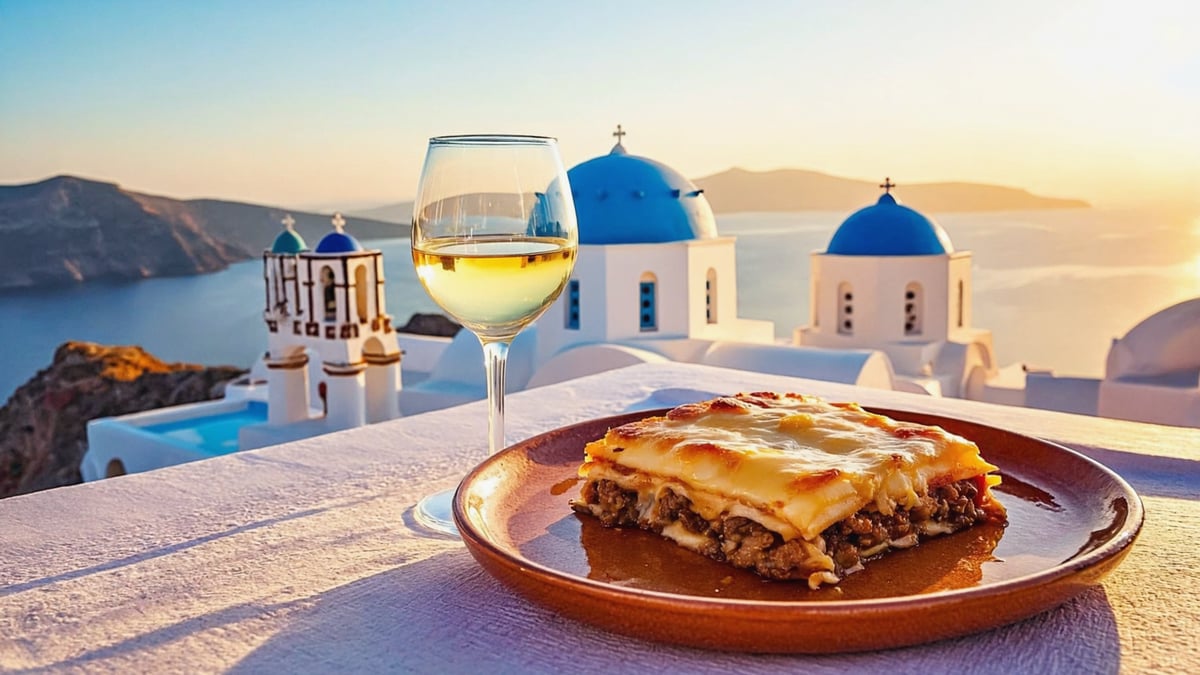
Fava is Santorini's signature dish and a genuine point of local pride — a silky yellow split pea purée made from a unique variety of small yellow lentil grown on the island's volcanic soil for centuries. It is served as a meze with capers, onion, and a drizzle of local olive oil. Try it everywhere, but the best is made from genuine Santorini fava (look for the PDO designation). Tomatokeftedes (tomato fritters) are another island speciality — small, crispy fritters made with Santorini's famous cherry tomatoes, which have an extraordinary sweetness and intensity of flavour due to the volcanic soil and minimal rainfall that concentrates their sugars. They are addictive.
White aubergine (Santorini's local variety) appears on menus across the island — grilled, stuffed, or baked — and has a milder, creamier flavour than standard aubergine. Grilled octopus (htapodi) is a staple of every Greek island, but Santorini's version — dried in the sun and then grilled over charcoal — is particularly good. Order it with a glass of chilled Assyrtiko wine. For dessert, seek out loukoumades (Greek honey doughnuts) from street vendors, or try the local version of baklava with pistachio and honey.
Where to Eat: Area by Area
Oia has the most spectacular settings for dinner — caldera-edge restaurants where you eat with one of the world's great views at your side. Prices reflect this: expect to pay €60–€120 per person for a full dinner with wine at a good restaurant. Budget-conscious visitors should note that the further you walk from the main strip towards the northern end of Oia, the more reasonable the prices become.
Fira has the greatest variety of dining options at all price points — from fast food souvlaki (€3–€5) to mid-range tavernas (€25–€40/person) to upscale restaurants with caldera views. The area around the caldera path in Fira is particularly good for sunset dining at slightly more accessible prices than Oia.
Pyrgos is the best village for genuinely local, value-for-money Greek food. Several family-run tavernas here serve traditional dishes at prices significantly lower than the tourist villages. A full meal with wine costs €20–€35 per person.
Kamari and Perissa have the island's best beach tavernas — relaxed, informal, and excellent value. Grilled fish, salads, and cold Mythos beer with your feet almost in the sand: this is the other side of Santorini, and it is equally valid.
Dietary Considerations
Santorini is relatively easy for vegetarians — Greek cuisine naturally features many vegetable-based dishes, and fava, tomatokeftedes, and grilled vegetables are found everywhere. Vegans may find it slightly harder, as dairy (particularly feta and yoghurt) features prominently, but awareness is growing and most restaurants can accommodate with advance notice. Gluten-free options are limited in traditional tavernas — those with coeliac disease should communicate clearly with staff and focus on naturally gluten-free dishes like grilled meat, fish, salads, and rice dishes.
Getting to Santorini from the UK: Flights, Routes & Transfers
Santorini (Thira) Airport (JTR) is a small regional airport located on the eastern side of the island, approximately 6 kilometres from Fira. Getting there from the UK is straightforward, with good flight options from multiple UK airports.
Direct Flights from the UK
Jet2 operates direct flights to Santorini from several UK regional airports including Manchester, Birmingham, Leeds Bradford, Edinburgh, and Newcastle, typically from late April to late October. EasyJet flies direct from London Gatwick, Bristol, and Manchester. TUI operates charter flights from a wide range of UK airports as part of package holidays. British Airways operates seasonal direct flights from London Heathrow.
Flight duration: Direct flights from London airports take approximately 3 hours 30 minutes to 4 hours. From northern UK airports (Manchester, Edinburgh), direct flights are similar in duration — roughly 3 hours 45 minutes to 4 hours 15 minutes.
Indirect routes: Year-round connectivity is available via Athens (ATH) with Olympic Air, Aegean Airlines, or Sky Express. The Athens–Santorini leg takes approximately 45 minutes. Flying via Athens adds travel time but opens up year-round travel options and can be cost-effective outside peak season.
Ferry Options
If you are combining Santorini with other Greek islands, ferries are an excellent and atmospheric option. High-speed ferries from Athens (Piraeus port) take approximately 4–5 hours; conventional ferries take 7–9 hours but are cheaper. Ferries also connect Santorini with Mykonos (approximately 2–3 hours), Naxos, Paros, and Crete. The Greek ferry booking platform Ferries.gr is a reliable resource for timetables and tickets.
Airport Transfers
From Santorini Airport to Fira, a taxi costs approximately €15–€20 (£13–£17). To Oia, expect to pay €35–€45 (£30–£38). The public bus from the airport to Fira bus station costs around €1.80 (£1.50) and runs regularly in season. Pre-booked private transfers are available from approximately €30–€45 (£25–£38) to Fira, and are recommended if you are arriving late or with heavy luggage. Many hotels in Oia and Imerovigli will arrange transfers directly — worth asking when you book.
Santorini Holiday Budget Guide: What Will It Cost in 2026?
Santorini has a well-deserved reputation as one of Greece's more expensive islands, but the range of experiences available means it can be done on a range of budgets. Here is a realistic daily spending guide for UK travellers, excluding flights and accommodation (which vary enormously).
Budget Traveller: £60–£90 per person per day
This is achievable but requires deliberate choices. Accommodation: Hostel dorms or guesthouses in Kamari, Perissa, or Fira (£30–£50/night). Food: Souvlaki and gyros for lunch (€4–€6), taverna dinners in Perissa or Pyrgos (€18–€25/person), self-catering breakfast from a supermarket. Activities: Focus on free experiences — the Fira to Oia hike, beach time, village exploring. Budget a small amount for entry fees (Akrotiri: £10, Museum: £5). Transport: Public buses (€1.80–€2.50 per journey) or hire a single ATV between two people.
Mid-Range Traveller: £120–£200 per person per day
This is the sweet spot for most UK couples and families visiting Santorini. Accommodation: Boutique guesthouses or smaller hotels with caldera views in Fira or Imerovigli (£80–£150/night for a double room, split between two). Food: Breakfast at the hotel or a café, taverna lunches (€20–€30 for two), and one or two good dinners per week at caldera-view restaurants (€50–€80 for two with wine). Activities: A catamaran tour (€100/person), wine tasting (€20/person), entry fees. Transport: Combination of buses, occasional taxis, and a day's ATV hire.
Luxury Traveller: £300–£600+ per person per day
Santorini can absorb almost any luxury budget. Accommodation: Cliffside cave suite with private plunge pool in Oia (£300–£800+/night). Food: Fine dining at Oia's best restaurants (€80–€150/person), private chef experiences, wine pairing menus. Activities: Private catamaran charter (€800–€1,500/day), helicopter transfers, private guided archaeological tours. Transport: Private car and driver (€150–€250/day).
GlobeHunters Package from £899 per person
GlobeHunters' Santorini package starts from £899 per person for 5 nights including flights from the UK and hotel accommodation. This represents excellent value, particularly when you factor in the convenience of having flights and accommodation arranged together with expert support. For couples, a combined package budget of approximately £1,800–£2,000 covers the package plus a comfortable daily spending allowance for food, activities, and transfers.
Travel Tips & Safety: Everything You Need to Know Before You Go
Santorini is a safe, well-touristed destination with excellent infrastructure for international visitors. That said, a few practical considerations will make your trip significantly smoother.
Safety
Santorini is one of Greece's safest tourist destinations. Petty crime levels are low compared to major European cities, though the usual precautions apply — keep valuables secure, be aware of your surroundings in crowded areas, and use hotel safes for passports and excess cash. The most genuine safety concern is road safety — ATV (quad bike) accidents are the most common cause of tourist injury on the island. If you hire a quad bike, wear a helmet at all times (legally required), drive slowly on the narrow roads, and be extremely cautious on the cliff-edge paths. Consider hiring a car instead if you are not experienced with ATVs.
Cliff path safety: The caldera rim paths are spectacular but can be uneven and have no barriers in places. Wear appropriate footwear and be particularly careful after rain or at night.
Health
No vaccinations are required for travel to Greece from the UK. Greece has a reciprocal healthcare arrangement with the UK — carry a UK Global Health Insurance Card (GHIC), which entitles you to emergency state healthcare on the same terms as Greek residents. However, comprehensive travel insurance is strongly recommended and is essential if you plan any activities like water sports. The island has a health centre in Fira and a hospital, though serious medical cases may be transferred to the mainland.
The summer sun in Santorini is intense — UV index regularly reaches 9–11 in July and August. Use high-factor sunscreen (SPF50+), wear a hat, and stay hydrated. The tap water in Santorini is technically drinkable but tastes strongly of minerals — most visitors buy bottled water.
Cultural Etiquette
Greeks are famously warm and hospitable, and a few simple gestures of cultural respect go a long way. When visiting churches and monasteries (and there are many on Santorini), dress modestly — shoulders and knees covered. Many churches have cover-ups available at the entrance. Tipping is customary but not mandatory — rounding up the bill or leaving 5–10% at restaurants is appreciated. Bargaining is not customary in shops or restaurants, though it may be possible for longer taxi journeys or private tours.
Noise in residential areas — particularly in the caldera villages — is taken seriously. Many of the accommodation areas are in tightly packed village settings where sound carries easily. Keep noise levels down after 11:00 PM.
Packing Essentials for Santorini
- Footwear: Comfortable walking shoes or trail trainers for the Fira–Oia hike and cobbled village streets. The caldera path is uneven throughout.
- Sunscreen and sun hat: Non-negotiable in summer. SPF50+ is recommended.
- Light layers: Evenings can be cooler than expected, particularly in shoulder season. A light cardigan or linen jacket is useful.
- Modest clothing: One or two items for visiting churches — a lightweight sarong or scarf is versatile.
- Reusable water bottle: The island's tap water is safe but mineral-heavy; a filtered bottle reduces plastic waste.
- Camera or phone with a good lens: You will take more photographs here than anywhere else on the trip. Make sure your storage is clear before you arrive.
- Travel adapter: Greece uses Type C and Type F plugs (two round pins), the same as most continental Europe. UK plugs require an adaptor.
- Travel insurance documents: And your GHIC card.
Money & Payments
ATMs are available in Fira and Oia, though queues can form in peak season. Card payments are widely accepted in hotels and most restaurants. Smaller tavernas and market stalls may be cash only — carry some euros for these situations. Avoid airport or hotel currency exchange — use a fee-free travel card (Wise, Revolut, or Starling) or withdraw from ATMs using your bank card for the best rates.
Frequently Asked Questions About Santorini Holidays
Is Santorini worth the expense for a UK holiday?
Yes — Santorini consistently ranks among travellers' most memorable experiences, and the combination of dramatic scenery, excellent food, rich history, and warm weather justifies the premium over cheaper Greek island destinations. That said, careful timing (shoulder season rather than peak) and smart accommodation choices can bring costs down considerably. Package deals from operators like GlobeHunters, starting from £899 per person including flights, offer genuine value.
How many days do you need in Santorini?
Five to seven days is the ideal length for most visitors. Five nights (six days) is sufficient to see the main highlights — Oia sunset, Akrotiri, a catamaran tour, the beaches, and several village explorations — without rushing. A week allows for a more relaxed pace with time for day trips and repeat visits to favourite spots. Three nights is possible but will feel rushed.
When is the best time to visit Santorini from the UK?
Late May to early June, and September, are widely considered the optimal times. These shoulder months offer warm, sunny weather (22–27°C), manageable tourist numbers compared to August, lower prices, and the full range of attractions and restaurants open. July and August are spectacular but intensely busy and significantly more expensive.
Do UK travellers need a visa for Santorini in 2026?
No visa is required for UK citizens visiting Greece for up to 90 days. However, the EU's ETIAS (European Travel Information and Authorisation System) is expected to be operational in 2026 and will require UK travellers to register online before entering Greece. The process is expected to be simple and low-cost (approximately €7), valid for multiple trips over three years. Check the official ETIAS website for the latest status before booking.
Is Santorini suitable for families with young children?
Santorini can be excellent for families, but it requires some planning. The caldera villages of Oia and Imerovigli involve lots of steps, narrow paths, and sheer drops — not ideal with very young children or pushchairs. The eastern beach villages of Kamari and Perissa are much more family-friendly, with flat access to the beach, good facilities, and a relaxed atmosphere. The Akrotiri site is fascinating for older children interested in history. Many of the best family-friendly hotels are based in the beach villages.
What is the currency in Santorini and should I take cash?
The currency is the Euro (€). Most hotels and restaurants in tourist areas accept card payments, but smaller tavernas, market stalls, and local shops often prefer or require cash. Take a mix of card (ideally a fee-free travel card) and a modest amount of cash (€100–€200 for the trip). ATMs are available in Fira and Oia but can have queues in peak season.
Are the sunsets in Oia as good as they look in photos?
Yes — and in many ways, better. The photographs you see of the Oia sunset are real and unfiltered; the colours genuinely are that extraordinary. What photos cannot convey is the atmosphere: the anticipation as hundreds of people gather, the collective silence as the sun drops below the horizon, and the spontaneous applause that often follows. Arrive at least 90 minutes early for the best viewing spots at the castle ruins, or book a caldera-view restaurant for a guaranteed (and more relaxed) experience.
How do I get around Santorini without a car?
The public KTEL bus network connects all major settlements from the Fira bus station, with services running frequently in season (roughly every 30–60 minutes on main routes). Taxis are available but can be scarce in peak season and should be booked in advance for airport transfers. ATV (quad bike) hire is the most popular option for independent exploration, costing €35–€50/day. Donkeys are available for the traditional path from the old port to Fira, though animal welfare considerations have led many visitors to choose the cable car instead (approximately €6 each way).
What is the water like for swimming in Santorini?
The sea around Santorini is clear, clean, and excellent for swimming, though the island's volcanic geography means beaches differ dramatically from the typical Mediterranean sandy bay. Most beaches have black or red volcanic sand (or pebbles), which absorbs heat and can be very hot underfoot in summer. The sea temperature reaches approximately 24–26°C in August–September, cooling to around 20°C by October. The caldera itself is deep (up to 400 metres) and not suitable for swimming from the cliff villages.
Is Santorini good for a honeymoon?
Santorini is one of the world's most popular honeymoon destinations, and for very good reason. The combination of spectacular scenery, intimate cave-suite hotels with private plunge pools, exceptional dining, and the island's inherently romantic atmosphere make it almost perfectly suited to couples celebrating. Many hotels in Oia and Imerovigli offer specific honeymoon packages with champagne, flowers, and private sunset terraces. Book well in advance — the best rooms sell out six to twelve months ahead for June–September.
What should I wear in Santorini?
Light, breathable clothing is ideal for summer — linen, cotton, and technical fabrics. Comfortable walking shoes or trail trainers are essential (sandals are fine for evenings but not ideal for hiking). Cover-ups for church visits are required (shoulders and knees covered). Evenings in shoulder season can be cooler than expected — a light layer is useful. The whitewashed villages and dramatic scenery make Santorini one of the world's most photogenic destinations, so many visitors pack slightly smarter outfits for evening dining and sunset watching.
Can I do a day trip to Santorini from Athens?
Technically yes — a 45-minute flight from Athens to Santorini makes a day trip possible. However, it is a very rushed experience and does not do justice to the island. Santorini really rewards at least three or four nights; five is ideal. If you are based in Athens for a longer Greece trip, consider a multi-night island hop combining Santorini with Mykonos or Naxos by ferry.
The Final Word: Why Santorini Belongs on Your 2026 Travel List
Some destinations are famous because they are convenient. Some are famous because they are affordable. And a very few are famous simply because they are extraordinary — places that genuinely live up to the hype, that deliver the experience they promise, and that leave you with memories that do not fade with time. Santorini is unambiguously in this last category.
The caldera views are as breathtaking as advertised. The sunsets in Oia are as moving as the photographs suggest. The food — built on volcanic soil, ancient grape varieties, and a genuine culinary tradition — is far better than it needs to be. And the island's history, from the Bronze Age city buried under ash at Akrotiri to the Venetian castles and Ottoman-era churches scattered across its hilltops, gives depth and context to what could otherwise be merely a beautiful backdrop.
Santorini in 2026 is a destination that rewards thoughtful planning. Go in late May, June, or September to avoid the worst of the summer crowds. Stay in Imerovigli or Pyrgos if you want caldera drama without Oia's prices. Eat at village tavernas as often as you eat at sunset restaurants. Hire a local guide for Akrotiri. Walk the caldera path at dawn. And book your catamaran tour before you arrive, because the best ones sell out weeks in advance.
If you have been putting off this trip — telling yourself you will go next year, or that it is too expensive, or that everywhere you look you have already seen the photographs — stop putting it off. The photographs do not capture it. The videos do not capture it. The only way to understand what Santorini actually is, is to go.
Book Your Santorini Holiday Now
GlobeHunters offers holiday packages including flights and hotels at competitive prices. Our Santorini package starts from £899 per person for 5 nights — flights from the UK and hotel accommodation included. With expert support from a team operating since 2003, booking your dream Santorini holiday has never been easier.
View Package & Prices →Or call us: 0208 944 4514
Ready to Book Your Santorini Holiday?
Our travel experts are ready to help you plan the perfect trip. Call us today or browse our latest deals.
Ready to Start Planning?
Speak to our travel experts for personalised advice and the best deals on your next holiday.
Call 0208 944 4514Holiday Packages You Might Like
Curated trips matched to this guide — flights, hotels & experiences included.
More Articles
Amalfi Coast vs. Santorini: Which Mediterranean Escape is Right for UK Travellers?
Amalfi Coast or Santorini? Compare scenery, costs, best areas & UK package prices to find your perfect Mediterranean holiday. Honest advice from GlobeHunters.
Maldives vs. Bora Bora: The Honest UK Traveller's Guide to Choosing Your Overwater Paradise
Maldives or Bora Bora? We compare costs, flights, resorts & experiences so UK travellers can choose the perfect luxury island escape. Packages from GlobeHunters.
Bora Bora Holiday Guide: Overwater Bungalows, Lagoons & UK Package Deals
Plan your Bora Bora holiday from the UK. Discover overwater bungalows, turquoise lagoons & GlobeHunters package deals. Flights, hotels & activities included.