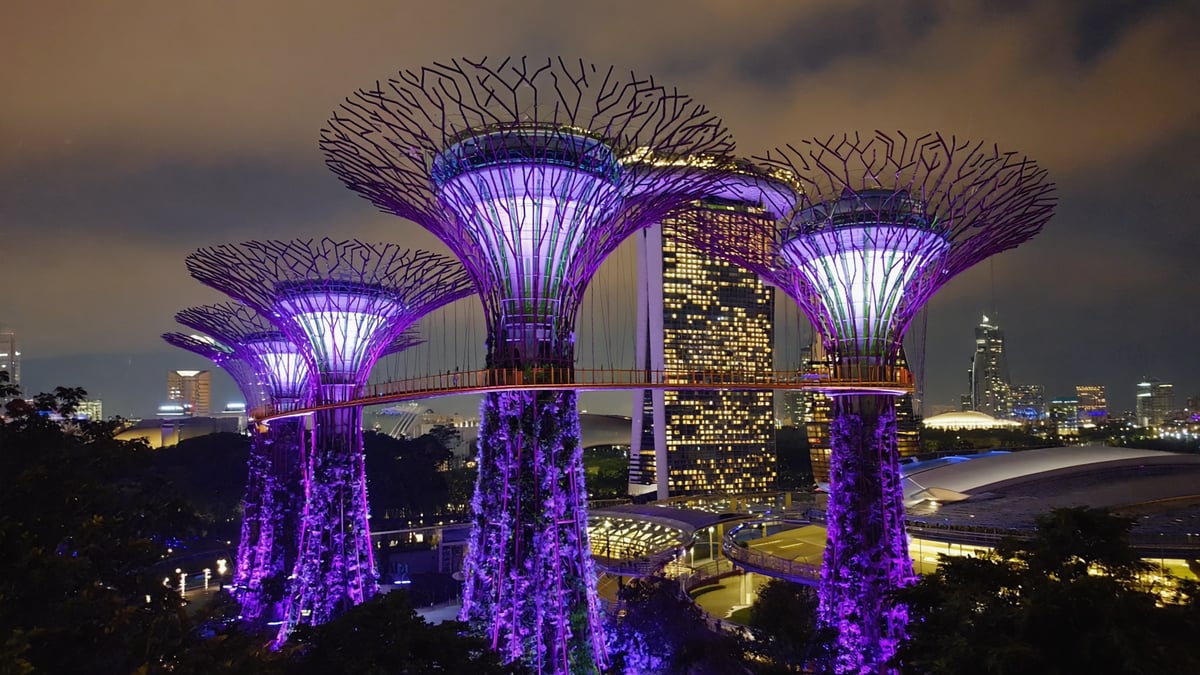
There is a city on this planet where you can eat a Michelin-starred meal at a hawker centre for under £3, fall asleep in a hotel room suspended 57 storeys above a glittering bay, and walk through a forest of towering illuminated supertrees — all in the same evening. That city is Singapore, and it consistently defies every expectation a first-time visitor brings to it. This is not a destination that eases you in gently. From the moment you step off the plane into Changi Airport — regularly voted the world's best — Singapore announces itself as something categorically different: a city-state that has compressed centuries of ambition into just over 700 square kilometres, and made it work spectacularly well.
For UK travellers in 2026, Singapore sits in a sweet spot that few destinations can match. It is long-haul enough to feel genuinely exotic, yet English-speaking and impeccably organised enough to be completely stress-free. It is expensive by Southeast Asian standards, yet extraordinary value compared to London, Paris, or Tokyo. Whether you are planning a honeymoon, a family adventure, a solo city break, or a cultural deep-dive with friends, Singapore has a version of itself perfectly calibrated for you. This guide is your definitive roadmap to getting it right.
Book Your Singapore Holiday Now
GlobeHunters offers Singapore holiday packages including flights and hotels at competitive prices — from just £1,099 per person for 5 nights.
View Package & Prices →Or call us: 0208 944 4514
Singapore: An Overview for UK Travellers
Singapore is a sovereign city-state located at the southern tip of the Malay Peninsula, separated from Malaysia by the narrow Johor Strait and sitting just 137 kilometres north of the equator. Its geographic position has shaped everything about it — from its role as one of the world's busiest trading ports to its year-round tropical climate and extraordinary ethnic and culinary diversity.
The island covers approximately 733 square kilometres, making it smaller than Greater London, yet it is home to nearly six million people and one of the world's most dynamic economies. Four official languages are recognised — English, Mandarin, Malay, and Tamil — but English is the primary language of government, business, and daily life, which makes it genuinely one of the most accessible Asian destinations for British travellers. You will have no difficulty navigating menus, transport, or street signs.
Currency: The Singapore Dollar (SGD). In 2026, the exchange rate hovers around SGD 1.70–1.80 to £1, though you should check the live rate before travelling. Most establishments accept major credit and debit cards, and contactless payment is widespread. ATMs are plentiful, and the Wise or Revolut card remains the savvy traveller's best friend for avoiding unnecessary conversion fees.
Time Zone: Singapore Standard Time (SST), which is UTC+8. This puts Singapore 7 hours ahead of UK GMT in winter and 8 hours ahead during British Summer Time. Jet lag is real but manageable — most travellers find they adapt within a day or two, particularly if they book an overnight flight and arrive in the morning.
Visa Requirements for UK Travellers: British passport holders do not require a visa for Singapore for stays of up to 30 days under the standard short-term visit pass. However, as of 2026, Singapore operates a Singapore Arrival Card (SGAC) system — a free electronic arrival declaration that must be completed within three days before arrival. This replaces the old paper disembarkation card and takes only a few minutes online. Ensure your passport has at least six months' validity beyond your travel dates.
Electricity: Singapore uses Type G plug sockets — the same three-pin rectangular plugs used in the UK — at 230V/50Hz. British travellers need no adaptor whatsoever, which is a genuinely underrated convenience.
Getting Around: Singapore's Mass Rapid Transit (MRT) system is one of the finest urban rail networks in the world — clean, air-conditioned, punctual, and remarkably affordable. A stored-value EZ-Link card (approximately £10 deposit) covers MRT, buses, and some taxis. Grab (Southeast Asia's equivalent of Uber) is widely used and transparent in pricing. Walking is feasible in many areas, though the equatorial heat demands strategic planning — shade, hydration, and the city's extensive network of covered walkways are your allies.
When Is the Best Time to Visit Singapore?
Singapore sits so close to the equator that its climate does not follow the dramatic seasonal swings that define most destinations. The short answer for UK travellers is that Singapore is visitable year-round — but some months are meaningfully better than others, and understanding the pattern will help you choose the right window and manage your expectations around rain.
Singapore experiences two monsoon seasons. The Northeast Monsoon runs from November through January, bringing heavier and more persistent rainfall, particularly in December and early January. The Southwest Monsoon runs from June through September, bringing drier conditions but still producing regular afternoon thunderstorms — the kind that erupt dramatically at around 3pm, drench everything for 45 minutes, and then vanish as if they never happened.
Month-by-Month Breakdown
January–February: The tail end of the Northeast Monsoon, but also the start of Chinese New Year festivities — one of the most visually spectacular events in Singapore's calendar. Chinatown transforms with lanterns and decorations, and the streets come alive with performances and night markets. Expect some rain and temperatures around 26–29°C. Hotel prices spike around Chinese New Year (late January/early February in 2026), so book well in advance.
March–May: Often considered the most comfortable months to visit. Rainfall decreases, humidity is slightly more manageable, and temperatures sit consistently around 28–32°C. This is the inter-monsoon period — warm, bright, and relatively dry. This is arguably the optimal travel window for most UK visitors. School holiday periods in April can push hotel prices up, so consider March or May for better rates.
June–August: The Southwest Monsoon brings drier overall conditions, and June is a popular month due to the Great Singapore Sale — a citywide retail event that draws shoppers from across the region. School summer holidays make July and August busier and pricier. Temperatures remain consistently hot at 30–33°C with frequent afternoon showers.
September–October: A second inter-monsoon period, often pleasantly warm with manageable rainfall. October features Deepavali preparations in Little India, which is a wonderful cultural experience. This is a relatively under-visited window with competitive pricing — a genuine hidden gem in Singapore's travel calendar.
November–December: The Northeast Monsoon returns, and December is Singapore's wettest month. That said, December also brings the spectacular Christmas light-up along Orchard Road, a major New Year's Eve celebration at Marina Bay, and a festive atmosphere throughout the city. If you can tolerate the occasional downpour, December is genuinely memorable — just pack a compact umbrella and embrace the tropical rain as part of the experience.
Our recommendation for UK travellers: March, May, or October offer the best balance of weather, crowd levels, and value. If you are travelling during school holidays, June or August are your best options — just budget slightly higher for accommodation.
Where to Stay in Singapore: Neighbourhoods and Accommodation Guide
Choosing where to base yourself in Singapore is one of the most important decisions you will make — not because any neighbourhood is unsafe or impractical, but because each one delivers a fundamentally different experience of the city. The good news is that the MRT makes every area accessible from any other, so you are never truly isolated regardless of where you stay.
Marina Bay & the CBD: The Showstopper District
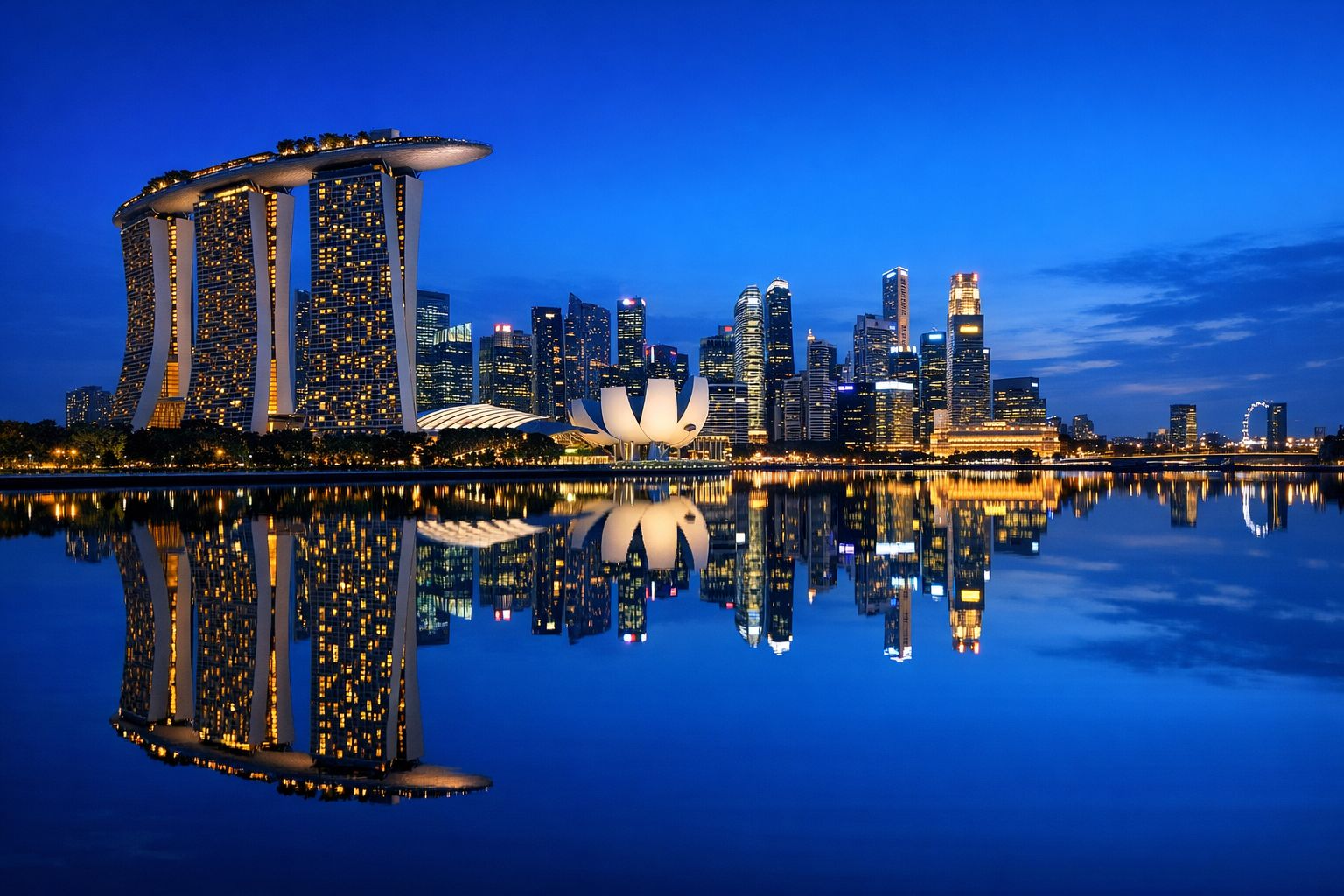
If you want to wake up to the most dramatic skyline in Asia, Marina Bay is your answer. This is where the iconic Marina Bay Sands hotel sits, where Gardens by the Bay sprawls along the waterfront, and where the city's financial district gleams with glass and steel. Staying here puts you within walking distance of the major tourist landmarks and delivers that unmistakable Singapore postcard view every single morning.
Budget: Budget accommodation is limited in this area — you are in the heart of luxury Singapore. Look at capsule hotels or hostels in the adjacent Tanjong Pagar area, from around £30–50 per night.
Mid-range: The Pan Pacific Singapore, Parkroyal Collection Marina Bay, and Sofitel Singapore City Centre all offer excellent mid-range options in the £120–200 per night range.
Luxury: The Marina Bay Sands itself remains one of the world's great hotel experiences. Expect to pay from £350–600+ per night, but the infinity pool access alone — with its 360-degree view of the Singapore skyline — is a transformative experience.
Orchard Road: Shoppers' Paradise
Singapore's famous retail corridor is lined with international hotels, from established five-star brands to solid four-star options. This area suits travellers who want to be close to upscale shopping, excellent restaurants, and a lively street atmosphere. The Mandarin Orchard, Hilton Singapore Orchard, and the Four Seasons are all located here.
Kampong Glam & Arab Street: Culture and Character
One of Singapore's most atmospheric neighbourhoods, Kampong Glam is centred around the Sultan Mosque and offers a fascinating blend of Malay heritage, Middle Eastern influences, and a thriving independent creative scene. Haji Lane — a narrow alley packed with boutique shops, murals, and cafés — is beloved by photographers and style-conscious travellers. Boutique hotels and guesthouses in this area offer excellent value at £80–150 per night, and the neighbourhood has some of the city's best independent restaurants.
Chinatown: Authentic Atmosphere, Great Value
Chinatown delivers one of Singapore's most immersive cultural experiences at prices that are notably more accessible than Marina Bay. Heritage shophouses, excellent hawker centres, and proximity to the CBD make this a strong choice for travellers who want character and convenience without the luxury price tag. Mid-range hotels here typically run £90–160 per night.
Sentosa Island: Resort Living
Sentosa is Singapore's purpose-built resort island, connected to the mainland by a short cable car, monorail, or pedestrian boardwalk. Resorts World Sentosa houses Universal Studios Singapore, multiple beach clubs, and some of the city's most extravagant resort hotels. This suits families and honeymooners who want a more self-contained, resort-style experience. Expect to pay £200–500+ per night for the major resort properties.
Top Things to Do in Singapore: 10 Experiences You Cannot Miss
Singapore packs an extraordinary density of world-class experiences into its compact geography. These are not generic tourist tick-boxes — they are genuinely exceptional things that you will remember years after returning home.
1. Gardens by the Bay
The Supertree Grove — those towering vertical gardens rising up to 50 metres — has become Singapore's defining modern landmark, and it earns every superlative. The OCBC Skywalk, a walkway connecting the tallest supertrees, offers spectacular views and costs around SGD 14 (approximately £8). The two climate-controlled conservatories — the Flower Dome and the Cloud Forest — are extraordinary feats of horticultural engineering. Combined admission runs around SGD 53 (approximately £30) for adults. Open daily 09:00–21:00, with the Supertree Grove free to walk around at ground level. Insider tip: The nightly Garden Rhapsody light and sound show at 19:45 and 20:45 is completely free and genuinely unmissable — stake out a spot on the OCBC Skyway or on the lawn beneath the trees for the best view.
2. Marina Bay Sands SkyPark Observation Deck
Even if you are not staying at Marina Bay Sands, the SkyPark Observation Deck on the 57th floor is worth every penny of its approximately SGD 32 (around £18) admission fee. The panoramic view of Singapore's skyline, the harbour, and — on clear days — the Indonesian islands on the horizon is breathtaking. Open daily 11:00–21:00. Insider tip: Visit at dusk to catch both the golden hour skyline and the illuminated cityscape as night falls.
3. A Hawker Centre Crawl
Eating at Singapore's hawker centres is not just a dining experience — it is a direct encounter with the soul of the city. UNESCO-inscribed Singapore hawker culture represents centuries of culinary tradition from Chinese, Malay, Indian, and Peranakan communities. The classics to order: Hainanese chicken rice, char kway teow, laksa, roti prata, and chilli crab (the latter typically at a seafood restaurant rather than a hawker stall). Maxwell Food Centre, Lau Pa Sat, and Old Airport Road Food Centre are among the most celebrated. Most hawker meals cost SGD 3–8 (£2–5).
4. Sentosa Island & Universal Studios Singapore
Universal Studios Singapore at Resorts World Sentosa is Southeast Asia's only Universal theme park and remains one of the city's top family attractions. Day passes cost around SGD 83 (approximately £47) for adults and SGD 63 (approximately £36) for children. The park features zones dedicated to Hollywood, Madagascar, Far Far Away, and the Sci-Fi City. Open 10:00–18:00 on most days, with extended hours during peak periods. Even without the theme park, Sentosa's beaches (Palawan, Siloso, and Tanjong) are pleasant for a half-day escape.
5. The Singapore Zoo and Night Safari
The Singapore Zoo consistently ranks among the world's best — its open-concept design gives animals far more natural space than traditional caged enclosures. Adult admission is around SGD 48 (approximately £27). The adjacent Night Safari — the world's first nocturnal wildlife park — is a completely different and unforgettable experience, operating from 18:15 to 00:00 with tram rides through habitats of over 900 nocturnal animals. Night Safari admission is approximately SGD 55 (around £31) for adults.
6. Little India and the Sri Veeramakaliamman Temple
The Serangoon Road area, known as Little India, is one of Singapore's most vibrant and visually arresting neighbourhoods. The Sri Veeramakaliamman Temple — dedicated to the goddess Kali and adorned with extraordinary sculptural detail — is free to enter (remove shoes at the entrance). Mustafa Centre, the neighbourhood's famous 24-hour shopping complex, sells everything from electronics to saris to groceries at competitive prices. The area is best explored on foot and is particularly atmospheric in the early evening.
7. Chinatown Heritage Centre
Housed in three restored shophouses on Pagoda Street, the Chinatown Heritage Centre tells the story of Singapore's early Chinese immigrant communities through meticulously recreated living quarters and compelling oral histories. Admission is approximately SGD 18 (around £10) for adults. Open daily 09:00–20:00. This is one of the most thoughtful and well-executed heritage museums in Southeast Asia — do not skip it simply because it lacks the spectacle of the city's modern attractions.
8. Clarke Quay and the Singapore River by Night
Clarke Quay's waterfront strip transforms after dark into one of Singapore's liveliest entertainment districts. The restored colonial godowns (warehouses) now house restaurants, rooftop bars, and clubs. A riverside walk from Clarke Quay to Boat Quay — taking in the Elgin Bridge, the CBD skyline reflections in the water, and the ambient energy of the city at night — costs nothing and is genuinely one of Singapore's most pleasurable free experiences.
9. The Peranakan Museum
The Peranakan people — descendants of early Chinese immigrants who intermarried with local Malay communities — produced one of Southeast Asia's most distinctive and visually magnificent cultures. The newly renovated Peranakan Museum on Armenian Street is dedicated to this heritage, with extraordinary collections of Nyonya beadwork, porcelain, and traditional dress. Admission is approximately SGD 15 (around £9) for adults. Open Tuesday to Sunday, 10:00–19:00.
10. Jewel Changi Airport
This may be the only airport in the world worth visiting as a tourist attraction in its own right. Jewel Changi — the stunning glass-and-steel dome connecting the airport terminals — features the world's tallest indoor waterfall (the HSBC Rain Vortex, cascading 40 metres), extensive shopping, restaurants, and the Canopy Park attraction on the top floor. Even if you are not transiting, Jewel is accessible to non-travellers and makes for a genuinely extraordinary afternoon. The Canopy Park costs approximately SGD 6 (around £3.50) for basic admission.
Singapore's Food Scene: A Culinary Guide for UK Travellers
Singapore's food culture is, without exaggeration, one of the greatest in the world — and it is the single thing that most UK travellers cite when asked what they remember most about the city. This is a place where the question "What shall we eat?" is treated with the same seriousness as a philosophical enquiry, where taxi drivers will detour to recommend their favourite char kway teow stall, and where a world-class meal costs less than a coffee at a London airport.
Essential Dishes to Try
Hainanese Chicken Rice: Arguably Singapore's national dish. Poached or roasted chicken served over fragrant rice cooked in chicken stock, accompanied by chilli sauce, ginger paste, and dark soy sauce. Tian Tian at Maxwell Food Centre is one of the most celebrated versions — expect a queue, but it moves quickly.
Laksa: A rich, spicy coconut milk noodle soup with prawns, fish cake, and cockles. The Katong/Joo Chiat area is famous for its Peranakan-style laksa, where the noodles are cut short and eaten with a spoon alone — a charming local quirk.
Chilli Crab: The dish that has been called Singapore's greatest culinary invention. Whole mud crabs cooked in a tangy, slightly sweet chilli and tomato sauce, eaten messily with fried mantou buns to mop up the sauce. Not cheap — expect to pay SGD 50–80 (£28–45) for a crab at a proper seafood restaurant — but a genuinely unmissable experience.
Char Kway Teow: Flat rice noodles stir-fried at high heat with Chinese sausage, egg, bean sprouts, and cockles in dark soy sauce. The wok hei (breath of the wok) — that smoky, slightly charred quality that can only be achieved in a blazing-hot wok — is the defining characteristic of a great plate.
Roti Prata: The Singaporean version of the Indian flatbread paratha, cooked on a flat griddle and served with curry dipping sauce. The plain prata is an institution; the egg or cheese versions are indulgent upgrades. Best eaten for breakfast or as a late-night snack.
Kaya Toast Set: The quintessential Singaporean breakfast. Toasted bread spread with kaya (a coconut and egg jam), served with two soft-boiled eggs seasoned with dark soy sauce and white pepper, accompanied by a cup of kopi (traditional Singaporean coffee brewed through a cloth sock). Ya Kun Kaya Toast is the most famous purveyor, with outlets throughout the city.
Best Areas for Dining
Hawker Centres: Maxwell Food Centre (Chinatown), Lau Pa Sat (CBD), Old Airport Road Food Centre (Geylang), and Newton Food Centre (near Orchard Road) are the top four for first-time visitors. Each has a slightly different character — Lau Pa Sat is spectacular in its Victorian cast-iron architecture, while Old Airport Road is where locals go for the most authentic experience.
Joo Chiat / Katong: Singapore's Peranakan heartland offers excellent Nyonya cuisine — the distinctive Straits Chinese cooking that blends Chinese techniques with Malay spices and ingredients. Beef rendang, ayam buah keluak (chicken with black nuts), and kueh (traditional cakes) are highlights.
Dempsey Hill: A former British Army barracks converted into a cluster of upscale restaurants, bars, and lifestyle shops set in lush greenery. This is where Singapore's expat community and well-heeled locals dine on weekend evenings — atmospheric, relaxed, and excellent.
Dietary Considerations: Singapore is one of the most dietary-friendly destinations in Asia. Vegetarian and vegan options are widely available, particularly in Indian and Chinese hawker stalls. Halal certification is common across many establishments. Gluten-free is less standardised, but English communication makes it easy to ask about ingredients. Nut allergies should be communicated clearly, as peanuts and cashews feature widely in local cooking.
Getting to Singapore from the UK: Flights, Airlines, and Transfers
Singapore is one of the UK's most well-connected long-haul destinations, served by multiple airlines on direct and one-stop routes. The journey is significant — this is a roughly 13-hour flight from London — but the destination makes every hour worthwhile, and Singapore Changi Airport makes the arrival experience arguably the best in the world.
Direct Flights
Singapore Airlines operates non-stop flights from London Heathrow to Singapore Changi multiple times daily. Flight duration on the direct route is approximately 12 hours 45 minutes eastbound and around 14 hours westbound. Singapore Airlines consistently ranks among the world's top airlines and the journey itself — particularly in Business or Premium Economy — is a genuine pleasure. Economy class on direct flights typically ranges from £650–1,100 return depending on season and booking timing.
British Airways also operates direct flights from London Heathrow to Singapore Changi, with comparable pricing and journey times.
One-Stop Flights
Emirates (via Dubai), Qatar Airways (via Doha), Cathay Pacific (via Hong Kong), and Turkish Airlines (via Istanbul) all offer one-stop connections from various UK airports including Manchester, Edinburgh, Birmingham, and Glasgow, as well as Heathrow. These routes can be significantly cheaper — sometimes £400–700 return — and are worth considering if you are flexible on journey time. Connections add 3–6 hours to the total travel time depending on layover duration.
From Changi Airport to Your Hotel
Changi Airport is one of the best-connected airports to its city centre in the world. Options include:
- MRT (Mass Rapid Transit): The East-West line connects Changi Airport to the city centre in approximately 30–40 minutes. Cost: around SGD 2.50 (approximately £1.40). This is the smartest option for most travellers arriving without excessive luggage.
- Taxi: Metered taxis are available from the official taxi stands. Expect to pay SGD 20–35 (approximately £11–20) to most central hotels, plus airport surcharges. Journey time is 20–35 minutes depending on traffic.
- Grab: Singapore's dominant ride-hailing app often offers competitive pricing and avoids the airport taxi queue. Prices are shown upfront.
- Hotel Shuttle: Many luxury hotels offer private transfers, which can be pre-booked — worth considering if you are arriving with family or heavy luggage.
Singapore Holiday Budget Guide: What to Expect to Spend
Singapore has a reputation for being expensive, and by Southeast Asian standards, it is. By Western European standards, however, it is often surprisingly affordable — particularly for food, transport, and culture. The key is understanding where to spend and where to save.
Budget Traveller: £60–80 per person, per day
A budget traveller staying in a hostel dormitory or budget hotel (£25–40 per night), eating exclusively at hawker centres (£8–15 per day on food), using the MRT for all transport (£3–5 per day), and focusing on free attractions (Gardens by the Bay ground level, Kampong Glam, Chinatown, the Singapore Botanic Gardens — a UNESCO World Heritage Site — are all free) can absolutely have a full and rewarding Singapore experience on this budget. The city's free offerings are genuinely world-class.
Mid-Range Traveller: £120–180 per person, per day
A mid-range budget unlocks comfortable hotel accommodation (£80–130 per night for a quality three-to-four-star hotel), a mix of hawker centre meals and sit-down restaurant dining, paid attractions (Gardens by the Bay conservatories, the Zoo, the SkyPark), and the occasional Grab ride. This is the sweet spot for most UK couples or families visiting Singapore for the first time, and it allows you to experience the city's highlights without compromise.
Luxury Traveller: £250–500+ per person, per day
At the luxury tier, Singapore competes confidently with the world's great cities. Marina Bay Sands, the Raffles Hotel Singapore, the Capella on Sentosa, and the Four Seasons on Orchard Road all offer world-class experiences. Fine dining at restaurants like Odette, Meta, or Les Amis (Singapore consistently produces some of Asia's most decorated restaurants) runs £80–200 per person for a full tasting menu. Private tours, rooftop bar drinks at the height of the MBS infinity pool, and premium seats at the Singapore Grand Prix (if your timing aligns) all add up — but the quality is consistently exceptional.
Practical Budget Tips for UK Travellers
- Use an EZ-Link card for all public transport — it is cheaper than single-journey tickets and works seamlessly across MRT and buses.
- Drink water from the tap — Singapore's tap water is among the safest in the world and buying bottled water daily is an unnecessary expense.
- The Singapore Botanic Gardens, Chinatown, Little India, Kampong Glam, the Southern Ridges trail, and Labrador Nature Reserve are all free and genuinely rewarding.
- Many top museums operate on a free-entry model on certain days — check individual museum websites before visiting.
- Alcohol is heavily taxed in Singapore — a beer at a bar will cost SGD 12–18 (£7–10). Buy from supermarkets (FairPrice, Cold Storage) for a fraction of the price if you want a drink in your room.
Travel Tips, Safety, and Cultural Etiquette for Singapore
Singapore is widely considered one of the safest cities in the world for travellers, and by any objective measure, it is. Violent crime is extremely rare, the city is extraordinarily well-lit and policed, and solo travellers — including women travelling alone — consistently report feeling completely secure at any hour of the day or night. That said, there are important practical and cultural considerations that every UK traveller should understand before arriving.
Laws and Rules
Singapore is famously governed by a strict rule of law, and some rules that UK travellers might consider minor carry significant penalties here. Chewing gum is banned from import and sale (though medicinal gum with a prescription is permitted). Smoking is prohibited in most indoor and many outdoor public areas — including bus stops, pedestrian underpasses, covered walkways, and within 5 metres of any building entrance. Fines for violations can reach SGD 1,000 (approximately £560).
Littering carries substantial fines, and jaywalking (crossing the road outside designated crossings within 50 metres of a crossing) is technically an offence. Drug laws in Singapore are among the strictest in the world — trafficking carries the death penalty, and possession of even small amounts can result in imprisonment. This is non-negotiable and must be taken seriously.
Health Considerations
No vaccinations are specifically required for entry from the UK, but the NHS recommends ensuring routine vaccinations (MMR, tetanus, diphtheria) are up to date. Hepatitis A vaccination is commonly recommended. Dengue fever, transmitted by Aedes mosquitoes that are active during daylight hours, is present in Singapore — apply mosquito repellent containing DEET, particularly if visiting parks, nature reserves, or residential areas. Singapore's hospitals are world-class, but medical treatment is expensive — comprehensive travel insurance is absolutely essential.
Cultural Etiquette
Singapore is a multi-ethnic, multi-religious society and sensitivity to this diversity is both appreciated and straightforward. When visiting temples, mosques, or Hindu shrines, dress modestly (cover shoulders and knees) and remove shoes at the entrance. Photography inside places of worship should be done respectfully and only where permitted. During Ramadan, be mindful when eating or drinking in public in predominantly Muslim areas.
Tipping is not customary in Singapore — service charges are typically added to restaurant bills (look for the "+ +" notation indicating service charge and GST), and tipping taxi drivers is not expected. If a service has been genuinely exceptional, a small tip is appreciated but never expected or required. This is a refreshing change from the tipping culture UK travellers encounter in the US.
Packing Essentials
- Light, breathable clothing: Think linens, cottons, and moisture-wicking fabrics. The heat and humidity are constant — avoid synthetic fibres that trap heat.
- A compact umbrella or lightweight rain poncho: Sudden tropical downpours are part of the Singapore experience. A small fold-up umbrella fits in any bag and will save you multiple times.
- Comfortable walking shoes: Singapore rewards walkers. Avoid brand-new shoes that might blister — you will cover serious ground.
- Sunscreen (SPF 50+): The equatorial sun is fierce, even on overcast days. Reapply frequently.
- A light cardigan or layer: Singapore's air conditioning is aggressively effective — shopping centres, cinemas, restaurants, and the MRT are often intensely cold. A light layer is essential for comfort.
- Prescription medications: Bring sufficient supply with documentation. Some medications available over-the-counter in the UK require a prescription in Singapore.
Connectivity
Singapore has excellent mobile connectivity. UK travellers should check whether their mobile provider offers free or low-cost roaming in Singapore (many do under current UK-EU-adjacent plans). Alternatively, a local SIM card is available from all three Changi Airport terminals from approximately SGD 15 (£9) for a week's unlimited data — among the best-value options for staying connected.
Book Your Singapore Holiday Now
GlobeHunters offers Singapore holiday packages including flights and hotels at competitive prices — from just £1,099 per person for 5 nights.
View Package & Prices →Or call us: 0208 944 4514
Frequently Asked Questions About Singapore Holidays
Do UK citizens need a visa to visit Singapore in 2026?
No. British passport holders do not need a visa for Singapore for stays of up to 30 days. However, you must complete the free Singapore Arrival Card (SGAC) online within three days before arrival. Your passport must have at least six months' validity beyond your travel dates.
How long is the flight from the UK to Singapore?
Direct flights from London Heathrow to Singapore Changi take approximately 12 hours 45 minutes eastbound. One-stop flights via Dubai, Doha, Hong Kong, or Istanbul add 3–6 hours to the total journey time depending on the layover.
Is Singapore expensive for UK travellers?
Singapore is more expensive than other Southeast Asian destinations but is broadly comparable to major Western European cities. Budget travellers can manage on £60–80 per day, mid-range travellers on £120–180 per day, and luxury travellers should budget £250–500+ per day. Food at hawker centres is extraordinarily affordable — world-class meals for £2–5 are genuinely commonplace.
What is the best time of year to visit Singapore from the UK?
March, May, and October offer the best balance of lower rainfall, manageable humidity, and competitive hotel pricing. December and January are vibrant with festivals and celebrations but bring heavier rainfall and higher hotel prices. Singapore is visitable year-round — no month is categorically unsuitable.
Is Singapore safe for solo travellers and women travelling alone?
Singapore is consistently ranked among the world's safest cities. Violent crime is extremely rare, the city is well-lit and policed, and solo travellers — including women — report feeling completely safe at all hours. Standard urban common sense applies, but Singapore presents minimal risk by any global standard.
What is the currency in Singapore, and can I use my UK bank card?
The currency is the Singapore Dollar (SGD). Major credit and debit cards (Visa, Mastercard) are accepted almost universally. Contactless payment is widespread. Using a Wise or Revolut card minimises foreign transaction fees. ATMs are plentiful throughout the city. In 2026, the exchange rate is approximately SGD 1.70–1.80 to £1.
How do I get from Changi Airport to central Singapore?
The MRT (Mass Rapid Transit) connects Changi Airport to the city centre in approximately 30–40 minutes for around SGD 2.50 (£1.40). Taxis cost SGD 20–35 (£11–20) plus airport surcharges. Grab (the local ride-hailing app) is a convenient and transparent-pricing alternative. Journey time by road is typically 20–35 minutes.
What should I eat in Singapore?
The essential Singapore food experiences are Hainanese chicken rice, laksa, char kway teow, chilli crab, roti prata, and the traditional kaya toast breakfast set. Eat at hawker centres — Maxwell Food Centre, Lau Pa Sat, and Old Airport Road Food Centre are the most celebrated — where world-class local dishes cost SGD 3–8 (£2–5).
Are there plug adaptor requirements for UK travellers visiting Singapore?
No adaptor is needed. Singapore uses Type G plug sockets — the same three-pin rectangular plugs used throughout the UK — at 230V/50Hz. This is a genuine convenience that UK travellers often overlook when packing.
Is chewing gum really banned in Singapore?
Yes. The import and sale of chewing gum is prohibited in Singapore under the Control of Manufacture Act, with the exception of therapeutic or dental gum available on prescription. The ban does not apply to consuming gum you have brought in (though importing it is technically restricted), but it is simplest to leave it at home. The fine for littering gum is substantial.
What is the Singapore Arrival Card (SGAC) and how do I complete it?
The Singapore Arrival Card is a free electronic arrival declaration that replaces the old paper disembarkation card. It must be completed online within three days before your arrival in Singapore via the ICA (Immigration and Checkpoints Authority) website or app. It takes only a few minutes and no fee is charged. Completing it before arrival significantly speeds up immigration processing on arrival.
How many days do you need in Singapore?
Five to seven days is the sweet spot for most first-time visitors. Five nights — as included in GlobeHunters' Singapore package — is sufficient to cover the major highlights including Gardens by the Bay, Marina Bay Sands, at least two hawker centres, Sentosa, Little India, Chinatown, and Kampong Glam, with time for spontaneous exploration. Seven or more days allows you to explore further afield to Pulau Ubin, the Southern Ridges, and multiple neighbourhood deep-dives.
Final Word: Why Singapore Belongs on Your 2026 Travel List
Singapore is one of those rare destinations that manages to be simultaneously surprising and supremely comfortable — a city that constantly exceeds expectations without ever making you work too hard to enjoy it. For UK travellers, the combination of English as a first language, no visa requirements, direct flights from Heathrow, and world-class infrastructure removes virtually every friction point that makes long-haul travel stressful.
What remains — once the logistics are handled — is a city of genuinely extraordinary richness. The food alone would justify the journey. The architecture alone would justify it. The cultural layering of Chinese, Malay, Indian, and Peranakan heritage into something uniquely Singaporean would justify it. The fact that all of this coexists with green spaces, pristine beaches, and some of the world's most ambitious urban design makes Singapore not just a holiday destination but a genuine education in what a modern city can aspire to be.
GlobeHunters' 5-night Singapore package, from just £1,099 per person including flights and hotel accommodation, represents one of the strongest value propositions in long-haul travel for UK travellers in 2026. Booking early — particularly for the March–May and October windows — secures the best hotel availability and pricing. The team at GlobeHunters has been curating these experiences since 2003, and Singapore is one of the packages that generates the most consistently enthusiastic feedback from returning travellers.
The supertrees are waiting. The hawker stalls are open. The skyline is glittering. It is time to book.
Book Your Singapore Holiday Now
GlobeHunters offers holiday packages including flights and hotels at competitive prices — Singapore from £1,099 per person for 5 nights.
View Package & Prices →Or call us: 0208 944 4514
Ready to Book Your Singapore holiday Holiday?
Our travel experts are ready to help you plan the perfect trip. Call us today or browse our latest deals.
Ready to Start Planning?
Speak to our travel experts for personalised advice and the best deals on your next holiday.
Call 0208 944 4514More Articles
Vietnam Holiday Guide 2026: Ha Long Bay, Hoi An Lanterns & Saigon Street Food
Explore Vietnam in 2026. Ha Long Bay cruise, Hoi An lantern streets, Hanoi Old Quarter, and Mekong Delta — from £1,499 pp with GlobeHunters.
Sri Lanka Holiday Guide 2026: Tea Plantations, Ancient Temples & Tropical Beaches
Plan your 2026 Sri Lanka holiday. Kandy temples, Ella train ride, Sigiriya Rock, and Mirissa beaches — 10-night trips from £1,399 pp.
Croatia Holiday Guide 2026: Dubrovnik, Plitvice Lakes & Island Hopping
Discover Croatia in 2026. Dubrovnik Old Town, Plitvice waterfalls, Hvar island, and Adriatic sailing — from £899 pp with GlobeHunters.


Multiple British Travel Awards Winner